Sending Flowers to Privolzhsk from Abroad? Read This First
You are sitting in Berlin, Toronto or Dubai, and someone you love is in Privolzhsk — a quiet town on the Volga in the Ivanovo region, far from the international flower routes most people picture. You want to send something beautiful, something that arrives fresh and feels personal, not like a last-minute afterthought. The distance between you and the recipient does not have to show in the bouquet. What it does require is a little extra planning, the right seasonal thinking, and an understanding of how flowers travel and are received in a Russian regional town.
Why Privolzhsk Is Different from Sending to a Big City
Privolzhsk sits in the Ivanovo region, roughly 300 kilometres northeast of Moscow. It is a small town with a textile history, tight-knit neighbourhoods, and a pace of life that is unhurried and personal. When a bouquet arrives there, it is noticed. Neighbours may see the delivery courier at the door. The recipient is likely to keep the flowers on the kitchen table or windowsill where everyone in the household will see them for days.
This context matters when you are choosing what to send. A dramatic, oversized installation piece that would look at home in a Moscow loft can feel out of place in a small-town apartment. Bouquets that are generous but not theatrical tend to land better — think a well-proportioned hand-tied arrangement rather than a towering hotel-lobby display.
The other practical difference is logistics. Turboflora delivers across Russia, including regional towns like Privolzhsk, within the one-to-two-hour window that is the standard for same-day fresh flower delivery. But because you are placing the order from outside Russia, you need to account for time zones. Privolzhsk runs on Moscow Time, which is UTC plus three, with no daylight saving adjustment. If you are in London, you are three hours behind in winter and two in summer. If you are in New York, the gap is eight hours in winter. Placing your order in the morning your time often means the bouquet arrives in the evening Privolzhsk time — which can actually be a lovely moment, when the recipient is home from work and the day is winding down.
Bouquets we can deliver

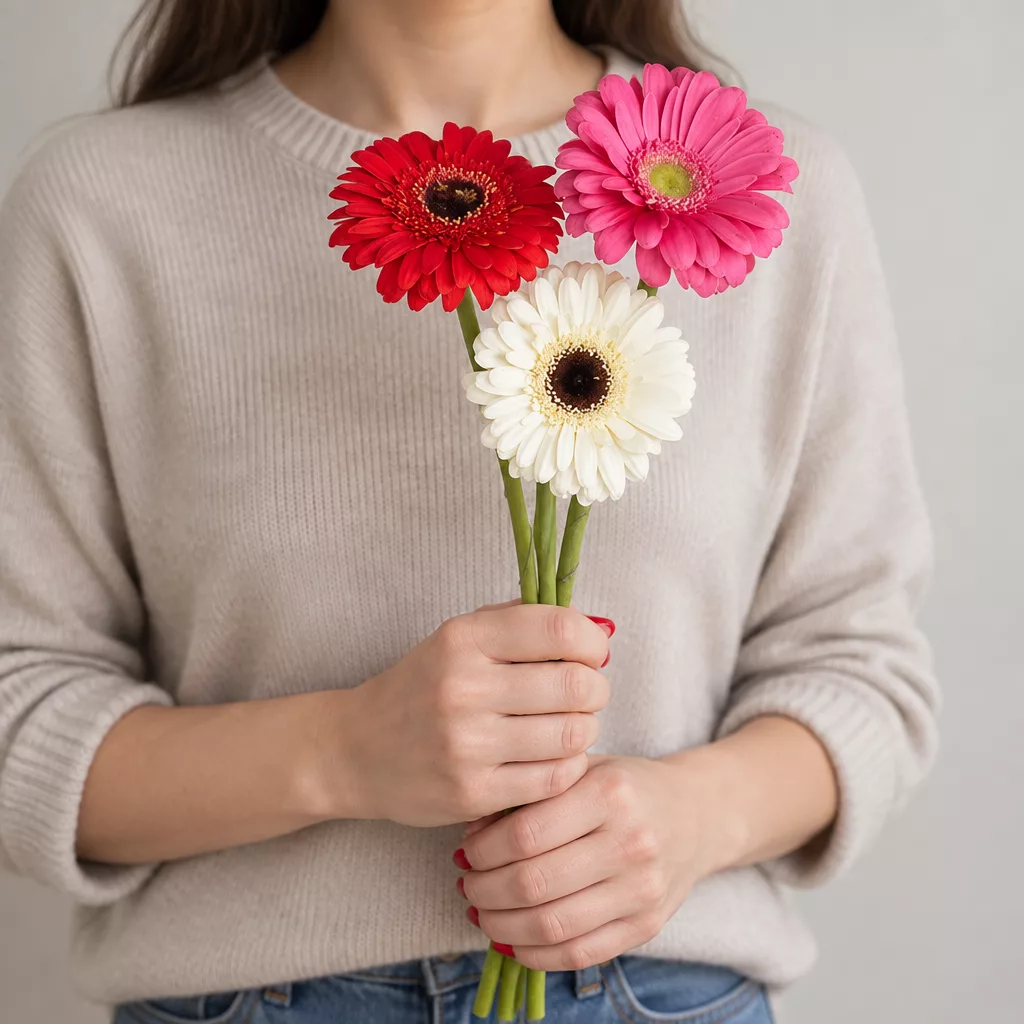
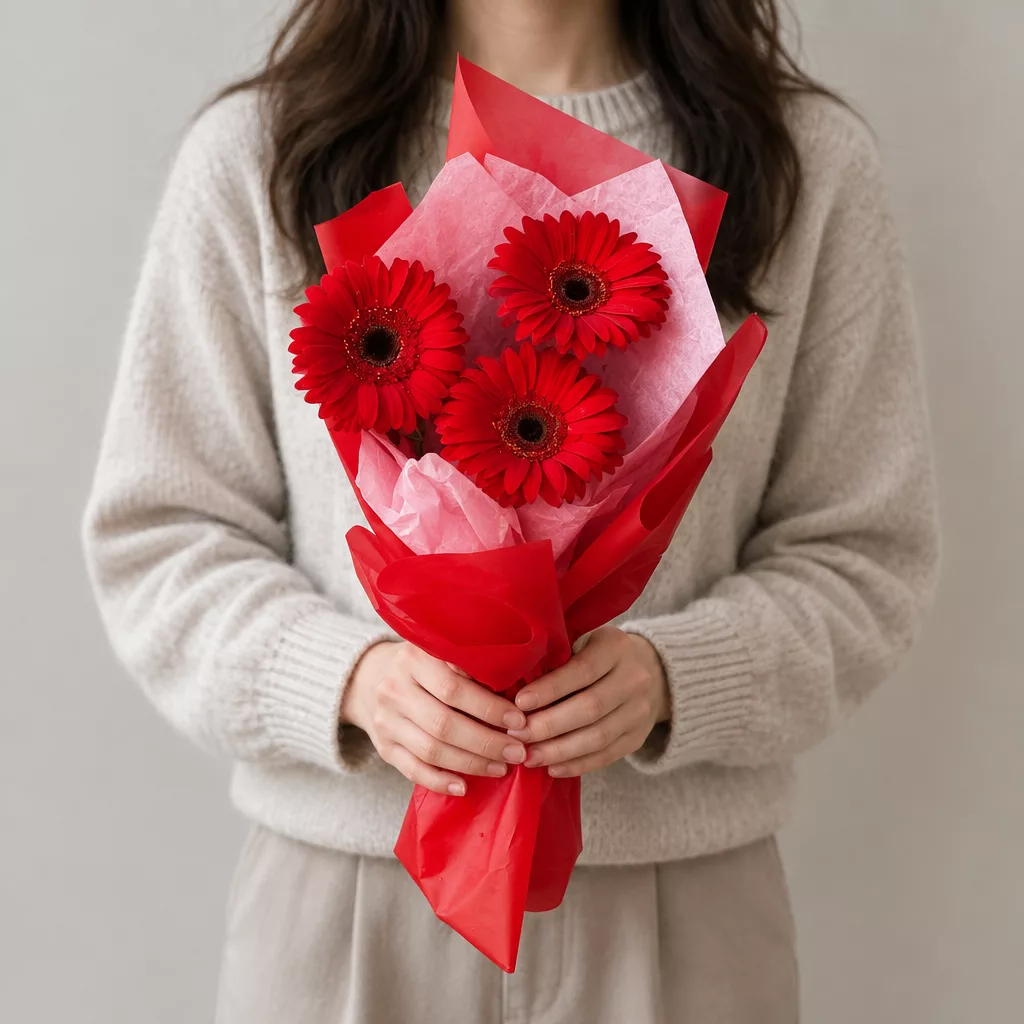
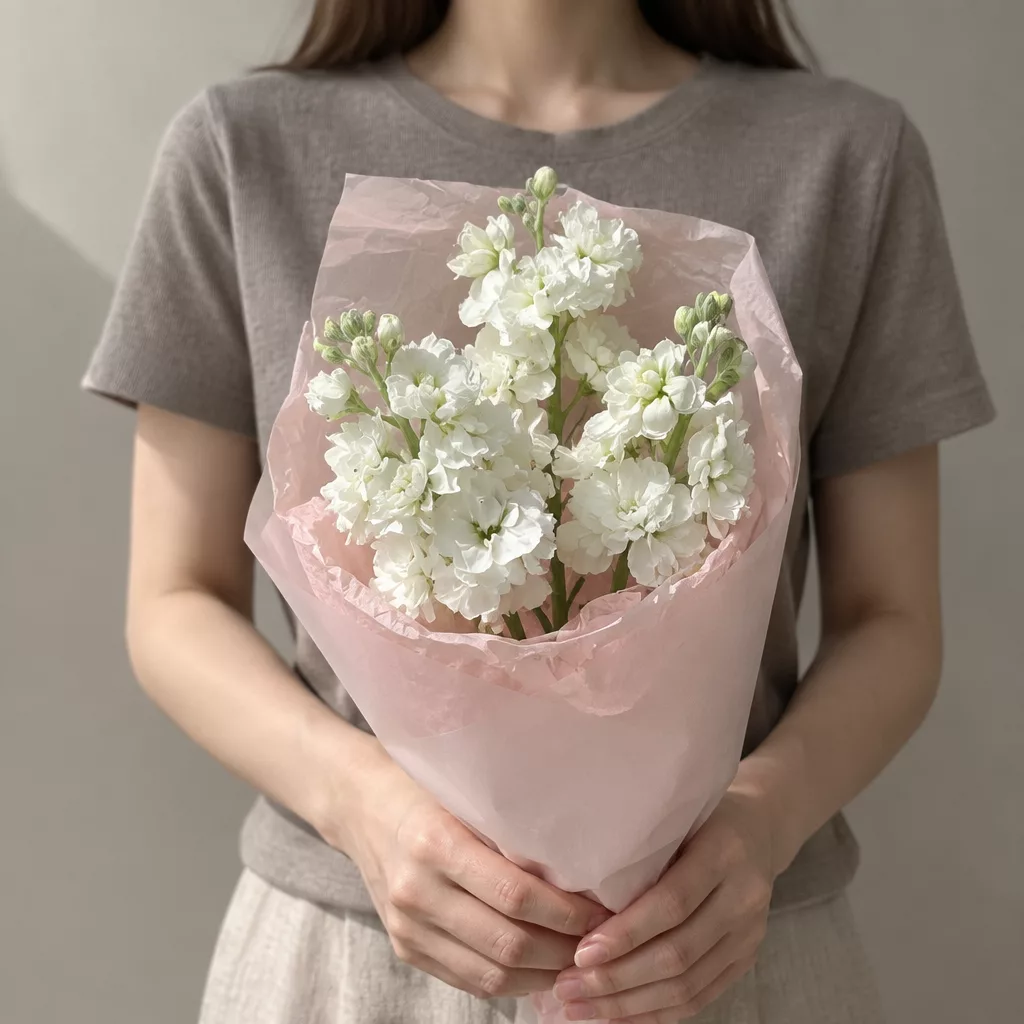
What the Recipient Will Feel: Setting the Right Tone
Before you choose a flower variety, think about the person and the occasion. Russians in regional towns tend to respond warmly to flowers that feel genuine and considered rather than generic. A single colour palette — all soft pinks and creams, or a deep burgundy and white combination — reads as intentional. A mixed grab-bag of whatever was available reads as hurried, even if the individual stems are beautiful.
For a birthday, warmth and celebration are the notes to hit. Garden roses in peach or coral, paired with lisianthus for texture and a few stems of eucalyptus for that soft green breath of freshness, make an arrangement that feels both festive and tasteful. For an anniversary or a romantic gesture from afar, red spray roses alongside white freesia carry a message that needs no translation. The scent of freesia in a small apartment is genuinely moving.
For a new baby or a housewarming — both common occasions for sending flowers in Russia — pastel tulips in spring or soft-toned chrysanthemums in autumn are practical choices because they last well and do not overwhelm a busy household. Avoid anything too heavily perfumed for a new mother, as strong scents can be uncomfortable in the first weeks.
One cultural note worth knowing: in Russia, flowers are traditionally given in odd numbers. Even numbers are reserved for mourning occasions. If you are ordering a specific stem count, ask for an odd number — seven, nine, eleven. Turboflora's florists follow this convention automatically, but it is good to be aware of it so you understand what you receive in the order confirmation.
Choosing Flowers by Season: What Travels Well in Each Month
The Ivanovo region has a genuinely continental climate. Winters are cold and long, summers are warm and short, and the shoulder seasons — March through April and October through November — bring sharp temperature swings that affect how flowers behave during delivery.
In winter, from December through February, temperatures in Privolzhsk regularly drop below minus fifteen degrees Celsius. Flowers delivered in these conditions need to be wrapped carefully and transported quickly. Roses and carnations handle cold transit better than tropical or thin-petalled varieties. Alstroemeria is an excellent winter choice — it is robust, long-lasting, and comes in a wide range of colours. Avoid orchid arrangements in deep winter; the blooms are sensitive to cold shock and can spot or collapse within hours of a cold exposure.
Spring brings tulips, ranunculus, and the first hyacinths. March eighth, International Women's Day, is the single biggest flower occasion in Russia — comparable to Valentine's Day and Mother's Day combined. If you are planning a delivery around that date, place your order at least three to four days in advance. Demand is enormous and timing is everything.
Summer, June through August, is the easiest season. Sunflowers, garden roses, peonies in June and early July, and dahlias from late July onward all travel beautifully and last well in moderate temperatures. Autumn calls for chrysanthemums, hypericum berries, and the warm tones of spray roses in amber and rust. These varieties are naturally suited to the season and hold their shape well in the cooling temperatures of September and October.
How to Place the Order When You Are Outside Russia
The practical steps matter here, and getting them right means the difference between a bouquet that arrives on time and one that misses the moment entirely. Turboflora's website works in both Russian and English, and the ordering process is straightforward for international customers.
The most important piece of information you need is the recipient's full address, including the apartment number and the building entrance number if applicable. Russian addresses include the street, house number, building number if the complex has multiple buildings, and the flat number. A delivery to a multi-building residential complex without the correct building number will be delayed. If you are not sure of the exact address, ask the recipient or a family member before placing the order — it is far better to ask than to guess.
You will also need a working Russian mobile phone number for the recipient. Couriers call ahead to confirm delivery, especially in residential areas. If the recipient does not have a Russian number, a WhatsApp-enabled number can sometimes work, but a local number is strongly preferred. If the recipient is elderly and may not be home, consider coordinating with a family member who can be present.
Payment from abroad is handled by international card. Visa and Mastercard issued outside Russia may have restrictions depending on your country and bank, so it is worth having an alternative payment method ready. Some customers find that a card issued by a third-country bank works smoothly where a European or American card encounters friction. Contact Turboflora's customer team before placing the order if you are uncertain — they can advise on the current options.
Personalising the Bouquet from a Distance
One of the small anxieties of ordering flowers from another country is that the arrangement will feel impersonal — like something ticked off a list rather than chosen with care. There are a few simple ways to make it feel genuinely personal, even across thousands of kilometres.
A handwritten card message is the most direct way. When you place the order, write the message in the language you and the recipient share. If that is English and the recipient reads it, wonderful. If the recipient is more comfortable in Russian, consider writing a short message in transliterated Russian or asking a bilingual friend to help you phrase a sentence or two. The florists at Turboflora can print the message as provided — they do not translate it, so the language is your choice.
Think about the recipient's home when selecting a colour palette. If you know they have a particular preference — a love of purple, a kitchen full of warm yellows — build the bouquet around that. Mentioning this in the order notes gives the florist something to work with when selecting complementary stems.
You can also request specific additions that carry meaning. A few stems of lily of the valley tucked into a spring bouquet is a classic Russian gesture of tenderness. A branch of mimosa in late winter, especially around March eighth, is deeply associated with the holiday and will be immediately understood. These small touches signal that the sender thought about the recipient specifically, not just the occasion generally. That is what makes a flower delivery feel like a gift rather than a transaction.
Vase Life and Care: What to Tell the Recipient
You will not be there to unwrap the bouquet and arrange it, so it helps to pass along a few care instructions to the recipient in advance. Turboflora includes care notes with deliveries, but a message from you reinforces the attention.
The first step, immediately on receiving the bouquet, is to trim the stems at an angle — about two centimetres from the bottom — using a sharp knife rather than scissors. Scissors can crush the stem tissue and reduce water uptake. The cut should be made under running water or while the stems are submerged, which prevents air from entering the vascular tissue.
Fresh water, changed every two days, is the single biggest factor in vase life. The water should be cool, not cold, and the vase should be rinsed each time to remove bacterial buildup. Remove any leaves that fall below the waterline, as they decompose quickly and cloud the water.
Placement matters. In a Privolzhsk apartment in winter, the radiators run hot and the air is very dry. Keep the bouquet away from the radiator and away from direct sunlight through the window. A cool corner of the kitchen or a hallway table is ideal. Roses in these conditions will last seven to ten days with proper care. Alstroemeria can go twelve to fourteen days. Tulips, which are sensitive to ethylene gas, should be kept away from a fruit bowl — the gas that ripening fruit emits shortens their life noticeably. A little attention to these details means the bouquet stays beautiful for the full span of its life, which in turn means the sender is remembered for longer.
Common Mistakes Senders from Abroad Make — and How to Avoid Them
The most common mistake is underestimating the time difference. An order placed at what feels like a reasonable morning hour in California or Western Europe can arrive at an inconvenient time for the recipient — late at night, or during working hours when no one is home. Think through the recipient's day before you confirm the delivery time. Early evening, roughly five to seven in the evening Privolzhsk time, is generally the most reliable window for a residential delivery.
The second mistake is sending an even number of flowers without realising the cultural significance. As mentioned earlier, even-numbered bouquets are associated with mourning in Russian tradition. This is not a superstition that younger urban Russians necessarily follow strictly, but in a regional town it is more likely to be noticed and felt. Odd numbers are always the right choice.
Third, some international senders choose flowers based on what they know from their own country without considering the Russian occasion. White chrysanthemums, for example, are a funerary flower in some Eastern European and Asian traditions but are entirely celebratory and cheerful in Russia — they are a popular birthday and autumn bouquet choice. Conversely, yellow flowers carry a folk association with separation or farewell in some Russian communities, particularly among older generations. It is not a universal rule, but if you are sending to someone traditional, a palette of warm reds, pinks, and whites is a safe and genuinely beautiful alternative.
Finally, do not leave the order to the last hour. Even with fast delivery, a same-day order placed very close to the desired delivery time leaves no room for the florist to source the best available stems or to handle any address complications. An hour or two of lead time makes a real difference to what arrives at the door.
Sending flowers to Privolzhsk from the other side of the world is a meaningful act — it says that the distance between you and the person you are thinking of is not the whole story. With the right seasonal choice, a correct address, and a little awareness of timing and Russian customs, the bouquet that arrives at that apartment door will feel like you were almost there yourself. The details are not complicated once you know them, and the result — a recipient opening the door to a fresh, carefully composed arrangement — is worth every minute of planning.
Frequently asked questions
Can I send flowers to Privolzhsk if I do not speak Russian?
Yes. Turboflora's website is available in English and the ordering process is designed for international customers. You can write your card message in any language the recipient reads. For address or delivery questions, the customer team can assist in English. The main thing you need is the recipient's correct Russian postal address and a local phone number for the courier to call.
How far in advance should I place my order from abroad?
For a standard delivery, placing your order two to four hours before the desired delivery time is sufficient. Around major Russian holidays — especially March eighth, International Women's Day — place the order three to four days ahead. Demand spikes sharply around these dates, and early ordering ensures the best flower selection and the most precise delivery window for your recipient.
What flowers should I avoid sending to Privolzhsk?
Avoid yellow flowers if the recipient is from an older or more traditional generation, as yellow can carry an association with parting in Russian folk tradition. In deep winter, avoid delicate tropical blooms like orchids that are vulnerable to cold shock during outdoor transit. Even-numbered bouquets should also be avoided, as even numbers are associated with mourning rather than celebration in Russian custom.
Will the bouquet arrive in good condition in cold Privolzhsk winters?
Yes, provided you choose cold-hardy varieties. Roses, carnations, alstroemeria, and chrysanthemums all travel well in cold temperatures when properly wrapped. Turboflora's couriers are experienced with winter deliveries across Russian regional towns. The transit from the florist to the recipient's door is fast, which is the key factor in keeping flowers undamaged in freezing conditions.
Can I include a gift or chocolates with the flowers?
Turboflora can include add-ons such as chocolates or small gifts alongside a bouquet — check the available options when placing your order. This is a popular choice for birthdays and anniversaries when you want the delivery to feel more complete. Mentioning this in your order notes ensures the florist composes the presentation as a single cohesive gift rather than separate items.
Ready to send flowers?
Pick the city, choose the bouquet, and a local florist takes it from there.
Choose a city →