Sending Flowers to Russia From Abroad: A Time Zone Guide
You are sitting at your desk in London, Berlin, or New York, thinking about someone you love in Saint Petersburg or Novosibirsk. You want fresh roses waiting for them when they wake up on their birthday, or a bouquet delivered just before a celebration dinner. The feeling is clear. The logistics are less so. Russia spans eleven time zones, and getting the timing wrong means flowers arrive at midnight, or worse, hours after the moment has passed. This guide walks you through exactly how to calculate your order time so the delivery lands when it should — while the tulips are still tight and the roses have not yet opened all the way.
Why Timing Matters More Than Distance for Flower Delivery
When you send flowers across a city, a one-hour window for delivery is easy to picture. When you send them across continents and time zones, the gap between your intention and the actual moment of arrival can stretch into something quite different. Fresh flowers are living things. A bouquet of peonies or garden roses cut that morning is at its best for a specific window of hours, and how it is handled during transit — temperature, water, wrapping — determines how long that window stays open.
Russian summers can push temperatures above 30 degrees Celsius in many cities, which shortens the life of delicate varieties like sweet peas or ranunculus noticeably. Russian winters drop well below freezing, which means a bouquet left on a cold doorstep for even twenty minutes can suffer frost damage on petals. Timing your order so the delivery happens when someone is actually home, or at their office during working hours, is not just a courtesy — it protects the flowers themselves.
The emotional weight of a well-timed delivery is also real. A bouquet that arrives at nine in the morning on a birthday feels like a deliberate, loving act. The same bouquet arriving at nine in the evening feels like an afterthought, even if the flowers are identical. Matching the moment to the flowers is what florists think about constantly, and it is what this guide is designed to help you do from wherever you are in the world.
Bouquets we can deliver

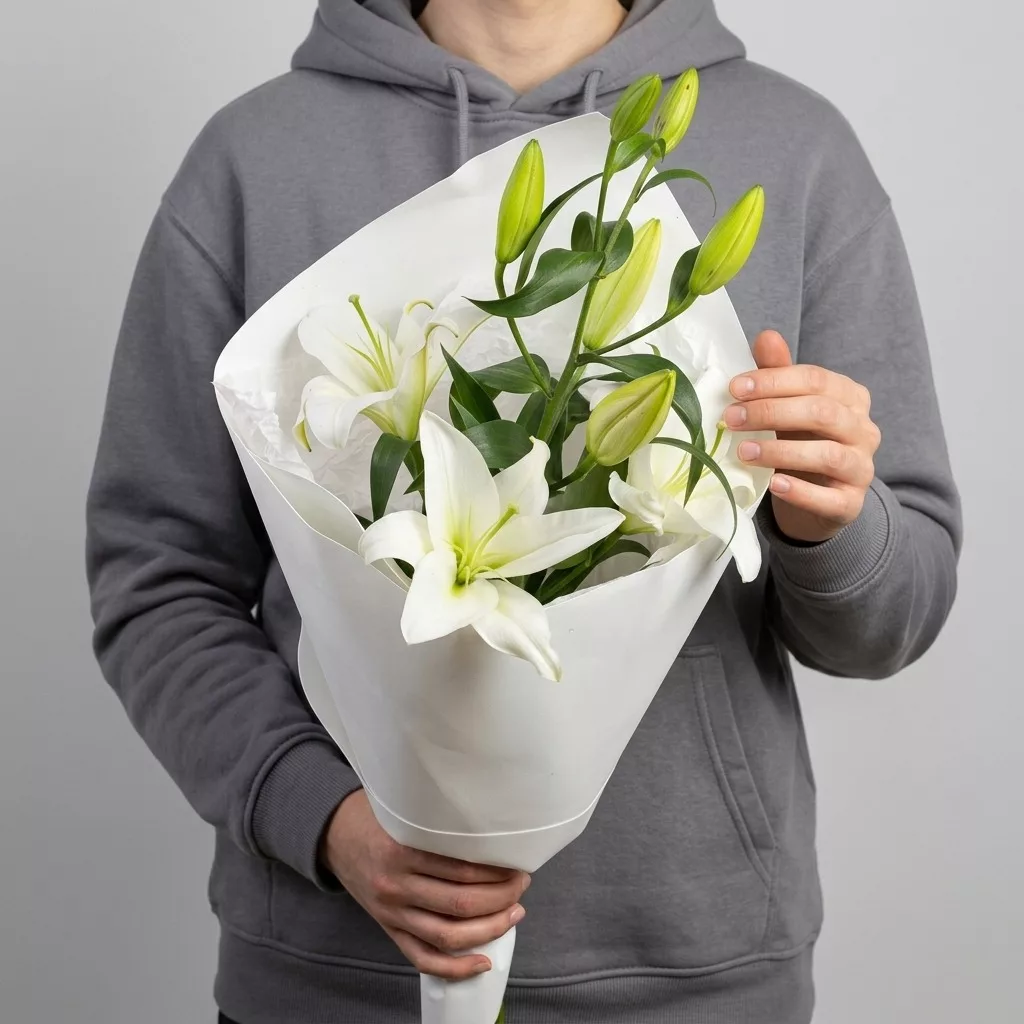
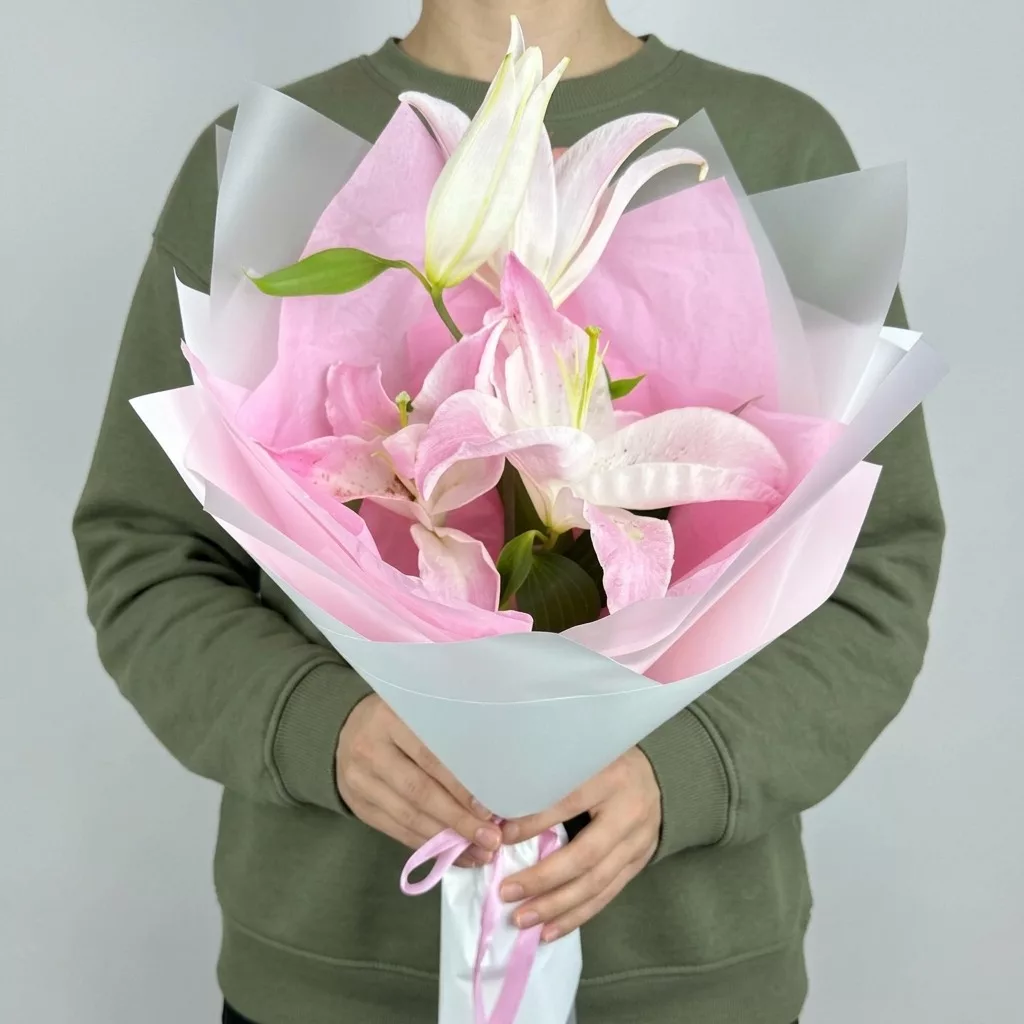

Moscow Time as Your Reference Point
Moscow Standard Time, known internationally as MSK, is UTC plus three hours. It does not change with daylight saving, because Russia abolished seasonal clock changes in 2014. This makes Moscow time unusually stable as a reference point — what you calculate today will be the same calculation next month and next year, with no seasonal adjustment needed.
If you are in London during winter, Moscow is three hours ahead of you. During British Summer Time, that gap narrows to two hours. If you are in Berlin or Paris, Moscow is two hours ahead in winter and one hour ahead in summer. New York is eight hours behind Moscow in winter and seven hours behind in summer. Los Angeles sits eleven hours behind Moscow in winter and ten hours behind in summer. Tokyo, going the other direction, is six hours ahead of Moscow year-round.
Saint Petersburg shares Moscow time exactly — they are in the same time zone. So if you are ordering for someone in Saint Petersburg, Turboflora's home city, you are always working with MSK. Most major Russian cities west of the Urals, including Moscow itself, also run on MSK. This means a large portion of Russia's population is reachable through a single time zone calculation, which simplifies things considerably for international senders.
A practical habit: convert your intended delivery time to MSK first, then work backward to figure out when to place your order. Do not start from your local time and try to add or subtract on the fly. One direction of calculation, done clearly, prevents the kind of small arithmetic errors that result in a very awkward midnight delivery.
Regional Russian Time Zones Beyond Moscow
Russia is vast, and once you move east of the Ural Mountains, the time differences from Moscow become significant. Yekaterinburg, the largest city in the Urals, runs on MSK plus two hours. Omsk is MSK plus three. Novosibirsk and Krasnoyarsk are MSK plus four. Irkutsk, near Lake Baikal, is MSK plus five. Vladivostok, on the Pacific coast, is MSK plus seven.
This matters practically because a sender in New York trying to arrange a morning delivery in Vladivostok is working with a combined time difference of fifteen hours in winter. If you want flowers to arrive at ten in the morning in Vladivostok, you need to place your order the previous evening in New York — and you need to account for the fact that the florist's order processing window needs to open before your order can be fulfilled.
For senders focused on European Russia — Saint Petersburg, Moscow, Kazan, Samara, Volgograd — the MSK calculation covers you. For the Urals and Siberia, add the regional offset on top of MSK. The safest approach is to look up the specific city on a world clock tool, confirm the current local time there, and then place your order with a delivery window that gives at least ninety minutes of buffer from the moment you submit.
One thing many international senders do not realize: Russian cities do not observe daylight saving time at all. So while your own clock shifts in spring and autumn, Russian clocks stay fixed. Recalculate your time difference every time the season changes in your country, even though nothing changes on the Russian side.
The Best and Worst Times to Schedule a Delivery in Russia
In Russia, as in most places, the most appreciated delivery windows are mid-morning and early afternoon. For a birthday, arriving between ten and noon means the recipient has the whole day to enjoy the flowers and show them to people. For a work anniversary or a professional congratulation, arriving at the office between eleven and one is ideal — colleagues are around, the mood is good, and the gesture lands publicly in the best way.
Evening deliveries can work beautifully for romantic occasions — a dinner at home, a return from a trip, a surprise after a long week. But they require you to know the recipient's schedule with some confidence. An evening bouquet of deep red spray roses or garden-variety burgundy dahlias arriving at seven or eight has genuine atmosphere. The same bouquet at ten at night is harder to receive gracefully.
The times to avoid are early morning before nine, late evening after nine, and the midday lunch hour if the recipient is at an office with a staffed reception. Russian offices vary widely in their reception desk coverage, and a delivery that arrives when no one is at the desk creates complications for fresh flowers that cannot wait.
Weekend deliveries in Russia are popular for celebrations, and Russians have a strong culture of marking occasions with flowers — birthdays, name days, graduations, promotions, and the many official holidays on the Russian calendar. If you are sending for a holiday, be aware that the day before a major celebration is often the moment the bouquet should arrive, not the holiday morning itself, when delivery demand is highest and schedules can run later.
Choosing Flowers That Travel Well Across a Time-Sensitive Delivery
The variety you choose affects how forgiving the timing needs to be. Some flowers have a long window of beauty after cutting. Others are more demanding. Chrysanthemums, alstroemeria, and carnations are among the most resilient — they hold their form and color for many days under normal indoor conditions. A bouquet built around these varieties gives you more flexibility if the delivery window shifts slightly.
Roses are the most universally requested flower in Russia, and for good reason — they carry meaning in almost every situation. A tight rose bud, properly hydrated and wrapped, will survive a careful delivery and then open slowly over several days in a vase. The risk with roses comes from temperature extremes: below zero, petals bruise and darken; above thirty-five degrees, they open too fast and the vase life shortens dramatically. This is why the delivery timing and the season matter together, not separately.
For spring occasions, tulips are deeply loved in Russia and are closely associated with warmth and celebration. They are, however, sensitive to heat and to being out of water. A tulip bouquet delivered promptly and placed in a cool vase of fresh water will stay upright and vivid for five to seven days. One left in a warm car or on a sunny windowsill will droop within hours.
If you are sending for a significant occasion — a big birthday, an anniversary, a new home — consider a combination of textures and lengths rather than a single variety in bulk. Roses paired with eucalyptus and white lisianthus, for example, create something that feels composed and generous rather than simply purchased. The presentation matters as much as the flower count.
Practical Steps for Placing an International Order Without Mistakes
Start with the recipient's city and look up its current local time right now, not from memory. Confirm the time zone offset from UTC, then calculate what that means relative to your own clock. Write both times down before you open any ordering page. This single step eliminates the majority of timing errors that international senders make.
Decide on your delivery window — not just a day, but a two-hour range. Think about where the recipient will be: at home in the morning, at work by ten, out for lunch between one and two, back at the office until six. A delivery window that matches their actual location is a delivery that succeeds. If you are not certain of their schedule, a mid-morning home delivery is usually the safest choice for most occasions.
When you place the order, convert your requested delivery time explicitly to the recipient's local time and state it clearly in the order notes. Do not assume the florist will automatically know you mean their local time — be specific. Write something like: please deliver between 11:00 and 13:00 Saint Petersburg time on the 14th.
Leave more buffer than you think you need. International payments sometimes take a few extra minutes to process. Order early in your own day rather than late, so that if anything needs clarification, there is time to resolve it before the delivery window closes. A bouquet ordered with two hours to spare is a bouquet delivered with confidence. One ordered with twenty minutes to spare is a bouquet ordered with anxiety, and that feeling tends to transfer to the outcome.
Sending flowers across time zones is an act of care that requires a small amount of precision to land the way you intend. The distance between you and the person you are thinking of is real, but it does not have to affect the moment the flowers arrive. When you take ten minutes to calculate the time correctly, choose varieties suited to the season, and give the delivery a window that matches the recipient's day, the bouquet does exactly what you hoped — it arrives at the right moment, looking its best, carrying everything you meant it to say.
Frequently asked questions
Does Russia observe daylight saving time?
No. Russia abolished seasonal clock changes in 2014. Moscow Standard Time stays fixed at UTC plus three hours all year. This means your time difference with Russia does change seasonally — but only because your own country shifts its clocks, not because Russia does. Recalculate each spring and autumn to stay accurate.
What is the safest delivery window to request when I am not sure of the recipient's schedule?
A mid-morning window between ten and noon local time in the recipient's city is the most reliable choice. Most people are settled into their day by then, whether at home or at work, and a delivery during this window rarely catches anyone at an inconvenient moment. It also gives the flowers the full day to be enjoyed.
How far in advance should I place an order from abroad?
Place your order at least three to four hours before the desired delivery window, accounting for the time difference. This gives enough time for payment processing and preparation. For major holidays like International Women's Day on March 8th, ordering the day before is strongly advisable, as demand is extremely high and delivery schedules fill quickly.
Are there Russian holidays I should know about when sending flowers?
The most flower-intensive dates in Russia are International Women's Day on March 8th, Valentine's Day on February 14th, and major personal milestones like birthdays and graduations. New Year is also significant. On these dates, order well in advance and expect that deliveries may run toward the later end of your requested window due to high volume.
What should I write in the order notes to make sure the timing is correct?
Write the requested delivery date and time explicitly in the recipient's local time zone — for example, please deliver between 11:00 and 13:00 Saint Petersburg time on March 14th. Avoid writing your own local time without specifying the zone. Clear, specific notes remove any ambiguity and give the delivery team exactly what they need to get it right.
Ready to send flowers?
Pick the city, choose the bouquet, and a local florist takes it from there.
Choose a city →