Sending Flowers to Russia from Australia: Timing, Addresses and Getting It Right
Someone you love is in Saint Petersburg, and you are sitting in Melbourne or Sydney watching the clock, wondering whether a bouquet can actually arrive fresh, on time, and looking the way you imagined it. The answer is yes — but only if you understand a few things about distance, time zones, and what Russian flower culture actually expects. This guide walks you through every step, from choosing the right moment to place your order to writing an address that our couriers can find without a single phone call.
Understanding the Time Difference Between Australia and Russia
Saint Petersburg runs on Moscow Time, which is UTC plus three hours. Sydney, for example, sits at UTC plus ten or eleven depending on daylight saving, meaning Saint Petersburg is typically seven to eight hours behind eastern Australia. Perth is even further ahead. This gap is the single most common reason a well-meant birthday bouquet arrives a day late.
The practical rule is simple: if the birthday or anniversary falls on a Tuesday in Saint Petersburg, you need to place your order no later than Monday evening Australian time — and earlier is always safer. Our team processes orders around the clock, and we deliver across Saint Petersburg within one to two hours of confirmation, but we cannot start the clock until your order is actually in the system and payment has cleared.
Think about the recipient's schedule too. A bouquet that rings the doorbell at seven in the morning is a surprise; one that arrives at eleven at night is a disruption. When you place your order, you can specify a delivery window — morning, afternoon, or evening. Factor in when your person is actually home. Students are often out during the day; office workers usually return by early evening. A little thought here makes the difference between a moment that lands perfectly and one that misses the feeling entirely.
Bouquets we can deliver

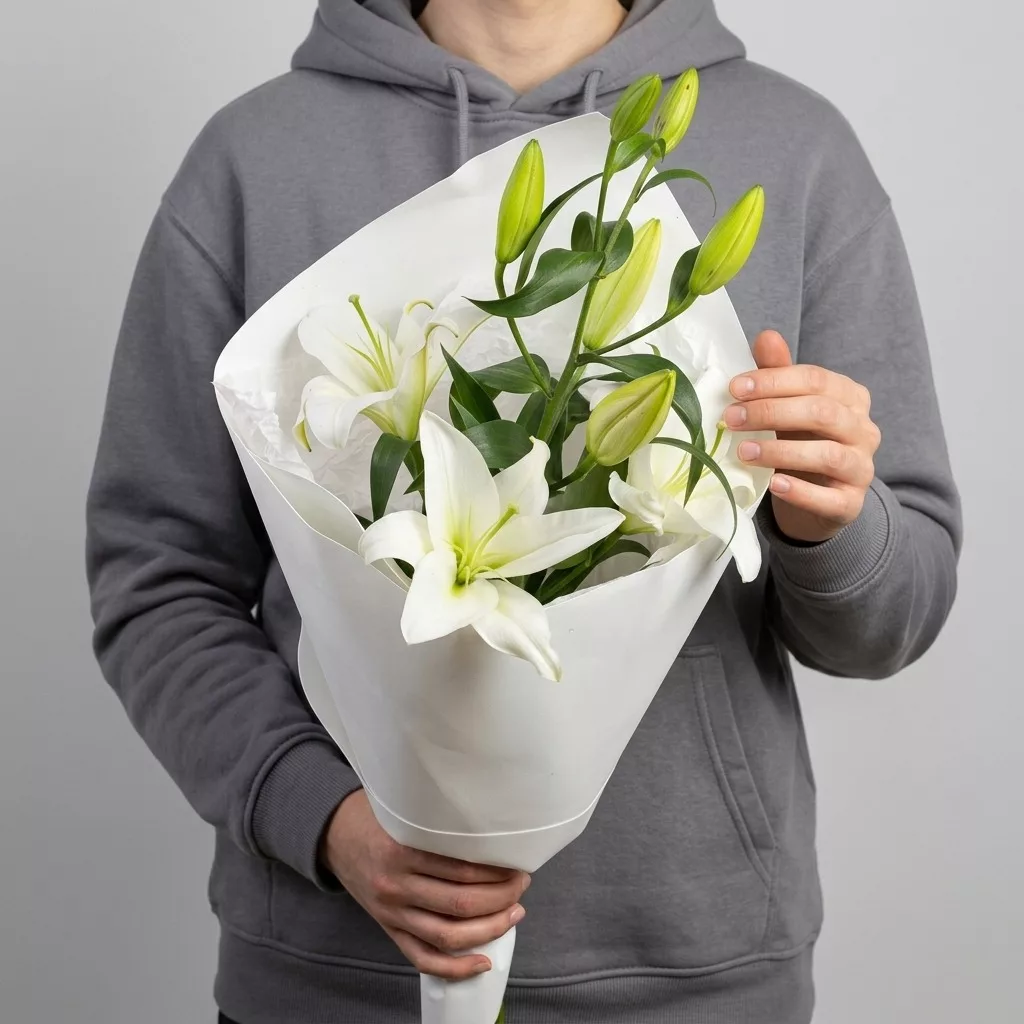
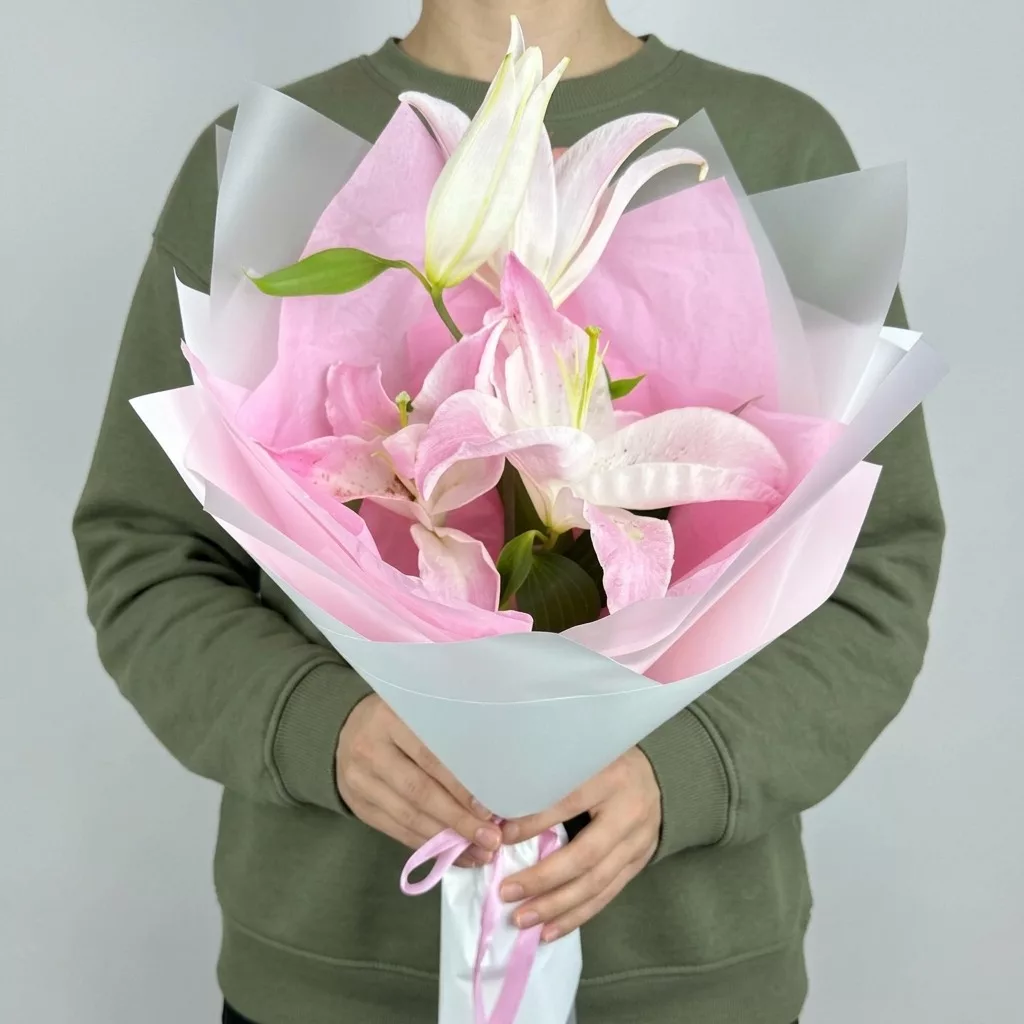
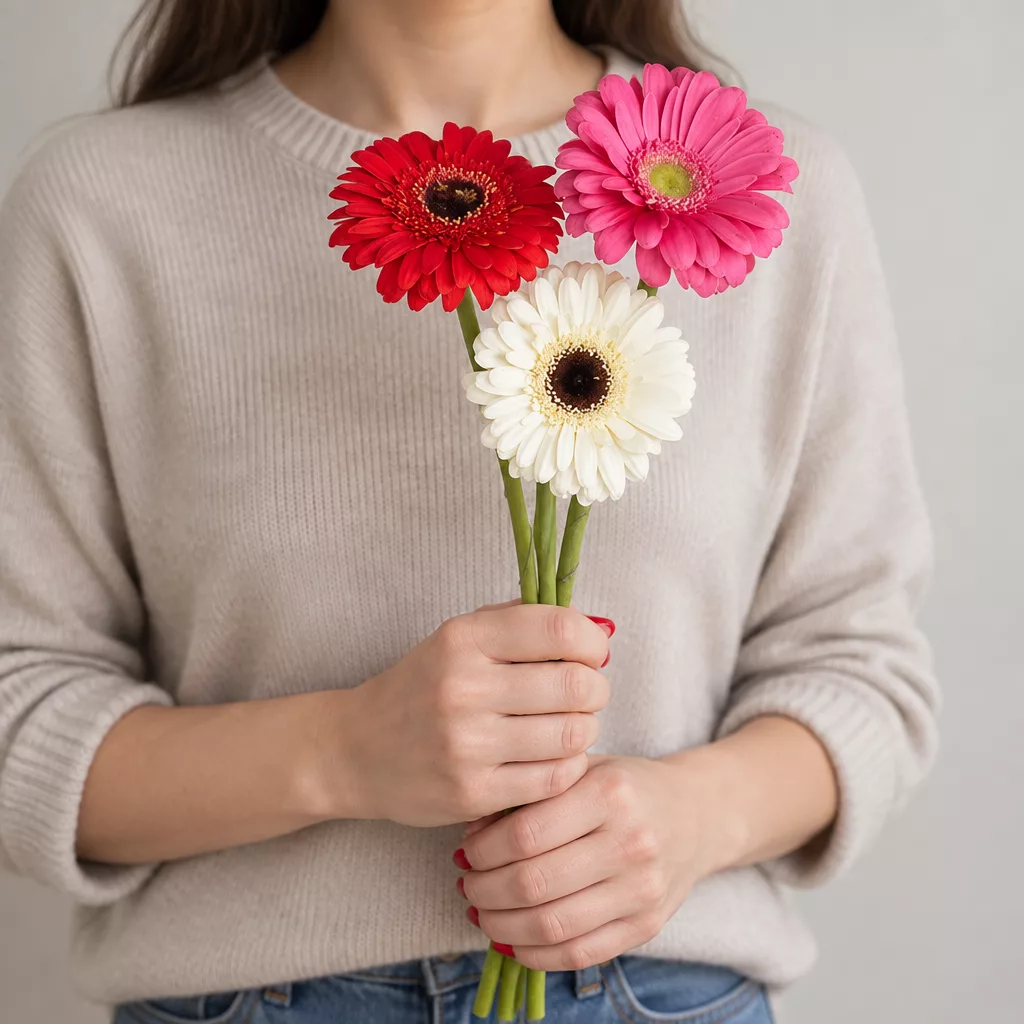
What Russian Flower Customs Mean for Your Order
If you have never sent flowers inside Russia before, there are two customs worth knowing immediately. First, odd numbers matter. Bouquets in Russia are always made with an odd number of stems — five, seven, nine, eleven, and so on. Even numbers are associated with mourning and would feel deeply wrong to a Russian recipient, even if they never say so directly. Every arrangement we put together already follows this rule, so you do not need to count, but it helps to understand why we might adjust a quantity you request.
Second, Russians take flowers seriously as a gift in a way that goes beyond the gesture. A bouquet is not a small add-on; it is the main event. Presentation — the wrapping, the ribbon, the proportions of the stems — carries as much weight as the variety itself. A loosely wrapped bunch handed over in a plastic sleeve would feel careless. Our bouquets are wrapped in kraft paper or fabric, tied properly, and carried upright by our couriers so they arrive looking as though they were just cut.
Colour carries meaning too, though it is less rigid than the odd-number rule. Red roses signal romantic love clearly. White flowers read as elegant and sincere across most occasions. Yellow flowers, sometimes avoided in older Russian tradition, are now widely accepted among younger recipients, especially in bright mixed arrangements with tulips or ranunculus. When in doubt, a mix of white and blush tones works beautifully for almost any relationship and any occasion.
How to Write a Russian Address Correctly
This is where many international orders quietly go wrong. A Russian address has a specific order that differs from Australian convention, and a small mistake can send a courier to the wrong building or the wrong entrance of a very large apartment block.
The correct sequence is: city, street name, building number, apartment number, floor if known, and any entry code for the door. In Russian apartment buildings, the entrance number — called a podezd — matters as much as the floor. A building might have six separate entrances and forty apartments per entrance. Without the right podezd, a courier stands outside pressing every buzzer. If you know the entry code for the intercom, include it.
When your recipient lives in a large residential complex built during the Soviet era, there may also be a korpus — a secondary building number that looks like a letter or a small number after the main address. It is easy to miss when someone reads their own address aloud quickly. Ask your recipient to send you their address in writing, ideally in Russian Cyrillic, and paste it exactly into the order form. If you only have it in English transliteration, that still works, but Cyrillic reduces any ambiguity for our couriers.
Always include a working Russian mobile number for the recipient. Our courier will call ahead when they are five to ten minutes away. Without a reachable number, we cannot guarantee entry to a secured building, and the bouquet may have to wait in ways that affect its freshness.
Payment from Australia: What to Expect
Paying for a flower delivery in Russia from an Australian bank account used to feel complicated. It is now straightforward, but there are a couple of things to prepare for before you reach the checkout.
Most Australian debit and credit cards — Visa and Mastercard especially — will work on our website. The transaction processes in Russian roubles, and your bank converts the amount at the current exchange rate. Some Australian banks flag international transactions as unusual and send you a verification message before the payment goes through. Keep your phone nearby when you check out so you can approve it immediately. A declined payment that you do not notice for an hour can push your order past the delivery window you wanted.
If your card does not process for any reason, contact us directly. We can discuss alternative arrangements. The important thing is not to assume the order went through if you did not receive a confirmation email. Check your spam folder first — confirmation emails from Russian domains occasionally land there for Australian recipients. If there is nothing in spam either, the order likely did not complete, and it is worth reaching out before too much time passes.
One more practical point: some Australian banks charge a small foreign transaction fee on international purchases. This is your bank's fee, not ours, and it varies by institution. It is worth checking your bank's terms once so it does not come as a surprise on your statement.
Choosing the Right Flowers for Someone You Cannot Hand Them To
When you are giving flowers in person, you can read the room — you see the expression, you adjust. When the bouquet travels across eleven time zones without you, the flowers have to do all the talking. That means choosing varieties that are both emotionally right and physically robust enough to arrive in perfect condition.
For romantic occasions — Valentine's Day, anniversaries, declarations — garden roses in deep red or dusty pink hold their shape beautifully and carry unmistakable meaning. A bouquet of fifteen garden roses wrapped in soft kraft paper needs no explanation in any language. For birthdays, a mix of spray roses, lisianthus, and eucalyptus reads as celebratory and generous without being heavy. Lisianthus in particular travels well, opens slowly over several days, and has a softness that feels genuinely luxurious.
If the recipient has a home full of light and loves drama, consider peonies when they are in season — late spring through early summer — or dahlias in late summer. Both are deeply loved in Russian flower culture and feel like a real event when they arrive. For something lighter and more everyday, alstroemeria in white or peach lasts an extraordinary length of time in a vase, often ten days or more, which matters when you cannot be there to replace them.
Avoid sending delicate single-stem flowers like anemones for long-distance occasions. They are beautiful in the shop but fragile in transit. Let the occasion guide the volume: a congratulation deserves generosity, a thinking-of-you note can be quieter.
What Happens After You Place Your Order
Once your order is confirmed and payment has cleared, our team in Saint Petersburg begins preparing the bouquet. We cut stems at an angle, condition the flowers in fresh water, and assemble the arrangement close to the delivery time so nothing sits waiting longer than necessary. In winter, when Saint Petersburg temperatures drop well below freezing, we wrap bouquets in insulating sleeves to protect them during the short journey from our car to the recipient's door. In summer, we work quickly to avoid heat exposure.
You will receive a confirmation email when the order is placed and another when the bouquet has been delivered. If you want to add a message card — and we strongly recommend it, because a handwritten note from someone on the other side of the world means a great deal — write it in the order notes and we will print and attach it. Keep the message short and warm; a few sentences are more powerful than a paragraph when someone is holding flowers and trying not to cry.
If for any reason delivery is not possible — the recipient is not home and does not answer their phone, or the address has an error — we will contact you directly using the email or number you provided. We do not leave bouquets outside an unsecured door. We would rather reach you, confirm a new window, and redeliver than leave flowers on a step in a Russian winter. This is why your own contact details matter as much as the recipient's when you fill in the order form.
Sending flowers from Australia to Russia is not complicated once you know the rhythm of it — the time zone arithmetic, the odd-number rule, the address format, the payment confirmation. What matters most is the same thing that matters in any flower gift: that someone opens their door and feels genuinely seen. The distance between Sydney and Saint Petersburg is real, but a well-chosen bouquet arriving at the right moment on the right day closes it completely. Place your order with a little more lead time than you think you need, write the address carefully, and let the flowers do what they have always done.
Frequently asked questions
How far in advance should I order flowers from Australia to be delivered in Saint Petersburg on a specific date?
Place your order at least 24 hours before the desired delivery time in Saint Petersburg, accounting for the time difference. Eastern Australia is typically seven to eight hours ahead of Saint Petersburg, so a Tuesday delivery there means ordering by Monday morning Sydney time at the latest. Earlier is always safer, especially around major holidays when demand is high.
Can I write the message card in English, or does it need to be in Russian?
English is perfectly fine. Many recipients in Saint Petersburg read English, and even those who do not will appreciate that you wrote from the heart in your own language. If you would like us to translate a short message into Russian for the card, mention it in the order notes and we will do our best to help.
What if the recipient is not home when the courier arrives?
Our courier will call the recipient's mobile number before arriving. If there is no answer and entry to the building is not possible, we will contact you using the details you provided at checkout. We will arrange a new delivery window rather than leave the bouquet unattended, so please make sure both contact numbers are correct when you place your order.
Do Russian flower customs differ from Australian ones in ways that might affect my order?
The most important difference is the odd-number rule: bouquets in Russia always contain an odd number of stems, as even numbers are associated with mourning. We follow this automatically. Colour and presentation also carry more social weight in Russian culture than in Australia, which is why we invest carefully in wrapping and proportion rather than simply bundling stems together.
How long will the flowers last once they are delivered in Saint Petersburg?
It depends on the variety. Alstroemeria and lisianthus regularly last eight to ten days in a clean vase with fresh water changed every two days. Garden roses typically give five to seven days. Peonies are shorter but spectacular for three to five days. Cutting a centimetre from the stems on arrival and keeping the vase away from direct heat or sunlight makes a meaningful difference to vase life.
Ready to send flowers?
Pick the city, choose the bouquet, and a local florist takes it from there.
Choose a city →