Sending Flowers to Russia from Canada: Timing, Payment, and What to Expect
You are sitting in Toronto or Vancouver, and someone you love is celebrating a birthday in Saint Petersburg or Moscow tomorrow morning. You want them to open the door to something beautiful — a full, fragrant arrangement that tells them exactly how much you are thinking of them across seven time zones. Sending flowers internationally sounds complicated, but when you understand a few key details about timing, payment, and how Russian addresses work, the whole process becomes surprisingly straightforward. This guide walks you through everything from placing your order at the right hour to writing the delivery address correctly, so the flowers arrive fresh and the moment lands the way you intended.
Understanding the Time Zone Gap Between Canada and Russia
The single most important thing a sender in Canada needs to grasp is the size of the time difference. Saint Petersburg and Moscow run on Moscow Standard Time, which is UTC plus three hours. That puts Saint Petersburg eight to eleven hours ahead of Canadian cities depending on whether you are in Halifax, Toronto, or Vancouver. When it is nine in the morning in Toronto, it is already five in the afternoon in Saint Petersburg.
This means that if you want flowers delivered in the morning — which is often the most touching gesture for a birthday or anniversary — you need to place your order the evening before, Canadian time. An order placed at ten at night in Toronto on a Tuesday reaches us well before the Saint Petersburg working day begins on Wednesday, giving plenty of time to prepare and dispatch.
For same-day delivery in Russia, the practical cutoff for Canadian senders is roughly midday local Russian time. Work backwards from that. If you are in British Columbia, you may need to order before four or five in the morning your time to catch a morning slot in Russia. Most people find it easier to simply order the night before and choose a delivery window for the following morning.
Turboflora delivers within one to two hours of the confirmed order during operating hours, so once your order is in the system and confirmed, the timeline is fast. The gap you need to manage is almost entirely on the Canadian side of the clock.
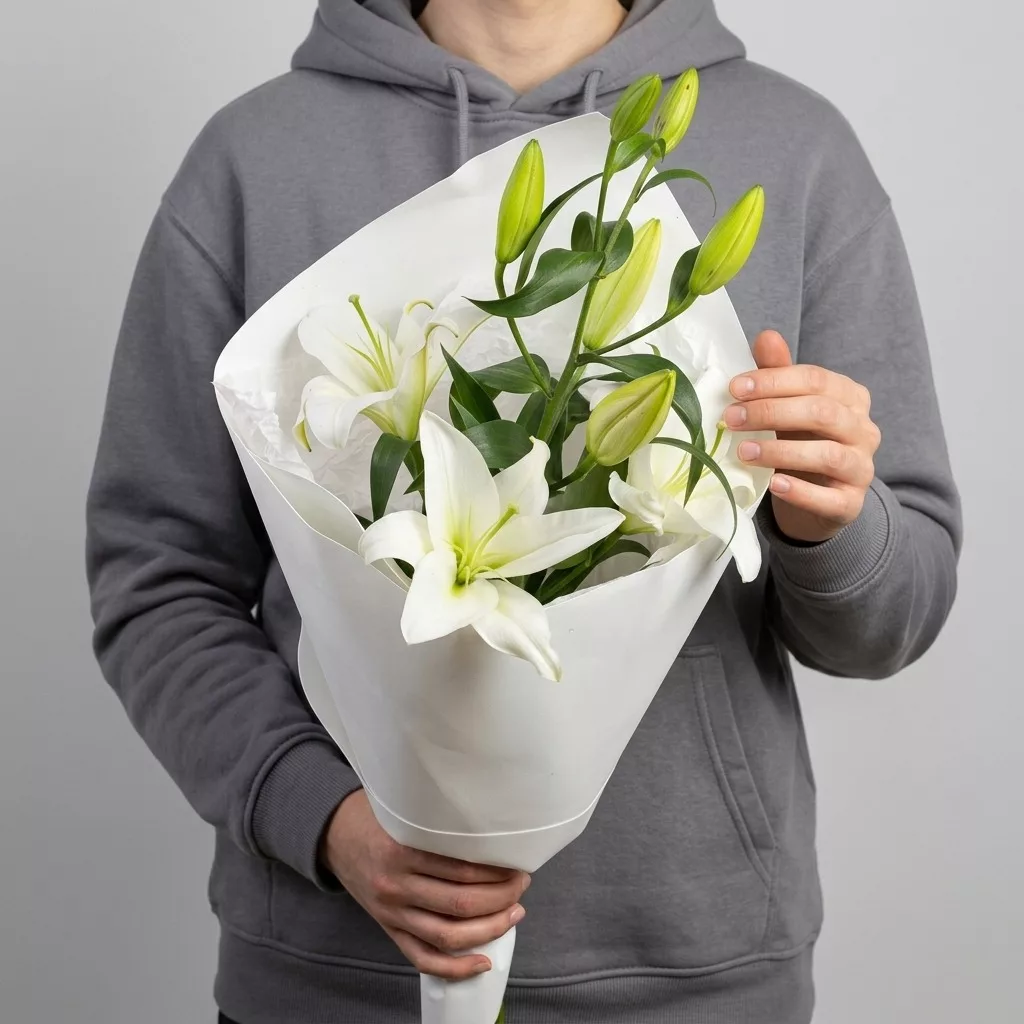
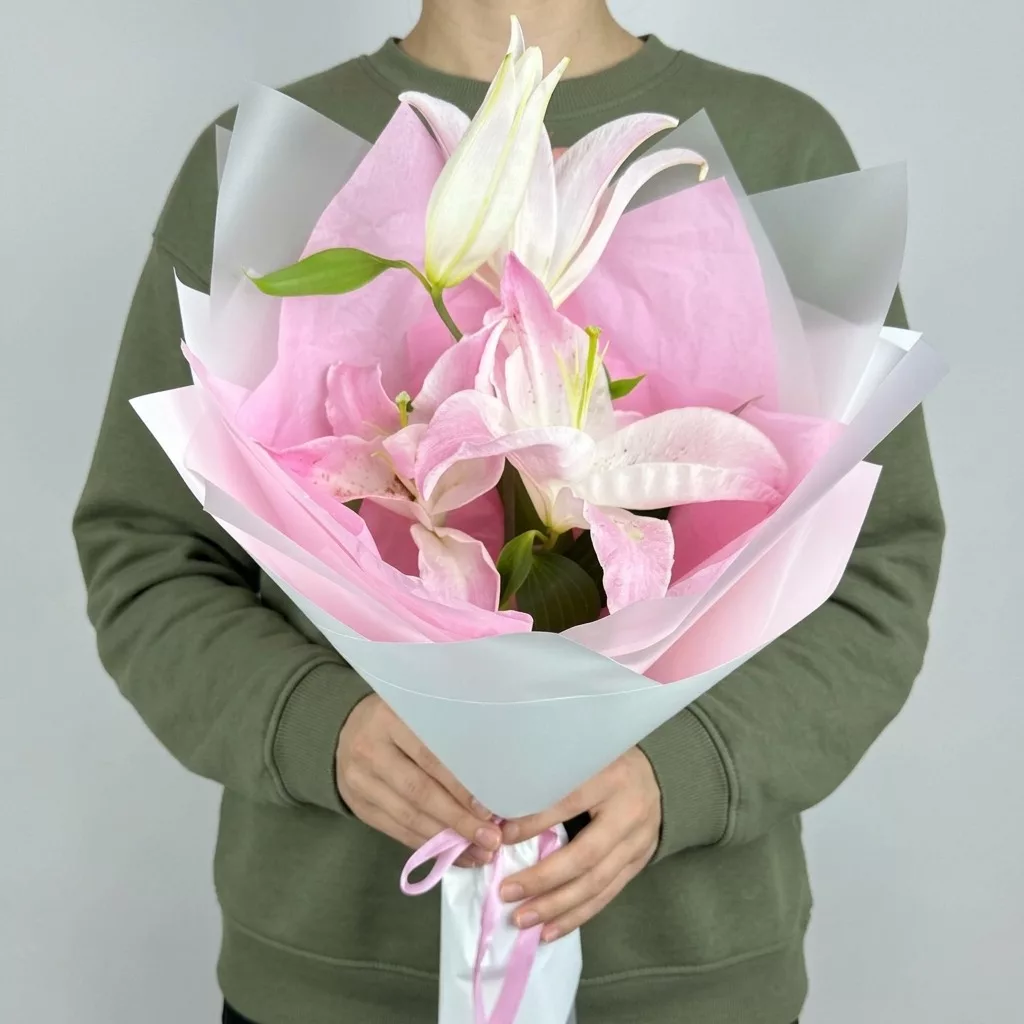
Bouquets we can deliver


Choosing the Right Occasion and Arrangement for a Russian Recipient
Russian flower culture has its own rhythms, and understanding them helps you choose something that will genuinely move the person receiving it. Flowers are given far more frequently in Russia than in most Canadian contexts — for birthdays, professional milestones, school graduations, Women's Day on March eighth, and simply as a gesture of warmth when visiting someone's home. A large, generous arrangement is never considered excessive; it is read as sincere.
Odd numbers of stems are the traditional choice for celebratory occasions in Russia. A bouquet of eleven roses, fifteen tulips, or twenty-one mixed stems signals a gift rather than a formal tribute. Even numbers carry a different cultural weight, so when in doubt, go odd. If you are ordering for a woman's birthday, roses and peonies are perennial favourites. Spray roses mixed with lisianthus create a softer, more romantic feeling. For a colleague or teacher, a structured arrangement of chrysanthemums, alstroemeria, and seasonal greens reads as respectful and considered.
Think about what the recipient's home looks like. A minimalist apartment in central Saint Petersburg suits a tight, architectural arrangement — think garden roses and eucalyptus in a single tonal palette. A warmer, more traditional home welcomes something fuller and more colourful. When you leave a note in the order comments describing the person and the occasion, a good florist will use that information to make choices that feel personal rather than generic.
How to Write a Russian Delivery Address Correctly
This is where many international orders go wrong, and it is entirely avoidable. Russian addresses follow a specific order that is the reverse of the Canadian convention. In Canada you write the recipient's name first, then the street and number, then the city. In Russia the formal order runs from largest to smallest: country, city, street, building number, apartment number, and finally the recipient's name. When filling in an online order form, pay attention to which field is asking for what.
Saint Petersburg addresses often include a building corpus number, written as korpus or abbreviated as k, which refers to a specific block within a larger housing complex. If the recipient has given you an address with a k after the main number, include it. Leaving it out can send the courier to the wrong entrance of a large residential compound.
The apartment or flat number, called kvartira in Russian, is equally important. Ground-floor commercial deliveries are simpler, but most residential deliveries in Russian cities go to apartment buildings, and the flat number is essential. If you are unsure of the exact flat number, contact the recipient discreetly or ask them to confirm the address without revealing the surprise.
For the phone number field, use the recipient's Russian mobile number in full international format, beginning with plus seven. Couriers in Saint Petersburg will call ahead to confirm delivery, so a working Russian number is not optional — it is the practical link that makes the delivery happen smoothly.
Payment Options for Canadian Senders
Paying for a flower delivery in Russia from a Canadian bank account is easier than most people expect, provided you use the right method. International credit cards — Visa and Mastercard issued by Canadian banks — work on Turboflora's website for most transactions. The charge will appear in rubles on your statement and your bank will convert it at the current exchange rate, typically adding a small foreign transaction fee depending on your card agreement.
Some Canadian banks have tightened their Russia-related transaction policies in recent years, which means a card may occasionally be declined at the payment stage even when the card itself is in good standing. If this happens, the most reliable workaround is to use a PayPal account linked to your Canadian card or bank account, as PayPal processes the transaction on its own infrastructure. Alternatively, some senders use travel-oriented cards or accounts that are specifically designed to handle international payments without friction.
When entering your billing address during checkout, use your Canadian address exactly as it appears on your card statement. Mismatches between the billing address and the card records are a common reason for declined payments, and correcting this detail resolves the issue in most cases.
It is worth placing your order with a small buffer of time specifically to allow for any payment troubleshooting. If you are ordering the evening before for a next-morning delivery in Russia, you have time to retry with a different payment method if the first attempt does not go through. Rushing payment at the last minute is where stress enters an otherwise simple process.
Seasonal Flowers and What Arrives Fresh in Russia
Russia's climate shapes what is available and what travels well. Saint Petersburg winters are long and cold, and while the city's flower market draws from Dutch and Ecuadorian growers year-round, the seasonal context still matters for freshness and presentation.
In winter months — November through March — roses, spray roses, chrysanthemums, alstroemeria, and orchids are the most reliably fresh choices. These varieties handle cool temperatures well and hold their form during transport. Tulips are available through much of the year from greenhouse growers and are enormously popular in Russia, particularly in February and March as Women's Day approaches. If you are ordering tulips in the depths of winter, they will be greenhouse-grown rather than field-cut, which means they open more slowly — a quality that actually extends their vase life.
Spring and early summer bring an abundance of peonies, which are perhaps the most beloved flower in Russian gifting culture. If you are ordering between late May and July, a peony-centred arrangement will feel genuinely seasonal and luxurious. Lisianthus, ranunculus, and garden roses are beautiful companions for peonies in this period.
Summer arrangements can include sunflowers, which are widely grown across Russia and carry a warm, generous feeling. Autumn is the season for dahlias, asters, and late roses. Whatever the season, specifying that you want the freshest available stems of a particular colour family — rather than locking in a specific variety — gives the florist room to choose what is at its best that day.
Making the Moment Land: Notes, Timing, and Small Details
The flowers are only part of what the recipient experiences. The note, the timing of arrival, and the small choices around presentation are what turn a delivery into a memory.
For the card message, write in whatever language feels most natural between you and the recipient. If you want to include a phrase in Russian but are not a Russian speaker, keep it simple and use a reliable translation tool for a short line — a single sentence in Russian followed by the rest in English is entirely acceptable and often touching. Avoid long machine-translated paragraphs, which can read awkwardly.
Timing the delivery to coincide with a specific moment adds real impact. A bouquet arriving just as someone sits down to breakfast on their birthday, or delivered to an office in the first hour of the working day so colleagues witness it, amplifies the gesture. When you place your order, use the delivery time window field to aim for this. Morning windows in Saint Petersburg run roughly from eight until noon local time.
If the delivery is a surprise and you are concerned about the recipient not being home, leave a note in the order comments asking the courier to call ahead about ten minutes before arrival. This gives the recipient time to come to the door without revealing exactly what is coming.
Finally, consider the vase. Most Russian apartments have at least one vase, but if you know the recipient has a small space or minimal decor, choosing an arrangement that arrives in its own vessel — a wrapped bouquet with a water-retaining base, or a compact box arrangement — removes any uncertainty and means the flowers look their best from the first moment.
Sending flowers from Canada to Russia is not nearly as complicated as the distance suggests. The time zone difference is the one thing that genuinely requires attention — get that right, place your order the evening before for a morning delivery, write the address with the flat number and a working Russian phone number, and choose varieties that suit the season and the person. Everything else follows naturally. The recipient in Saint Petersburg or Moscow will open the door to something fresh, fragrant, and entirely personal, and they will know that someone on the other side of the world was thinking of them carefully enough to make it happen.
Frequently asked questions
What is the latest I can order from Canada for same-day delivery in Saint Petersburg?
Because Saint Petersburg is eight to eleven hours ahead of Canadian cities, same-day delivery requires ordering well before midday Russia time. From Toronto that means placing your order by roughly two or three in the morning at the latest. Most Canadian senders find it far simpler to order the evening before and select a morning delivery window for the following day in Russia.
Do I need to speak Russian or know Russian customs to place an order?
No. The Turboflora website handles international orders and the order form is available in English. The one cultural point worth remembering is that celebratory bouquets in Russia traditionally use an odd number of stems. Beyond that, describing the person and occasion in your order comments is enough for the florist to make appropriate choices on your behalf.
My Canadian credit card was declined. What should I do?
Some Canadian banks flag Russia-related transactions automatically. Try completing the payment through a PayPal account linked to your Canadian card or bank account, as this routes the transaction differently. Also double-check that your billing address matches exactly what your bank has on file — even a small mismatch in postal code or street abbreviation can trigger a decline.
What if the recipient is not home when the flowers arrive?
Leave a note in the order comments asking the courier to call the recipient approximately ten minutes before arrival. This gives them time to come to the door. Make sure the Russian mobile number you provide is current and reachable. If the recipient truly cannot be home during the chosen window, you can select a different delivery time when placing the order.
Can I write the card message in English even though the recipient lives in Russia?
Absolutely. Many Russians read English, and a heartfelt message in your own language will always feel more genuine than a stiff machine translation. If you want to include a short phrase in Russian, keep it to one simple sentence and use a trusted translation tool. A mix of both languages on the same card is warm and perfectly acceptable.
Ready to send flowers?
Pick the city, choose the bouquet, and a local florist takes it from there.
Choose a city →