How to Send Flowers to Russia from Finland: Timing, Payment and What to Expect
You are sitting in Helsinki or Turku, and someone you care about is celebrating a birthday in Saint Petersburg — maybe a parent, a partner, a colleague you worked with for years. The distance feels real, but the gesture does not have to. Sending flowers across the Finnish-Russian border is entirely possible, and when it is done right, a bouquet of garden roses or white peonies arrives at the door within hours, as fresh as if you had carried it yourself. What you need is a clear picture of how the process works from your side of the border.
Why Distance Does Not Diminish the Gesture
There is something particular about receiving flowers when the sender is far away. The bouquet says: I thought of you specifically, I made an effort, and I timed it for this moment. For a recipient in Saint Petersburg, that meaning lands just as fully whether the order was placed from Espoo or from across town. Russians mark occasions generously — birthdays, anniversaries, professional milestones, the first day of school in September, International Women's Day on the eighth of March. Arriving empty-handed, even from a distance, is noticed. Arriving with flowers is remembered.
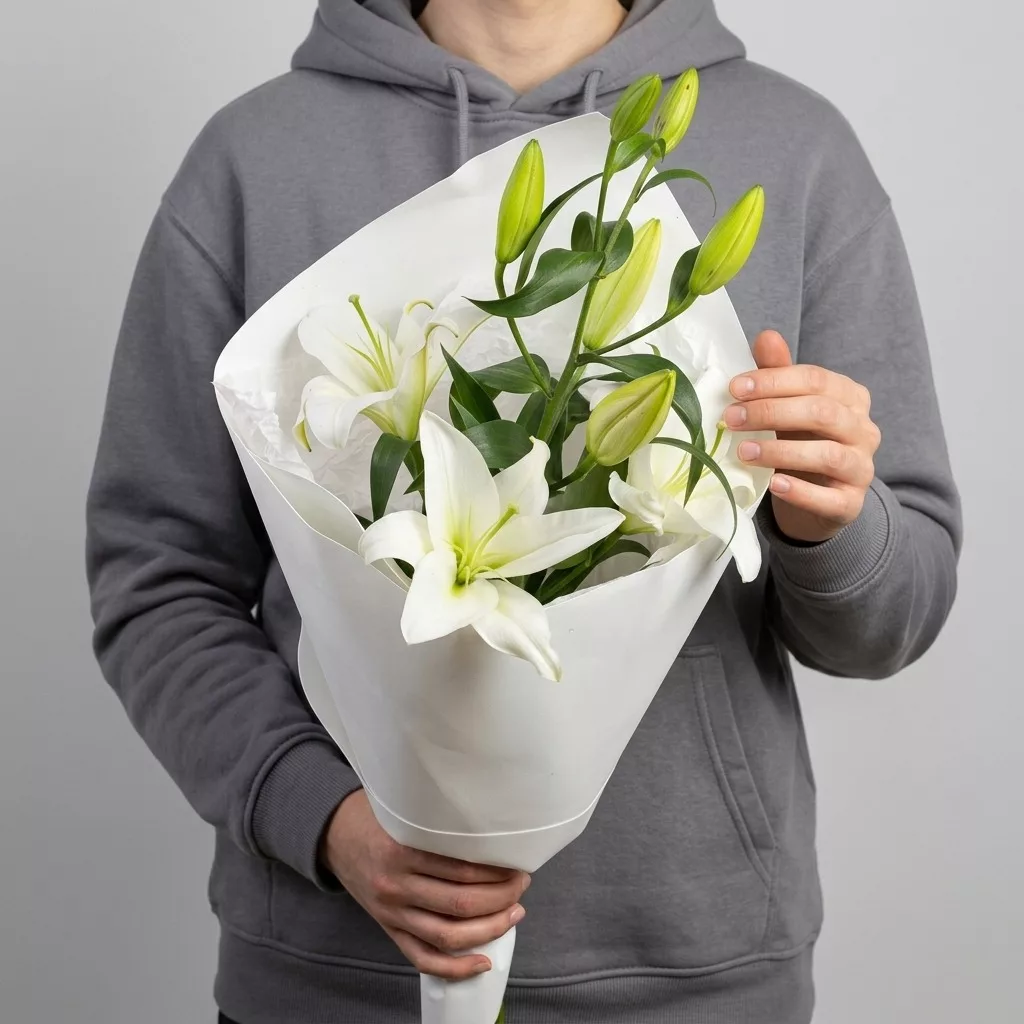
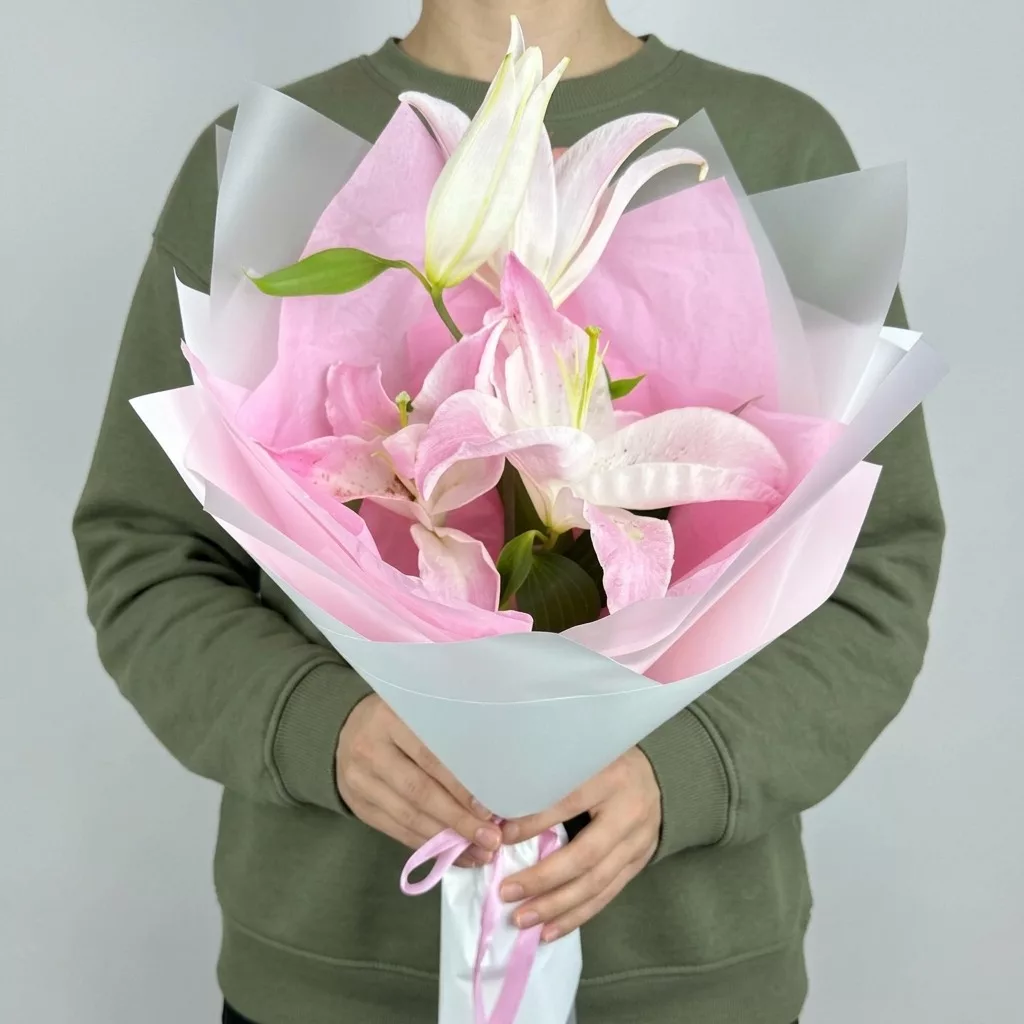
The varieties that read as genuinely celebratory in Russian culture are worth knowing. Roses remain the benchmark — red for deep affection, white and cream for elegance, coral and peach for warmth that is not quite romantic. Peonies carry enormous weight in late spring and early summer. Chrysanthemums, tulips, and ranunculus all work well for lighter occasions. Lilies are widely appreciated but worth combining with something softer so the arrangement does not feel too formal.
One detail that surprises many senders from Finland: in Russia, bouquets are traditionally given in odd numbers. This is not superstition to dismiss — it is simply the done thing, and a florist who knows the market will already count accordingly. If you are ordering online from abroad, it is worth confirming that the shop follows this convention. A good florist does it automatically.
Bouquets we can deliver


Understanding the Timing Window from Finland
Finland and Saint Petersburg share a border and a time zone difference of just one hour — Finland is one hour ahead of Moscow time for most of the year. This is genuinely helpful when you are trying to hit a specific moment: a morning delivery before a birthday lunch, an afternoon arrival before a dinner celebration. The gap is small enough that you can place an order during your own working day and still catch the recipient at a reasonable hour.
Turboflora delivers across Saint Petersburg within one to two hours of order confirmation. That means if you place an order at noon Finnish time, the bouquet can realistically be at the door by early afternoon Saint Petersburg time. For same-day delivery, placing the order before early afternoon local time gives the most comfortable window. Evening deliveries are possible but it is always wiser to order with a margin rather than cutting it close, especially if the occasion has a fixed start time.
Seasonal timing also affects what is available and how it travels. Winter in Saint Petersburg is genuinely cold — temperatures regularly fall below minus ten Celsius from December through February. Flowers delivered in those conditions need to be wrapped properly and moved quickly between warmth and cold. Roses and spray chrysanthemums handle winter transport well. Tropical varieties like anthuriums can suffer in extreme cold if the handoff is slow. In summer, the opposite challenge appears: heat accelerates wilting, so same-day delivery matters even more. Ordering with a short lead time in warm months is always the better choice.
How to Write a Russian Address Correctly
This is where many international orders go wrong, and it is entirely avoidable. Russian addresses follow a specific structure that differs from Finnish conventions, and if the address arrives at a florist garbled or incomplete, the delivery is delayed or fails entirely. Getting this right from the start saves everyone frustration.
A complete Russian address includes: the city, the district if the city is large, the street name, the building number, the apartment or office number, and the postal code. In Russian postal convention, the order runs from largest to smallest — country, city, street, building, apartment. When writing in Latin characters for an international order form, keep the same information but write it in the order the florist can work with: street first, then building number, then apartment, then city, then postal code.
Saint Petersburg has a particular complexity: many buildings have a korpus, which is a secondary building number within the same plot, written as something like building 14, korpus 2, apartment 56. If your recipient's address includes a korpus number, include it — leaving it out sends the courier to the wrong entrance or the wrong building entirely.
Always ask the recipient for their full address in advance rather than reconstructing it from memory or a messenger chat. A screenshot of their address as they have it saved on their own phone is the most reliable source. Include a working Russian mobile number for the recipient. Couriers in Saint Petersburg will call ahead, and if the number is wrong or unreachable, the delivery stalls. A Finnish number for you as the sender is also useful as a backup contact.
Payment from Finland: What Actually Works
Paying for a flower delivery in Russia from Finland requires a little preparation, but it is not complicated once you know what to expect. The key issue is that standard card payment flows between Finnish banks and Russian merchants have been affected by the broader restrictions on cross-border financial transactions that came into force in 2022. Not every payment method that works in Finland will process smoothly on a Russian retail site.
Turboflora accepts payment through methods that are accessible to international senders. The clearest path is to check the payment options on the site before you begin building your order — this avoids the frustration of completing a selection and then finding your card is declined at checkout. Cards issued by major international networks may or may not process depending on your bank's own settings for cross-border transactions to Russia. Some Finnish banks flag these transactions for manual review, which can add a delay.
If a direct card payment does not go through, contacting the shop directly by phone or through the site's messaging channel is the most efficient next step. A human conversation resolves payment questions far faster than retrying a card multiple times. The shop can advise on the current working methods without you having to guess.
One practical note: currency. The order will be priced in Russian rubles. The amount you see in rubles will be converted by your bank at its current rate, and your bank may add a foreign transaction fee. This is standard for any cross-border purchase and is worth factoring in when you are thinking about budget. The ruble equivalent of what you want to spend is easy to check with any currency converter before you order.
What the Recipient Experiences at the Door
Thinking about the moment of delivery from the recipient's perspective makes the whole order feel more intentional. In Saint Petersburg, residential deliveries typically involve a courier calling the recipient's mobile number when they arrive at the building entrance. Most apartment buildings have an entry code or an intercom system, and the courier will need either the code or for the recipient to buzz them in. This is why a working mobile number is not optional — it is the mechanism that makes the handoff happen.
If you want the delivery to be a surprise, there is a workaround: arrange for a family member or a neighbor who is in on the plan to receive the bouquet, or time the delivery for when you know the recipient will be home and reachable. Asking the recipient to simply be home between certain hours, without explaining why, is a classic approach. Couriers are experienced with surprise deliveries and will not announce the sender if you ask them not to.
The bouquet itself will arrive wrapped and ready to present. Russian florists typically use kraft paper, fabric wrapping, or a combination, with the stems in a water-retaining wrap for transit. This matters in both winter and summer — the stems stay hydrated during the delivery window so the flowers arrive looking as they did when they left the shop. If you have added a card message, it will be attached to the outside of the wrapping so the recipient sees it immediately. A short, warm message in Russian or English is equally appreciated — the feeling in the words matters more than the language.
Keeping the Flowers Fresh After Arrival
A bouquet that arrives beautifully and then wilts within two days is a missed opportunity. Sharing a few simple care notes with your recipient — even just a short message after the delivery — extends the life of the flowers and keeps the gesture present in their home for longer. This is especially worth doing if you are sending something that requires a little attention, like roses with multiple layers of petals or lilies that are still in bud.
The first step is always a fresh cut. The stems should be trimmed at an angle under water or immediately before going into the vase, removing about two centimetres from the bottom. This opens the stem's vascular tissue and lets it draw water properly. A clean vase matters too — residue from a previous arrangement carries bacteria that shorten vase life significantly.
Water temperature makes a difference by variety. Most flowers prefer cool to room-temperature water. Tulips in particular drink quickly and need the vase topped up daily. Roses last longest when kept away from direct sunlight and heat sources — in a Saint Petersburg apartment in winter, this usually means keeping them away from the radiator, which is often the warmest spot in the room.
Removing lower leaves that sit below the waterline prevents rot and keeps the water cleaner. Changing the water every two days, with another small trim of the stems each time, can add three to five days to the overall vase life. Lilies will continue to open from bud over several days, which means the arrangement actually looks fuller and more impressive a day or two after arrival than it did at the door — a quality worth mentioning to your recipient so they know what to expect.
Sending flowers from Finland to Saint Petersburg is a real and reliable thing to do, not a complicated international logistics exercise. The time zone difference is small, the delivery window is tight and fast, and the moment when someone opens their door to a bouquet of fresh roses or peonies is exactly what you imagined it would be. What it takes from your side is accurate information — a complete address, a working phone number, a payment method that processes — and a florist who handles the rest with the same care they would give to any local order. The distance between Helsinki and Saint Petersburg is about 400 kilometres. A well-chosen bouquet covers it in under two hours.
Frequently asked questions
Can I order flowers for same-day delivery to Saint Petersburg from Finland?
Yes. Because Finland is only one hour ahead of Saint Petersburg, placing an order in the morning or early afternoon Finnish time gives a comfortable same-day window. Turboflora delivers within one to two hours of order confirmation across the city, so a midday order from Helsinki can reach a Saint Petersburg recipient well before evening.
What if my recipient is not home when the flowers arrive?
The courier will call the recipient's mobile number on arrival. If there is no answer, the courier will typically try again and may wait briefly. For surprise deliveries, it helps to have a trusted person at the address ready to receive. Always provide an accurate, active Russian mobile number for the recipient when placing the order — this is the most important piece of information for a smooth handoff.
Do I need to write the address in Russian, or is Latin script acceptable?
Latin script is fine when ordering through the site, but the address information itself must be complete and accurate. Include the street name, building number, korpus number if there is one, apartment number, and postal code. An incomplete address in any script causes delays. The safest approach is to ask your recipient to send you their address exactly as they would write it themselves.
Are there flowers I should avoid sending for certain occasions in Russia?
Even numbers of flowers are traditionally associated with mourning in Russian custom, so bouquets are given in odd numbers — a good florist will already know this. Yellow flowers carry a mixed reputation in some regions, though this varies by generation and personal feeling. When in doubt, roses, peonies, or a mixed seasonal bouquet in warm tones are universally well received for celebratory occasions.
How do I include a personal message with the bouquet?
When placing your order, there is a field for a card message. Write whatever feels right — a few warm sentences are more meaningful than a long paragraph. The message can be in English or Russian; both are perfectly understood and appreciated. The card is attached to the wrapping so the recipient sees it the moment the bouquet is handed over, before they even unwrap it.
Ready to send flowers?
Pick the city, choose the bouquet, and a local florist takes it from there.
Choose a city →