How to Send Flowers from Germany to Russia Without the Guesswork
Someone you love is in Saint Petersburg, Moscow, or another Russian city, and you are sitting in Berlin, Hamburg, or Munich wondering whether a bouquet can actually reach them today. It can. The distance feels enormous, but the order itself takes about five minutes — if you know what to prepare before you start. This guide walks you through every practical step: when to order, how to pay from a European bank, how to write a Russian address so it reaches the right door, and which flowers will still look beautiful after the courier hands them over.
Understanding the Time Difference Before You Order
The single most common mistake senders from Germany make is ordering at what feels like a reasonable afternoon hour and then being surprised that delivery cannot happen until the following morning. Saint Petersburg is two hours ahead of Central European Time, and Moscow is three hours ahead. That gap matters enormously when you want same-day delivery.
Turboflora delivers within one to two hours of a confirmed order, but the order still needs to arrive while the working day has capacity to handle it. If you are in Frankfurt at four in the afternoon, it is already six or seven in the evening in Saint Petersburg. Placing an order at that moment means planning for the next morning, not the same evening.
The practical rule is simple: place your order before one o'clock in the afternoon German time if you want delivery on the same calendar day in Saint Petersburg. For birthdays, anniversaries, or any occasion with a fixed date, ordering the evening before from Germany is actually the safest approach. You choose the delivery window, the bouquet is prepared fresh that morning, and it arrives exactly when you intended.
If the occasion is a surprise, timing becomes even more important. Think about when your recipient is actually home. A delivery to a residential address at nine in the morning works only if someone is there to open the door. Discuss this with yourself honestly before you confirm the slot, and leave a note in the order comments if there is a preferred window.
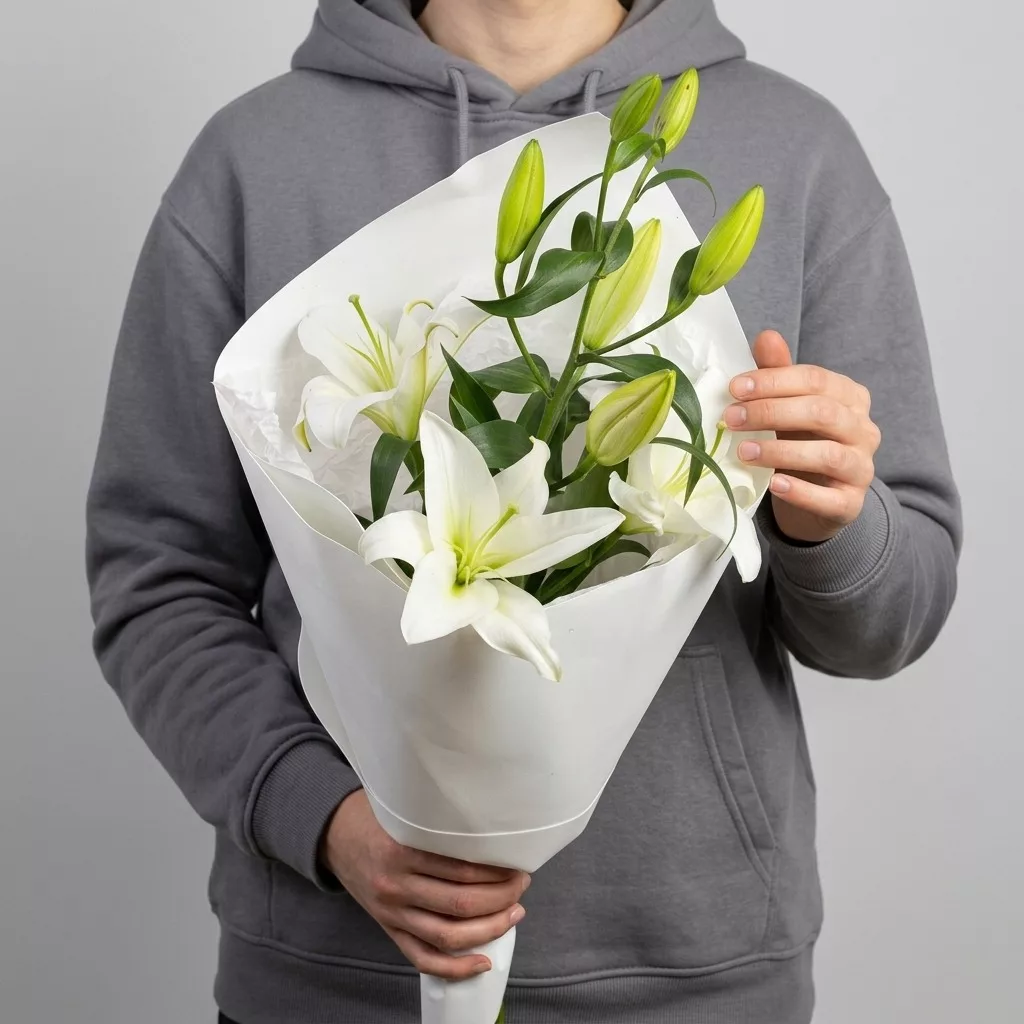
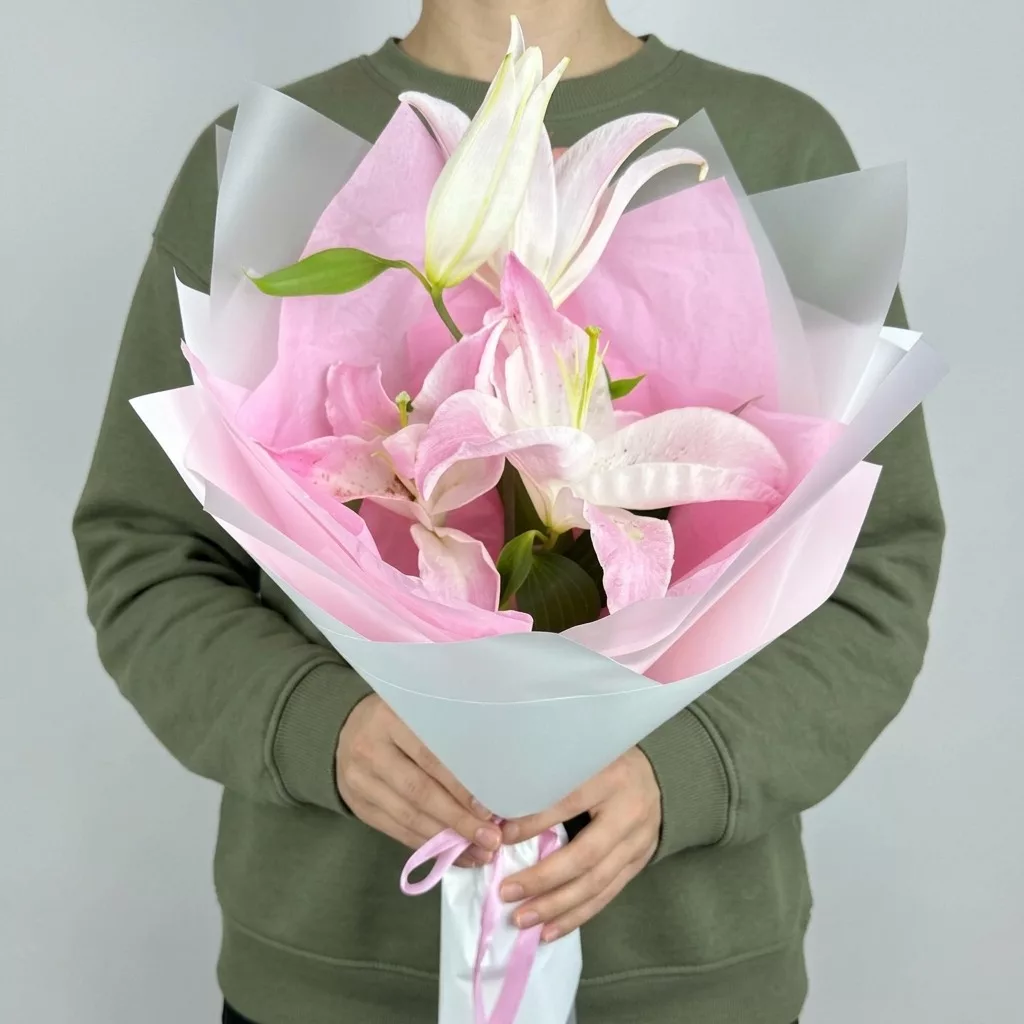
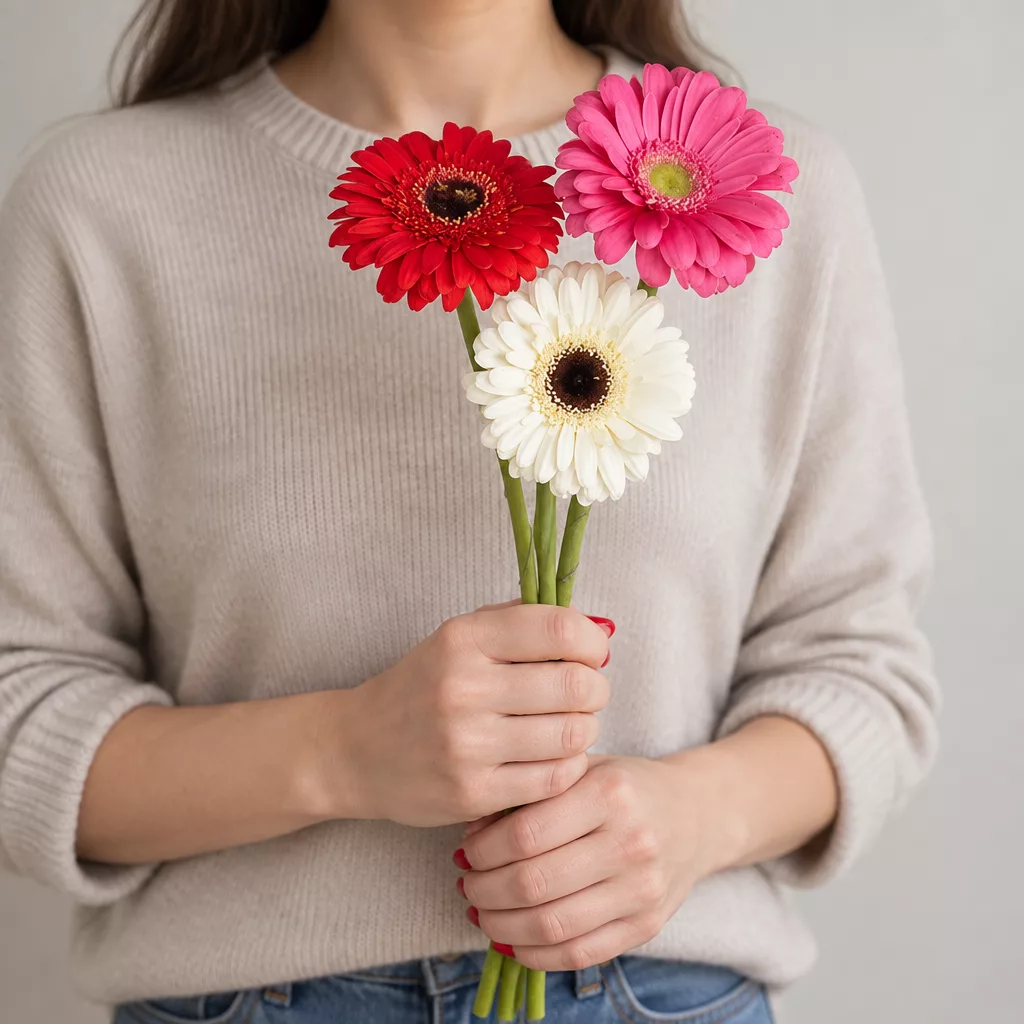
Bouquets we can deliver

How to Write a Russian Address When You Are Ordering Abroad
A Russian address written incorrectly is the most frequent reason a delivery is delayed or requires a phone call to clarify. Russian addresses follow a different sequence from German ones, and the terminology can be unfamiliar if you have never lived there.
The correct order for a Russian address runs from largest to smallest: city, then district if relevant, then street name, then building number, then apartment or office number. In Russian postal tradition, the building number sometimes includes a letter or a secondary number separated by a slash, indicating a specific block within a larger complex. This is called a korpus. If your recipient lives in building 14, korpus 2, apartment 37, you need all three of those numbers.
When filling in the address field on an international order, write it in Latin characters if you are not comfortable with Cyrillic, and our team will verify the details. What matters most is that the apartment number and the building number are both present and separated clearly. A street name alone is never enough.
Always include the recipient's mobile phone number. Russian couriers will call ahead when they are a few minutes away, especially for residential deliveries. Without a working local number, even a perfectly written address can cause a delay. If you only have a WhatsApp number registered to a German SIM, mention that in the comments and provide it anyway — it is still useful for coordination.
If you are sending to a workplace, include the company name and floor number. Office buildings in Russian cities often have security desks that require this information before allowing a courier through.
Payment from a German Bank: What Actually Works
Paying for a flower delivery in Russia from a German bank account is a genuine practical concern in the current environment, and it is worth addressing honestly rather than glossing over it. Standard SWIFT transfers between European and Russian banks face restrictions, and many German debit and credit cards issued by major banks are not accepted by Russian payment terminals or standard online gateways.
Turboflora accepts payment through methods that work for international customers. The most reliable options for senders based in Germany are payment by card through an international payment processor that supports cross-border transactions, or payment via systems that remain accessible from Europe. When you reach the checkout, the available options are displayed clearly, and you will see which ones apply to your location.
One approach that many customers from Germany use successfully is paying through a card issued by a bank that was not subject to the 2022 restrictions — some smaller European banks and neobanks still process these transactions without issues. Revolut accounts, for example, have worked for some customers, though card acceptance can change and it is always worth having a backup option ready.
If you encounter a declined payment, the most straightforward solution is to contact us directly before giving up. Our team can advise on the current working methods and, in some cases, arrange an alternative payment path. The goal is always to make sure the flowers arrive on time, and we are accustomed to helping international senders navigate this step without fuss. Do not let a payment screen be the reason someone does not receive flowers on their birthday.
Choosing Flowers That Travel Well to a Russian Door
When you are ordering from another country, you cannot inspect the stems yourself, which means trusting the florist's judgment about what holds up beautifully under real delivery conditions. This is where knowing a little about flower behavior helps you choose confidently.
Roses are the most popular choice for delivery in Russia, and for good reason — a well-conditioned rose stem holds its form for seven to ten days when handled correctly. Ecuadorian roses in particular, with their large heads and sturdy stems, are a staple of Russian flower culture and look genuinely impressive in a box. Peonies, when in season from late spring into early summer, are another excellent choice: they are beloved in Russia and carry a lush, generous feeling that suits celebrations and expressions of affection equally well.
Chrysanthemums are extremely long-lasting and work beautifully as supporting flowers in mixed arrangements, though they rarely carry the emotional weight of roses or peonies on their own. Alstroemeria is another robust option — it travels well, opens gradually over several days, and adds color and movement to a bouquet without wilting quickly.
What to avoid if you want the arrangement to look its best on arrival: tulips in warm weather are fragile and droop quickly once cut; delicate garden flowers like sweet peas have a very short vase life. In the winter months, when temperatures in Saint Petersburg drop well below zero, cold-sensitive tropical flowers like anthuriums or orchid stems can suffer even in a short courier journey from a warm vehicle to a cold entrance hall. Seasonal, hardy varieties are always the safer and more beautiful choice.
Russian Flower Customs a Sender from Germany Should Know
Flowers carry specific cultural meaning in Russia, and a few of those conventions are different enough from German habits that they are worth knowing before you choose.
The most important custom is the odd-number rule. In Russia, even numbers of flowers are traditionally associated with mourning and are brought to funerals. A bouquet of ten roses or twelve tulips, which would seem perfectly normal in Germany, carries an uncomfortable connotation in Russia. Always choose an odd number: seven roses, nine stems, eleven peonies. This applies whether you are sending one flower or fifty. Turboflora's bouquets are always arranged with this in mind, but if you are specifying a custom quantity, keep it odd.
Red roses are associated strongly with romantic love in Russian culture — even more explicitly than in much of Western Europe. Sending red roses to a colleague or a distant relative can feel unexpectedly intimate. For friendships, professional appreciation, or family occasions, mixed bouquets, white flowers, or softer pastel combinations read more naturally.
Yellow flowers have a complicated reputation in some parts of Russian popular culture, where they are sometimes associated with separation or bad luck. This is a generational and regional belief rather than a universal rule — many younger Russians do not follow it at all — but if you are unsure of your recipient's sensibilities, a mixed arrangement that uses yellow as an accent rather than the dominant color is a comfortable middle ground.
Presentation matters enormously in Russia. A beautifully wrapped bouquet with a ribbon and a handwritten card is not considered excessive — it is expected and appreciated. Mentioning a personal message when you order is always worthwhile.
How to Care for the Bouquet Once It Arrives
Part of a thoughtful gift is making sure the recipient knows how to keep it looking beautiful. When you place the order, you can include care instructions in the card message, or simply share these points with them directly.
The first thing to do when a fresh bouquet arrives is to recut the stems at an angle under running water or while submerged in a bowl. Even a small fresh cut — two centimeters is enough — opens up the stem tissue and dramatically improves water uptake. Scissors work, but a sharp knife gives a cleaner cut that does not compress the stem.
Roses and most cut flowers prefer cool conditions. A room temperature of around eighteen to twenty degrees Celsius is comfortable; a warm apartment with the heating running at full power in a Russian winter will shorten vase life noticeably. Keeping the vase away from radiators and direct sunlight adds days to the bouquet's life.
Change the water every two days and rinse the vase each time. Bacteria build up quickly in flower water and block the stems. If a sachet of flower food was included with the delivery, dissolve it in the first fill of water — it contains a mild acidifier and sugar that genuinely extend freshness.
For peonies specifically, if the blooms arrive tightly closed, a gentle warm-water soak of the stem ends for twenty minutes encourages them to open. For roses that arrive slightly soft after a cold delivery, a full stem submerged in cool water for an hour usually revives them well. These are not tricks — they are standard florist practice, and they work.
Sending flowers from Germany to Russia asks a little more of you than a local order, but the result — a fresh, beautifully wrapped bouquet arriving at exactly the right moment — is entirely worth the few extra minutes of preparation. Get the time zones right, write the address completely, choose an odd number of seasonal flowers, and leave a personal message. Those four things cover almost everything that makes a delivery from abroad feel as warm and considered as if you had chosen the bouquet yourself.
Frequently asked questions
Can I order flowers for delivery in Russia today if I am in Germany?
Yes, same-day delivery is possible if you place your order before approximately one o'clock in the afternoon German time. Russia is two to three hours ahead, so afternoon orders from Germany typically arrive the following morning. For birthdays or fixed occasions, ordering the evening before is the most reliable approach and gives you a wider choice of delivery windows.
Why do Russian bouquets always have an odd number of flowers?
In Russian tradition, even numbers of flowers are associated with mourning and are brought to funerals. An odd number — seven, nine, eleven stems — is used for all celebratory and affectionate occasions. This is a deeply held cultural convention across generations, and Turboflora always follows it. If you are specifying a custom quantity, keep the number odd.
What information do I absolutely need to provide for a delivery address in Russia?
You need the city, street name, building number, korpus number if applicable, and apartment or office number. A working Russian mobile phone number for the recipient is equally essential, as couriers call ahead on arrival. For workplace deliveries, include the company name and floor. Missing any of these details is the most common cause of delivery delays.
Which flowers are best to send in winter when temperatures in Saint Petersburg are very low?
Roses, chrysanthemums, and alstroemeria handle cold transit well and are excellent winter choices. Avoid tropical varieties like anthuriums or delicate orchid stems, which can suffer even in a brief exposure to freezing temperatures between a warm vehicle and a cold building entrance. Seasonal and hardy varieties always arrive in better condition during the Russian winter months.
Can I include a message card in a language other than Russian?
Absolutely. You can write your message in German, English, or any language you choose, and we will include it exactly as written on the card. If you would like the message translated into Russian so your recipient can read it in their own language, mention this in the order comments and we will do our best to help with a straightforward translation.
Ready to send flowers?
Pick the city, choose the bouquet, and a local florist takes it from there.
Choose a city →