Sending Flowers to Russia from Italy: What Actually Happens Step by Step
You are sitting in Milan or Rome, thinking about someone in Saint Petersburg or Moscow — a birthday, an anniversary, a moment you want to mark from thousands of kilometres away. The good news is that distance is genuinely not the obstacle it used to be. What matters now is knowing a few practical things before you place the order: when to do it, how to pay from an Italian bank, what address format Russian couriers actually need, and which flowers will still look beautiful after travelling across a city in a Russian winter or summer. Get those details right and the person opening the door will have no idea the order came from another country entirely.
Understanding the Time Difference Between Italy and Russia
The first thing to sort out before anything else is the clock. Saint Petersburg and Moscow run on Moscow Time, which sits two hours ahead of Central European Time in winter and three hours ahead during the Italian summer, because Russia does not observe daylight saving. That gap is small enough to feel manageable but large enough to catch you out if you are ordering at what feels like a reasonable evening hour in Italy.
If you place an order at nine in the evening from Florence, it is already eleven at night in Saint Petersburg. Our couriers deliver from early morning until late evening, so a same-day order placed that late from Italy would be scheduled for the following morning. Plan for this. If you want flowers to arrive at a specific moment — say, before a birthday lunch — count forward by two or three hours depending on the season and place the order accordingly.
The safest approach is to order the morning before the occasion, Italian time. That gives you the full Russian delivery window to work with and leaves room for any last-minute message changes or address corrections. We always confirm the delivery window with the sender, so you will know exactly when to expect the recipient's reaction. Keep a note of the time zone difference and the whole process becomes straightforward.
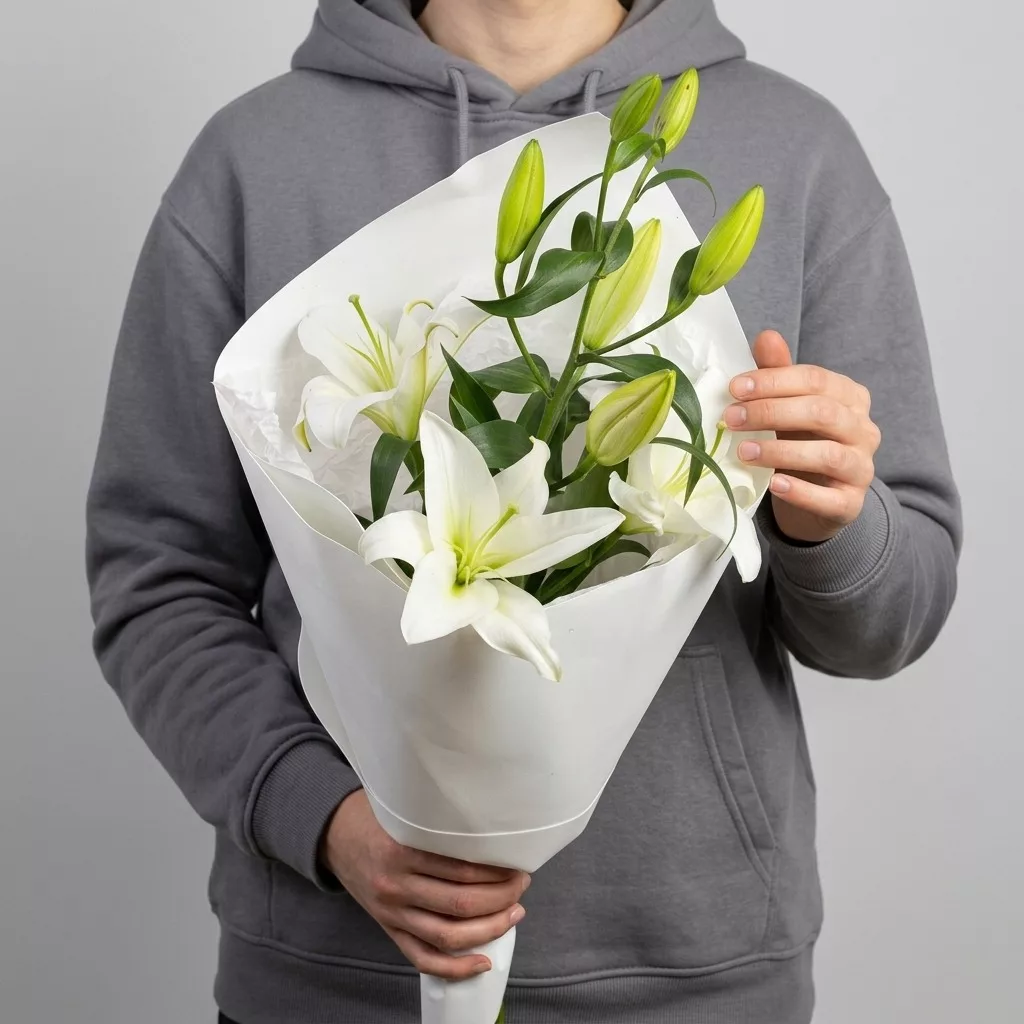
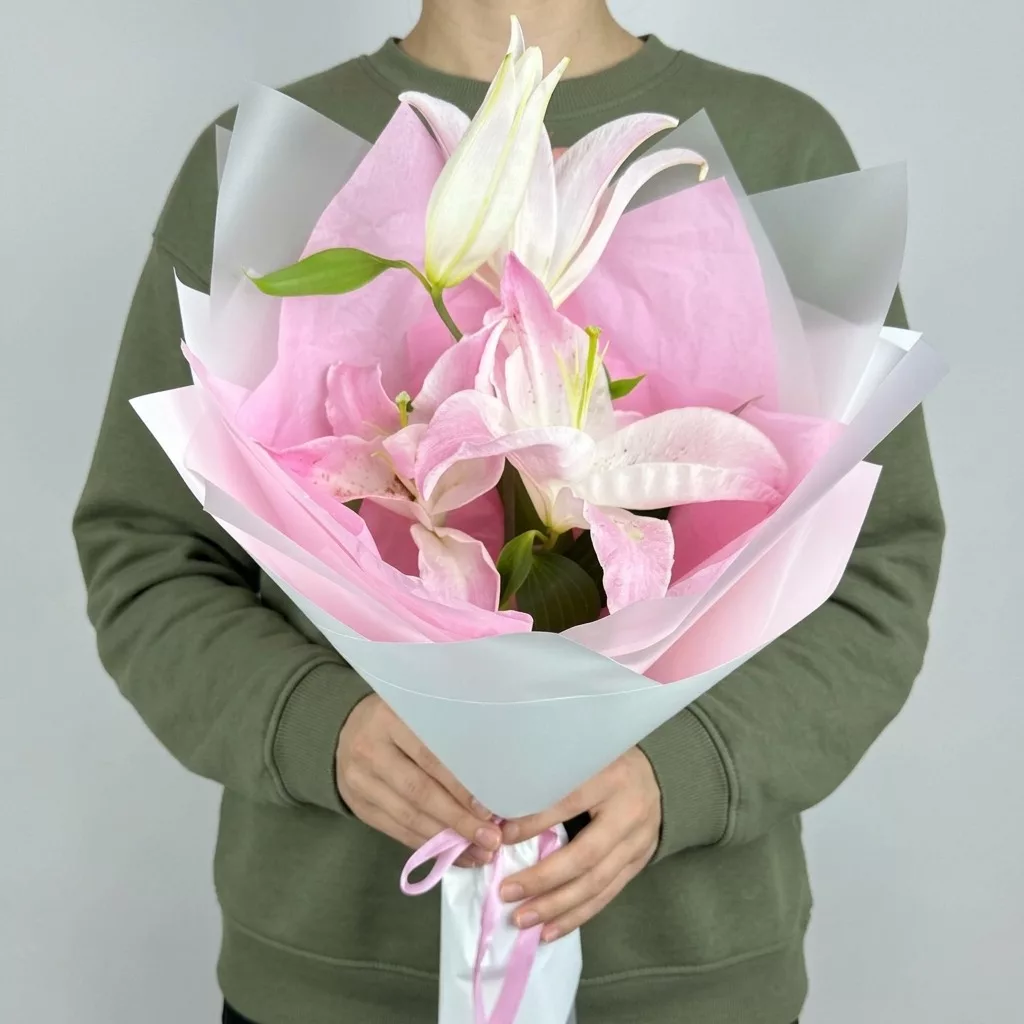
Bouquets we can deliver


How to Write a Russian Address Correctly
This is where most international orders go wrong, and it is entirely avoidable. Russian addresses follow a specific order that is the reverse of what Italian senders are used to. In Russia the format runs from largest to smallest: city, then district if relevant, then street name, then building number, then apartment number. The apartment number is critical — without it a courier arriving at a large residential block has no way to reach the recipient.
For a flat in a multi-storey building you also need to know whether there is an entrance number, called a podyezd in Russian. Many Soviet-era buildings have four, six or even eight separate stairwells, each with its own door code or intercom. If you know the entrance number and the door code, include them. If you do not, ask the recipient's friend or family member before placing the order — do not guess.
For office deliveries, include the company name and floor number alongside the street address. Receptionists in Russian offices will often call the recipient directly, so a full name is essential. Write the recipient's name in the Latin alphabet exactly as they use it — our team will transliterate it into Cyrillic for the courier.
When filling in the address field on our website, use Latin characters throughout. Our florists read both scripts and will format the address correctly for the Russian courier system. A complete address with building, apartment, entrance and floor turns a complicated delivery into a smooth one.
Payment from an Italian Bank: What Actually Works
Paying for a flower delivery in Russia from an Italian account is simpler than many people expect, provided you use the right method. Standard European bank cards — Visa and Mastercard issued by Italian banks — work on our international checkout. The transaction processes in euros and is converted at the current rate. You do not need a Russian account, a Russian phone number or any special setup.
What does not work is trying to use payment methods that are region-locked. Some digital wallets and buy-now-pay-later services are not available for cross-border transactions into Russia, so if your usual Italian checkout method is declined, switch to a standard debit or credit card. Most Italian Visa and Mastercard debit cards issued by major banks process without any issue.
Your bank may flag the transaction as international and send a verification message. This is normal. Keep your phone nearby when you check out so you can approve the payment immediately through your bank's app or by SMS. If the first attempt is declined, do not try repeatedly — contact your bank first to whitelist the transaction, then complete the order.
We recommend saving your order confirmation email. It contains the order number, the scheduled delivery window and a contact address for any changes. If you need to update the recipient's phone number or add a note after payment, email us with the order number and we will handle it quickly. The earlier you send any changes, the easier it is to act on them before the bouquet leaves our studio.
Choosing Flowers That Travel Well and Feel Right for Russian Occasions
Not every flower suits every occasion in Russia, and some varieties simply hold up better than others when a courier is navigating city traffic in July heat or January frost. Roses are the most universally appropriate choice — they are expected at birthdays, celebrations and romantic moments, and they last well in the cold. Peonies are beloved in Russia but have a short season in late spring and early summer; outside that window they are imported and expensive. Chrysanthemums are everyday flowers in Russia and carry no negative connotation the way they might in parts of Italy.
One custom worth knowing: Russians traditionally give flowers in odd numbers. Even numbers are associated with mourning, so a bouquet of twelve roses would feel wrong to a Russian recipient in a celebratory context. Our florists already account for this, but if you specify a quantity, make it odd — seven, nine, eleven or fifteen stems.
For winter deliveries in Saint Petersburg, where temperatures drop well below zero, we wrap bouquets in insulating kraft paper and use thermal sleeves for delicate varieties like tulips and ranunculus. These flowers are beautiful but sensitive to cold shock. Roses, alstroemeria and eustoma handle Russian winters more reliably and still look lush and full when they arrive.
If you want something seasonal and genuinely striking, ask for a mixed bouquet built around what is at its best that week. We select combinations that work as a whole rather than individual stems, so the colours and textures complement each other rather than simply sitting side by side.
Writing a Card Message Across a Language and Cultural Gap
The card is often what the recipient reads first and remembers longest, so it deserves as much thought as the flowers themselves. You can write your message in Italian, English or Russian — we will print it exactly as you type it. If you write in Italian, consider whether your recipient reads Italian comfortably. Many Russians of the younger generation read English well; older recipients may prefer Russian.
If you want to write in Russian but do not speak it, keep the message simple and use a transliteration tool or ask a Russian-speaking friend to help. A short, sincere message in Russian will almost always land better than a long, elaborate one in a language the recipient struggles with. Our team can also help with simple translations if you contact us before placing the order.
Russian card culture tends toward warmth and directness. Phrases that wish health, happiness and love are genuinely appreciated and not considered clichéd. It is completely normal to write something like wishing you all the best on this day and many more like it — that kind of warmth is expected rather than sentimental.
Avoid humour that relies on cultural references the recipient may not share. What reads as charming irony in Italian can feel confusing when translated literally. Stick to what you actually feel. The flowers will carry the visual impact; the card just needs to tell the person who sent them and why. That combination — a beautiful bouquet and a message that means something — is what makes a delivery from abroad feel personal rather than transactional.
What Happens on Delivery Day: Tracking and Recipient Contact
Once your order is confirmed, our florists begin preparing the bouquet on the morning of the delivery date. For same-day orders placed early enough, the bouquet goes out within a few hours of being assembled. We contact the recipient by phone before the courier arrives — this is standard practice in Russia, where many apartment buildings require someone to be present to buzz the courier through the entrance.
This means the recipient's phone number is not optional. A mobile number that accepts calls and SMS messages in Russia is essential. If the recipient is not answering — perhaps they are in a meeting or have their phone on silent — our courier will try again and leave a message. We do not leave bouquets unattended outside apartment doors.
As the sender, you will receive a delivery confirmation once the flowers have been handed over. If you are in Italy and the delivery is happening mid-afternoon Russian time, that confirmation may arrive during your own morning. Keep an eye on the email address you used for the order.
If the recipient is not available at the scheduled time and cannot be reached, we will contact you to arrange a new delivery slot. This rarely happens, but it is worth letting the recipient know roughly when to expect something — you do not need to spoil the surprise entirely, just mention that they should keep their phone close that afternoon. A little coordination from your side makes the moment much smoother for everyone involved.
Sending flowers from Italy to Russia is genuinely straightforward once you have the right information in front of you. The time difference is small, the payment process works with a standard Italian card, and a correctly written address with apartment number and entrance details is all the courier needs. Choose varieties suited to the season and the occasion, remember the odd-number custom, and write a card that says what you actually mean. The recipient in Saint Petersburg or Moscow will open the door to a fresh bouquet assembled that same morning, with no trace of the distance it took to arrange it.
Frequently asked questions
How far in advance should I order from Italy to ensure same-day delivery in Russia?
Because Russia is two to three hours ahead of Italy depending on the season, order by midday Italian time to be confident of same-day delivery. Orders placed in the Italian evening will typically be scheduled for the following morning in Russia. If the occasion has a specific time — a lunch or a party — order the day before to be safe.
Do I need to speak Russian to place an order on the Turboflora website?
No. The ordering process works in English and our team reads messages in both English and Italian. You can write your card message in whichever language your recipient reads best. If you want help phrasing something in Russian, contact us before placing the order and we will assist you.
Why do Russian bouquets traditionally have an odd number of flowers?
Even numbers of flowers are associated with mourning in Russian tradition and are brought to funerals. For any celebratory occasion — birthdays, anniversaries, congratulations — an odd number of stems is the correct and expected choice. Our florists always follow this convention automatically, so your bouquet will feel right to a Russian recipient.
What if the recipient is not home when the courier arrives?
Our courier calls ahead before arriving. If the recipient cannot be reached, we attempt again and then contact you as the sender to arrange a new delivery window. Flowers are never left unattended. Letting your recipient know to expect a delivery that afternoon — without revealing the details — helps avoid missed attempts.
Which flowers hold up best during Russian winters for a delivery in Saint Petersburg?
Roses, alstroemeria and eustoma are the most reliable choices in cold weather. Tulips and ranunculus are beautiful but sensitive to temperature shock and need careful wrapping, which we provide. Avoid requesting tropical varieties in deep winter. If you are unsure, choose roses — they are appropriate for almost every occasion and arrive in excellent condition year-round.
Ready to send flowers?
Pick the city, choose the bouquet, and a local florist takes it from there.
Choose a city →