How to Send Flowers to Russia from the Netherlands
You are sitting in Amsterdam or Rotterdam, and someone you love is celebrating a birthday in Saint Petersburg or Moscow. You want to send flowers — real ones, not a gift card, not a message. You want them to open the door and find a proper bouquet, still fresh, still fragrant, with a handwritten note from you. The distance between the Netherlands and Russia is roughly 2,000 kilometres, but for the person receiving those flowers, none of that distance will matter. What matters is getting the details right before you place the order — the timing, the payment method, the address format. Get those three things right, and the rest is our job.
Understanding the Time Difference Before You Order
Saint Petersburg is two hours ahead of the Netherlands in winter and one hour ahead during European summer. Moscow sits in the same time zone as Saint Petersburg. That gap feels small, but it shapes everything about when your order lands. If you place an order at 10 in the morning Amsterdam time on a weekday, it is already midday in Saint Petersburg — plenty of time for a same-day delivery. If you place it at 7 in the evening Netherlands time, it is already 9 pm in Russia, and the delivery window has closed for the day.
The practical rule is to order before 3 pm Netherlands time if you want same-day delivery in Saint Petersburg or Moscow. That gives the receiving city enough daylight hours to complete the run. For other Russian cities, the time difference may be larger — Yekaterinburg is four hours ahead of the Netherlands, Novosibirsk is six. Always calculate the local time at the destination before you confirm your order.
Public holidays are another timing consideration. Russian public holidays do not align with Dutch ones. New Year in Russia is celebrated from January 1 through January 8, and the country slows down considerably. International Women's Day on March 8 is one of the busiest flower days of the year in Russia — demand is enormous, and ordering two or three days in advance is strongly recommended. Knowing the Russian calendar before you send is not just thoughtful; it is practical.
Bouquets we can deliver

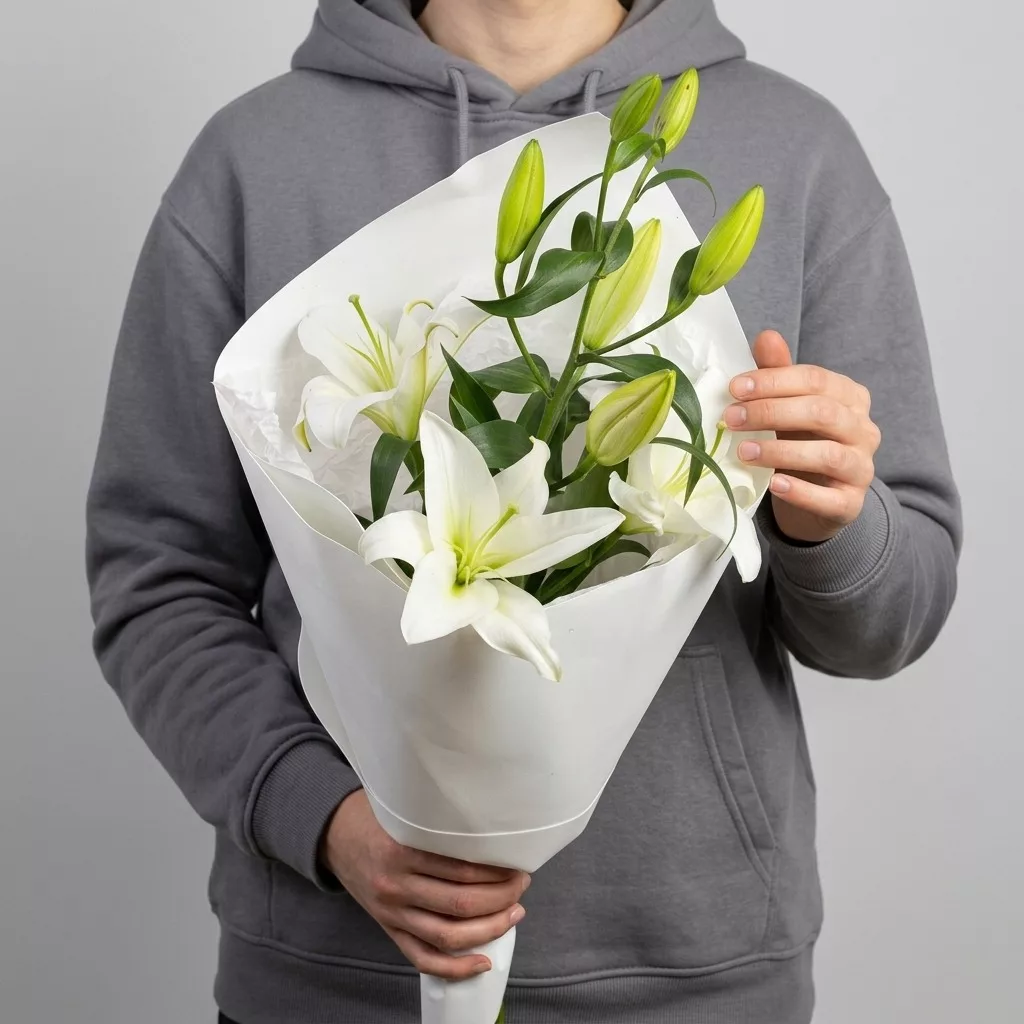
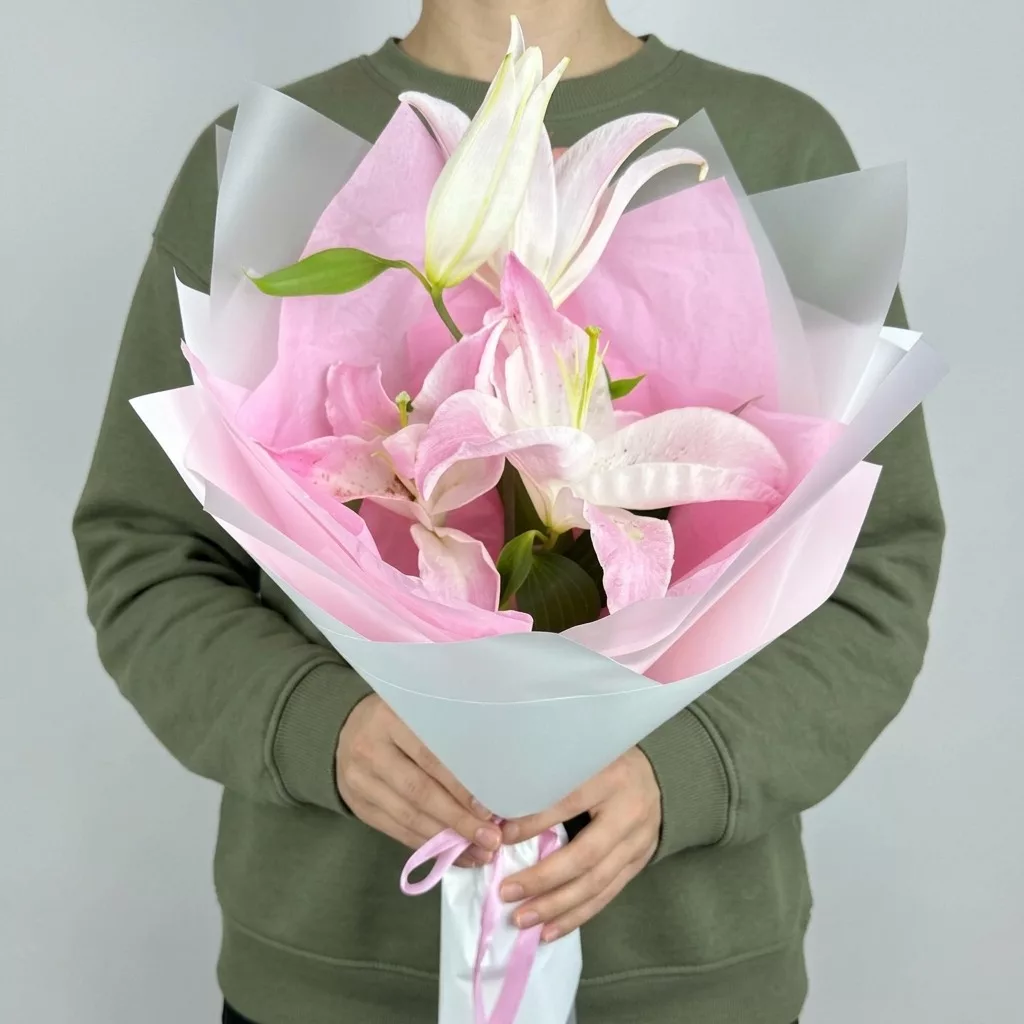
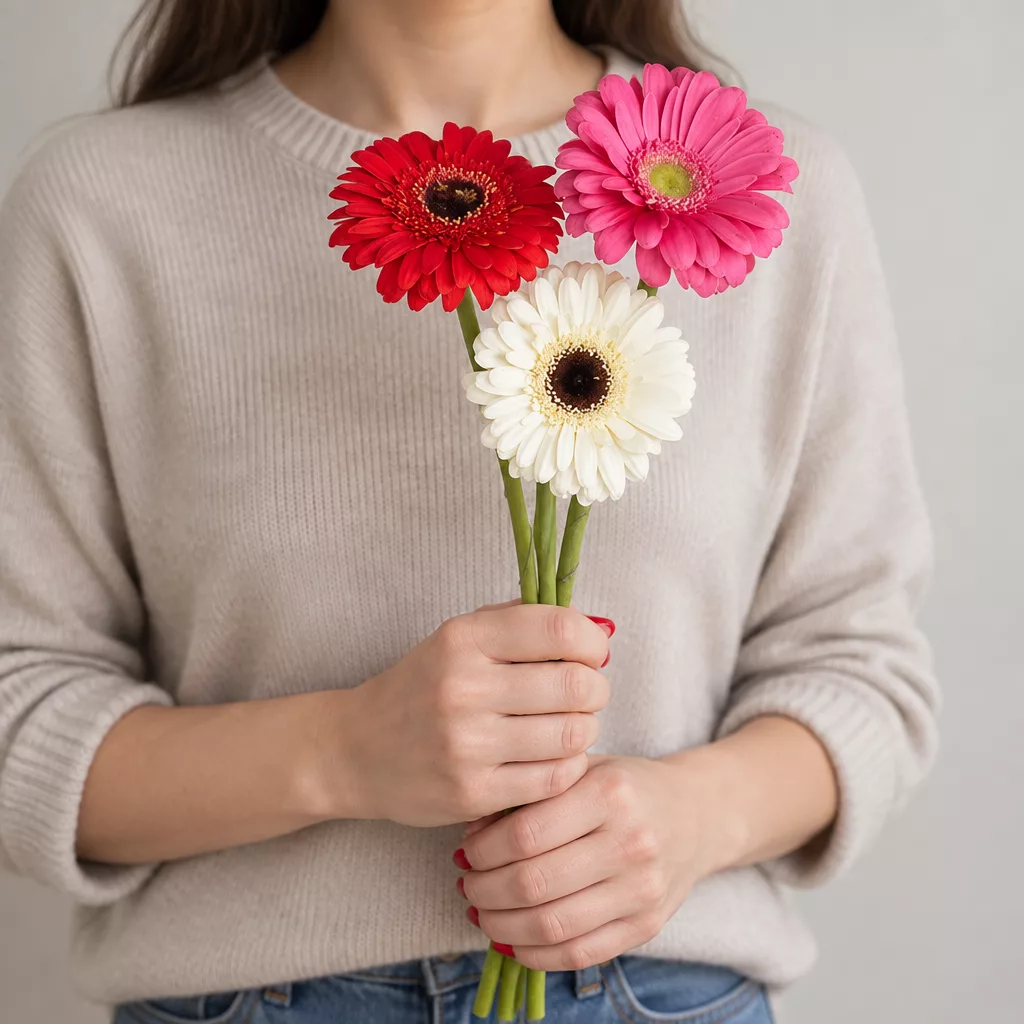
What Russian Recipients Actually Expect from a Bouquet
Russian flower culture is generous and unambiguous. A bouquet that might seem lavish in the Netherlands is considered perfectly normal in Russia. Roses are the most universal choice — long-stemmed, full-headed varieties like Explorer or Avalanche are immediately recognisable as a serious gesture. Peonies, when in season from late spring through early summer, carry enormous sentimental weight. Chrysanthemums are popular for birthdays and celebrations, though they are associated with grief in some Western countries — in Russia, they are entirely festive.
One custom worth knowing: Russians traditionally give flowers in odd numbers. Even numbers are reserved for funerals, so a bouquet of 11 roses or 15 tulips feels right, while 10 or 12 would quietly unsettle the recipient. You do not need to count every stem yourself — simply mention the occasion when you order and the florist will compose accordingly.
Presentation matters as much as the flowers themselves. Russian recipients appreciate wrapping — kraft paper, fabric, layered tissue — and a visible structure to the bouquet rather than a loose handful. A ribbon and a card slot naturally into the expectation. If you want to add something alongside the flowers, chocolates or a small stuffed toy are common and warmly received. Avoid sending flowers alone if the occasion is a major birthday or anniversary — a small companion gift signals that you thought carefully about the moment, not just the gesture.
How to Write a Russian Address Correctly
This is the step where international orders most often go wrong. Russian addresses follow a different order from Dutch ones, and a small error can delay delivery or send the bouquet to the wrong building entirely. The standard Russian address structure runs from largest to smallest: city, street, building number, apartment number. For example: Saint Petersburg, Nevsky Prospekt, building 10, apartment 34. If the building has a separate entrance number — called a podezd — include that too, because large residential blocks can have six or eight entrances and the courier needs the right one.
Ask the recipient's contact in Russia to write the address in Russian Cyrillic if at all possible. A transliterated address in Latin letters can be misread or mis-keyed. If you only have the address in Latin script, write it out phonetically and clearly, and flag it when you place the order so the team can verify it.
Flat numbers and floor numbers are both useful. Russian apartment buildings — especially Soviet-era ones — can have dozens of floors and hundreds of flats. The floor helps the courier navigate quickly, especially in buildings without working intercoms. Always include a Russian mobile number for the recipient. Couriers in Russia routinely call ahead to confirm they are at the right entrance and that someone is home. Without a local number, delivery becomes significantly harder. A WhatsApp or Telegram number registered to a Russian SIM is ideal.
Payment Options for Senders Based in the Netherlands
Paying for an international flower delivery from the Netherlands requires a little preparation, but it is straightforward once you know what to expect. Most international flower services accept major credit and debit cards — Visa and Mastercard are the most reliable choices for cross-border transactions. American Express is less consistently accepted, so check before you start the checkout process.
Bank transfers are possible but add a day or two of processing time, which makes them unsuitable for same-day or next-day orders. If you are planning ahead for a birthday or anniversary, a transfer can work well. For anything urgent, a card payment is the only realistic option.
Some Dutch banks apply foreign transaction fees or temporarily block payments to Russian-registered merchants as a fraud precaution. If your payment is declined, the fastest fix is to call your bank, confirm the transaction is legitimate, and try again. Alternatively, using PayPal — where accepted — can bypass this friction entirely. It is worth having a backup card ready before you start the order, particularly if you are ordering close to a deadline.
Euro payments are generally accepted and converted at the current rate. You will see the total in euros before you confirm, so there are no surprises at checkout. Keep the confirmation email — it contains the order number, which is your reference point if you need to check on delivery status or make any changes to the address or timing before the bouquet goes out.
Choosing Flowers That Travel Well in the Russian Climate
Russia's climate varies dramatically by region and by season, and it affects which flowers arrive in the best condition. Saint Petersburg winters are cold and damp, with temperatures regularly dropping below minus ten Celsius from December through February. Moscow winters are similarly harsh. In these conditions, cold-sensitive flowers like tropical varieties or delicate open garden roses can suffer during the final stage of outdoor delivery, even if the journey from the shop is short.
For winter orders, choose flowers with sturdy petals and strong stems. Spray roses, alstroemeria, and chrysanthemums handle cold transitions well. Lilies — particularly Oriental varieties like Stargazer — are excellent year-round choices because they are robust, long-lasting, and deeply fragrant, which makes the moment of receiving them genuinely memorable. Tulips in winter are a lovely contrast to the grey season, though they need to be conditioned in water quickly after arrival.
In summer, the concern reverses. Saint Petersburg summers are warm and occasionally humid, and flowers can wilt faster if left in a warm hallway. Roses and peonies are still ideal choices, but the recipient should be advised to put the bouquet in water within the first hour. Including care instructions with the bouquet — which a good florist will do automatically — helps the flowers last as long as possible. A well-conditioned bouquet of roses in summer should hold beautifully for seven to ten days in a cool room with fresh water changed every two days.
What to Write on the Card When You Are Far Away
The card is the part of a flower delivery that carries the most weight, and it deserves as much thought as the bouquet itself. From the Netherlands, you cannot be there in person — the card is your voice in the room. Keep it warm and specific rather than formal and general. Mention something only the two of you would know: a shared memory, an inside reference, the reason this particular day matters. That specificity is what transforms a beautiful bouquet into a genuinely moving gesture.
If you want the card written in Russian, write your message in English and ask the florist to translate it accurately. Automated translation tools often produce stilted or grammatically odd Russian, which can undercut the warmth of the message. A florist who works with international orders regularly will be accustomed to this request and will handle it naturally.
For significant occasions — a milestone birthday, a graduation, a new baby — consider a longer message rather than a short one. Russian culture values sincerity and does not consider sentiment excessive. A heartfelt paragraph is more welcome than a polished two-liner. If the recipient speaks both Russian and English, you might write in English and let the language itself be part of the message: it signals that this came from abroad, from someone who made the effort across distance.
Avoid overly formal salutations like 'Dear' followed by a full name — they read as cold in Russian contexts. Start with the person's name alone, or with a term of endearment if the relationship warrants it, and close with warmth rather than formality.
Sending flowers from the Netherlands to Russia is not complicated once you understand the few things that make it work: calculate the time difference before you order, write the address in full Cyrillic with a local phone number, use a card that processes internationally, and choose flowers suited to the season at the destination. The person receiving that bouquet will not think about any of this. They will open the door, see the colours and the wrapping, read your card, and feel exactly what you intended them to feel — that someone who is far away was thinking of them on a day that mattered.
Frequently asked questions
How far in advance should I order flowers from the Netherlands for delivery in Russia?
For same-day delivery, place your order before 3 pm Netherlands time on a weekday. For major Russian holidays like March 8 or New Year, order two to three days ahead. The earlier you order, the more flexibility there is with variety selection and delivery time slots, especially during peak seasons.
Can I write the delivery address in English rather than Russian?
You can provide the address in Latin letters, but Cyrillic is strongly preferred for accuracy. If you only have the address in English, write it as clearly and phonetically as possible and flag this when ordering. Always include the apartment number, entrance number if known, and a Russian mobile number for the recipient.
Why do Russian bouquets traditionally have an odd number of flowers?
Even numbers of flowers are associated with mourning in Russian tradition and are brought to funerals. Odd numbers — 7, 11, 15, 21 — are considered celebratory and appropriate for all joyful occasions. When you order for a birthday or anniversary, the florist will automatically compose the bouquet with this in mind.
My Dutch bank card payment was declined. What should I do?
Some Dutch banks flag payments to Russian merchants as a precaution. Call your bank, confirm the transaction is genuine, and try again. Having a second Visa or Mastercard ready is useful for urgent orders. PayPal can also bypass this issue where accepted. Always keep your order confirmation email as a reference.
Which flowers last longest after delivery in a Russian apartment?
Alstroemeria, spray roses, chrysanthemums, and Oriental lilies are among the most durable choices and handle temperature changes well. Standard roses last seven to ten days with proper care — fresh water every two days and a cool room away from direct sun or radiators. Including care instructions with the bouquet helps the recipient get the most from the arrangement.
Ready to send flowers?
Pick the city, choose the bouquet, and a local florist takes it from there.
Choose a city →