Sending Flowers to Russia from Poland: Timing, Payment and What to Expect
You are sitting in Warsaw or Kraków, thinking about someone in Moscow or Saint Petersburg — a birthday, an anniversary, a moment you wish you could share in person. The distance feels enormous until you realise that a bouquet of garden roses or a cloud of white lisianthus can arrive at their door in under two hours. Sending flowers to Russia from Poland is genuinely straightforward when you know the small details that make the difference between a gift that lands beautifully and one that causes confusion. This guide walks you through everything: when to order, how to pay, how to write the address, and what your recipient will actually unwrap.
Understanding the Time Difference and the Best Moment to Order
Poland runs on Central European Time, which puts Moscow two hours ahead and Saint Petersburg the same. That gap matters more than people expect. If you want flowers delivered at noon in Saint Petersburg, you need to place your order by ten in the morning your time at the very latest — and earlier is always safer, especially if you want a specific arrangement rather than a ready bouquet.
Flower shops in Russia typically begin deliveries from around nine in the morning local time and continue into the late evening, which is a genuine advantage. A sender in Poland who wakes up and remembers a birthday can still arrange a same-day delivery before lunch, local Polish time, and have tulips or spray roses on a doorstep in Russia by early afternoon.
The safest window for ordering is the evening before. This gives the florist time to source the freshest stems — peonies in season, garden roses with the longest vase life, ranunculus when they are available — rather than working from whatever is already cut and conditioned. Evening orders also avoid the mid-morning rush when delivery slots fill quickly, particularly around major Russian holidays like International Women's Day on the eighth of March, which is the single busiest flower day in the country.
If the occasion is fixed — a birthday, an anniversary — place the order two or three days ahead. You choose the delivery date and time window at checkout, and the shop holds your slot. This is especially worth doing in February and early March when demand across Russia spikes sharply and the best seasonal varieties sell out fast.
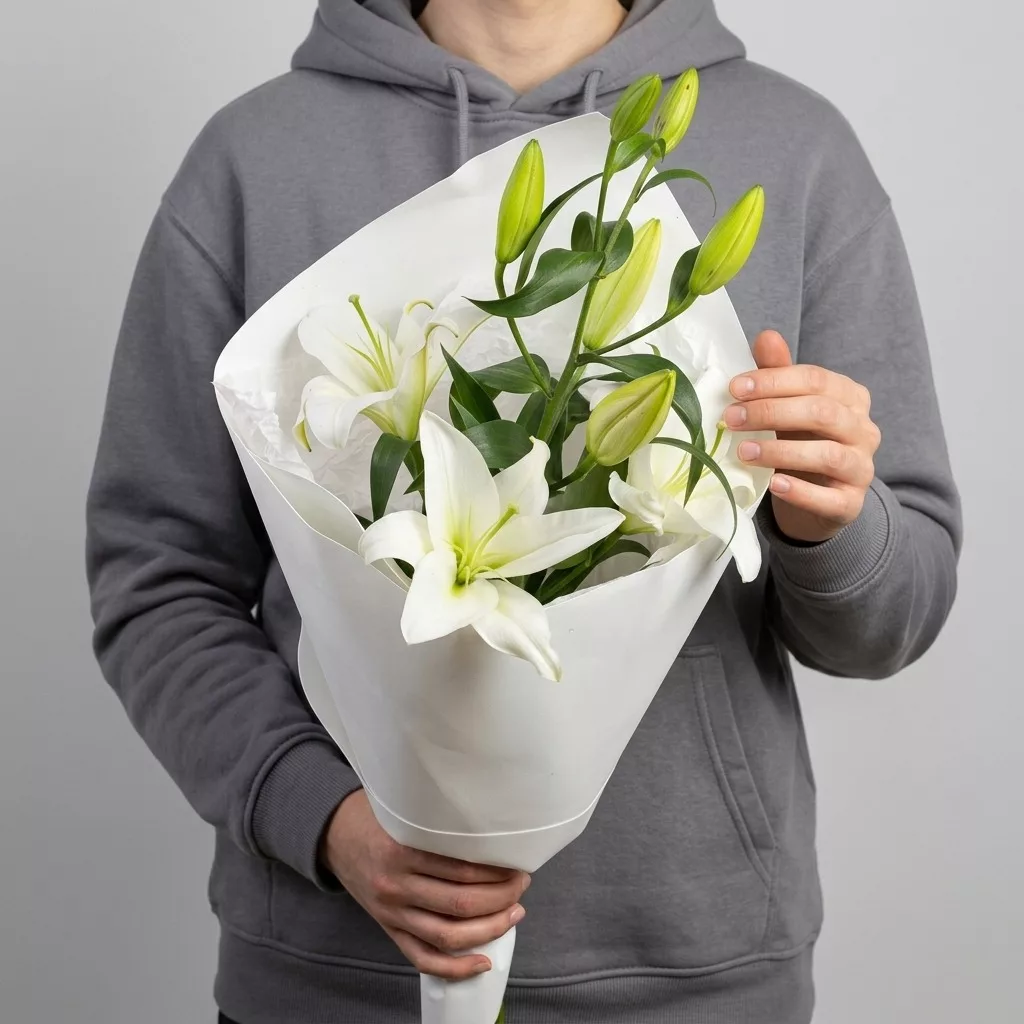
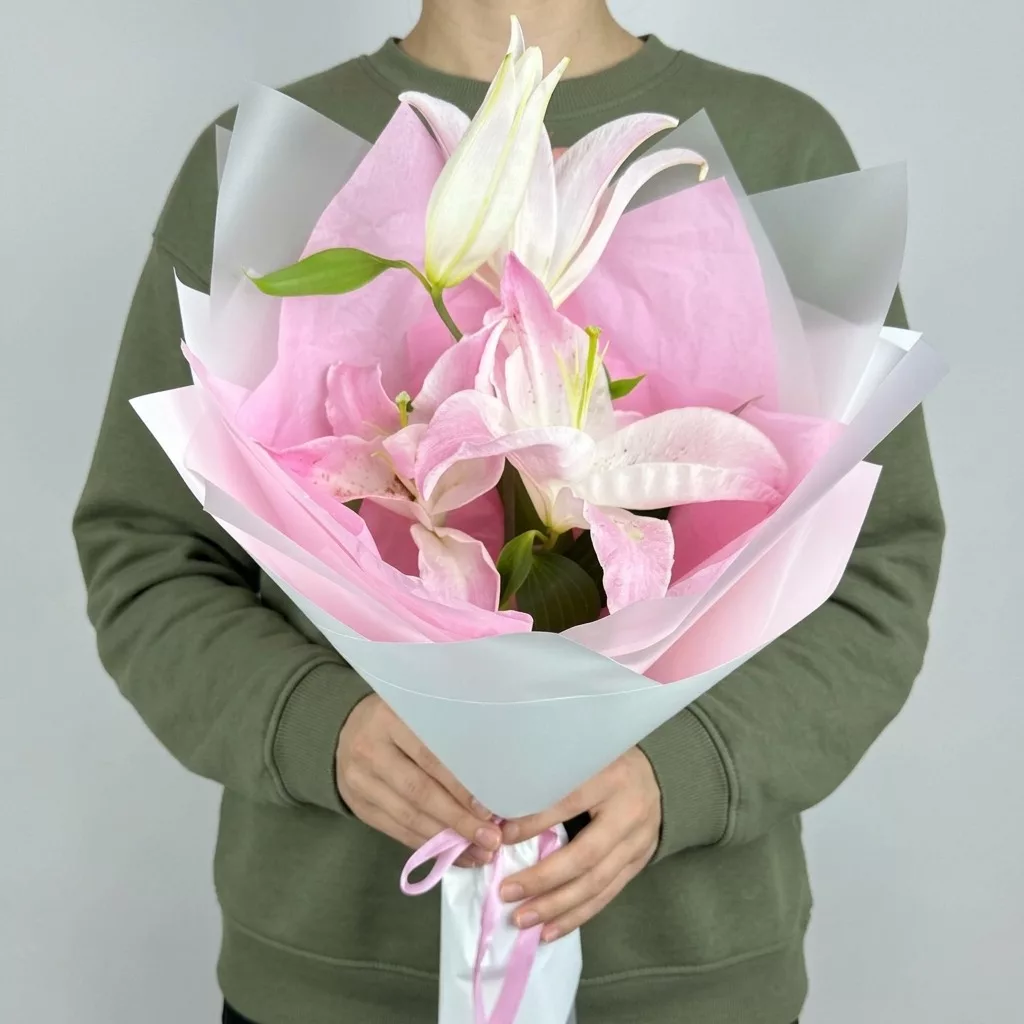
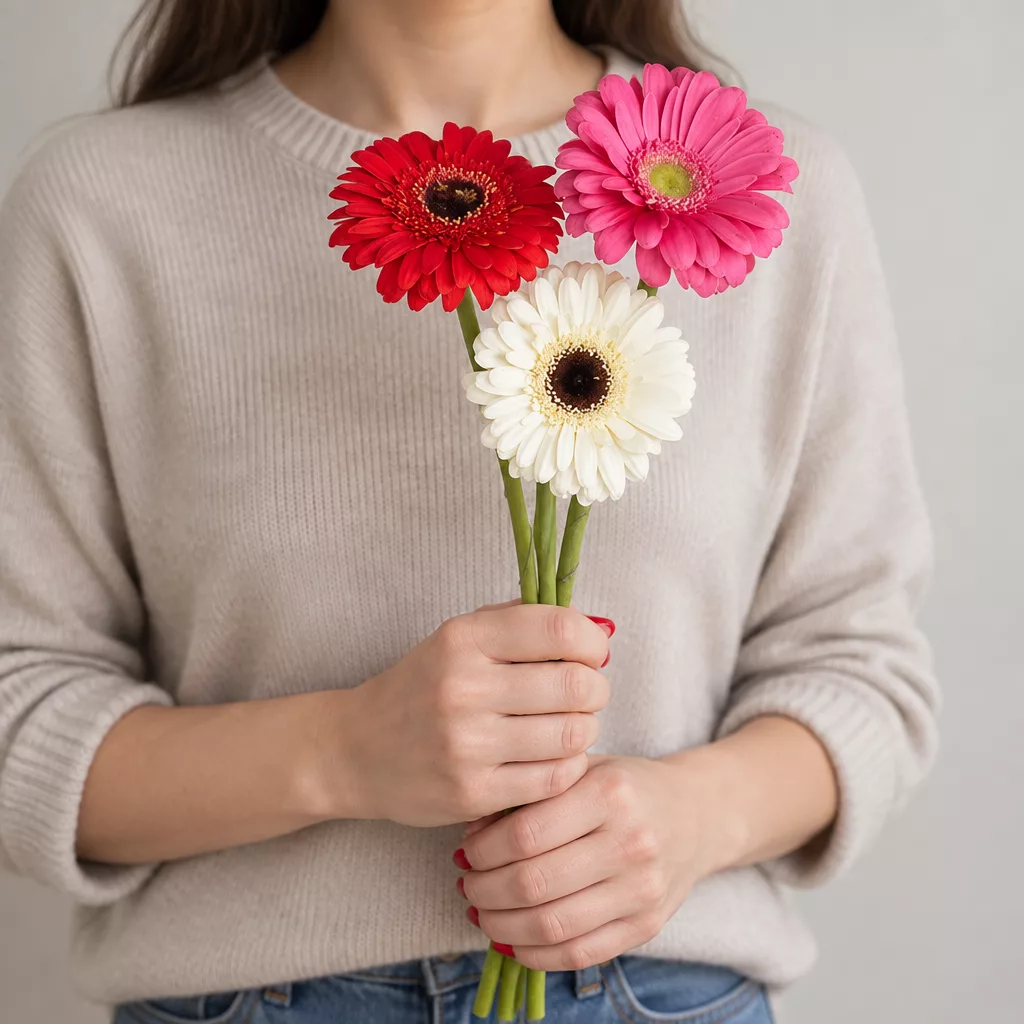
Bouquets we can deliver

How Russian Addresses Work and Why Getting Them Right Matters
A Russian address follows a structure that is different from what Polish senders are used to, and a single missing field can delay or prevent delivery entirely. The correct order is: city, street name, building number, apartment number, floor if relevant, and any entry or door code if the building has one. That last detail — the entry code, called a domofon code in Russian — is the one most often forgotten by senders abroad, and it is the one that causes the most problems.
Most apartment buildings in Russian cities have an intercom system at the street door. Without the code, a courier cannot enter the building. Your recipient may not answer their phone if it is a surprise. Always ask the person who gave you the address whether there is a door code, and include it clearly in the delivery notes.
Building numbers in Russia can include a korpus, which is a secondary building number within a larger complex. An address might read: ulitsa Lenina, dom 12, korpus 2, kvartira 45. If your recipient has given you this information, include every part of it. Leaving out the korpus number sends the courier to the wrong entrance of a large residential block.
Write the address in both Latin and Cyrillic if you can, or ask your recipient to send it to you in Russian text so you can paste it directly into the order form. Most international flower delivery sites accept Cyrillic input. If you are unsure about the spelling, the Russian postal code is a reliable backup — include it and the florist can cross-reference it against mapping systems to confirm the district and street.
Payment from Poland: What Works and What to Expect
Paying for flower delivery in Russia from a Polish bank account or card is simpler than many senders assume, though there are a few practical points worth knowing before you sit down at checkout. Most reputable Russian flower delivery services accept international Visa and Mastercard payments, and the transaction processes in the same way as any other European online purchase. You will see the charge in the currency displayed at checkout, and your Polish bank will apply its standard exchange rate.
Some Polish cardholders find that their bank applies an additional foreign transaction fee for payments to Russian merchants. This is a bank-side charge, not something the flower shop adds, and it is typically small. If you want to avoid it entirely, check whether your bank account offers fee-free international transactions — some Polish digital banks do.
At the moment of payment, you may be asked to confirm the transaction through your bank's authentication system, which is standard practice for cross-border card payments in Europe. Have your phone nearby so you can approve the payment quickly; some authentication windows close after a short period.
Once payment is confirmed, you will receive an order confirmation to your email address. Keep this confirmation because it contains your order number, which you will need if you want to contact the shop about delivery timing or make any changes. Changes to the delivery address or time window are usually possible up to a few hours before the scheduled delivery, but the earlier you request them the better. The florist works to a production schedule, and a bouquet that is already being assembled cannot easily be redirected.
Choosing the Right Flowers for a Russian Recipient
Flowers carry real meaning in Russia, and understanding a few local customs will help you choose something that feels genuinely thoughtful rather than accidental. The most important rule is the odd number rule: bouquets given as gifts always contain an odd number of stems. Even numbers are associated with mourning and are placed at memorials. A bouquet of eleven roses or fifteen tulips is a celebration; a bouquet of ten is not a gift a Russian recipient will feel comfortable receiving. Good florists count automatically, but if you are building a custom order, keep this in mind.
Roses are universally loved and always appropriate. Red roses read as romantic; white roses are elegant and suit a wide range of occasions; pink roses, particularly garden varieties like David Austin types, feel warm and personal without being overtly romantic. For a friend or colleague, a mixed bouquet of spray roses, lisianthus, and eucalyptus is generous and contemporary without making any statement beyond genuine care.
Tulips are enormously popular in Russia, especially in spring, and a large gathered bunch of single-colour tulips — white, coral, or deep purple — is one of the most joyful things you can send. Peonies, when in season from late spring into early summer, are extravagant and deeply appreciated. Chrysanthemums are common in Russia but carry associations with autumn and, in some regions, with cemeteries, so they are better avoided unless your recipient has specifically asked for them.
If you are unsure, trust a florist's seasonal recommendation. A well-made bouquet in whatever is freshest that week will always outlast a specific variety that was not at its best when cut.
What Happens on Delivery Day and How to Prepare Your Recipient
Flower delivery in Russia works differently from what Polish senders might picture. The courier will typically call the recipient before arriving, both to confirm the address and to arrange access to the building. This means your recipient will know a delivery is coming, even if they do not know exactly what it is. If you want the bouquet to be a complete surprise, you can add a note at checkout asking the courier to say only that a delivery has arrived, without specifying it is flowers.
Most deliveries in cities like Saint Petersburg and Moscow happen within the one to two hour window you select at checkout. Russian cities are large and traffic is unpredictable, particularly during morning and evening rush hours, so if timing is critical — for a birthday dinner, for example — choose a delivery window that ends at least an hour before the event begins.
The bouquet will arrive wrapped and conditioned, with the stems freshly cut and the flowers hydrated. Russian florists wrap bouquets in layers of craft paper or film with a water-retaining base at the stem end, so the flowers travel well even in summer heat or winter cold. In winter, which in Saint Petersburg can mean temperatures well below zero, the florist wraps the bouquet in insulating material to protect petals from frost damage during the short journey from van to door.
Ask your recipient to unwrap the bouquet promptly, recut the stems at an angle under running water, and place them in a clean vase with fresh water. This single step extends vase life by several days, turning a beautiful delivery into a lasting memory.
Care Instructions to Pass On: Making the Bouquet Last
The moment flowers arrive is not the end of the story — it is the beginning of a week or more of colour and scent, if the recipient knows a few simple things. As a sender in Poland, you can include these tips in your card message or simply share them separately. A little knowledge from you means your gift keeps giving long after the delivery day.
Fresh water is the single most important factor. The vase should be rinsed and filled with clean, cool water every two days. Bacteria build up quickly in warm water and are the main reason bouquets fade early. A small drop of bleach — no more than a single drop per litre — slows bacterial growth without harming the flowers. Commercial flower food sachets, which the florist often includes with the bouquet, do the same job more precisely.
Keep the bouquet away from direct sunlight, radiators, and fruit bowls. Ripening fruit releases ethylene gas, which accelerates petal drop in roses, lisianthus, and tulips particularly. A cool room with indirect light is ideal. In a Russian apartment in winter, a spot near a window but away from the heating unit works well.
As individual stems begin to fade, remove them rather than leaving them in the vase. This keeps the water cleaner and lets the remaining flowers continue to open properly. Tulips will keep drinking and growing taller in the vase — this is normal and actually rather beautiful. Roses benefit from having their outer guard petals peeled away as they brown, revealing the fresher petals underneath.
With good care, a well-conditioned bouquet of roses or lisianthus will last seven to ten days. Tulips typically last five to seven. Peonies, if they arrive as tight buds, will open over two to three days and are at their most spectacular on day three or four.
Sending flowers from Poland to Russia is one of those gestures that carries more weight precisely because of the distance. It tells the person receiving the bouquet that you thought of them carefully, that you made an effort, that the kilometres between you did not make the occasion feel smaller. With the right timing, a correctly written address, and a choice of flowers that respects the customs of the person you are sending to, what arrives at their door is not just flowers — it is a moment of genuine connection wrapped in craft paper and tied with ribbon. The practical details are simpler than they seem, and once you have done it once, you will find yourself reaching for a bouquet every time something worth celebrating happens in the lives of the people you love in Russia.
Frequently asked questions
Can I send flowers to Russia from Poland on the same day?
Yes, same-day delivery is available as long as you place your order with enough lead time to account for the two-hour time difference between Poland and Russian cities like Saint Petersburg or Moscow. Ordering before ten in the morning Polish time reliably secures a same-day slot. For the busiest periods, such as early March around International Women's Day, ordering the day before is strongly recommended.
What if my recipient is not home when the flowers arrive?
The courier will call ahead before arriving, so your recipient will have notice. If they are unexpectedly unavailable, the courier can arrange a new delivery attempt or leave the bouquet with a neighbour if the recipient agrees. Adding a mobile number for the recipient at checkout is essential — without it, rescheduling becomes much harder and the flowers may wait in a van longer than is good for them.
Is it safe to send flowers to Russia in winter when temperatures are very low?
Yes, and florists in Russian cities are experienced at cold-weather delivery. Bouquets are wrapped in insulating layers to protect petals during the brief outdoor exposure between the delivery vehicle and the building entrance. The greater risk is actually overheating inside the van, so reputable services keep their vehicles at a consistent cool temperature throughout the route.
Do I need to write the delivery address in Russian or is English acceptable?
Providing the address in Cyrillic is strongly preferred and reduces the chance of errors. Ask your recipient to send you their address as a Russian text message, then paste it directly into the order form. If that is not possible, include the Russian postal code alongside the Latin-script address — this allows the florist to verify the location using mapping tools before dispatching the courier.
How many flowers should be in the bouquet I send to Russia?
Always an odd number — this is a firm cultural convention in Russia. Bouquets with an even number of stems are associated with mourning and are placed at memorials, not given as celebratory gifts. Any good florist will count automatically, but if you are specifying a custom quantity, choose eleven, fifteen, nineteen, or another odd number to ensure your gift is received in the spirit you intend.
Ready to send flowers?
Pick the city, choose the bouquet, and a local florist takes it from there.
Choose a city →