Sending Flowers to Russia from Spain: How to Get It Right
You are in Madrid or Barcelona, and someone you love is in Saint Petersburg or Moscow. Maybe it is a birthday you cannot be there for, an anniversary that deserves more than a message, or simply a moment when you want them to open the door and feel remembered. Sending flowers across that distance is entirely possible, and when you understand a few practical details about timing, payment, and addresses, it becomes straightforward. This guide walks you through everything from the Spanish side of the order to the moment your recipient lifts a fresh bouquet from their doorstep.
Understanding the Time Difference Before You Place Your Order
Spain and Russia do not share a clock, and that gap matters more than most senders expect. Saint Petersburg and Moscow both run on Moscow Time, which sits three hours ahead of Central European Time and four hours ahead of Spain during daylight saving periods. In practical terms, if it is ten in the morning in Barcelona, it is already one or two in the afternoon in Saint Petersburg.
This means that if you want flowers delivered in the morning — which is often the loveliest surprise, catching someone before their day fills up — you need to place your order the evening before from Spain, or very early in the morning at the latest. A birthday delivery timed for eleven o'clock in Saint Petersburg requires your order to be confirmed no later than eight or nine in the morning Moscow Time, which could be five or six in the morning in Madrid.
Turboflora delivers within one to two hours of order confirmation, so the window is genuinely tight if you are aiming for a specific moment. The safest approach is to plan a day ahead. Choose your bouquet, confirm the address, complete payment, and let the florist know the preferred delivery window in Moscow Time. Mentioning the occasion in the order notes also helps, because a birthday arrangement and a congratulations bouquet for a new job carry different energy, and that shapes how the flowers are composed and presented at the door.
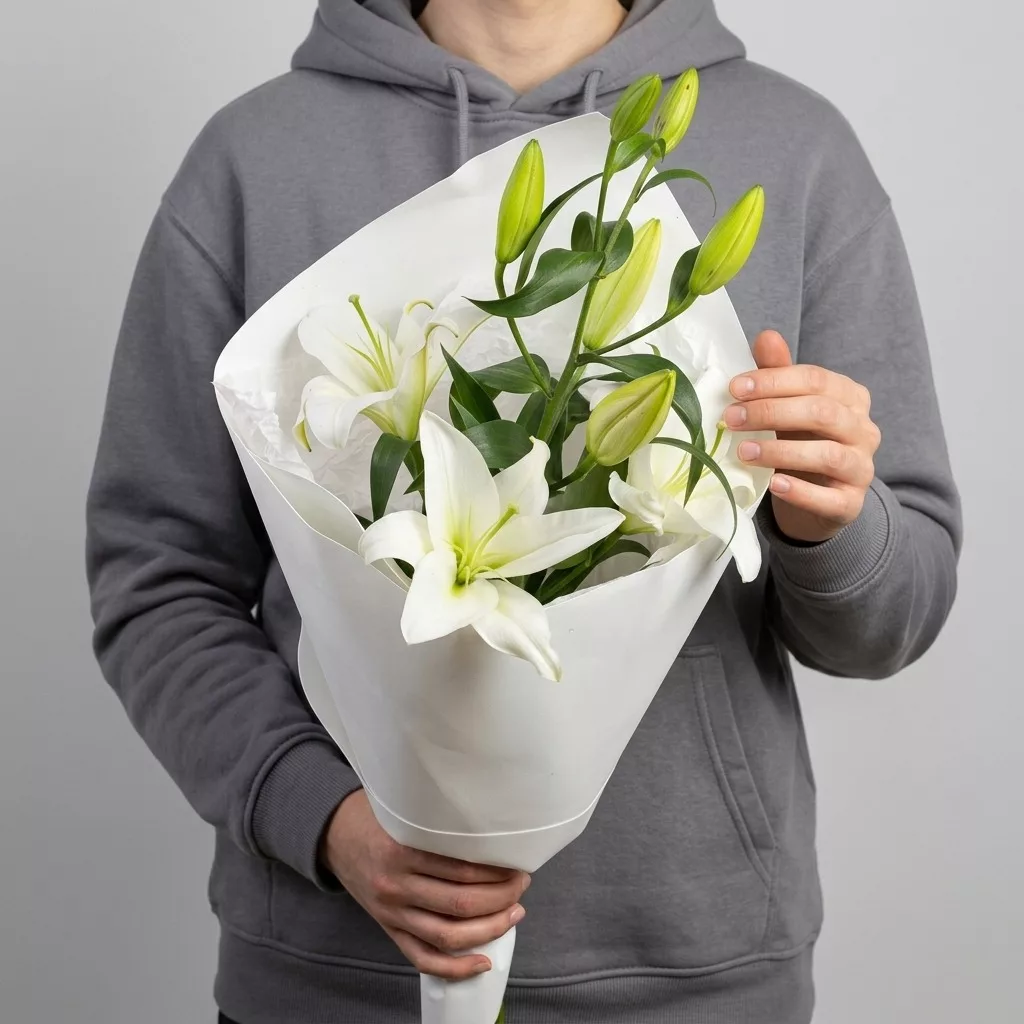
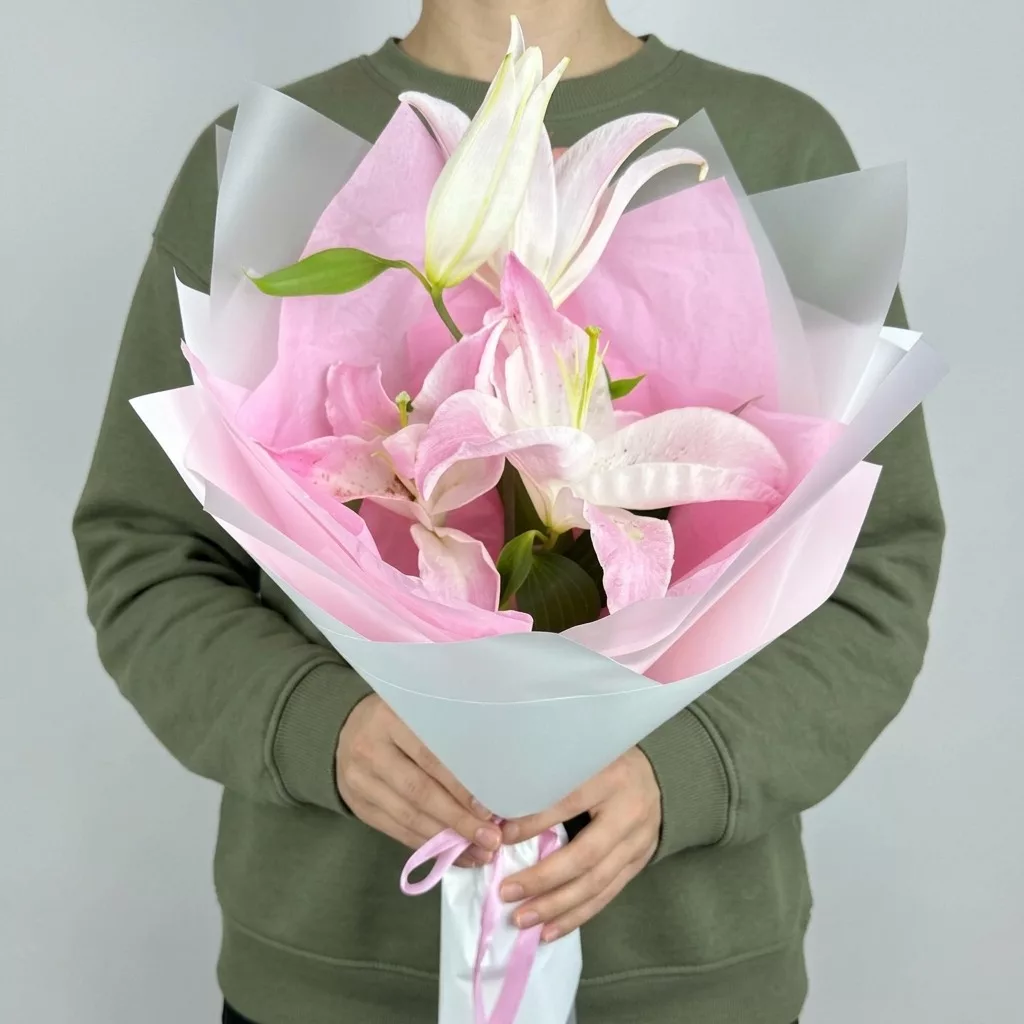
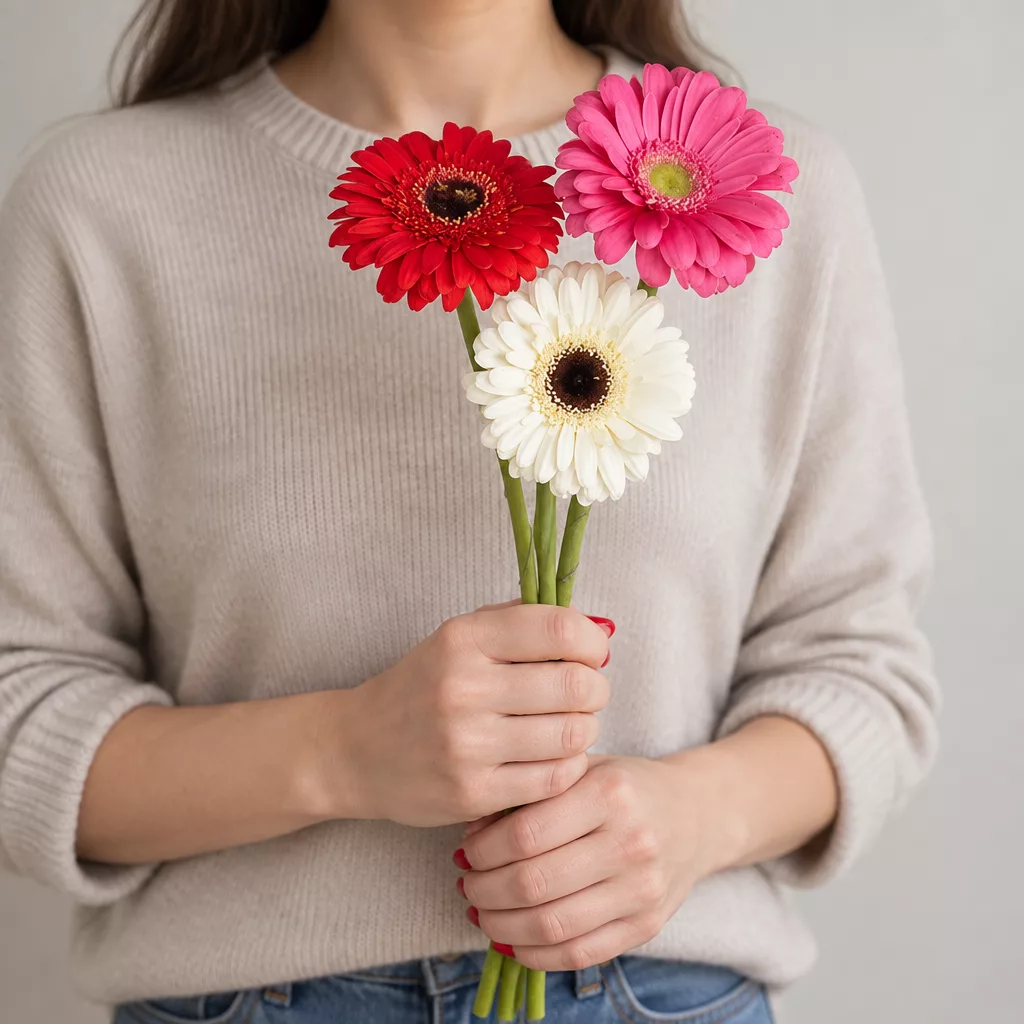
Bouquets we can deliver

How to Write a Russian Address Correctly as a Sender Abroad
A Russian address looks different from a Spanish one, and getting it wrong is the most common reason a delivery is delayed or sent to the wrong building. Russia uses a specific format, and the details that feel minor — like the apartment number or the building corpus — are actually essential for reaching the right door in a large residential block.
The standard order in Russian addressing runs from the largest unit to the smallest: city, then district if needed, then street name, then building number, then corpus or stroenie if the building has one, then apartment number. A corpus is a lettered or numbered sub-building within a larger complex, something that does not exist in Spanish address systems. If your recipient lives in korpus 2, building 14, and you omit that detail, the delivery arrives at the wrong entrance entirely.
When you receive the address from your recipient, ask them to write it out in full, ideally in Russian characters, because transliteration can create ambiguity. If they send it in Cyrillic, copy it exactly into the order form without trying to translate it. Turboflora's team reads Russian addresses natively and will interpret the information correctly.
Also confirm the floor and whether there is an intercom code. Many apartment buildings in Saint Petersburg and Moscow have coded entry panels at the street door. Without the code, the courier cannot enter the building, and the recipient misses their surprise. A phone number for the recipient is always required and ensures the courier can call if the intercom does not connect.
Payment from Spain: What Methods Work and What to Expect
Paying for a flower delivery in Russia from a Spanish bank account or card used to feel complicated, but it has become much more manageable when you use a shop that is set up for international customers. The key thing to understand is that you are paying in Russian rubles, so your bank will apply its standard currency conversion at the moment of the transaction. The amount that appears on your Spanish statement will reflect the euro equivalent at that day's rate.
Most major international Visa and Mastercard cards issued by Spanish banks process without difficulty on Turboflora's website. If your card is declined on the first attempt, it is almost always a security block placed by your Spanish bank on a foreign transaction rather than a problem with the order itself. A quick call to your bank to authorize international payments usually resolves it within minutes.
Some senders find it easier to use a digital payment option like a virtual card or a multi-currency account, which can process foreign transactions more smoothly. If you regularly send gifts to Russia, setting up one of these accounts in advance removes any friction at the moment you need to order quickly.
Keep in mind that the price you see on the site is the full price including delivery. There are no hidden customs fees or import duties because the flowers are sourced and arranged within Russia and delivered domestically. You are not shipping flowers internationally — you are placing a local Russian delivery order from abroad, which is a meaningful distinction that keeps the process clean and the flowers fresh.
Choosing Flowers That Survive the Russian Climate
Russia's climate is not Spain's, and that shapes which flowers hold up best and how they should be packaged for delivery. Saint Petersburg in January can sit at minus fifteen degrees Celsius. Moscow winters are similarly unforgiving. A bouquet that travels even five minutes in that cold without proper wrapping can arrive with petals that have turned translucent and stems that have gone limp.
Turboflora wraps cold-weather deliveries in insulated packaging that protects the flowers during the journey from the shop to the door. But as a sender, you can also make smarter choices about what you order. Roses, particularly spray roses and garden-style varieties, are robust and travel well in cold. Chrysanthemums are exceptionally cold-tolerant. Alstroemeria holds its structure beautifully even after a chilly transit. Tulips, which are enormously popular in Russia, are actually quite resilient in cold air and tend to open gradually after delivery, which recipients love.
What to be more careful with in deep winter are tropical varieties like anthuriums or birds of paradise, which can suffer in extreme cold even with good packaging. In spring and summer, this concern largely disappears, and the full range of seasonal flowers — peonies in May and June, sunflowers through summer, dahlias in late summer — becomes available and ships beautifully.
In Russia, flowers are typically given in odd numbers, which is a cultural custom worth knowing. Even numbers of flowers are associated with mourning, so a bouquet of seven roses or eleven tulips feels right, while six or ten would feel off to a Russian recipient. Your florist will handle this automatically, but it is good to understand why.
What Russian Recipients Expect When Flowers Arrive
Flowers carry a particular weight in Russian culture. They are not a casual gesture — they are a statement of attention and care. When someone in Russia receives a bouquet, especially an unexpectedly delivered one, it is genuinely significant. Understanding this helps you choose not just the flowers but the presentation and the message.
Russians tend to appreciate lush, full arrangements. A single stem, while elegant in some European traditions, reads as thin in the Russian context. A bouquet with volume, layered textures, and complementary greenery feels generous and considered. Think of combining roses with eucalyptus, or tulips with ranunculus and soft wax flower, rather than a single variety presented alone.
The card message matters enormously. Even a short line — written in Russian if you can manage it, or in your own language with a note asking the florist to translate — adds warmth that a nameless bouquet cannot. Russian recipients will want to know who sent the flowers and why, and a card transforms the bouquet from a delivery into a genuine moment.
Delivery timing also shapes the experience. A morning delivery, arriving before the recipient leaves for work, creates a different emotional effect than an evening one. For birthdays, morning is almost always the better choice — it sets the tone for the whole day. For a celebration like a promotion or graduation, an afternoon delivery can feel like the day's culmination. Think about what your recipient's day looks like and choose accordingly when you fill in the preferred delivery window.
How to Place Your Order Smoothly from Spain
The actual ordering process takes less time than most people expect once you have the address and delivery window sorted. Turboflora's website works in Russian and accepts orders around the clock, which matters because the time difference means you might be placing your order late at night in Spain while it is already morning in Saint Petersburg.
Start by choosing the bouquet that fits the occasion and the person. Think about what they love rather than what you personally prefer. Someone who keeps a simple, modern home might appreciate a clean arrangement of white roses and eucalyptus. Someone who loves color and abundance would be delighted by a mixed seasonal bouquet with ranunculus, anemones, and garden roses. The occasion shapes the palette — warm pinks and corals for a birthday, rich burgundy and cream for an anniversary, bright yellows and whites for a new job.
Once you have selected the bouquet, enter the recipient's full address in the address field, including the apartment number, corpus if applicable, and the intercom code. Add the recipient's Russian mobile number — this is essential and not optional. Write your card message in the notes, specifying the language if it is not Russian so the team can handle it appropriately.
Choose your delivery window in Moscow Time and double-check it against your local Spanish time before confirming. Complete payment, and you will receive a confirmation. From that point, delivery happens within one to two hours of the chosen window. You can follow up by messaging the recipient to let them know something is on its way — or keep it a complete surprise. Either way, the flowers will arrive fresh, wrapped, and ready to make their impression.
Sending flowers from Spain to Russia is not complicated once you know the moving parts. The time difference asks for a little planning ahead, the address format asks for a little precision, and the payment process asks for a moment's patience with your bank if needed. Everything else — the freshness, the wrapping, the cultural touch of an odd-numbered bouquet and a handwritten card — is handled at the Russian end by people who do this every day. What you are really doing is deciding that someone far away deserves to feel seen, and that decision is the easy part.
Frequently asked questions
How far in advance should I order flowers for delivery in Russia from Spain?
Because Russia is two to four hours ahead of Spain depending on the season, ordering the evening before your target delivery date is the safest approach. This gives you time to confirm the address, complete payment without rushing, and choose a morning delivery window that will actually fall on the right day in Moscow Time. Same-day orders are possible for afternoon deliveries if you place them early in the Spanish morning.
Can I write the card message in Spanish or English?
Yes. Write your message in whatever language feels natural to you and note in the order comments which language it is in. If your recipient reads Spanish or English, the card is delivered as written. If you would like it translated into Russian, mention that in your notes and the team will handle it. A personal message in any language means far more than no message at all.
What if I do not have the recipient's full address, only a general area?
A general area is not enough for delivery — you need the full address including street, building number, corpus if applicable, and apartment number. Contact your recipient before ordering and ask them to send their full postal address, ideally in Russian characters. If they are the recipient of a surprise, you can ask a mutual friend or family member instead. Delivery without a complete address cannot be guaranteed.
Are there flowers I should avoid ordering in Russian winter?
Tropical varieties like anthuriums and birds of paradise are more sensitive to cold transit even with protective packaging. In deep winter, roses, chrysanthemums, alstroemeria, and tulips are the most reliable choices because they tolerate cold air well and arrive in good condition. From late spring through early autumn, the full seasonal range including peonies, sunflowers, and dahlias is available and ships without concern.
Why does the number of flowers in a bouquet matter in Russia?
In Russian tradition, even numbers of flowers are given at funerals and are associated with mourning, so a bouquet for a celebration should always contain an odd number of stems — seven, nine, eleven, and so on. Turboflora composes bouquets according to this custom automatically, so you do not need to count or specify. It is simply useful to understand the reason, especially if your recipient mentions it.
Ready to send flowers?
Pick the city, choose the bouquet, and a local florist takes it from there.
Choose a city →