Sending Flowers from Sweden to Russia: What Actually Happens
You are sitting in Stockholm or Gothenburg, thinking about someone in Saint Petersburg or Moscow — a birthday, an anniversary, a moment you want to mark from a distance. The distance feels large, but the gesture does not have to. Sending flowers from Sweden to Russia is genuinely straightforward when you know a few practical things in advance: how the time difference works in your favour, how to write a Russian address correctly, and which payment methods actually go through without friction. This guide walks you through every step, from the moment you decide to send to the moment your recipient opens the door.
Understanding the Time Difference and Why It Works in Your Favour
Sweden runs on Central European Time, which puts Saint Petersburg and Moscow two hours ahead of you. This gap is smaller than it sounds, and for flower delivery it is actually useful. When you place an order at nine in the morning Stockholm time, it is already eleven in Saint Petersburg — the working day is well underway, drivers are on the road, and a same-day delivery within one to two hours is entirely realistic.
The window you need to keep in mind is this: orders placed before around three in the afternoon Swedish time can typically reach a recipient in Saint Petersburg or Moscow the same day. Place the order later in the evening and you are looking at the following morning, which is often a perfectly fine choice — fresh roses or peonies delivered with breakfast carry their own kind of warmth.
What catches people out is forgetting about Russian public holidays. Russia observes a generous calendar of national holidays, and some of them — International Women's Day on the eighth of March, for instance — fall on dates when flower demand is extraordinarily high across the entire country. If you are planning to send around those dates, ordering two or three days ahead is not caution, it is simply good sense. The flowers will be fresher for it, and your recipient will not be the person whose bouquet arrived at nine in the evening because the afternoon was completely overwhelmed.
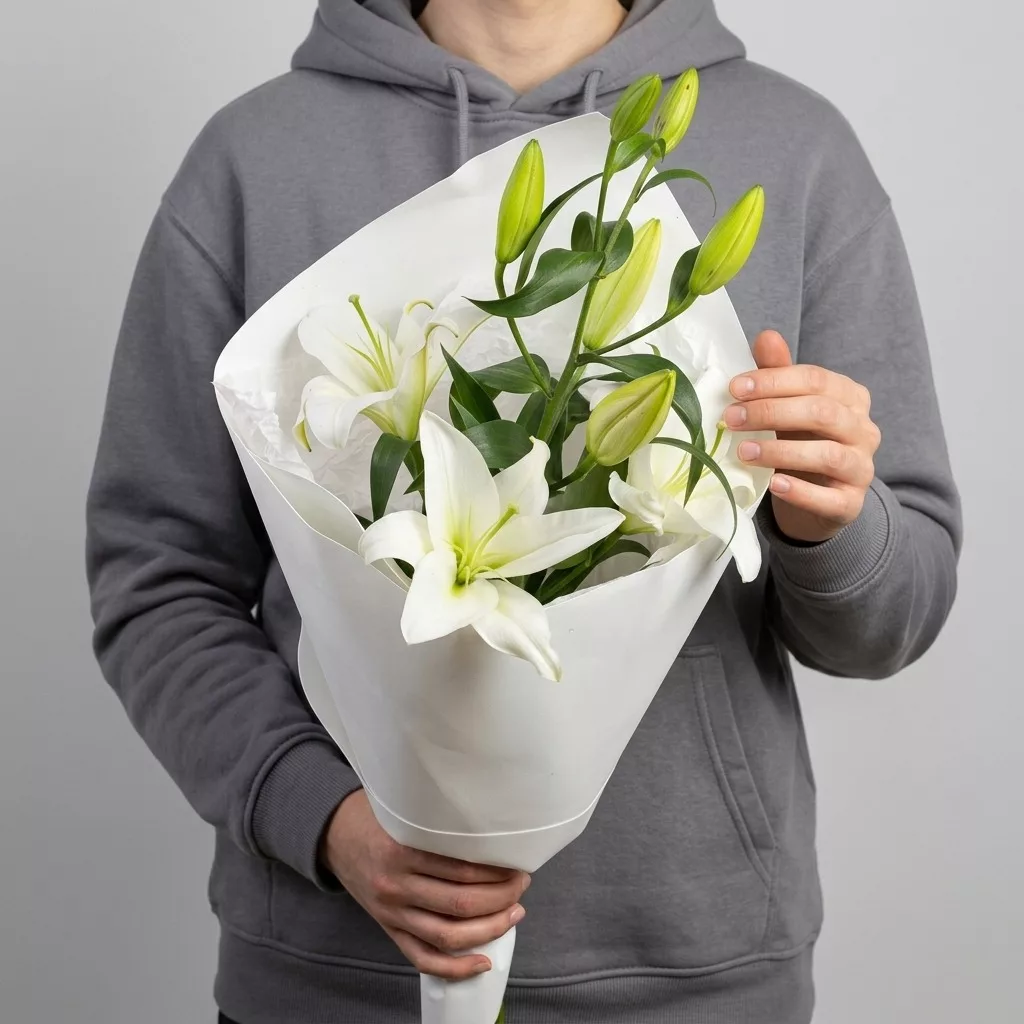
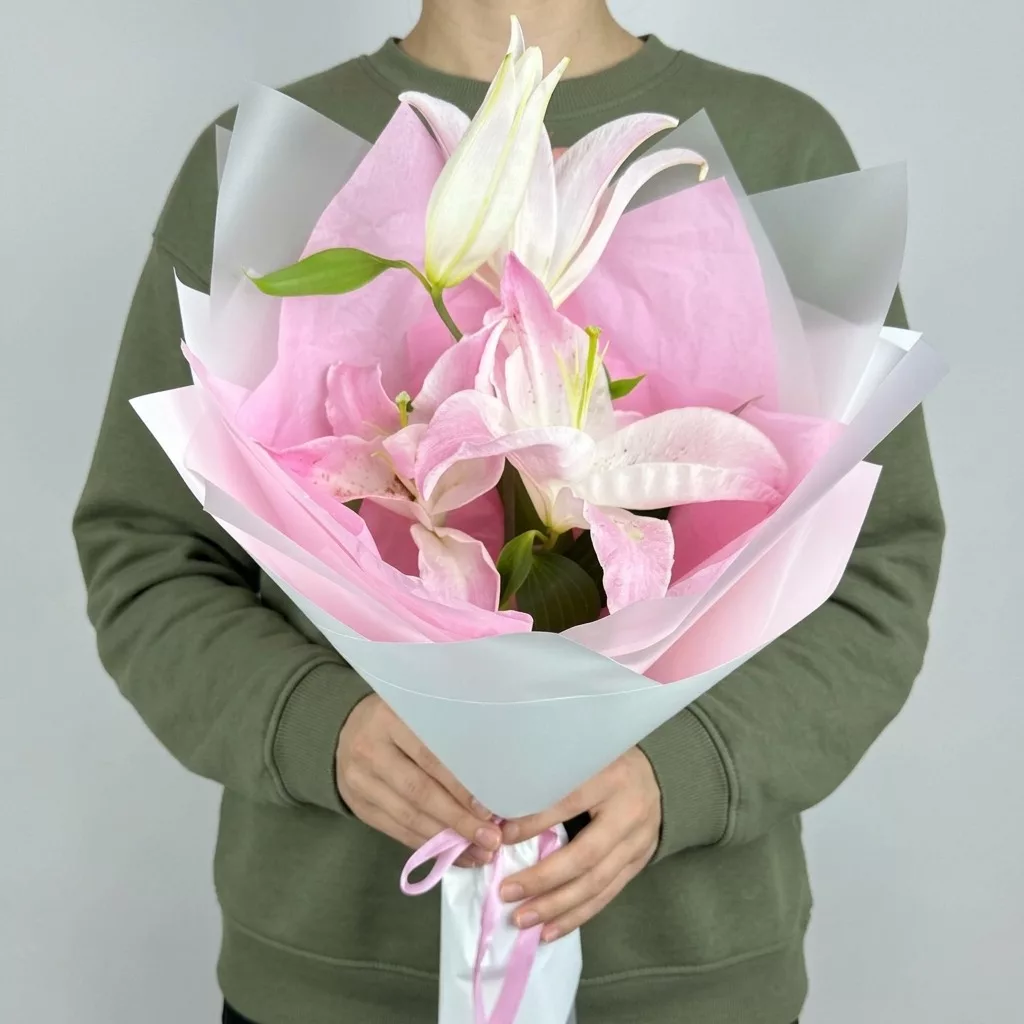
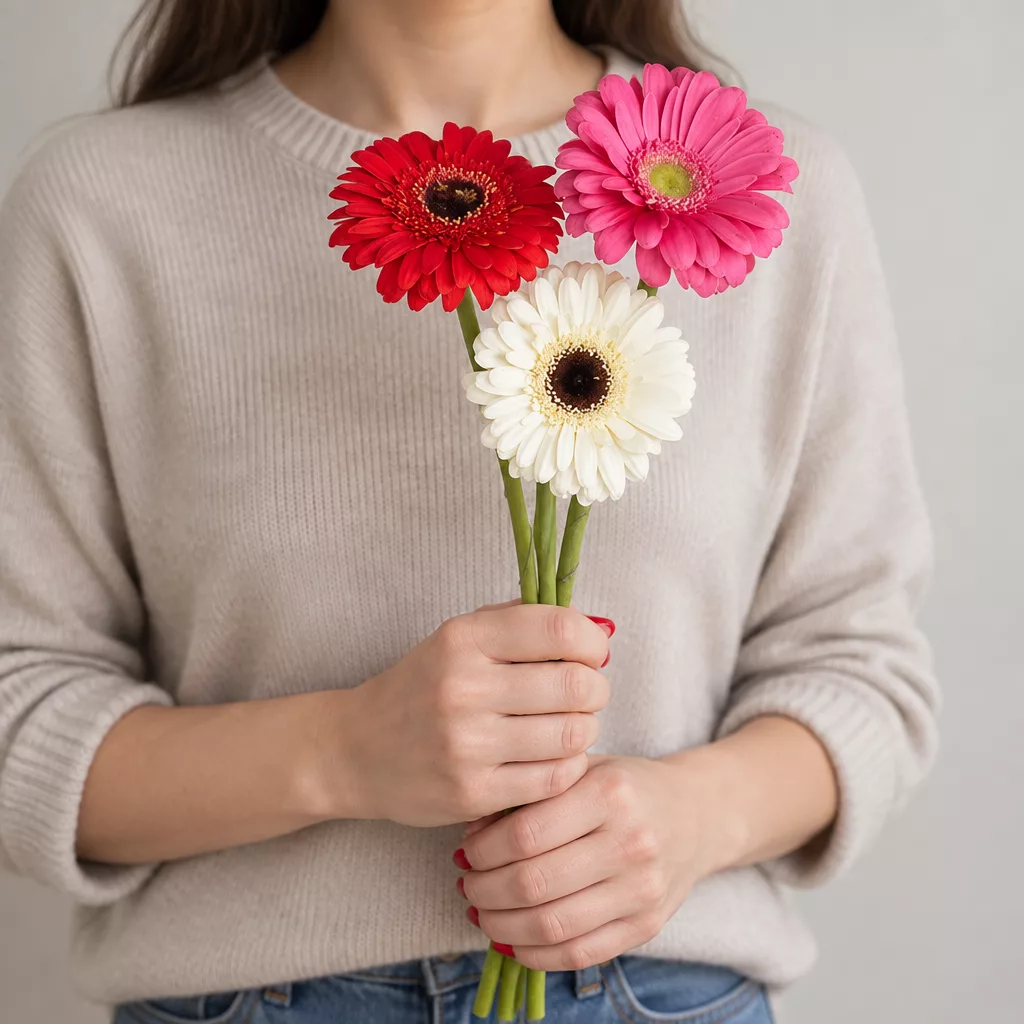
Bouquets we can deliver

Writing a Russian Address Correctly: The Detail That Changes Everything
Address formatting in Russia follows a different logic from what you are used to in Sweden. In Sweden you write the street first, then the city. In Russia the convention runs the other way — country, city, district if relevant, street name, building number, then apartment number. Getting this order right matters, but for an online order what matters even more is providing every single field, not just the street and city.
Russian apartment buildings are often large, and a building can have multiple entrances, called podezd. If your recipient lives in an apartment block, you need the entrance number, the floor, and the apartment number. Without the entrance number a driver can stand outside a building with sixteen doors and no way to narrow it down. Ask your recipient in advance if you do not have this information — most people are happy to share it when they know a surprise is coming, and you can keep the specific occasion or timing a secret.
The intercom code is another detail worth collecting. Many buildings in Saint Petersburg and Moscow have coded entry panels, and without the right sequence a driver cannot reach the door. Some buildings also have a concierge, in which case a name is enough. When you fill in the delivery form, use the notes field generously — write the entrance number, the floor, the intercom code, and any landmark that helps, such as the colour of the door or a nearby shop. A florist who delivers their own orders reads every note carefully.
Payment from Sweden: What Goes Through and What Does Not
This is the question Swedish senders ask most often, and it deserves a direct answer. Since 2022 the payment landscape between Sweden and Russia has changed significantly. Standard Visa and Mastercard transactions issued by Swedish banks do not process on Russian platforms, which means you cannot simply enter your Swedish card details and expect the order to go through on a Russian-based checkout.
Turboflora accepts international payments through methods that are specifically set up for cross-border customers. PayPal works reliably for many Swedish senders. Some customers use Wise or similar transfer services to pay in a currency the platform accepts. The checkout page will show you which options are live at the time you order — it is worth reading that page carefully rather than assuming your usual card will work.
One practical tip: have your payment method ready before you start building the order. Choosing flowers, writing a personal message, and then discovering at checkout that your payment method is not accepted is frustrating, especially if you are working against a time window. Two minutes of preparation at the start saves that frustration entirely.
If you are unsure, the customer support team can tell you exactly which methods are currently working for orders from Sweden. The team is used to helping international customers and will not make you feel like an edge case — you are not. Swedes sending flowers to Russia is a regular, familiar situation, and the process has been made as smooth as possible for exactly that reason.
Choosing the Right Flowers for a Russian Recipient
Flowers carry meaning in Russia in ways that are worth knowing before you choose. The most important rule is the number of stems: an even number of flowers is associated with mourning and is only brought to funerals. Always choose an odd number — five, seven, nine, eleven, fifteen. This is not a superstition you can ignore politely; it is a deeply ingrained convention, and your recipient will notice. A good florist counts automatically, but if you are specifying a custom quantity, keep this in mind.
Roses are the most universally beloved flower in Russia, and for good reason — a well-grown rose, properly hydrated, holds its form and fragrance for up to ten days. Red roses carry a clear romantic message. Cream and blush roses read as elegant and warm, suitable for a mother, a colleague being celebrated, or a friend marking a milestone. Peonies, when in season from late spring through early summer, are adored across all ages and occasions. Their full, generous heads feel luxurious without being formal.
For something lighter and more playful, a mixed bouquet of spray roses, lisianthus, and eucalyptus combines beautifully and lasts well. Tulips are beloved in spring but are more delicate in transit — a good florist will only include them when they can be delivered the same day. If you want to add something personal, a small note in Russian is always appreciated, even just a phonetic greeting. The shop can help with simple phrases if you ask.
What Happens Between Your Order and the Recipient's Door
Understanding the delivery process helps you set the right expectations and write the clearest possible instructions. Once your order is confirmed and payment clears, the bouquet is assembled fresh — not pulled from a refrigerator shelf but built for the specific order. Stems are cut at an angle, conditioned in water, and arranged according to the style you have chosen. This typically takes between thirty and sixty minutes depending on complexity.
The driver then collects the order and heads directly to the address. In Saint Petersburg and Moscow, traffic is a real variable. The city centres can be dense during morning and evening peaks, which is why a one-to-two-hour delivery window is quoted rather than a single minute. If you are ordering for a specific moment — say, you want the flowers to arrive before your recipient leaves for dinner — it is worth noting the latest acceptable arrival time in the order comments.
If the recipient is not at home when the driver arrives, the driver will call the number you have provided. This is why a working Russian mobile number for the recipient is not optional — it is essential. If no one answers and there is no way to leave the flowers safely, the order may need to be rescheduled, which nobody wants. Double-check the number before you confirm. If you are surprising someone and do not want them to know in advance, you can provide a neighbour's number or arrange to have someone at the address — just explain the plan in the notes.
Caring for the Flowers Once They Arrive: What to Tell Your Recipient
Part of sending flowers well is making sure they last. You can include care instructions in your message, or simply share these points with your recipient separately. Fresh-cut flowers need a clean vase filled with cool water — not ice cold, not warm. Lukewarm water, around room temperature, is ideal for most varieties including roses, lisianthus, and spray roses.
The single most important step is re-cutting the stems immediately upon arrival, removing about two centimetres at a diagonal angle with a sharp knife or scissors. This reopens the stem's water channels, which close quickly after the initial cut. Do this under running water if possible, so no air enters the stem before it goes back into the vase. Remove any leaves that would sit below the waterline — they decay quickly and cloud the water, shortening the life of the whole bouquet.
Change the water every two days and re-cut the stems each time. Keep the vase away from direct sunlight, radiators, and fruit bowls — ethylene gas from ripening fruit accelerates wilting noticeably. In a Russian apartment in winter, when heating is strong and the air is dry, placing the vase in a cooler room overnight extends vase life by a day or two.
Roses kept this way will last seven to ten days. Lisianthus often outlasts roses, holding for up to two weeks. Peonies are shorter-lived but more spectacular — four to six days of full bloom is their gift, and it is a generous one. When your recipient knows how to care for the flowers, your gesture stays in the room far longer than the delivery day.
Sending flowers from Sweden to Russia is not complicated once you know the shape of it: order with the two-hour time difference in mind, write the address in full with every entrance and intercom detail, use a payment method set up for international transactions, choose an odd number of stems, and make sure the recipient's Russian mobile number is correct. Do those five things and the rest takes care of itself. The person in Saint Petersburg or Moscow will open their door to something fresh, fragrant, and entirely unexpected — which is exactly the point.
Frequently asked questions
Can I order flowers from Sweden for same-day delivery in Saint Petersburg?
Yes, if you place your order before approximately three in the afternoon Swedish time, same-day delivery in Saint Petersburg is realistic. Saint Petersburg is two hours ahead of Sweden, so the working day there is well underway when you order in the morning. Delivery typically takes one to two hours from the moment the order is confirmed and payment clears.
What payment methods work when ordering from Sweden?
Standard Swedish Visa and Mastercard cards do not process on Russian platforms due to banking restrictions introduced in 2022. PayPal and services like Wise are commonly used by Swedish customers. The checkout page shows which methods are currently active. If you are unsure, contact customer support before building your order so you do not lose time at the payment step.
Do I need to know Russian to fill in the delivery address?
No. You can write the address in Latin letters on the order form, and the team will handle the rest. What matters most is that every part of the address is complete: street, building number, entrance number, floor, apartment number, and intercom code if there is one. A missing entrance number is the most common cause of delivery delays, so ask your recipient for this detail in advance.
Why does the number of flowers matter in Russia?
In Russian tradition, an even number of stems is associated with funerals and is considered inappropriate for celebratory occasions. Always choose an odd number — seven, nine, eleven, fifteen. This convention is taken seriously across generations and regions. Turboflora counts stems carefully on every bouquet, but if you are requesting a specific quantity, keep the odd-number rule in mind when you specify it.
What if my recipient is not home when the flowers arrive?
The driver will call the mobile number provided with the order. This is why a working Russian mobile number is essential — without it, there is no way to coordinate if the recipient is briefly out. If you are planning a surprise and do not want the recipient called in advance, you can arrange for a neighbour or family member to be at the address and note this clearly in the order comments.
Ready to send flowers?
Pick the city, choose the bouquet, and a local florist takes it from there.
Choose a city →