How to Send Flowers to Russia from the USA and Get It Right
You are sitting in Chicago or Los Angeles, thinking about someone in Saint Petersburg or Moscow, and you want them to open their door to something beautiful. The distance feels enormous, but the gesture does not have to be complicated. What you need is a clear picture of how the time zones work, what the ordering process actually looks like from your side of the world, and which flowers will still look stunning after traveling from our coolers to their hands. This guide walks you through every practical step so the bouquet arrives exactly when it should, looking exactly as it should.
Understanding the Time Difference Before You Place Your Order
Saint Petersburg runs eight hours ahead of New York and eleven hours ahead of Los Angeles. That gap matters more than most senders realize, and getting it wrong is the single most common mistake people make when ordering from abroad. If you want flowers delivered on a birthday morning in Saint Petersburg, you need to place your order the evening before — your evening, not theirs.
Think of it this way: when it is nine in the evening in New York, it is already five in the morning the next day in Saint Petersburg. The city is waking up. Our florists are already cutting stems, conditioning roses, and building the first arrangements of the day. If your order arrives during that window, delivery can happen within the first hours of the recipient's morning.
The most reliable approach is to order at least twelve to eighteen hours before the moment you want the bouquet to arrive. This gives room for any small clarifications about the address, for the florist to source the freshest stems available that day, and for the courier to plan the route. Ordering well in advance also means you are not rushed into choosing whatever is left — you can think about the person, the occasion, and what combination of flowers will genuinely move them. Urgency and thoughtfulness rarely go together, and a little planning from your side of the ocean makes all the difference on theirs.
Bouquets we can deliver

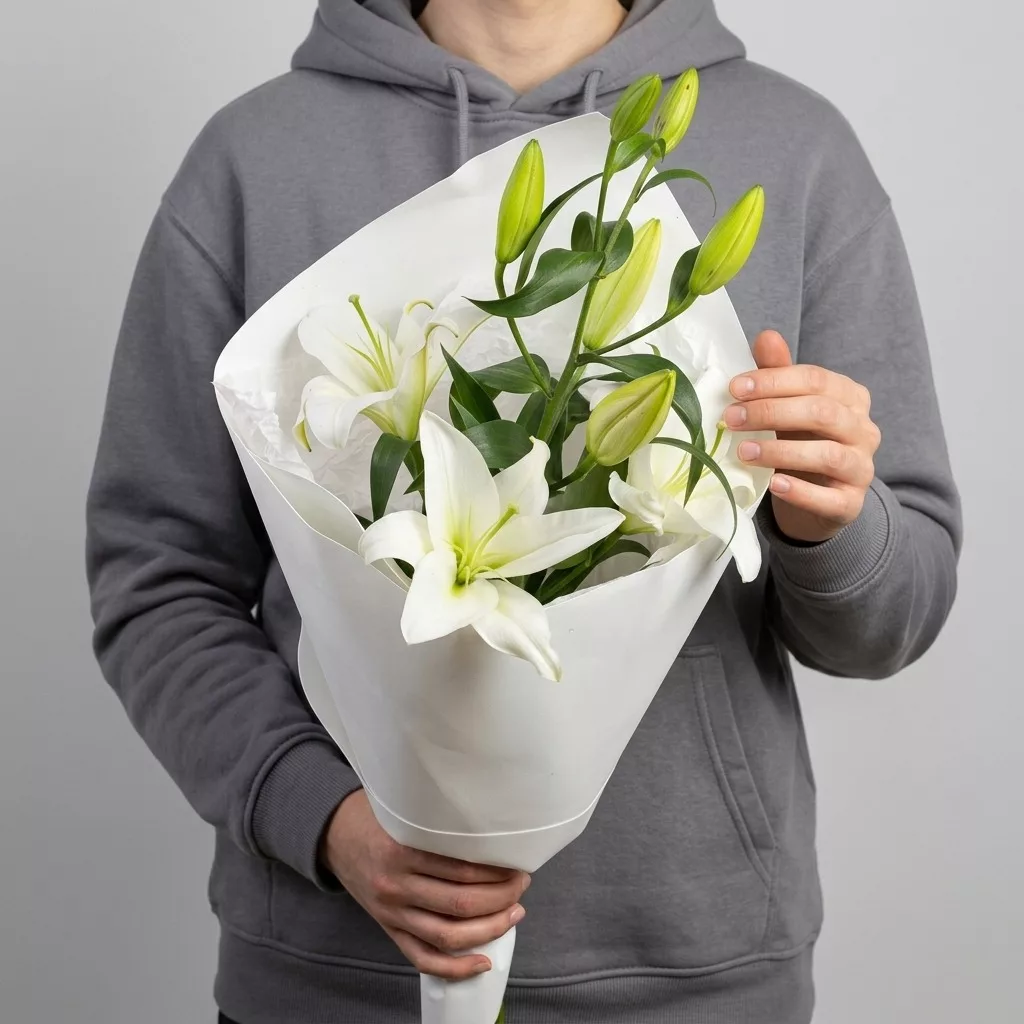
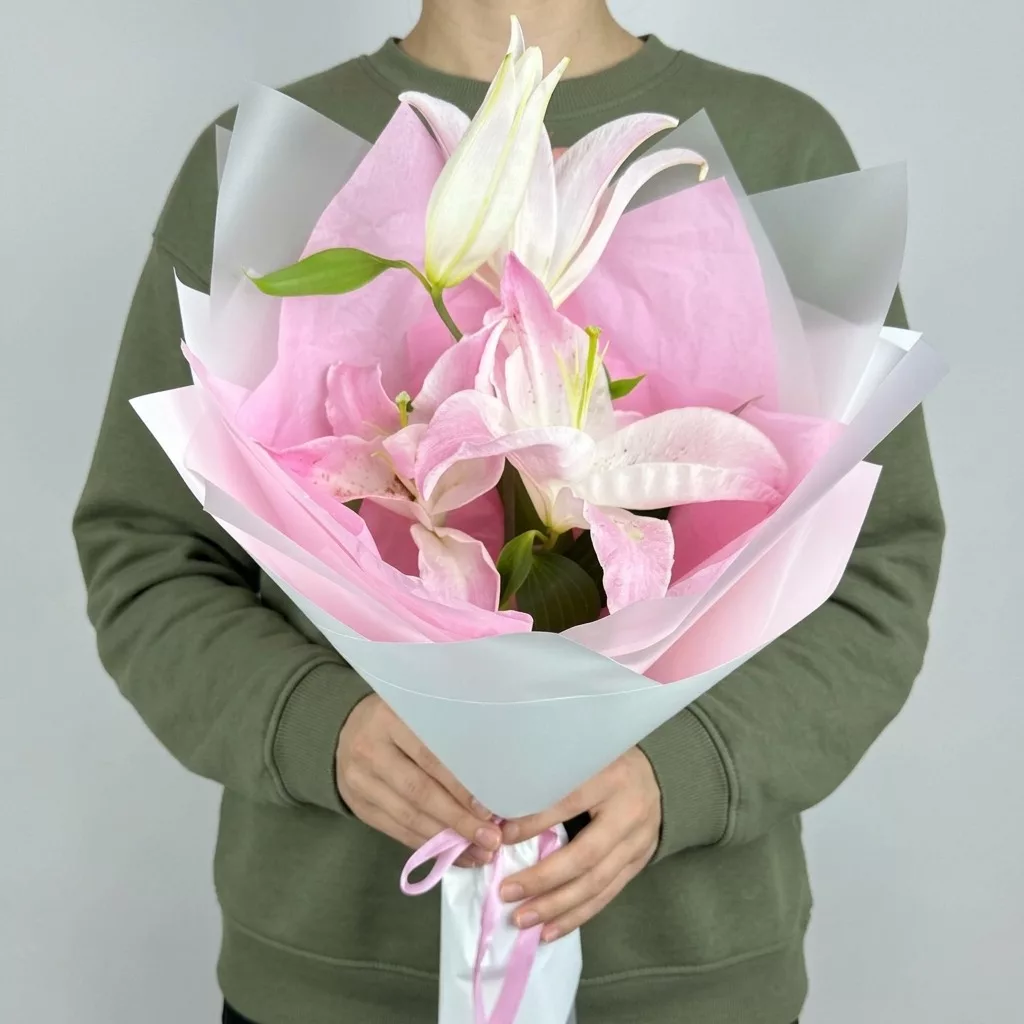

What Russian Flower Customs Mean for Your Choice of Bouquet
Russia has a strong and specific flower culture, and knowing a few of its rules will help you choose something the recipient actually receives with joy rather than quiet confusion. The most important one: always give an odd number of flowers. Even numbers of blooms are traditionally associated with mourning, and a bouquet of ten roses, however beautiful, carries an unintended message. Odd numbers — seven, nine, eleven, fifteen — are celebratory and warm.
Red roses are genuinely beloved here, not considered cliché the way they sometimes are in Western markets. A tight bunch of deep red garden roses or long-stemmed hybrid tea roses is a classic gift that lands well across generations. Peonies are adored in season, roughly late spring through early summer, and a full peony bouquet in blush or coral pink is considered deeply romantic and generous. Tulips are the go-to for International Women's Day in early March, when the entire city seems to move in clouds of yellow, white, and lilac.
For everyday occasions — a thank-you, a welcome, a thinking-of-you — mixed seasonal arrangements with spray roses, lisianthus, and eucalyptus feel modern and personal without being overwhelming. White flowers are perfectly appropriate for celebrations, unlike in some other cultures where they might signal solemnity. Chrysanthemums are common and well-liked, though they tend to read as a more casual gift than roses or peonies. When in doubt, ask for what is freshest that day — a florist who knows their stock will steer you toward what looks best.
How to Write a Russian Address Correctly for Delivery
This is where many international orders hit a wall. Russian addresses follow a different structure from American ones, and a small error can send a courier to the wrong building in a city of five million people. Understanding the format before you order saves everyone time and ensures the flowers actually reach the right door.
A typical Saint Petersburg address reads in this order: street name, building number, sometimes a corpus number (a secondary building identifier on the same plot), then apartment number. The corpus detail is crucial — large residential complexes often have several buildings sharing one street number, labeled corpus 1, corpus 2, and so on. If your recipient lives in corpus 2 and you omit that, the courier may spend twenty minutes at the wrong entrance.
Ask your recipient — or someone who knows them — to write out the full address in Russian Cyrillic if possible, and paste that directly into the order form. If you only have a transliterated version in Latin letters, that works too, but double-check the apartment number and floor independently. Russian apartment buildings are typically accessed through a code-locked entrance called a domofon — a small intercom panel. If you can include the entry code or ask the recipient to be near their phone at delivery time, the handoff goes smoothly.
For office deliveries, include the company name, the floor, and whether there is a reception desk. Our couriers are experienced with both residential buildings and business addresses across the city, but the more detail you provide, the faster and cleaner the delivery.
Payment from the United States: What Actually Works
Paying for a flower delivery in Russia from an American bank account used to feel complicated. The current financial landscape between the two countries has some real friction, and it is worth being direct about what that means for you as a sender.
Major international credit cards — Visa and Mastercard — may face processing limitations depending on your issuing bank and the current state of cross-border transactions. The most reliable approach right now is to use a payment method that processes internationally without routing through restricted channels. PayPal, where available, and some international payment platforms work for many customers. Cryptocurrency payments are accepted by a growing number of Russian e-commerce services, including florists who work with international clients regularly.
When you reach the checkout stage, look carefully at what currency the total is displayed in and whether there is a foreign transaction fee on your card. Some US banks add a three percent surcharge on international purchases — that is your bank's fee, not the florist's. It is worth calling your bank before ordering if you have not made international purchases recently, simply to confirm the card will not be blocked as a suspicious transaction.
If you run into a payment issue, reaching out via the site's messaging or email is the fastest path to a solution. A florist who works with international clients regularly will have encountered this before and can usually suggest an alternative within the hour. Do not let a payment hiccup stop you from sending — there is almost always a way through, and the flowers are worth the extra five minutes of sorting it out.
Choosing Flowers That Survive the Season and the Journey
The flowers are not traveling from the USA to Russia — you are placing an order that is fulfilled locally in Saint Petersburg, which means the bouquet is made fresh on the day of delivery. What matters is not the transatlantic distance but the seasonal availability and the weather conditions on the ground in Russia on the day you choose.
Saint Petersburg has cold, dark winters and genuinely warm summers, and that range affects what flowers look their best at any given time. In January and February, the city is deep in frost, and the florist's cooler is full of roses, alstroemeria, carnations, and imported tulips — flowers that hold well in cold transit and low-humidity indoor air. A bouquet of cream and blush roses with white waxflower travels beautifully in those conditions.
In spring and early summer, ranunculus, tulips, and the first peonies arrive, and the city's mood lifts visibly. These are the months to order something theatrical — a full armful of garden peonies in dusty rose, or a mixed bouquet of ranunculus in coral, orange, and yellow that looks like it came straight from a market stall in Provence. Summer brings dahlias, sunflowers, and lush greenery, and autumn offers the deep tones of burgundy roses, chocolate cosmos, and hypericum berries.
When ordering across seasons, trust the florist's recommendation for what is at peak freshness. A slightly different variety chosen because it is at its best that morning will always look better than a specific request fulfilled with flowers that are a day past ideal.
Making the Moment Feel Personal from Six Thousand Miles Away
The distance between a sender in the USA and a recipient in Russia is real, but the feeling that arrives with the flowers does not have to reflect that distance at all. The details you add to an order — the card message, the color palette, the timing — are what transform a transaction into a moment the recipient actually remembers.
Write the card message in the language your relationship uses. If you always speak English with this person, write in English — seeing your words in your voice is part of the gift. If the recipient speaks only Russian, take five minutes with a translation tool and ask a Russian-speaking friend to check the result before you submit it. A warm message in careful Russian lands far better than a perfect message the recipient has to struggle through.
Think about the timing as a design choice. Flowers that arrive in the morning turn the whole day golden. Flowers that arrive in the evening feel like a surprise after a long day. If the occasion is a birthday, find out whether the person starts their day early or prefers a slower morning, and schedule accordingly.
Consider adding something that extends the life of the gift. A note asking them to trim the stems at an angle, change the water every two days, and keep the vase away from direct sunlight and radiators will help the bouquet last seven to ten days instead of four. Roses and lisianthus are especially responsive to clean water and cool room temperatures. That small note shows you thought not just about the moment of arrival but about the days that follow — and that is exactly what makes a flower gift feel like it came from someone who truly knows how to give.
Sending flowers from the USA to Russia is genuinely doable, and when it goes well, it goes beautifully. The keys are simple: order ahead to account for the time difference, write the address carefully with every detail you can gather, choose flowers that suit the season and the person, and put real thought into the card message. The physical distance between you and the recipient disappears the moment they open the door to a courier holding something made with care. That is what flowers do — they collapse the miles into a single, immediate feeling. Let that feeling be exactly what you intended.
Frequently asked questions
How far in advance should I order flowers in Russia if I live in the USA?
Plan to order at least twelve to eighteen hours before your desired delivery time, accounting for the eight to eleven hour time difference depending on your US time zone. Ordering the evening before — your evening — typically ensures a morning delivery in Saint Petersburg. Earlier is always safer, especially around major holidays like International Women's Day or New Year.
Can I send flowers to Russia if I do not speak Russian?
Absolutely. The order form and customer communication at Turboflora are available in English. For the card message, you can write in English if the recipient understands it, or ask a friend to help translate. The delivery address is the one detail where Cyrillic spelling helps — if you can get it from the recipient directly, paste it as written.
What is the significance of odd numbers of flowers in Russia?
In Russian tradition, even numbers of flowers are associated with mourning and are typically brought to funerals. For any celebratory or affectionate occasion, always choose an odd number — seven, nine, eleven, or fifteen are all common and well-received. Most florists building bouquets for gifts will automatically follow this rule, but it is worth confirming when you order.
Which flowers are most popular as gifts in Saint Petersburg?
Roses are the enduring favorite across all ages and occasions. Peonies are beloved in late spring and early summer. Tulips are strongly associated with March celebrations. For a modern, textured look, combinations of spray roses, lisianthus, and eucalyptus are widely appreciated. Seasonal availability always shapes what looks best, so asking the florist for their freshest recommendation is a reliable approach.
What if my credit card does not work for an international payment to Russia?
Some US-issued Visa and Mastercard cards face processing restrictions on Russian transactions. If your card is declined, contact the shop directly via email or the site's messaging — alternative payment options including some international platforms may be available. Calling your bank in advance to flag the international purchase can also prevent an automatic fraud block from stopping a legitimate transaction.
Ready to send flowers?
Pick the city, choose the bouquet, and a local florist takes it from there.
Choose a city →