Sending Flowers to Your Russian Partner on a National Holiday
A well-timed bouquet arriving at a Russian colleague's office on the right national holiday does something a formal email never quite manages — it crosses the distance and lands as a genuinely personal gesture. For a foreign partner who may be thousands of kilometres away, that moment of recognition carries outsized warmth. This article walks you through the holidays that matter most, what to send, and how to make sure the flowers actually arrive fresh and on time.
Why Flowers Matter More on Russian Holidays Than You Might Expect
In Russia, marking a public holiday with a gift — especially flowers — is not a formality. It is a signal that you see the person, not just the business relationship. Russians tend to read the gesture carefully: the choice of flowers, the timing of delivery, and the accompanying note all carry meaning. Arriving a day late, or sending a generic arrangement, can quietly undercut the warmth you intended.
Flowers are the single most common celebratory gift across all age groups and regions of Russia. They appear at birthdays, graduations, and professional milestones, but they peak sharply around the national holidays listed below. On those days, a bouquet from an international partner stands out precisely because it takes effort — you had to think about the date, the recipient, and the logistics from abroad.
The good news is that the emotional logic is straightforward. Think about who your Russian contact is as a person first: their role, their gender, their professional relationship with you. Then match the occasion. A bold, celebratory arrangement for a male director on Victory Day reads very differently from a soft, pastel bouquet sent to a female colleague on International Women's Day, and both of those are correct choices in their context. The variety and colour do the communicating for you, which is why the florist's job here is as much about storytelling as about stems.
Bouquets we can deliver

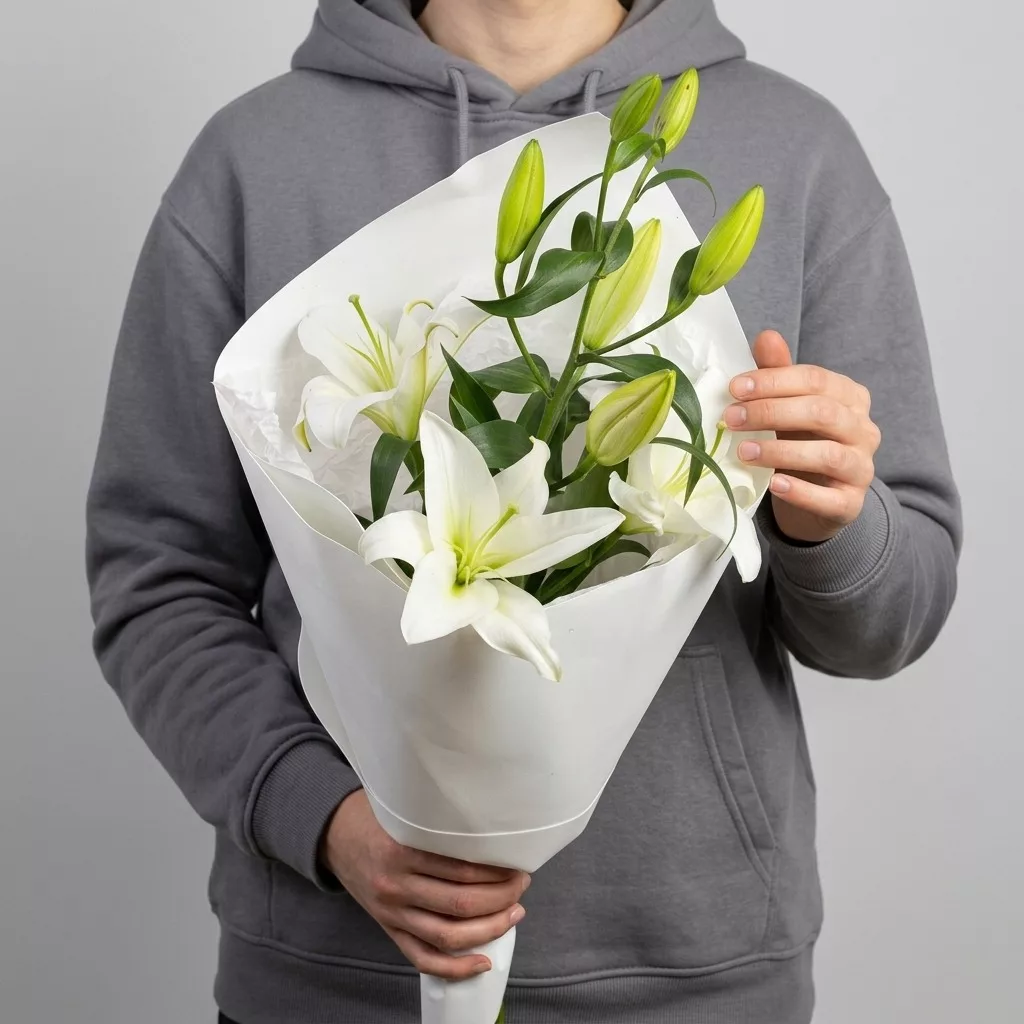
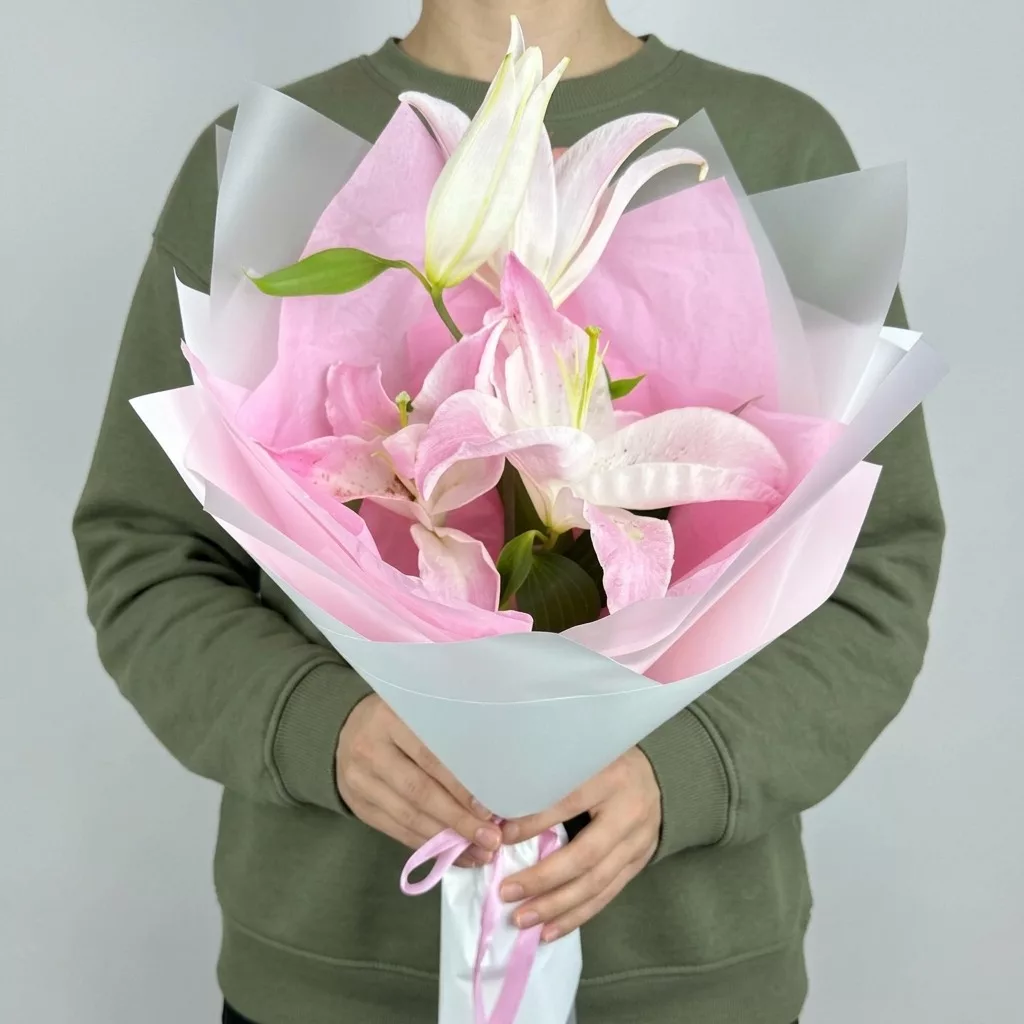

International Women's Day on 8 March: The Biggest Floral Moment of the Year
No holiday in Russia generates more flower orders than 8 March. International Women's Day is a public holiday and a deeply embedded cultural event. Every woman in a Russian workplace — from the director to the receptionist — expects to be recognised on this day, and flowers are the primary language of that recognition. If you have a female Russian partner or a mixed team, this is the single most important date in the floral calendar.
The flowers that dominate 8 March are tulips, mimosa, and ranunculus in early spring colours: soft yellows, pale pinks, lilac, and white. Roses are always appropriate, but the lighter varieties — spray roses, garden roses with open petals — feel more seasonal than a tight red bud. Peonies are not yet in season in Russia in early March, so a skilled florist will steer you toward what is genuinely fresh rather than what has been cold-stored for weeks.
The critical logistics point is this: order no later than 5 March for an 8 March delivery. The days immediately before the holiday see the highest demand of the entire year, and same-day slots fill quickly. Delivery windows in the morning of 8 March are the most requested, because recipients want the flowers visible at the start of the working day. If your partner is based in Moscow, Saint Petersburg, or another major Russian city, a 1–2 hour delivery window is realistic when ordered in advance. Include a handwritten-style note in your order — it is the detail that transforms a commercial transaction into a personal moment.
New Year from 31 December to 8 January: A Long Holiday That Rewards Early Planning
The Russian New Year holiday block runs from 31 December through 8 January, making it the longest public holiday period in the Russian calendar. Unlike in many Western countries, New Year's Eve is the primary celebration — bigger than Christmas in terms of family gatherings, gifts, and festivity. Christmas itself is observed on 7 January according to the Orthodox calendar, and many families mark both dates.
For a foreign partner, sending flowers around 30–31 December is a warm and well-received gesture. The arrangement should feel celebratory rather than wintery-minimal: think deep red roses, white chrysanthemums, burgundy alstroemeria, and seasonal greenery like eucalyptus or pine branches. Amaryllis works beautifully in this palette and has excellent vase life — up to two weeks when the stem base is kept in cool, clean water and re-cut every two to three days.
The practical challenge with New Year flowers is that couriers and recipients alike are preparing to leave for family gatherings. Aim for delivery on 29 or 30 December rather than the 31st itself, when many offices close early or staff leave by midday. If your partner works from home during the holiday block, confirm the delivery address in advance — a bouquet left at an empty office is a wasted gesture. Vase life matters more here than at any other time of year because the recipient may be travelling for part of the period; choose varieties that hold well rather than delicate open blooms that drop petals within days.
Defender of the Fatherland Day on 23 February: Flowers for Your Male Partners
23 February, officially Defender of the Fatherland Day, is the Russian equivalent of a men's national holiday. Originally a military commemoration, it has evolved into a broad celebration of masculinity and professional achievement, and it is now common for colleagues to give small gifts or flowers to male coworkers and partners on this date. A foreign partner who sends flowers to a Russian male contact on 23 February will almost certainly be the only international partner to do so — which makes the gesture unusually memorable.
The right flowers for this occasion are structured and confident rather than delicate. Deep red or burgundy roses in a tight, architectural arrangement work well. So do sunflowers, which carry associations of warmth and directness in Russian culture. Avoid anything that reads as overly romantic — a single red rose, for example, carries a different message than a bold mixed arrangement. Think volume and presence: a bouquet that makes a statement on a desk.
For a senior male partner, consider adding a complementary element like dried cotton stems, olive branches, or textured foliage that extends the arrangement's visual weight without making it feel feminine. The accompanying note is important here too — keep it professional and warm rather than effusive. Something brief that acknowledges the day and expresses appreciation for the partnership lands exactly right. Delivery on the morning of 23 February is ideal; if that falls on a weekend, many Russian companies hold small celebrations on the preceding Friday, so check the calendar for the year you are planning.
Victory Day on 9 May: A Day of Deep National Significance
Victory Day, marking the Soviet Union's victory in the Second World War, is one of the most emotionally significant dates in the Russian calendar. It is observed with parades, public ceremonies, and a strong sense of collective memory. Many Russian families lost relatives in the war, and the day carries genuine weight across generations. A foreign partner who acknowledges this holiday respectfully demonstrates cultural awareness that goes well beyond business courtesy.
The appropriate flowers for 9 May are carnations — specifically red carnations, which are the traditional flower of this commemoration and are sold and given in enormous quantities across Russia on this day. Red and white combinations are also very fitting. What to avoid: anything that could read as flippant or commercially festive, like bright tropical arrangements or novelty shapes. The tone of the bouquet should be dignified and sincere.
For a business partner, a clean arrangement of red carnations with some white alstroemeria or white lisianthus is respectful without being sombre. The note matters here perhaps more than on any other holiday — a few words acknowledging the significance of the day, expressed simply and without political commentary, will be read carefully and appreciated. Logistically, 9 May is a public holiday and most offices are closed. Residential delivery is the right approach; confirm your partner's home address if you plan to send on the day itself, or send to the office on 8 May with a note explaining the occasion.
Russia Day on 12 June and Unity Day on 4 November: Smaller Occasions, Genuine Gestures
Russia Day on 12 June marks Russian sovereignty and is a full public holiday, though it is celebrated with less intensity than 8 March or 9 May. Unity Day on 4 November commemorates a historical event from 1612 and was established as a public holiday in 2005. Both days are genuine occasions for a goodwill gesture from a foreign partner, precisely because most international contacts do not know these dates exist.
Sending flowers on either of these holidays signals that you have taken the time to understand the Russian calendar beyond the obvious dates. That kind of attentiveness is noticed in a business relationship. The arrangements do not need to be elaborate — a medium-sized bouquet of seasonal flowers in warm, national colours (white, blue, and red appear on the Russian flag) is appropriate and thoughtful without being heavy-handed.
For 12 June in summer, you have the best seasonal variety of the year: garden roses, peonies if the season is right, lisianthus, and freesia are all at peak freshness. Vase life in summer deliveries requires attention — flowers transported and arranged in temperatures above 25 degrees Celsius need to be conditioned in cool water immediately on arrival. For 4 November in autumn, dahlias, chrysanthemums, and spray roses in amber, rust, and deep pink tones suit the season perfectly. Both dates fall outside the peak order periods, so same-day or next-day delivery is more reliably available, and your bouquet will arrive at a moment when the recipient is not already overwhelmed with gifts from every direction.
Getting the Logistics Right When You Are Ordering From Abroad
Ordering flowers for delivery inside Russia from a foreign country involves a few practical steps that are worth understanding clearly before you place your first order. The most important variable is time zone: Russia spans eleven time zones, and Saint Petersburg and Moscow run on UTC+3. If you are ordering from Western Europe, the time difference is small and manageable. If you are ordering from North America or East Asia, you may be placing an order in what feels like the middle of your working day but is already evening in Russia — which means next-morning delivery is the earliest realistic option.
Specify the delivery address as precisely as possible. Russian addresses include the city, street, building number, apartment or office number, and often an entrance number for large residential buildings. An incomplete address is the single most common cause of delayed or failed delivery. If your partner works in a large business centre, include the company name and floor.
For the note, a short message in English is perfectly fine — many Russian professionals read English well, and a sincere note in your own language often feels more genuine than a translated phrase. If you want to include a few words in Russian, stick to a simple greeting: the effort is appreciated even when the grammar is imperfect. Finally, plan for the holiday itself: most Russian national holidays mean offices are closed, so either deliver the day before or confirm a residential address. Flowers ordered 48–72 hours in advance for a major holiday give you the best combination of variety choice, delivery slot availability, and peace of mind.
A bouquet sent on the right Russian holiday, chosen with care and delivered on time, does something that a follow-up email or a quarterly call cannot quite replicate — it arrives in someone's hands and tells them they were thought of. You do not need to be an expert in Russian culture to get this right. You need to know the dates, understand who the recipient is, and trust a florist who knows what is fresh and what travels well. The logistics are manageable from anywhere in the world, and the goodwill it builds in a long-term business relationship is entirely disproportionate to the effort involved.
Frequently asked questions
Which Russian holiday is the most important one to acknowledge with flowers?
8 March, International Women's Day, is the single most significant floral occasion in Russia. If your Russian partner is a woman, or if you work with a mixed team, this date should be your priority. A bouquet arriving on the morning of 8 March from an international partner is genuinely memorable and carries strong goodwill value in any professional relationship.
Can I send flowers to a Russian business partner at their office on a public holiday?
Most Russian national holidays mean offices are closed for the day, sometimes for several days in a row. The safest approach is to deliver to the office on the working day immediately before the holiday, with a note explaining the occasion. If you have your partner's residential address, doorstep delivery on the holiday itself is also a warm and personal option.
What flowers should I avoid sending to a Russian partner?
In Russian tradition, yellow flowers are sometimes associated with separation or bad luck, though this varies by generation and region. Even-numbered bouquets are traditionally reserved for funerals, so always choose an odd number of stems. Wildly tropical arrangements can feel out of place for formal business occasions — seasonal, structured bouquets tend to read as more considered and respectful.
How far in advance should I order flowers for a major Russian holiday?
For 8 March especially, order at least three days in advance — ideally by 5 March. Delivery slots and flower availability both become constrained in the final 24 hours before the biggest holidays. For other national holidays like 23 February or 9 May, 48 hours in advance is usually sufficient, though earlier is always better for popular morning delivery windows.
Does it matter what language I write the gift note in?
No — a sincere note in English is entirely appropriate and is often preferred over a machine-translated Russian phrase. Many Russian business professionals read English comfortably. What matters is that the note is personal, brief, and acknowledges the occasion by name. A few genuine sentences in your own language will always land better than a formal translated paragraph that sounds impersonal.
Ready to send flowers?
Pick the city, choose the bouquet, and a local florist takes it from there.
Choose a city →