Sending Flowers to Shlisselburg from Abroad? Here Is What You Need to Know
Shlisselburg sits at the point where the Neva River leaves Lake Ladoga, just forty kilometres east of Saint Petersburg — close enough for a fast delivery run, far enough that most international flower services have never heard of it. If someone you love lives there and you want fresh flowers at their door today, the good news is that it is entirely possible. The key is knowing what to expect before you order, so the bouquet that arrives matches the moment you are trying to create.
Why Shlisselburg Is Worth the Extra Thought
Most people ordering from London, Berlin, or Tel Aviv picture Saint Petersburg when they think of flower delivery in this part of Russia. Shlisselburg is a separate city, small and historic, and it deserves its own consideration. The town sits on the southern shore of Lake Ladoga, and that geography matters in a practical way: the climate along the lake is noticeably cooler and windier than the city centre, especially from October through April. A bouquet that survives perfectly in a warm city apartment can arrive stressed if it has been sitting in a cold vehicle on an exposed road.
The distance from central Saint Petersburg is short by Russian standards, roughly forty to forty-five kilometres, but the route runs through industrial outskirts and then opens onto open lakeside roads. Our drivers account for this in how the flowers are packed and conditioned before they leave. Knowing this helps you set realistic expectations: we do not treat Shlisselburg as a quick city drop but as a considered regional delivery that requires proper preparation.
For the recipient, none of this complexity is visible. They simply open the door to a fresh, well-presented arrangement. For you as the sender, understanding the geography means you can choose the right flowers for the season and brief us clearly on the occasion, which is where the real magic happens. A well-chosen bouquet for a Shlisselburg address lands just as beautifully as anything delivered to Nevsky Prospekt.
Bouquets we can deliver
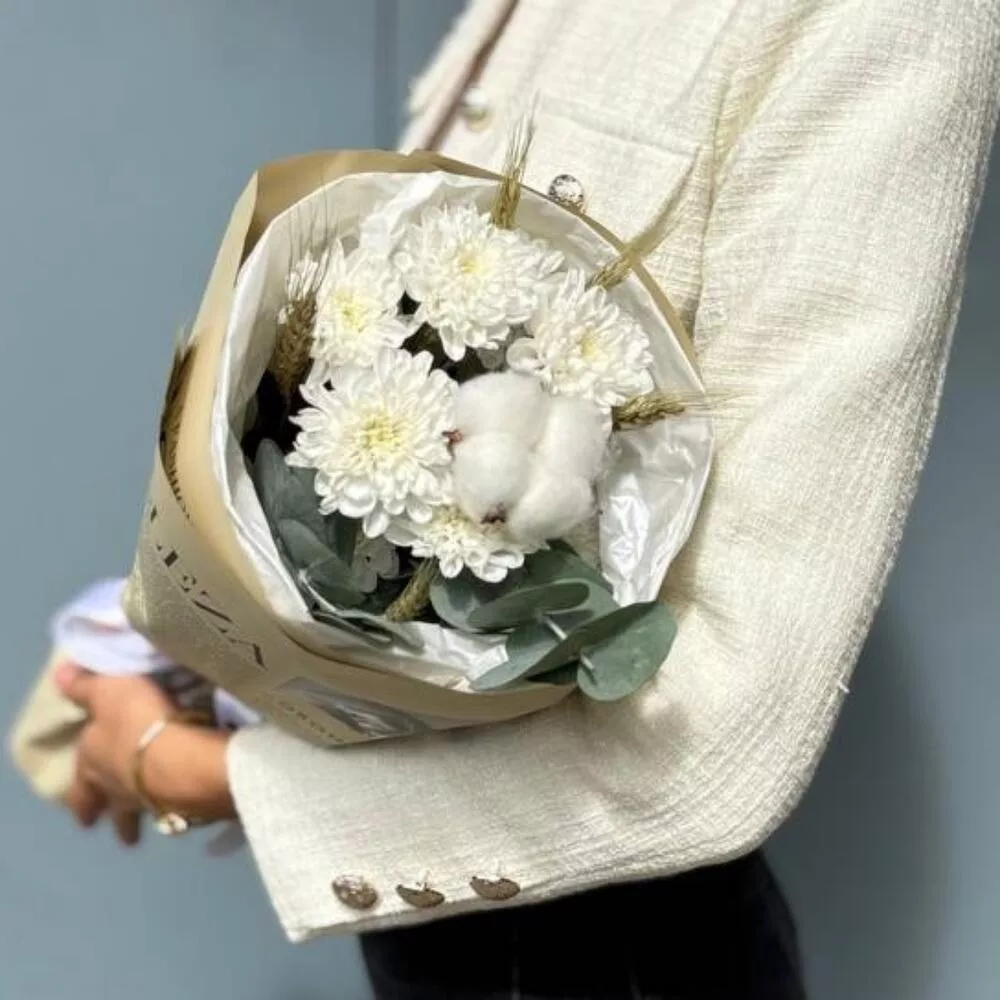

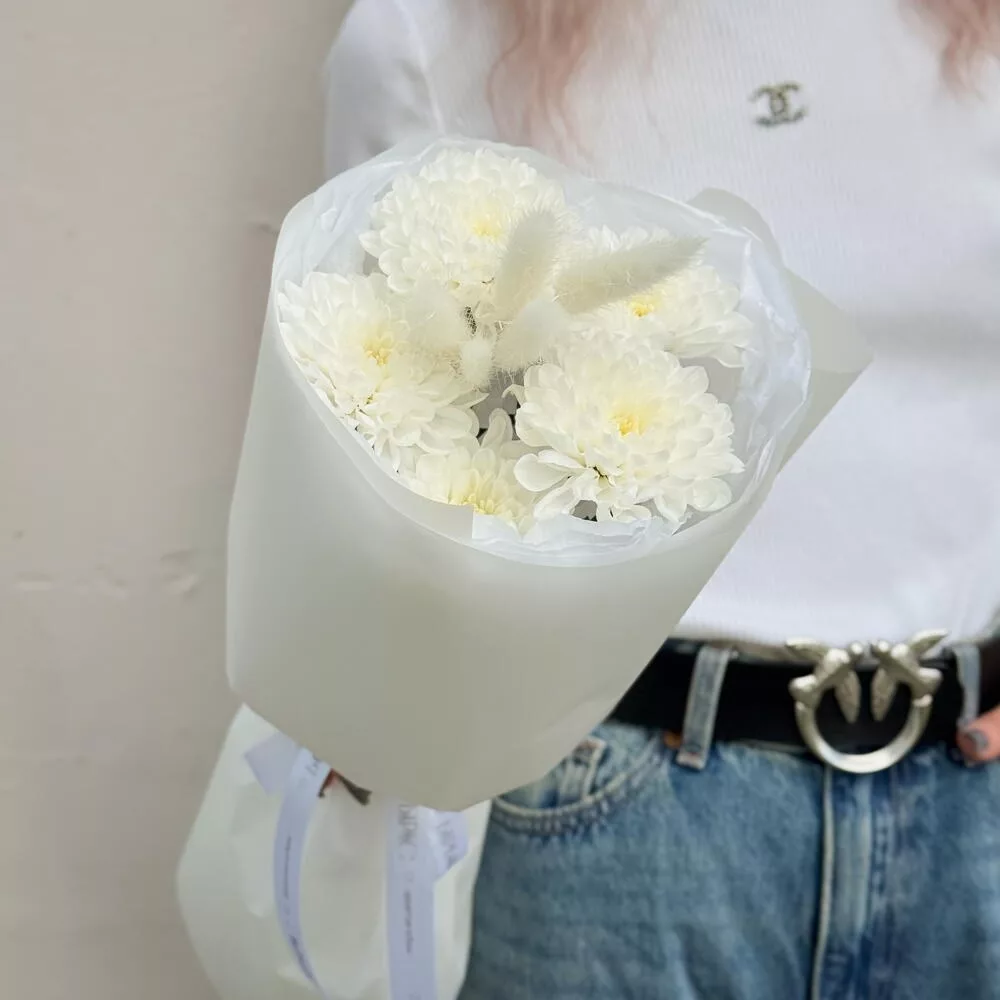
Reading the Season Before You Choose
The single most useful thing an international sender can do is match the bouquet to the actual season in northwest Russia, not the season at home. If you are ordering from Sydney in July, it is the height of a Russian summer and peonies, lisianthus, and garden roses are at their best and travel well. If you are ordering from Miami in February, Shlisselburg is deep in winter, temperatures regularly fall below minus ten Celsius, and the flowers that hold up best are compact, sturdy varieties: spray roses, alstroemeria, chrysanthemums, and carnations in dense, tightly wrapped compositions.
Spring arrives later here than in western Europe. May is the true turning point, when tulips are still relevant and the first ranunculus appear. Summer, from June through August, is the window for lush, generous bouquets — sunflowers, dahlias in late August, and fragrant freesias. September brings a beautiful but brief warm spell before the cold returns, and that is when orange and burgundy tones in roses and gerberas feel exactly right for the landscape.
Winter is not a limitation but a different palette. White and cream flowers against deep greenery look deliberately elegant rather than sparse. A round composition of white spray roses, eucalyptus, and waxflower travels well in cold conditions and looks considered rather than accidental. Tell us the date, the occasion, and the season you are working with, and we will steer you toward what is genuinely fresh and what will last once it reaches the recipient's home.
What the Occasion Tells Us About the Bouquet
Russian flower-giving customs have a few specifics that are worth knowing if you grew up somewhere else. The most practical one: even numbers of flowers are traditionally associated with mourning, so bouquets for celebrations always contain an odd number of stems. This is not a rigid rule that every Russian follows, but it is deeply familiar, and an odd-numbered arrangement will always feel right to the recipient in a way an even one might not. We follow this automatically, but if you are ordering a very precise composition, it is worth knowing.
Birthdays are the most common occasion and the most forgiving in terms of colour. Bright, warm colours — coral, yellow, hot pink — read as joyful and energetic. For a woman receiving flowers from someone far away, a lush, mixed bouquet with a dominant flower she loves surrounded by complementary textures feels personal rather than generic. Roses paired with matthiola for fragrance, or tulips mixed with muscari in spring, create that layered impression.
For anniversaries or romantic occasions, the classic red rose still carries enormous weight in Russia, but an all-red bouquet can feel heavy. A better approach is a base of red or deep pink garden roses with lighter accents — cream lisianthus, soft gypsophila — that lifts the whole composition without diluting the sentiment. For a new home, baby, or professional achievement, something architectural and long-lasting works well: gladioli, anthuriums, or a mixed arrangement with tropical elements that will hold for ten days or more. Match the flower to what the recipient is celebrating, and the delivery becomes a message in itself.
Timing Your Order Across Time Zones
This is where international senders most often stumble, and it is entirely understandable. Moscow time is UTC plus three, which means that when you are sitting down to order at nine in the morning in New York, it is already five in the afternoon in Shlisselburg. If you want same-day delivery, you need to order early in your own morning, not at lunchtime. A useful rule of thumb: if it is before noon Moscow time, same-day delivery is very likely possible. After two in the afternoon Moscow time, next-morning delivery is the safer and more relaxed choice.
For planned occasions — a birthday, an anniversary, a graduation — ordering a day or two in advance removes all the time-zone anxiety. You choose the date, specify the morning or afternoon window, and we handle the rest. The flowers are prepared and conditioned the morning of delivery rather than sitting overnight, so freshness is not compromised by early ordering.
One thing that catches people off guard is Russian public holidays. Russia has several extended holiday periods, most notably early January for the New Year and Orthodox Christmas period, and early May for the spring holidays. Demand is very high during these windows, and if you want flowers for a specific date within a holiday cluster, ordering several days ahead is strongly recommended. International Women's Day on the eighth of March is the single busiest day in the Russian flower calendar — if you are sending for that date, order at least three days ahead and be specific about what you want, because generic requests during peak season result in generic bouquets.
Giving the Address and Reaching the Recipient
A complete and correct address is the foundation of a successful delivery to any Russian city, and Shlisselburg is no exception. The format that works best is: street name, building number, apartment number if applicable, and any entry code or intercom number. Russian residential buildings often have a code-locked entrance door, called a domofon, and without that code the driver cannot get through to the apartment. If you know it, include it. If you do not, we will call the recipient's number to be let in.
This brings up the question of surprise deliveries. If you want the flowers to be a genuine surprise, you have two options. The first is to give us a phone number for the recipient and let us call ahead — we can be discreet about who sent them, simply saying we have a delivery. The second is to give us the entry code yourself and ask us to leave the flowers with a neighbour or building concierge. Completely unannounced deliveries to Russian apartment buildings are difficult in practice, and it is better to plan for one of these approaches than to hope the door will be open.
For a house address rather than an apartment, the process is simpler: street and house number, and a working phone number is enough. We will call when we are close. The phone number you provide should be a Russian mobile number if possible, as international numbers can sometimes fail to connect through our dispatch system. If the recipient only has an international number, let us know and we will find a workaround.
The Card Message and What to Write
The card is where the delivery becomes personal, and it deserves more thought than most senders give it. A message in Russian will feel warmer to a Russian-speaking recipient, even if your Russian is imperfect. A simple phrase written in Cyrillic carries more emotional weight than the same words in Latin letters, because it shows effort. If you are not confident writing in Russian, write your message in English and ask us to translate it — we will render it naturally rather than literally, which matters when the words are meant to touch someone.
Keep the message short and direct. Russian communication tends toward the sincere and the specific rather than the elaborate. Saying exactly what you feel — that you are thinking of them, that you wish you could be there, that you are proud of them — lands better than a long, ornate paragraph. A single honest sentence on a card often moves people more than a paragraph of careful phrasing.
If the occasion is a birthday, it is customary to wish the person health first, then happiness, and then whatever is specific to them — success in work, joy in family, whatever fits. This is not a rule but a pattern that feels natural to Russian recipients. For other occasions, follow your instinct. The fact that the flowers came from abroad, from someone who made the effort to send them across a long distance, is already a powerful statement. The card just needs to say what the flowers mean.
Helping the Recipient Keep the Flowers Fresh
A well-made bouquet delivered to Shlisselburg should last seven to ten days with basic care, and some varieties will go longer. The recipient may not know what to do when the flowers arrive, especially if they are not in the habit of receiving them. If you want to include care instructions, we can print a short note with the delivery, or you can send a quick message to the recipient after they receive the flowers.
The basics are simple and universal. Cut the stems at an angle under running water before placing them in a vase — this opens up the stem and lets the flower drink properly. Change the water every two days and trim the stems again each time. Keep the vase away from direct sunlight, radiators, and fruit bowls, because ethylene gas from ripening fruit shortens flower life noticeably. In winter, Russian apartments are often very warm and dry from central heating, which speeds up wilting; a cool room at night extends vase life significantly.
Different flowers in a mixed bouquet age at different rates. Alstroemeria and chrysanthemums typically outlast roses and tulips in the same arrangement. As individual stems fade, removing them keeps the rest looking fresh longer and prevents bacteria from building up in the water. Lisianthus, which resembles a ruffled rose, is one of the longest-lasting cut flowers and is worth requesting specifically if you want the bouquet to still look beautiful a week after delivery. Passing on even one or two of these tips to the recipient turns a beautiful moment into a lasting one.
Sending flowers to Shlisselburg from the other side of the world is less complicated than it sounds once you know the landscape — the time zones, the seasons, the address format, and the small cultural details that make a bouquet feel like it came from someone who really thought about it. The distance between you and the person receiving the flowers does not have to show in the arrangement. A fresh, well-chosen bouquet at the right moment says exactly what you mean, regardless of how many kilometres separate you when it arrives.
Frequently asked questions
Can I order flowers for Shlisselburg if I do not speak Russian?
Yes, entirely. Our ordering process works in English and we can translate your card message into Russian for you. The only thing to prepare in advance is the recipient's full address and a working phone number. If you are unsure how to write the address in Russian format, write it as you have it and we will format it correctly on our end before the delivery goes out.
How far in advance should I order for a specific date?
For a regular weekday delivery, ordering the day before is comfortable. For major Russian holidays — International Women's Day on March 8th, New Year, and the May holidays — place your order at least three days ahead. During peak periods, specific flower varieties sell out quickly and early orders allow us to source exactly what you want rather than substituting at the last moment.
What happens if the recipient is not home when the flowers arrive?
Our driver will call the recipient's phone number before arriving. If there is no answer, we will attempt delivery to a neighbour or building concierge with the recipient's permission if you have noted that option in your order. We will always contact you as the sender if a delivery cannot be completed, and we will reschedule at no extra charge in most cases.
Which flowers travel best to Shlisselburg in cold winter months?
Spray roses, alstroemeria, chrysanthemums, lisianthus, and carnations are the strongest performers in cold conditions. They are dense, low in moisture loss, and hold their shape during a chilled vehicle journey. We pack winter deliveries with insulating wrap as standard. Avoid requesting tropical flowers like bird of paradise in deep winter unless you are certain the recipient's home is very warm.
Is it true that I should only send an odd number of flowers in Russia?
Yes, this is a genuine and widely observed custom. Even numbers of flowers are traditionally associated with funerals, so for any celebratory occasion — birthdays, anniversaries, congratulations — an odd number is the right choice. We follow this automatically in every bouquet we compose, so you do not need to count or specify unless you have a particular number in mind for personal reasons.
Ready to send flowers?
Pick the city, choose the bouquet, and a local florist takes it from there.
Choose a city →