Sending Flowers to Sukhinichi from Abroad: What You Need to Know
You are somewhere outside Russia — maybe in Berlin, Dubai, or Toronto — and someone you love is in Sukhinichi, a quiet town in Kaluga Oblast. You want to send them flowers that arrive fresh, look beautiful, and feel personal. The distance makes it feel complicated, but with the right preparation it is genuinely straightforward. This article walks you through everything: timing, flower choices, Russian gifting customs, and how to make sure the bouquet lands exactly as you imagined it.
Why Sukhinichi Is Reachable and What That Means for Your Order
Sukhinichi sits in Kaluga Oblast, roughly 270 kilometres southwest of Moscow. It is a small town, which means the person receiving your flowers will almost certainly notice the gesture more than someone in a big city where deliveries are routine. A bouquet arriving from abroad carries real weight here — it is an event, not just a transaction.
Turboflora delivers across Russia, and Sukhinichi is within our service area. Delivery windows depend on when the order is placed and the recipient's schedule, so the earlier in the day you confirm your order, the more comfortable the timing. Aim to place your order before noon Moscow time if you want same-day delivery — Moscow time is UTC plus three hours, which is worth writing down before you start.
Because Sukhinichi is not a metropolitan centre, the address details you provide matter more than usual. Russian addresses follow a specific format: region, city, street, building number, apartment number. If your recipient lives in a private house rather than an apartment block, note that clearly. A precise address prevents delays and means the flowers arrive at peak freshness rather than sitting in transit while someone tries to locate the building.
The recipient does not need to do anything special to prepare. They simply need to be reachable by phone around the expected delivery window, which is standard practice across Russia for any courier delivery.
Bouquets we can deliver

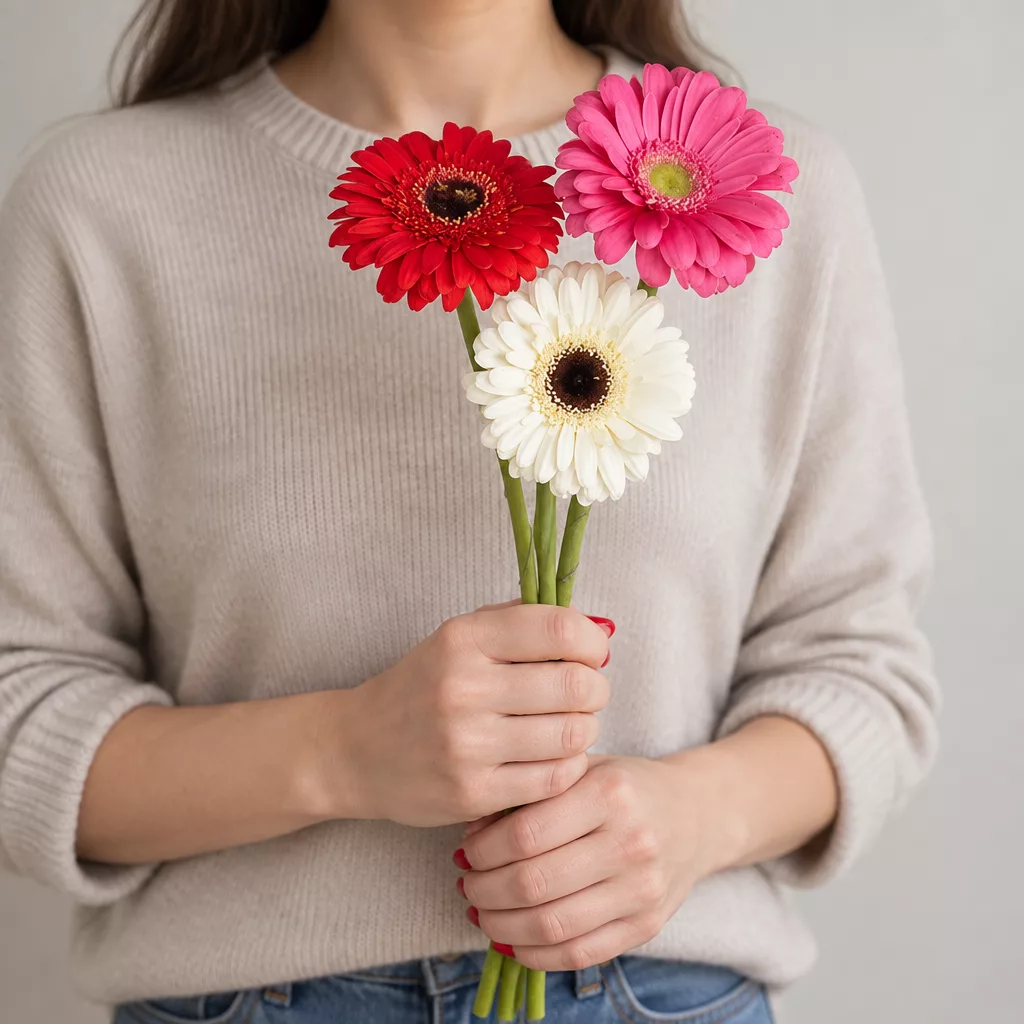

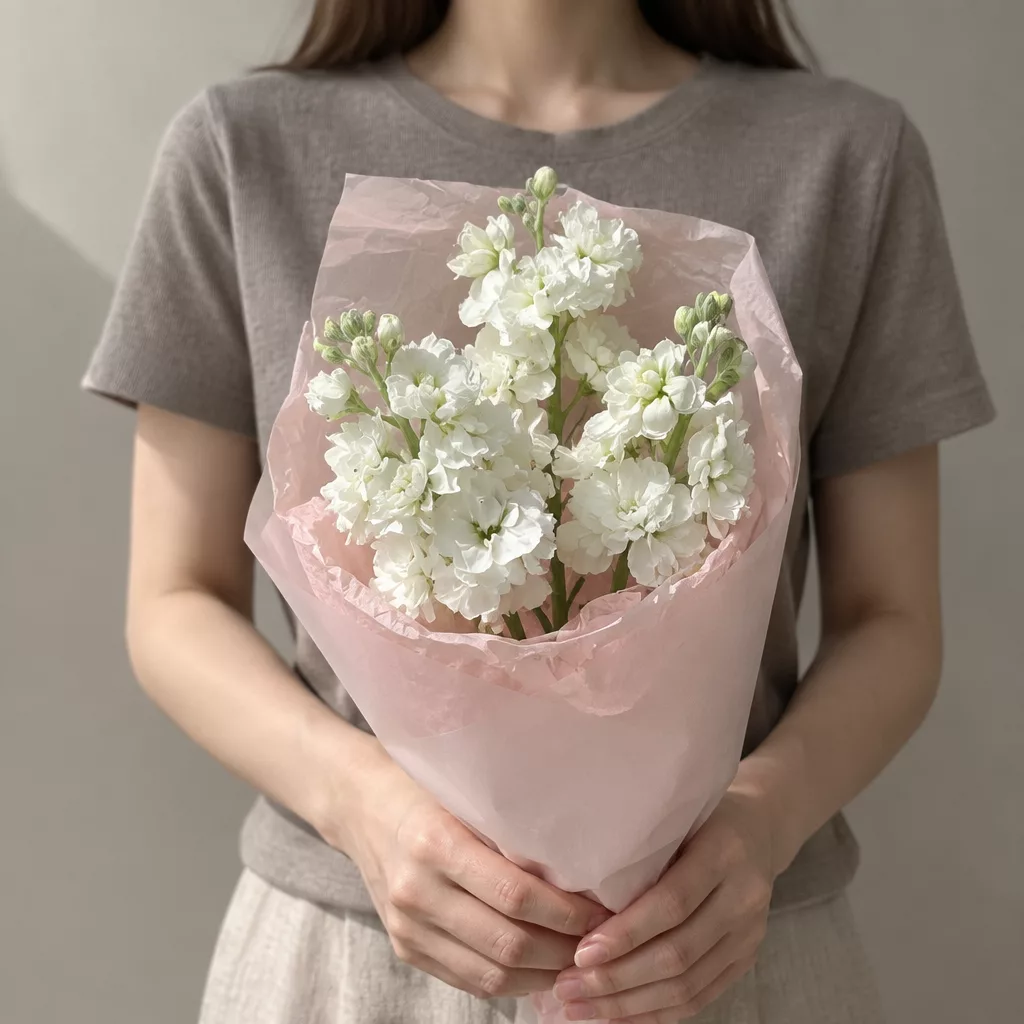
Understanding Russian Flower Customs Before You Choose
If you did not grow up in Russia, a few gifting customs are worth knowing so your bouquet sends exactly the right message. The most important one: always send an odd number of stems. Even numbers of flowers are associated with mourning in Russian tradition, so a bouquet of ten roses, however beautiful, would feel wrong to most recipients. Bouquets of five, seven, nine, or eleven stems are all perfectly natural choices.
Colour carries meaning too, though less rigidly than the odd-number rule. Red roses signal romantic love and are widely understood that way — if you are sending to a mother, colleague, or friend, a mixed palette or a single-colour arrangement in pink, white, or coral reads as warm and celebratory without being romantic. Yellow flowers were once considered unlucky in Soviet-era thinking, but that association has softened considerably among younger generations. If in doubt, a mix of white and pink is universally safe and genuinely lovely.
Wrapping style also matters. Russian bouquets are typically presented with the stems visible and the flowers facing upward, often wrapped in craft paper or cellophane with a ribbon. This is different from the low, compact arrangements common in Western European florist shops. If you have seen Russian bouquets on social media, you will recognise the tall, generous silhouette — that is the local expectation, and it is what Turboflora prepares by default.
A handwritten card in Russian is a thoughtful touch. If you write your message in English, our team can help format it so the card feels natural to the recipient.
Choosing Flowers for the Occasion and the Person
Start from the recipient, not the catalogue. Think about who they are and what this moment means to them, and the right flowers follow naturally from that.
For a birthday, especially for a woman, roses remain the classic choice in Russia — garden roses with full, ruffled heads feel more personal than tight hybrid tea buds. Peonies are beloved when in season, typically from late spring through early summer. Ranunculus and lisianthus work beautifully in a birthday bouquet because they have soft, layered petals that look abundant without being heavy. A bouquet built around one hero flower — say, blush peonies — with supporting textures like eucalyptus, waxflower, or white matthiola feels considered and sophisticated.
For a congratulatory moment — a new job, an anniversary, a graduation — white and cream tones read as elegant and celebratory. White spray roses mixed with cream freesia and a few stems of green trick dianthus give a bouquet freshness and movement. Alstroemeria is an underrated choice here: it is long-lasting, comes in many shades, and fills out an arrangement generously.
If you are sending to a man, which is increasingly common in Russia for birthdays or professional milestones, consider something architectural and unfussy. Sunflowers, anthuriums, or a monochrome arrangement of deep burgundy roses with minimal foliage tend to land well.
If you are unsure, describe the person and the occasion in your order notes. A working florist reads those notes and adjusts the composition accordingly.
Timing Your Order Across Time Zones
Time zone arithmetic is the part that trips up most international senders, and a small miscalculation can push a same-day delivery into the next morning. Moscow time — the reference for all Turboflora operations — is UTC plus three hours. That means if you are in London, you are two hours behind in summer and three hours behind in winter. New York is six hours behind Moscow in summer, eight in winter. Dubai is one hour ahead of Moscow year-round.
The practical rule is to place your order before noon Moscow time for same-day delivery. If you are in New York and it is nine in the morning your time in summer, it is already three in the afternoon in Moscow — same-day delivery is unlikely unless you move quickly. The safest approach for international senders is to order the evening before, your local time. That almost always lands your order in the morning Moscow window.
Scheduled delivery is your best tool. When you place the order, you can specify the delivery date and a preferred time window. This removes the time zone guesswork entirely. Choose a window when your recipient is likely to be home — late morning or early afternoon tends to work well for people who are not office workers, while early evening suits those who work standard hours.
If there is any uncertainty about the recipient's schedule, leave a note asking our courier to call ahead. Russian delivery couriers routinely call before arrival, so this is standard practice and never feels intrusive.
What Happens to Flowers in Transit and How Freshness Is Maintained
Freshness is the thing international senders worry about most, and it is a reasonable concern. The good news is that Turboflora sources flowers for delivery, not for display — meaning the stems are cut, conditioned, and packed specifically to survive the journey from our preparation space to the recipient's door in Sukhinichi.
Temperature is the key variable. Cut flowers are happiest between four and eight degrees Celsius. In summer, when Sukhinichi can see temperatures above twenty-five degrees, our couriers use insulated packaging and plan routes to minimise time in a warm vehicle. In winter, the opposite risk applies — roses and tropical varieties like anthuriums can suffer cold damage below two degrees. Stems are wrapped to protect against frost exposure during the transfer from vehicle to door.
Roses are the most temperature-sensitive common cut flower. A rose that has been chilled correctly will open gradually over three to five days. One that has been left in a warm car for an hour may open all at once and drop petals within two days. This is why we pay attention to transit conditions, not just the bouquet composition.
Lisianthus and alstroemeria are notably more forgiving in transit and are excellent choices when you are sending in summer or want maximum vase life. Peonies, when sent in bud, travel beautifully and open over several days, giving the recipient the pleasure of watching the bouquet change.
For very hot summer days, it is worth mentioning the season in your order notes so the preparation team can factor it into packaging decisions.
What to Write on the Card — and How to Say It
The card is often the part that matters most to the recipient, and international senders sometimes underestimate it. A beautiful bouquet with a generic or awkward message feels incomplete. Take a few extra minutes with this part.
In Russia, card messages tend to be warmer and more direct than in some northern European cultures. Phrases like 'I am so proud of you' or 'You deserve every beautiful thing' are not considered over the top — they are genuinely appreciated. If you are writing in English, that is completely fine; many Russians read English, and a message in your own language feels authentic rather than translated.
If you want to include something in Russian, a few phrases work universally well. 'S dnyom rozhdeniya' means happy birthday. 'Pozdravlyayu' means congratulations. 'Ya tebya lyublyu' means I love you. You do not need to transliterate these perfectly — even a phonetic attempt on the card is charming rather than embarrassing.
Keep the message specific to the person and the moment. 'Happy birthday' alone feels thin. 'Happy birthday — I keep thinking about that summer in Lisbon and wishing I could be there with you today' is the kind of message that makes someone put the card somewhere they will see it for weeks.
You can submit your card message in the order notes field in any language. If you want help phrasing something in Russian, mention that in the notes and the team will assist. The card is printed and placed inside the bouquet wrapping before delivery.
After Delivery: Care Tips to Pass Along to Your Recipient
Once the bouquet is in your recipient's hands, a few simple steps will significantly extend how long it stays beautiful. If you can include these tips in your message or send them separately, your recipient will appreciate the thoughtfulness — and the flowers will last longer, which reflects well on the whole gesture.
The first thing to do after receiving a bouquet is to trim the stems at a diagonal angle, about two centimetres from the bottom, and place them immediately in clean, cool water. Diagonal cutting increases the surface area for water uptake. Many people skip this step because the bouquet looks fine as it arrives, but it makes a genuine difference over the following days.
Change the water every two days. Bacteria build up in vase water and block the stems, which is the most common reason flowers fade faster than they should. A clean vase and fresh water are more effective than any commercial flower food, though a small sachet of flower food dissolved in the water does help if one is included with the bouquet.
Keep the arrangement away from direct sunlight, radiators, and fruit bowls. Ripening fruit releases ethylene gas, which accelerates petal drop in roses and lisianthus in particular. A cool room away from heat sources — between sixteen and twenty degrees — is ideal.
Roses and peonies will open further over the first two days, so a bouquet that looks tightly budded on arrival will be fully open and generous by day two. Alstroemeria and spray roses hold their form for seven to ten days with good care. Lisianthus can last up to two weeks, making it one of the best value flowers for a long-lasting arrangement.
Sending flowers to Sukhinichi from abroad is less complicated than it sounds once you understand the timing, the customs, and the small details that make a bouquet feel genuinely personal. The distance between you and the recipient does not have to show in the flowers — a well-chosen, carefully prepared bouquet says that you planned, that you thought about them, and that you wanted to give them something real. Turboflora handles the logistics and the freshness; your job is simply to decide who you are celebrating and what you want them to feel when the door opens.
Frequently asked questions
Can I order flowers for Sukhinichi if I do not speak Russian?
Yes, entirely. The order process is available in English, and you can write your card message in any language. If you want the card to include Russian text, note that in your order and the team will handle the wording. The recipient's address should follow the standard Russian format — region, city, street, building, apartment — which you can confirm with the recipient beforehand.
How far in advance should I place my order from a different time zone?
The safest approach is to order the evening before your local time, which typically places the order in the morning Moscow window. Moscow is UTC plus three hours. If you are in North America, ordering before you go to sleep almost always ensures same-day delivery the following day in Sukhinichi. Scheduled delivery lets you lock in a specific date and time window, removing the guesswork entirely.
What flowers are available year-round for delivery to Sukhinichi?
Roses, alstroemeria, lisianthus, spray roses, and chrysanthemums are reliably available throughout the year. Peonies are seasonal, typically late spring through early summer. Sunflowers are available most of the year but peak in summer. If you have a specific variety in mind, mention it in your order notes and the team will confirm availability or suggest the closest alternative.
What if the recipient is not home when the courier arrives?
The courier will call ahead before arrival, which is standard practice for all Russian deliveries. If the recipient is temporarily unavailable, the courier will arrange a short wait or a revised time. It helps to provide the recipient's mobile number when placing the order and to let the recipient know a delivery is coming, even if you want to keep the specific contents a surprise.
Is it appropriate to send flowers to a man in Russia?
Yes, and it is becoming increasingly common for birthdays, professional achievements, and significant anniversaries. The arrangement simply needs to feel considered rather than decorative. Monochrome bouquets — deep red roses, all-white arrangements, or rich burgundy and green combinations — tend to work well. Sunflowers are also a popular and well-received choice. Avoid very pastel or delicate compositions if you want the bouquet to feel suited to the recipient.
Ready to send flowers?
Pick the city, choose the bouquet, and a local florist takes it from there.
Choose a city →