How to Send Flowers to Tomsk from Abroad and Get It Right
You are sitting in Berlin, Toronto, or Dubai, and someone you love is having a birthday in Tomsk tomorrow. You want flowers on their doorstep, fresh and beautiful, not a apologetic message saying delivery was not possible. Sending flowers across that distance feels complicated, but it does not have to be. What you actually need is clear information about timing, the right varieties for Siberian conditions, and an understanding of what will genuinely move the person receiving them — and that is exactly what this guide gives you.
Understanding Tomsk and Why It Changes Everything About Flowers
Tomsk is not Moscow. It sits deep in Western Siberia, and that geography shapes every practical decision you make when ordering flowers from abroad. The city has a genuine continental climate: winters push well below minus twenty Celsius, and even spring and autumn bring sharp overnight frosts. That matters enormously for cut flowers, which are living things sensitive to cold shock the moment they leave a warm vehicle.
When you picture the recipient opening the door in January, think about what a bouquet of garden roses or hydrangeas experiences in those few seconds of transition from a heated delivery bag to a Siberian hallway. Quality florists account for this with insulated packaging and fast handoff, but the flower choice itself also plays a role. Roses with thick, waxy petals — varieties like Avalanche or Explorer — travel the cold far better than open, delicate blooms.
Tomsk also has a strong university culture and a younger, educated population. The city appreciates thoughtful presentation. A bouquet that arrives looking considered — not just a generic round bunch — will be noticed and remembered. Residents there are used to seeing seasonal Siberian flowers like lisianthus and alstroemeria alongside imported roses, so you have real creative range to work with.
Finally, Tomsk is three hours ahead of Moscow, which is itself two or three hours ahead of most of Western Europe, and ten or eleven hours ahead of the North American East Coast. That time gap is the first practical thing to get right before you think about anything else.
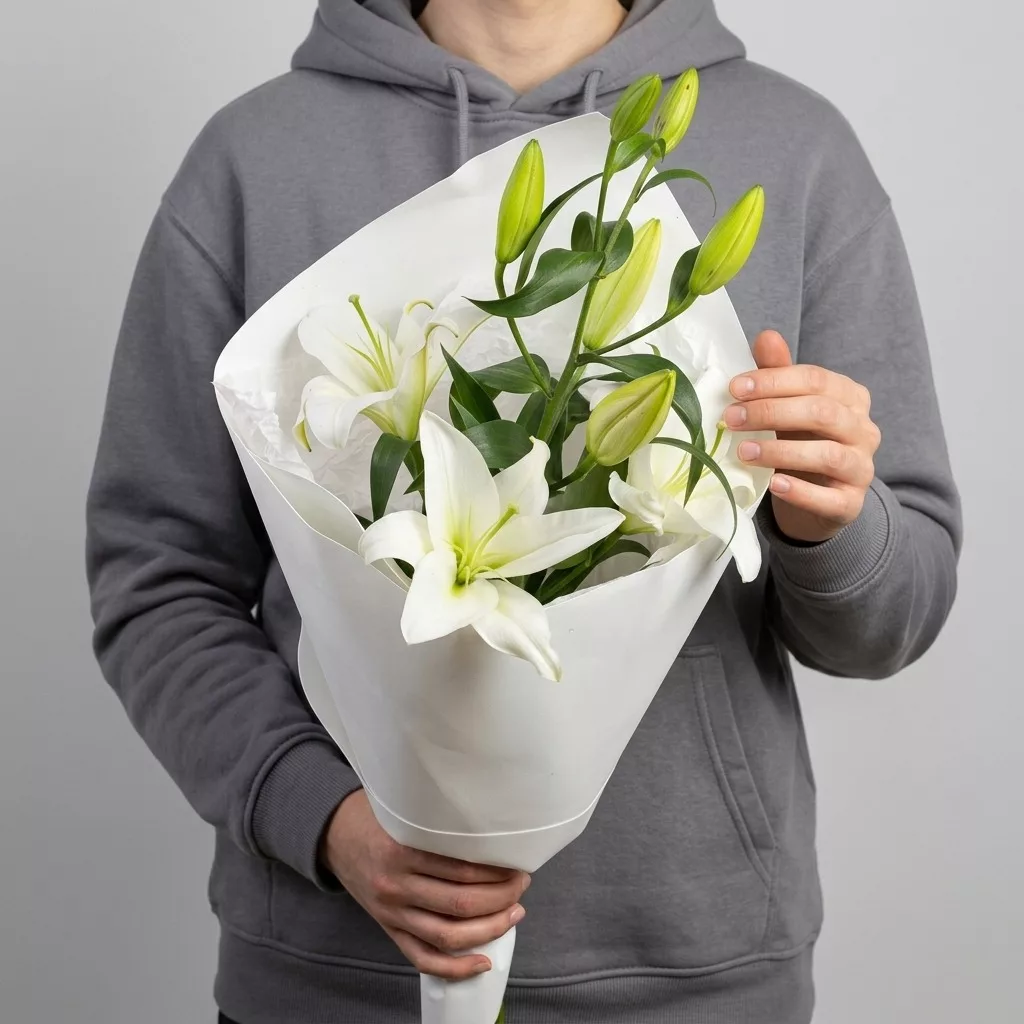
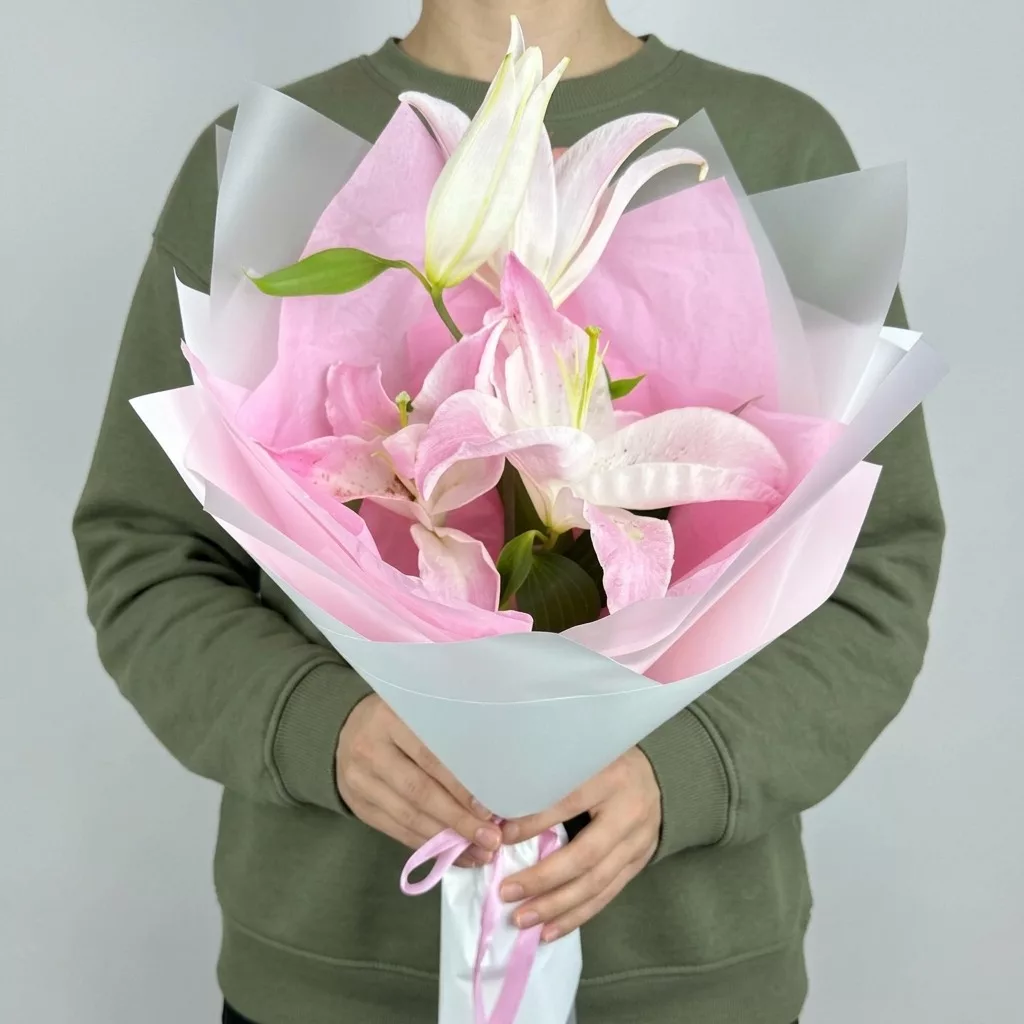
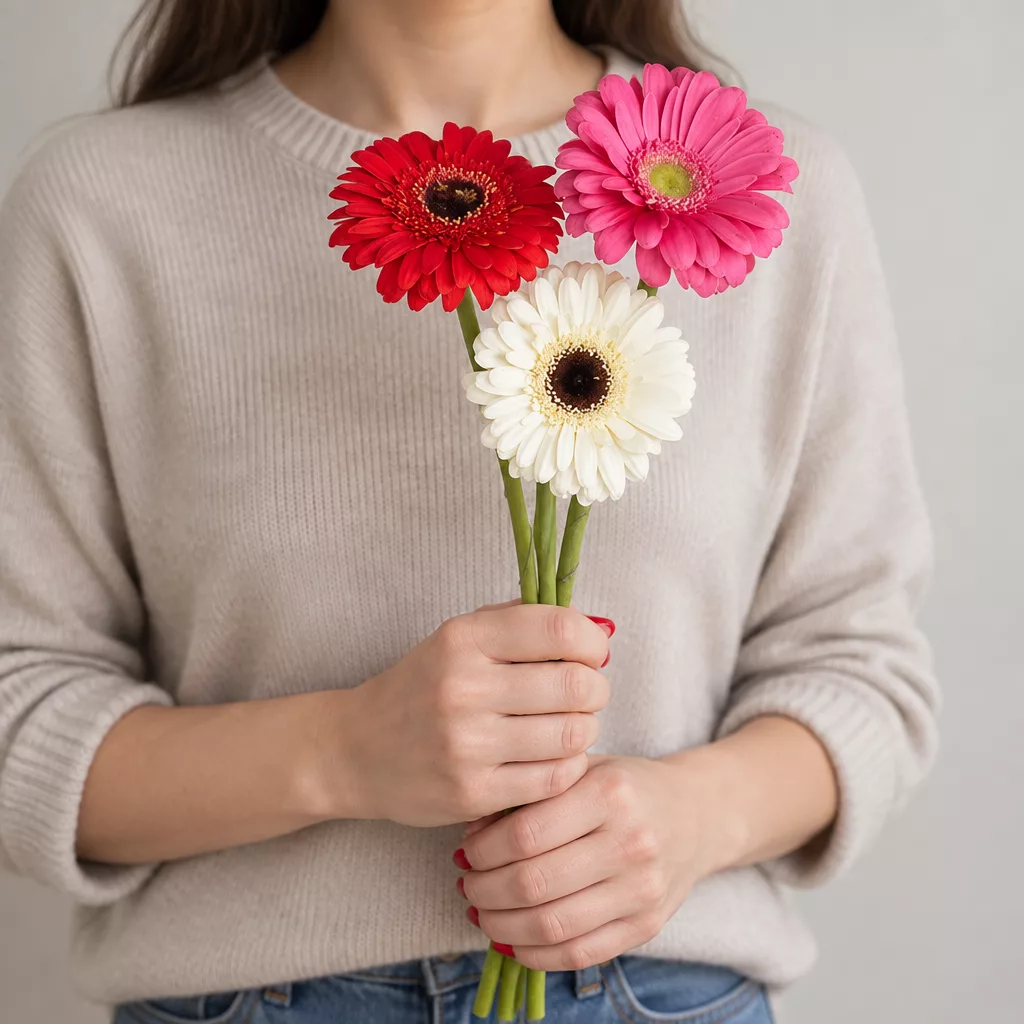
Bouquets we can deliver

Getting the Timing Right When You Are Several Time Zones Away
The most common mistake international senders make is ordering flowers according to their own clock. You place an order at nine in the evening thinking you are being organised, but in Tomsk it is already midnight or later, and the delivery window you chose has passed. Before you do anything else, convert the delivery time you want into Tomsk local time and work backwards from there.
Tomsk operates on Krasnoyarsk Time, which is UTC plus seven. Write that down somewhere visible while you are placing the order. If you want flowers to arrive at noon on a birthday, that is five in the morning in Paris, two in the morning in London, and nine the previous evening in New York. Planning ahead by at least twenty-four hours is strongly recommended for international senders, and forty-eight hours gives you real comfort.
Same-day delivery within Tomsk is genuinely possible when you order early enough in the Tomsk morning — before eleven o'clock local time is a reliable rule of thumb. If you miss that window, scheduling for the following morning is usually the smarter choice rather than rushing a late-afternoon delivery that might catch the recipient out of the house.
For significant occasions — anniversaries, major birthdays, International Women's Day on the eighth of March — order even further ahead. The eighth of March is the single busiest flower day in Russia, and demand in Tomsk is intense. Placing your order a week in advance for that date is not excessive; it is simply wise. The same applies to the fourteenth of February, though Women's Day dwarfs Valentine's Day in cultural importance across Russia.
Russian Flower Customs You Should Know Before You Choose
If you grew up outside Russia, some of the etiquette around flowers here will be unfamiliar, and getting it wrong can turn a kind gesture into an awkward one. The most important rule: always send an odd number of flowers. Even numbers of flowers in Russia are associated with mourning and are placed at graves. A bouquet of twelve roses, however beautiful, sends the wrong message entirely. Eleven, thirteen, fifteen, twenty-one — these are the numbers to aim for.
Colour carries meaning too, though the rules are more relaxed than they once were. Red roses remain the classic romantic declaration. For a friend, colleague, or family member, mixed bouquets in soft pinks, whites, corals, and lilacs read as warm and celebratory without romantic implication. Yellow flowers, once considered unlucky in Soviet-era thinking, are now widely popular and carry no negative weight among younger Russians — a generous mixed bouquet with yellow tulips or yellow spray roses is perfectly lovely.
Flowers are given in Russia for almost every occasion that matters: birthdays, professional achievements, graduations, welcoming a new home, thanking a teacher. If you are unsure of the occasion's formality, lean toward a mixed seasonal bouquet rather than a single-variety statement arrangement. Mixed bouquets feel generous and considered, whereas a single-stem gesture can read as minimal in Russian gifting culture.
Including a handwritten card message is genuinely valued. Even a short note — written in English is fine — shows that the gift came from a real person thinking of them, not just an automated order.
Which Flowers Actually Survive and Shine in Siberian Conditions
Choosing the right varieties is not about limiting yourself — it is about making sure the bouquet looks as good in the recipient's hands as it did in your imagination. For Tomsk's cold winters, roses with dense petal structure are your most reliable choice. Avalanche roses, with their creamy white petals and strong stems, are a classic for a reason. Red varieties like Explorer hold their shape beautifully in low temperatures. These are not compromise choices; they are genuinely elegant flowers.
Lisianthus is an underappreciated gem for Tomsk deliveries. It resembles a ruffled rose but is hardier, comes in white, purple, and soft pink, and lasts exceptionally well in vase — often ten days to two weeks with proper care. It photographs beautifully, which matters when the recipient will inevitably share the bouquet on social media.
Sprays of alstroemeria add colour and volume without fragility. Chrysanthemums in their modern, refined forms — not the old-fashioned round pom-pom but the elegant spider and anemone varieties — are genuinely cold-tolerant and long-lasting. In spring and summer, tulips become available in abundance and are deeply loved across Russia; a generous bunch of fifty tulips in mixed or single colours is one of the most joyful things you can send.
Avoid open garden roses or large-headed peonies for winter delivery unless you are certain of very fast transit. Their petals are simply too vulnerable to cold shock. In summer, peonies are wonderful and widely available, but timing matters. Trust the season and the florist's current stock rather than insisting on a flower that is not at its best.
How to Choose by Occasion and Make It Personal from a Distance
The distance between you and the recipient does not have to make the bouquet feel impersonal. In fact, flowers sent from abroad often carry extra emotional weight — the effort involved is visible, and that matters deeply to the person receiving them.
For a birthday, think about what the person loves rather than what seems impressive. A woman who gardens will appreciate a loose, natural arrangement of seasonal flowers over a stiff formal bouquet. A young man celebrating a professional milestone might love a graphic, modern arrangement of tropical proteas mixed with white roses — bold and architectural. Children's birthdays call for bright, cheerful colour: sunflowers, gerberas in orange and yellow, and soft green foliage that feels alive and energetic.
For a romantic occasion, roses remain the language everyone understands, but the presentation elevates everything. A mono-bouquet of deep red roses in a long-stemmed arrangement is a classic declaration. If you want something more original, a mix of dusty pink roses, white lisianthus, and eucalyptus sprigs reads as romantic but with more personality than pure red.
For a thank-you or congratulations — a new job, a university graduation, a new apartment — mixed bouquets in warm, celebratory tones work beautifully. Think coral roses paired with yellow alstroemeria and white gypsophila: generous, joyful, and completely appropriate for professional or friendly contexts.
Always add a note, even a brief one. It transforms a flower delivery into a real moment of connection, and in Russian culture, the personal gesture behind a gift is considered as important as the gift itself.
Keeping Flowers Fresh: What to Tell the Recipient in Tomsk
You have done the hard work of ordering across time zones and choosing the right flowers. Now the bouquet is in your recipient's hands, and a little practical knowledge will help it last as long as possible. You can share these tips in your card message or in a quick message after delivery — it shows you thought of everything.
The first thing to do with any fresh bouquet is trim the stems. A diagonal cut of about two centimetres, made with a sharp knife rather than scissors, opens up the stem's water channels without crushing them. Do this under running water or in a bowl if possible, then place the stems immediately into a clean vase filled with cool, fresh water. In Tomsk's dry, centrally heated interiors — and Russian apartments are kept very warm in winter — flowers lose moisture quickly, so the vase should be topped up daily.
Keep the bouquet away from direct heat sources, which are everywhere in a Siberian winter: radiators, heated floors, sunny windowsills in summer. A cool room or a spot away from direct sunlight will extend vase life significantly. Roses and lisianthus can last seven to twelve days with good care. Tulips are shorter-lived, typically five to seven days, but they are so vivid and joyful in that time that no one minds.
Remove any leaves that fall below the waterline, as they rot and cloud the water quickly. Change the water entirely every two days. These small habits make a real difference and show the recipient that the flowers were worth caring for — which, sent from abroad with love, they absolutely were.
Sending flowers to Tomsk from abroad is genuinely achievable, and when it works — when the door opens and someone you love finds a beautiful bouquet waiting for them across thousands of kilometres — it is one of the most powerful things a gift can do. The key is planning ahead for the time difference, choosing varieties suited to the season and the cold, respecting the odd-number rule, and adding a personal note that makes the moment real. Get those things right and the distance disappears entirely.
Frequently asked questions
Can I order flowers for Tomsk if I do not speak Russian?
Yes, completely. The ordering process on Turboflora works in English, and you can write your card message in any language — the recipient will understand that it came from abroad, and that personal touch adds to the meaning. You do not need to know Russian to place a successful order or to communicate the occasion clearly.
How far in advance should I order flowers for delivery to Tomsk from outside Russia?
At least twenty-four hours is recommended, and forty-eight hours is more comfortable when you are working across multiple time zones. For major Russian holidays like International Women's Day on the eighth of March, order a full week ahead. Same-day delivery is possible if you place your order before eleven in the morning Tomsk local time, which is UTC plus seven.
Why do flowers in Russia always come in odd numbers?
Even numbers of flowers are traditionally associated with mourning in Russian culture and are used for funerals. Sending an even-numbered bouquet to a living recipient carries an unintended and unwelcome message. Always choose odd numbers — eleven, fifteen, or twenty-one are popular choices for generous bouquets and feel naturally celebratory rather than counted.
What is the best flower choice for a winter delivery to Tomsk?
For Tomsk winters, choose varieties with dense petal structure that tolerate cold transit well. Avalanche or Explorer roses, lisianthus, alstroemeria, and sturdy chrysanthemum varieties are all excellent. Avoid large open-headed flowers like garden roses or peonies in the coldest months, as they are vulnerable to cold shock during the brief outdoor exposure at delivery.
Is it possible to include a gift or card with the flowers sent to Tomsk?
A personal card message can absolutely be included with your order, and it is warmly encouraged — in Russian gifting culture, the sentiment behind a gift matters as much as the gift itself. Write your message in any language when placing your order and it will be printed and included with the bouquet. Some additional gift items such as sweets or small gifts may also be available to add at checkout.
Ready to send flowers?
Pick the city, choose the bouquet, and a local florist takes it from there.
Choose a city →