Sending Flowers to Uzhur from Abroad? Here Is What to Expect
Uzhur sits in the Krasnoyarsk region of Siberia, and when you are trying to send flowers there from London, Toronto or Berlin, the distance can feel overwhelming. The good news is that the gesture itself — a bouquet arriving at someone's door within hours of your order — lands with exactly the warmth you intended, sometimes more so because it crossed so many time zones to reach them. What you need is a clear picture of how to make it work well.
Understanding the Distance and What It Actually Means for Delivery
Uzhur is a small city in Krasnoyarsk Krai, roughly in the geographic heart of Russia. When you are ordering from abroad, you are not shipping flowers physically across borders — you are placing an order with a florist service that operates within Russia and fulfils it locally. This distinction matters enormously. There are no customs delays, no international freight, no cold-chain worries crossing multiple countries. The flowers are sourced and arranged inside Russia and delivered directly in Uzhur.
What this means practically is that the main variable is not geography but timing. Uzhur operates on Krasnoyarsk Time, which is UTC plus seven hours. If you are in New York, that is a ten-hour difference. If you are in Paris, it is five. Before you place your order, convert the recipient's local time in your head. A bouquet ordered at 9 in the morning in New York arrives during Uzhur's early evening — which is often a perfectly warm moment to receive flowers.
Turboflora delivers across Russia with a one-to-two hour window after the order is confirmed. That speed does not change based on where the sender is sitting. Your order is processed the moment it comes through, and the florist team works to the same standard whether you are in Siberia yourself or calling from Sydney. The only thing that changes your experience is how clearly you communicate the recipient's address and any building entry details — more on that shortly.
Bouquets we can deliver

Choosing the Right Occasion Framing Before You Pick a Single Stem
Before you think about roses versus tulips, think about the person and the moment. Russians attach meaning to flowers in ways that differ from Western conventions, and understanding this helps you choose something that genuinely resonates rather than something that simply looks nice in a photo.
Odd numbers are the rule for celebratory occasions in Russia. A bouquet of seven roses, nine tulips or eleven peonies signals a gift for the living. Even numbers are associated with mourning and are never given as a celebration. This is not a superstition you need to worry about managing yourself — when you order through Turboflora, the arrangements are composed with this in mind — but it is useful to know so you understand why a bouquet of ten stems is never suggested for a birthday.
Colour carries weight too. Red roses signal deep romantic feeling. White flowers are elegant and suitable for many occasions but can feel more formal. Mixed seasonal arrangements in warm tones — peach spray roses, orange gerberas, yellow freesias — read as joyful and generous without any romantic implication, which makes them ideal for birthdays, promotions, or simply saying you are thinking of someone.
If the occasion is a birthday, lean into abundance. Russians tend to give generously, and a full, layered bouquet feels more appropriate than a minimal arrangement. If you are marking something quieter — a new home, a recovery from illness, a long-awaited reunion — softer colours and delicate flowers like lisianthus or alstroemeria carry the right emotional weight without overwhelming the moment.
Seasonal Flowers That Actually Arrive in Good Condition in Siberia
Siberia has a real climate, and Uzhur experiences it fully. Winters are cold — temperatures can drop well below minus twenty Celsius — and summers are short but genuinely warm. This affects which flowers survive the journey from the florist to the recipient's door, particularly in the coldest months.
In winter, hardy varieties hold up best. Chrysanthemums are exceptionally resilient and remain fresh through brief exposure to cold air. Roses, when properly wrapped and moved quickly, also travel well. Carnations are underrated in this context — they are tough, long-lasting, and available in a wide range of colours that make them versatile for any occasion. Avoid ordering delicate tropical flowers like anthurium or bird of paradise in deep winter if you want them to arrive looking their best.
Spring and early summer bring a wave of availability. From late April through June, tulips are at their peak — Dutch varieties like strong pink Dynasties or creamy white Purissima are common in Russian wholesale markets and hold well. Peonies arrive in June and are enormously popular in Russia, carrying associations of abundance and femininity. If you are ordering for a June birthday or anniversary, peonies in blush, coral or deep magenta make an immediate impression.
In autumn, dahlias and sunflowers are at their strongest. A hand-tied bunch of sunflowers with eucalyptus and orange spray roses reads as warm and grounded — exactly the right tone for a September or October celebration when the Siberian air is already turning sharp. Knowing the season helps you order with confidence rather than guessing.
Giving the Right Address Details for a City That Needs Precision
Uzhur is not a large city, but Russian addresses have a specific structure that can trip up international senders if they are not familiar with it. Getting this right is the single most important practical step you can take to ensure smooth delivery.
A Russian address typically runs: street name, building number, sometimes a corpus or block number, then the apartment number. The building number and apartment number are not the same thing, and confusing them causes real delays. If your recipient lives in a multi-storey apartment building, you need the apartment number. If they live in a private house, confirm there is no separate entrance code or gate.
Many Russian apartment buildings have an intercom system, called a domofon, at the entrance. If the building has one, the delivery team needs to know the apartment number to buzz through. If there is a door code instead of an intercom, include that in the order notes. This is not unusual to ask — florists across Russia deal with this every day, and providing the information simply makes the delivery faster.
When you are filling in the order form from abroad, write the recipient's name as it appears on their phone — because the florist will call ahead to confirm arrival. If the recipient's name is Natalia but everyone calls her Natasha, either version works, but the phone number must be correct and active. If you want the delivery to be a surprise, note that in the comments and the team will handle the call discreetly, confirming only that a delivery is on its way without revealing who sent it.
Budget Ranges and What They Look Like as an Actual Bouquet
When you are ordering from abroad, it helps to have a mental picture of what different investment levels produce, because you cannot walk into the shop and point at the display.
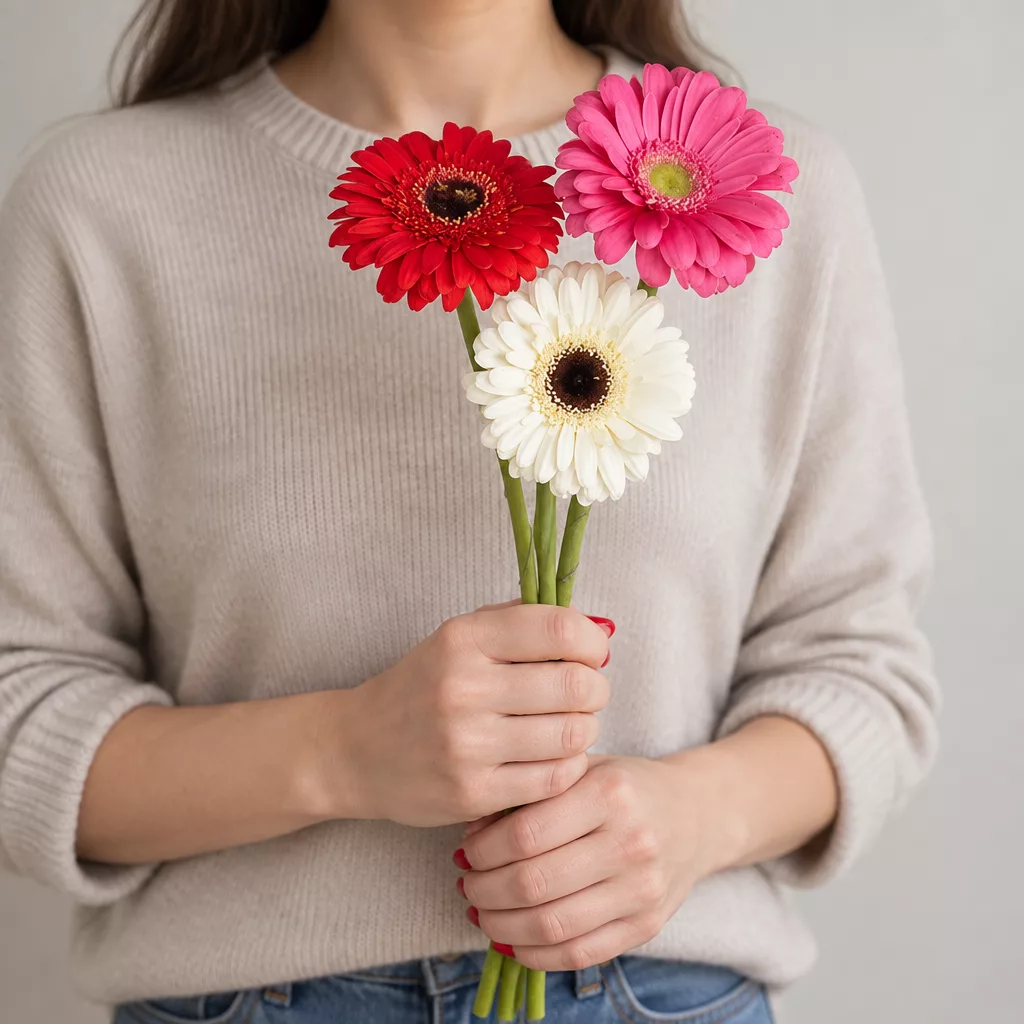
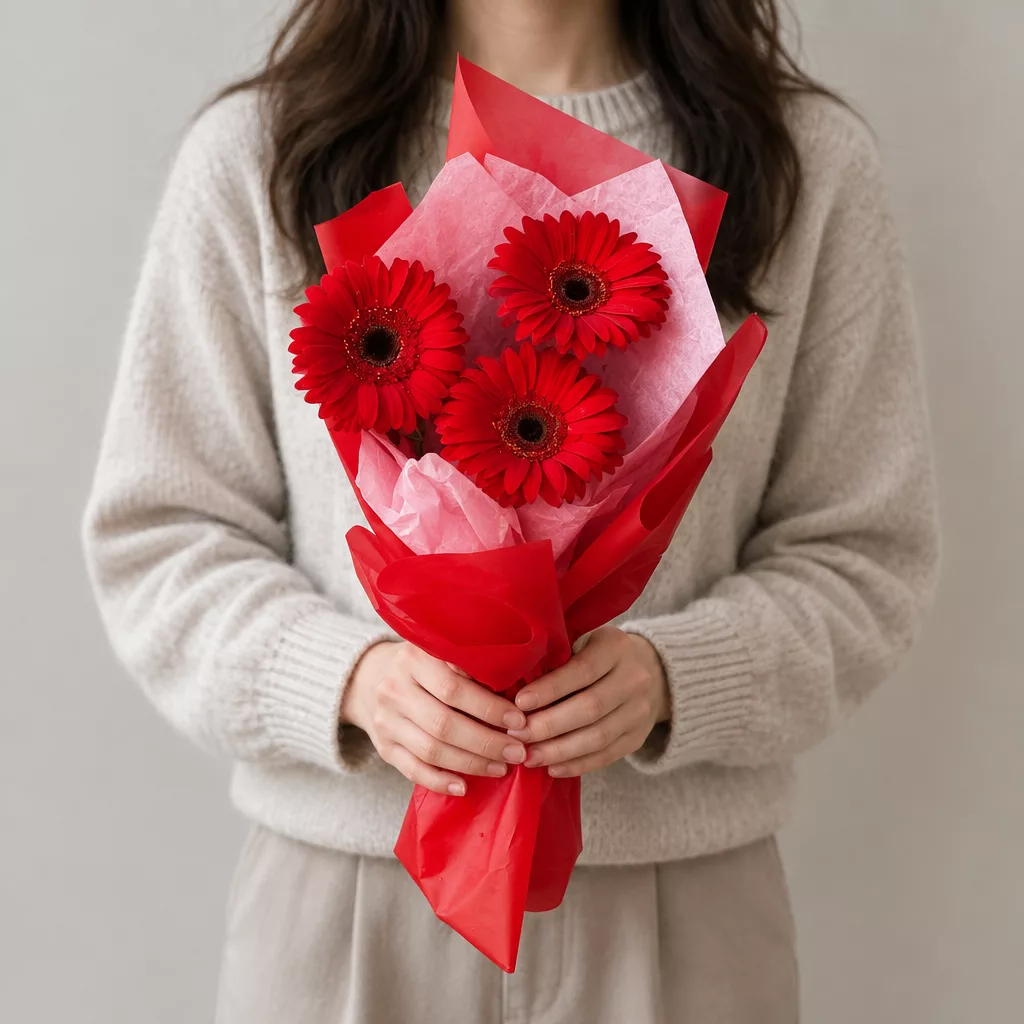
At an entry level, you are typically looking at a single-variety hand-tied bouquet — perhaps fifteen tulips in a single colour, or a cheerful bunch of bright gerberas with some greenery. This is a genuine, lovely gesture and absolutely appropriate for a colleague, a neighbour, or a casual celebration. It will not feel sparse if it is ordered with care.
At a mid-range budget, combinations become possible. A florist can work with two or three varieties — say, blush roses with white lisianthus and eucalyptus, or yellow freesias with peach spray roses and ruscus. These mixed bouquets have more visual depth and feel more considered. They are the right choice for birthdays, anniversaries, or any occasion where you want the recipient to feel genuinely seen.
At a higher budget, you are entering the territory of large-format bouquets with premium flowers — garden roses, peonies in season, or Dutch tulips in significant volume — combined with interesting foliage like Italian ruscus, cotton stems or dried elements for texture. These arrangements photograph beautifully and make a strong impression when someone opens the door. If you are celebrating something major — a significant birthday, a professional achievement, a long-distance relationship milestone — this is the level that matches the moment. Whatever your budget, communicate the occasion clearly in your order notes so the florist can make the composition feel intentional.
What Happens After the Flowers Arrive: Care Advice to Pass Along
When flowers travel from a florist to a home, the recipient's first few minutes with them determine how long they last. If you are sending flowers to someone who does not have much experience with fresh arrangements, it is worth including a short note with care instructions — or simply knowing what to tell them when you call.
The first step is trimming the stems. A diagonal cut of about two centimetres, made with a sharp knife rather than scissors, opens up the stem's water channels. Scissors crush the stem slightly, which reduces water uptake. This single step adds two to three days of vase life.
Water temperature matters more than most people realise. Lukewarm water — not cold, not hot — is absorbed faster by most cut flowers. Roses and tulips especially benefit from this. The vase should be clean, because bacteria in a dirty vase are the main reason flowers wilt prematurely. A small splash of vodka or a drop of bleach in the water is a traditional Russian trick that actually works — it slows bacterial growth.
Keep the bouquet away from direct sunlight, heat sources and ripening fruit. Fruit releases ethylene gas, which accelerates ageing in cut flowers. In a Siberian winter, a cool room is actually an advantage — chrysanthemums and carnations last up to two weeks in temperatures around fifteen to eighteen Celsius. Roses and tulips do best around eighteen to twenty Celsius. Peonies, if they arrive as tight buds, will open over two to three days in a warm room and last five to seven days at their peak. Passing this information along turns a beautiful delivery into something the recipient can enjoy for as long as possible.
The Small Details That Make a Delivery Feel Personal Across the Distance
When you cannot be in the room when the flowers arrive, the details of the order carry your presence. A handwritten card message is the most important of these. Russian recipients respond warmly to sincerity — a direct, personal sentence means more than a polished formal phrase. Write in whatever language feels natural to you. If you write in English and the recipient reads it, that itself becomes part of the story of the bouquet.
If you want to write in Russian but are not fluent, keep it simple. A short phrase like the recipient's name followed by a warm greeting translates cleanly and lands without awkwardness. Avoid long translated messages that may lose their tone — brevity in a card is elegant in any language.
Consider the timing as part of the gift. A bouquet that arrives at noon on a workday is a surprise in the middle of an ordinary Tuesday, which has its own charm. A delivery timed for the morning of a birthday means the recipient starts the day already feeling celebrated. Evening deliveries work well for romantic occasions. When you place the order, you can specify a preferred delivery window, and the team will work to honour it.
Finally, think about whether the recipient will be home. In Russia, it is common for people to be out during working hours, and a missed delivery is disappointing for everyone. If you are not certain of their schedule, a quick message — even just saying something nice is coming — means they will be there to receive it. The surprise of the flowers themselves is not diminished by knowing something is on its way. What matters is the moment the door opens.
Sending flowers to Uzhur from abroad is genuinely straightforward once you understand the few things that actually matter: the time difference, the address format, the season, and the occasion. Everything else — the composition, the wrapping, the delivery timing — is handled by a team that does this every day across Russia. Your role is to know the person well enough to choose the right moment and the right feeling, and then to trust that the flowers will carry it the rest of the way.
Frequently asked questions
Can I order flowers for Uzhur if I do not speak Russian?
Yes, entirely. The order form and customer communication at Turboflora work in English. You do not need to know Russian to place an order, write a card message or specify delivery details. If you include a card in English, it will be delivered exactly as written. The only Russian you might want is the recipient's address in its correct local format, which your recipient can provide to you in advance.
How far ahead should I order to guarantee a specific delivery time in Uzhur?
Placing your order at least two to three hours before your target delivery window gives the team comfortable preparation time. For same-day delivery, orders placed in the morning Uzhur time are safest. Remember to convert time zones — Uzhur is UTC plus seven. If you are ordering for a specific occasion like a birthday morning, placing the order the evening before your local time is a reliable approach.
What flowers should I avoid ordering in a Siberian winter?
Delicate tropical varieties like anthurium, bird of paradise and certain orchid types are vulnerable to brief cold exposure during the walk from the delivery vehicle to the door. In deep winter, stick to hardy varieties: roses, chrysanthemums, carnations and spray roses all travel well in cold conditions. Tulips are also resilient if properly wrapped. The florist team accounts for seasonal conditions, but it helps to choose robust varieties from the start.
Is it considered rude to send flowers without a card message in Russia?
It is not rude, but a card transforms the gesture. In Russian culture, the accompanying words carry real weight — flowers without any message can feel anonymous, especially in a romantic context. Even a single line identifying who sent them and why makes the bouquet feel complete. If you are stuck on what to write, something direct and warm — naming the occasion and the person — is always better than something elaborate but impersonal.
What if the recipient is not home when the flowers arrive?
The delivery team will call the recipient's phone number before arriving, which is standard practice in Russia. If there is no answer and no one is home, the team will attempt to reach you as the sender. To avoid a missed delivery, it helps to give the recipient a heads-up that something is coming without revealing the details. Alternatively, confirm their schedule before choosing the delivery window so the timing works for them.
Ready to send flowers?
Pick the city, choose the bouquet, and a local florist takes it from there.
Choose a city →