Sending Flowers to Volgograd from Abroad the Right Way
Volgograd sits on the western bank of the Volga, far from the coasts and far from most international senders who want to reach someone they love there. You are probably sitting in Berlin, Dubai, Toronto, or Tel Aviv, looking at a birthday or anniversary on the calendar and wondering whether fresh flowers can actually arrive beautifully across that distance. They can — if you understand a few things about timing, about what grows well in that continental climate, and about what a Volgograd recipient will genuinely feel when the door opens and a courier hands them something extraordinary.
Understanding Volgograd Before You Order
Volgograd is not a small city. It stretches nearly ninety kilometres along the Volga, which means the district your recipient lives in matters when you fill out the address. Always provide the full street name, house number, apartment number, and the district or microrayon if you know it. Russian addresses are written in a specific order — city, street, house, apartment — and a missing apartment number is the single most common reason a delivery has to wait at the door.
The city has a strongly continental climate: summers are genuinely hot, often above thirty-five degrees Celsius from June through August, and winters can drop well below minus fifteen. This affects which flowers travel well and how long they last once delivered. A lush garden rose that holds beautifully in Saint Petersburg in October may need extra conditioning and a cool delivery window in a Volgograd July.
Volgograd recipients tend to appreciate generosity in presentation. A single stem in a box feels sparse here; arrangements that feel full and considered land better emotionally. Think about the person opening the door — the first impression is the whole impression, and volume, colour, and fragrance all contribute to that moment. When you order from outside Russia, you are trusting the florist to carry your feeling across thousands of kilometres, so being specific about the person and the occasion gives the arrangement its best chance of feeling personal rather than generic.
Bouquets we can deliver

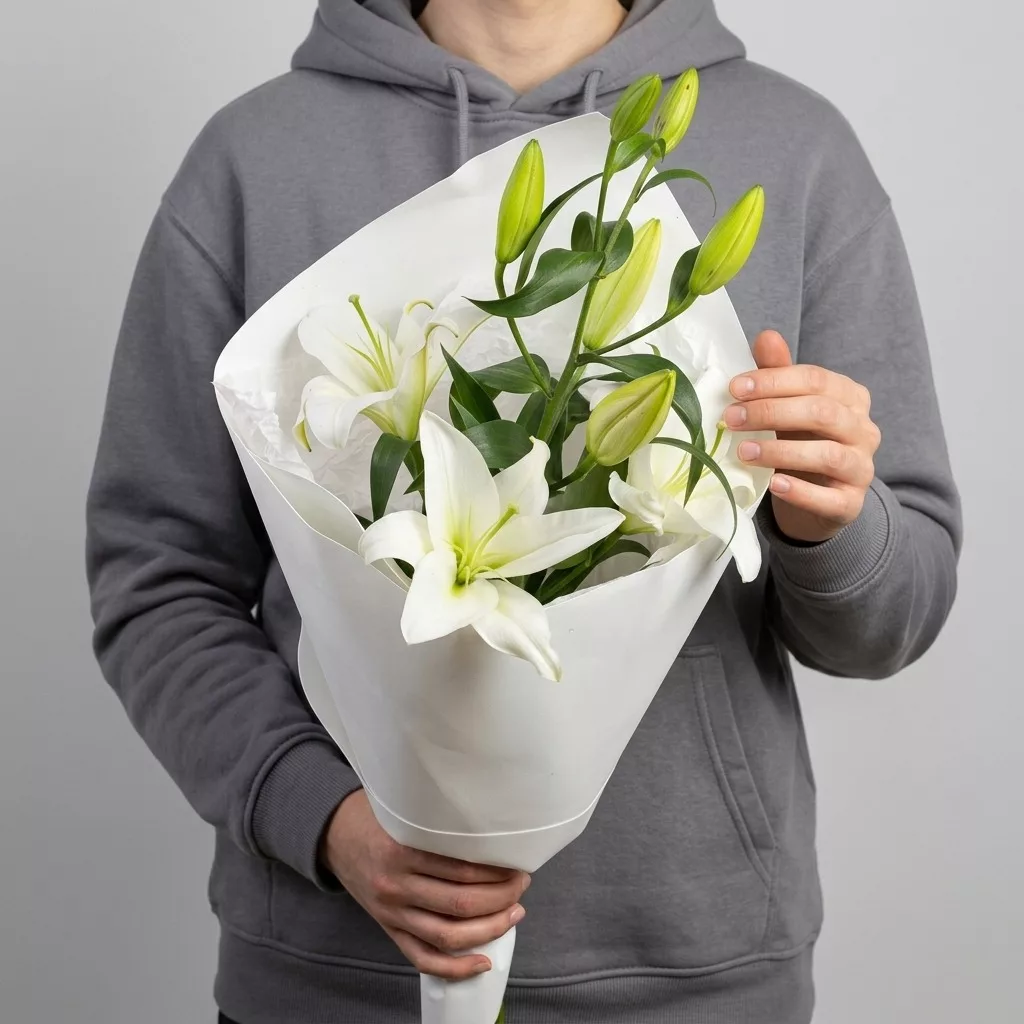
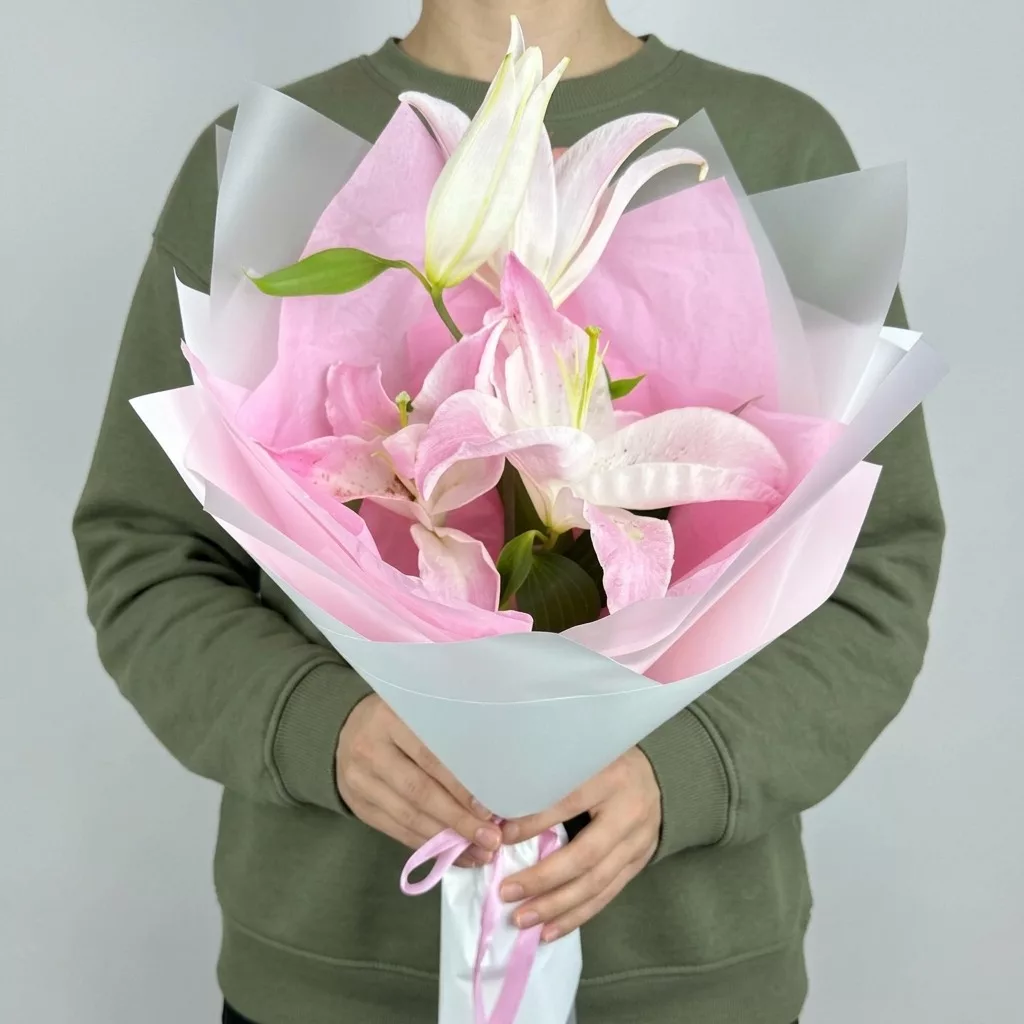
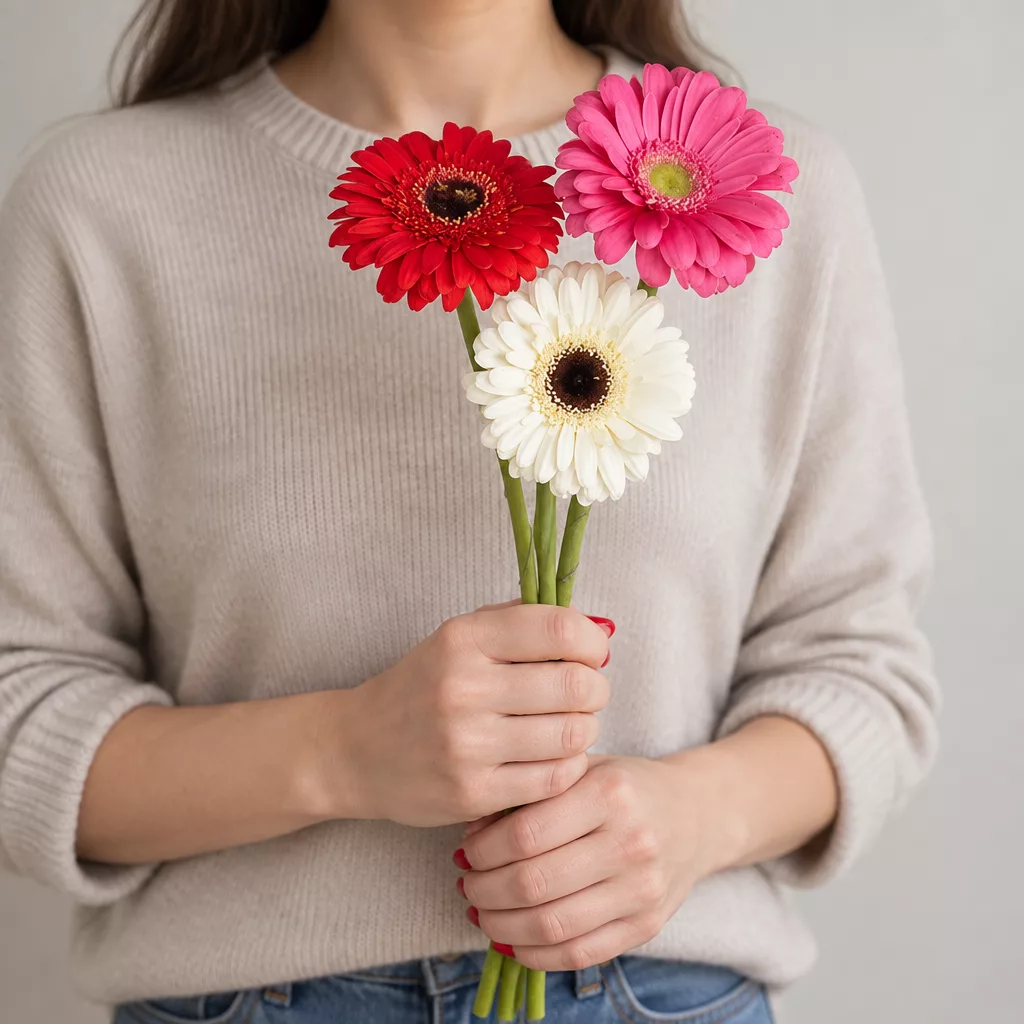
Timing Your Order Across Time Zones
Volgograd operates on Moscow Standard Time, which is UTC plus three. There is no daylight saving adjustment in Russia, so the offset from your location stays constant year-round. If you are in London, Volgograd is three hours ahead. New York is six hours behind Volgograd. Dubai is actually one hour ahead. Work out the local Volgograd time before you decide on a delivery slot, because ordering at what feels like mid-morning to you might already be late afternoon there.
For birthdays and anniversaries, morning delivery — between ten and noon Volgograd time — tends to create the strongest emotional effect. The recipient has the whole day ahead of them with the flowers visible, and the gesture sets the tone of the celebration. If you miss the morning window, early evening delivery, around six to seven, still works well because it catches people at home after work.
Place your order at least three to four hours before the desired delivery time to allow for arrangement preparation and courier scheduling. For large or complex compositions — think tall vase arrangements with branches, or mixed seasonal bouquets with over fifteen stems — give six hours if you can. Avoid ordering for the same day if your time zone means you are reaching out in the middle of the Volgograd night; schedule it for the following morning instead. A well-timed, beautifully fresh delivery always outperforms a rushed one that arrives wilted from sitting in a warm van longer than it should.
What Flowers Actually Survive the Journey to the Recipient
Because flowers for Volgograd delivery are prepared fresh in Saint Petersburg and dispatched with temperature-controlled logistics, variety choice matters enormously for what the recipient actually receives in peak condition. Roses are the most reliable travellers — specifically large-headed varieties like Explorer, Mondial, and Avalanche, which have dense petals and strong stems that resist bruising. They arrive looking intentional rather than tired.
Lisianthus, also called eustoma, is an excellent choice for summer and early autumn orders. It looks delicate but is structurally tough, holds its colour well in heat, and adds a romantic layering to any arrangement. Spray chrysanthemums are similarly resilient and carry well in warmer months. Alstroemeria is another dependable choice — long-lasting, available in a wide palette, and it continues to open after delivery, which means the recipient gets a flower that evolves over several days.
In the Volgograd summer heat, avoid flowers with very thin petals or high moisture content as a centrepiece choice: open garden peonies, for instance, are stunning but need careful handling and a very short window between arrangement and delivery. If you love peonies, order them in bud form in May or June when temperatures are still moderate. Tulips are a winter and early spring flower here — they are available year-round through greenhouse growing, but they perform best emotionally and physically between November and April when the ambient temperature supports them. Hydrangeas work beautifully as a supporting element rather than the hero stem in summer orders.
Russian Flower Customs Worth Knowing
If you did not grow up with Russian gifting culture, a few customs will help you choose more confidently. The most widely known is the odd-number rule: bouquets given as gifts should contain an odd number of stems. Even numbers are traditionally associated with mourning, and while younger generations are less strict about this, it remains a meaningful convention for most recipients over thirty. When you place your order, trust that a professional florist applies this automatically, but it is worth knowing so you understand why a bouquet of eleven roses feels right and one of twelve feels slightly off to a Russian recipient.
Colour carries meaning too, though less rigidly than the number rule. Red roses communicate romantic love clearly and universally. White flowers read as elegant and celebratory in a birthday or housewarming context — unlike some Western European traditions where white can feel funereal. Yellow flowers were once considered unlucky in Soviet culture, but this association has faded significantly among younger generations, and a warm yellow rose or sunflower arrangement now reads as cheerful and summery rather than ominous.
Wrapping style matters as much as the flowers themselves. In Russia, the bouquet wrapping — whether kraft paper, fabric, or cellophane — is considered part of the gift. A well-wrapped bouquet signals care and investment. When you add a card message, keep in mind that the florist will transliterate or translate if needed, but writing your message in simple, warm language makes it easier to render faithfully. Avoid idioms that do not cross languages well; a direct, sincere sentence lands better than a clever phrase that loses its warmth in translation.
Choosing by Occasion and Budget Range
Think first about who is receiving the flowers and what you want them to feel in that moment. For a mother's birthday, warmth and abundance work best — a generous mixed bouquet built around pastel roses, lisianthus, and matthiola creates a softness that feels genuinely maternal. For a romantic partner, a mono-bouquet of long-stemmed red or deep burgundy roses is still the most emotionally direct choice, especially if the relationship is established and the gesture is meant to feel certain rather than experimental.
For a friend's housewarming or a congratulatory occasion, seasonal mixed arrangements with interesting textures — eucalyptus, waxflower, and spray roses together — feel generous without being overly intimate. These work across a wider range of personal dynamics and are almost always received with genuine delight.
In terms of scale: a compact arrangement of seven to nine stems is a warm, real gesture that does not feel token. Fifteen to twenty-five stems begins to feel genuinely impressive and is appropriate for significant birthdays, anniversaries, or professional achievements. Above that, you are creating something that fills a room, which is a powerful statement for milestone occasions.
From abroad, it is worth investing slightly above your instinct. International senders often underestimate how much the physical scale of a bouquet contributes to the emotional impact on the recipient. A slightly larger arrangement communicates that the distance did not diminish the thought — it actually amplified it. That is the feeling you want the person in Volgograd to have when they open the door.
Keeping the Flowers Beautiful After Delivery
A fresh bouquet arriving in Volgograd deserves a few minutes of proper care so it lasts as long as possible. The stems should be cut at a forty-five-degree angle — this increases the surface area for water uptake. Use a clean, sharp knife rather than scissors, which can crush the vascular tissue of the stem and reduce water absorption. Remove any leaves that would sit below the waterline in the vase, because submerged foliage rots quickly and introduces bacteria that shorten the life of the whole arrangement.
Fill the vase with cool, clean water. In Volgograd's summer heat, changing the water every day or every other day makes a significant difference. Keep the arrangement away from direct sunlight and away from sources of heat, including radiators in winter and south-facing windows in summer. Fruit bowls are a surprisingly common enemy of cut flowers — ripening fruit releases ethylene gas, which accelerates petal drop, particularly in roses and lisianthus.
Roses and spray chrysanthemums in good condition typically last seven to ten days with proper care. Lisianthus can hold beautifully for ten to fourteen days. Alstroemeria, if the stems are trimmed every two days, can last close to two weeks. If you want to include care instructions with your order, you can add a note and the florist will include them with the card. Letting the recipient know these small steps — even in a casual way — shows that the gift was chosen with real attention, not just ordered and forgotten. That detail, passed across thousands of kilometres, is what makes the gesture feel close.
Sending flowers to Volgograd from abroad is entirely possible, and when it is done with the right timing, the right varieties, and a genuine sense of who the recipient is, it becomes one of the most powerful gestures distance allows. You do not need to be in the same room to make someone feel completely seen. You just need to plan a few hours ahead, think about what they love, and trust that fresh flowers handled with care will carry everything you mean to say across every kilometre between you.
Frequently asked questions
Can I order flowers for Volgograd delivery if I do not speak Russian?
Yes, completely. The ordering process is available in English, and you can write your card message in English, French, German, or any language you are comfortable with. The florist will handle the local delivery details. Just provide the recipient's full address including apartment number, and a working phone number for the recipient so the courier can confirm arrival.
How far in advance should I place a flower order for Volgograd from another country?
For a standard bouquet, three to four hours before your desired delivery time in Volgograd is sufficient. For large or complex arrangements, allow six hours. If you are ordering for a specific morning delivery, placing the order the evening before your recipient's time zone is always the safest approach and removes any risk of a time zone calculation error on a meaningful occasion.
What is the best flower choice for a summer delivery to Volgograd given the heat?
Roses in bud form, lisianthus, spray chrysanthemums, and alstroemeria all travel and hold well in summer heat. Avoid fully open peonies or thin-petalled flowers as the centrepiece of a summer arrangement. Ask for the bouquet to include sturdy foliage like ruscus or eucalyptus, which adds volume and stays fresh longer in warm conditions than many soft-stemmed fillers.
Do Russian recipients expect a specific number of flowers in a bouquet?
Yes, the tradition of odd-numbered bouquets is widely observed across Russia, including Volgograd. Gifts should contain an odd number of stems — seven, nine, eleven, fifteen, and so on. Even numbers carry a mourning association in Russian culture. A professional florist will always apply this convention automatically, but it is helpful to understand why when you are choosing a specific quantity.
Can I include a gift or chocolates alongside the flowers for a Volgograd delivery?
Flowers can be accompanied by add-ons such as a box of chocolates, a soft toy, or a balloon depending on what is available at the time of order. These are arranged together with the bouquet for a single coordinated delivery. If you want to include something specific, mention it in the order notes and the team will confirm availability before preparing the arrangement.
Ready to send flowers?
Pick the city, choose the bouquet, and a local florist takes it from there.
Choose a city →