Sending Flowers to Yaransk from Abroad? Read This First
You are somewhere far from Russia — a different time zone, a different season, maybe a different continent — and someone you love is in Yaransk waiting for a moment that matters. The distance feels enormous, but a well-chosen bouquet, delivered on time to the right address, closes that gap faster than almost anything else. Here is everything a sender outside Russia needs to understand before placing an order, from how Russian recipients actually receive flowers to which varieties survive a Kirov-region winter without losing a petal.
Why Yaransk Is Different from Sending to a Big Russian City
Yaransk is a small town in the Kirov region, roughly 180 kilometres south of Kirov city. It sits in a continental climate zone where winters are genuinely cold — temperatures regularly drop to minus 20 Celsius between December and February — and summers are warm but short. This matters for flowers because the journey from our Saint Petersburg facility covers serious distance, and the packaging has to match the season rather than just the occasion.
Senders who have previously ordered to Moscow or Saint Petersburg sometimes assume the same lead times and the same variety availability apply everywhere. Yaransk requires a little more planning. Orders placed with enough notice — ideally the evening before the desired delivery date — give our team time to prepare cold-weather wrapping in winter or humidity-controlled packaging in the July heat, so the bouquet arrives looking as though it was assembled around the corner.
The town itself is quiet and residential. Addresses are usually apartments in low-rise buildings or private houses with gates. Our courier will call the recipient before arrival, which is standard practice across Russia, so the person receiving the flowers is never caught completely off guard. If you want the delivery to feel like a surprise, you can leave a note asking the courier to say only that a parcel has arrived, and the full reveal happens when the door opens.
Bouquets we can deliver

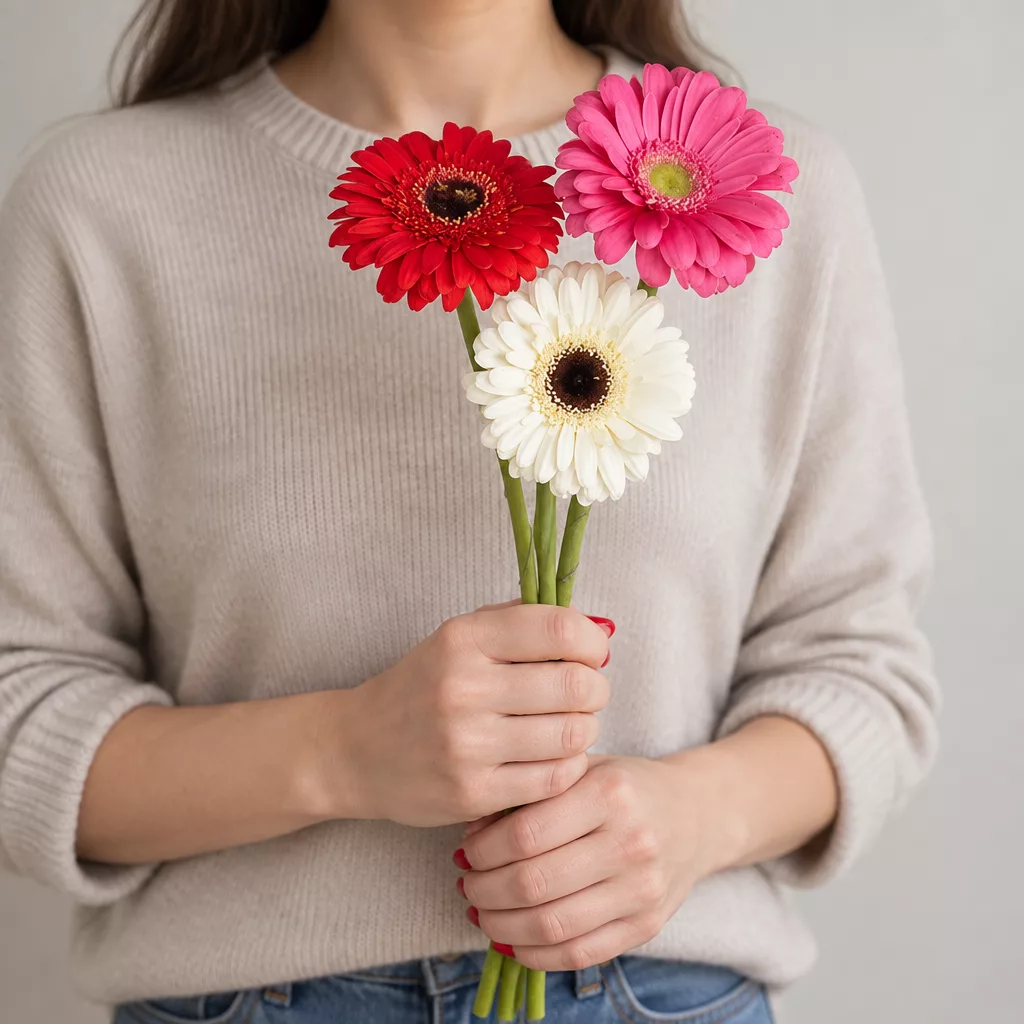

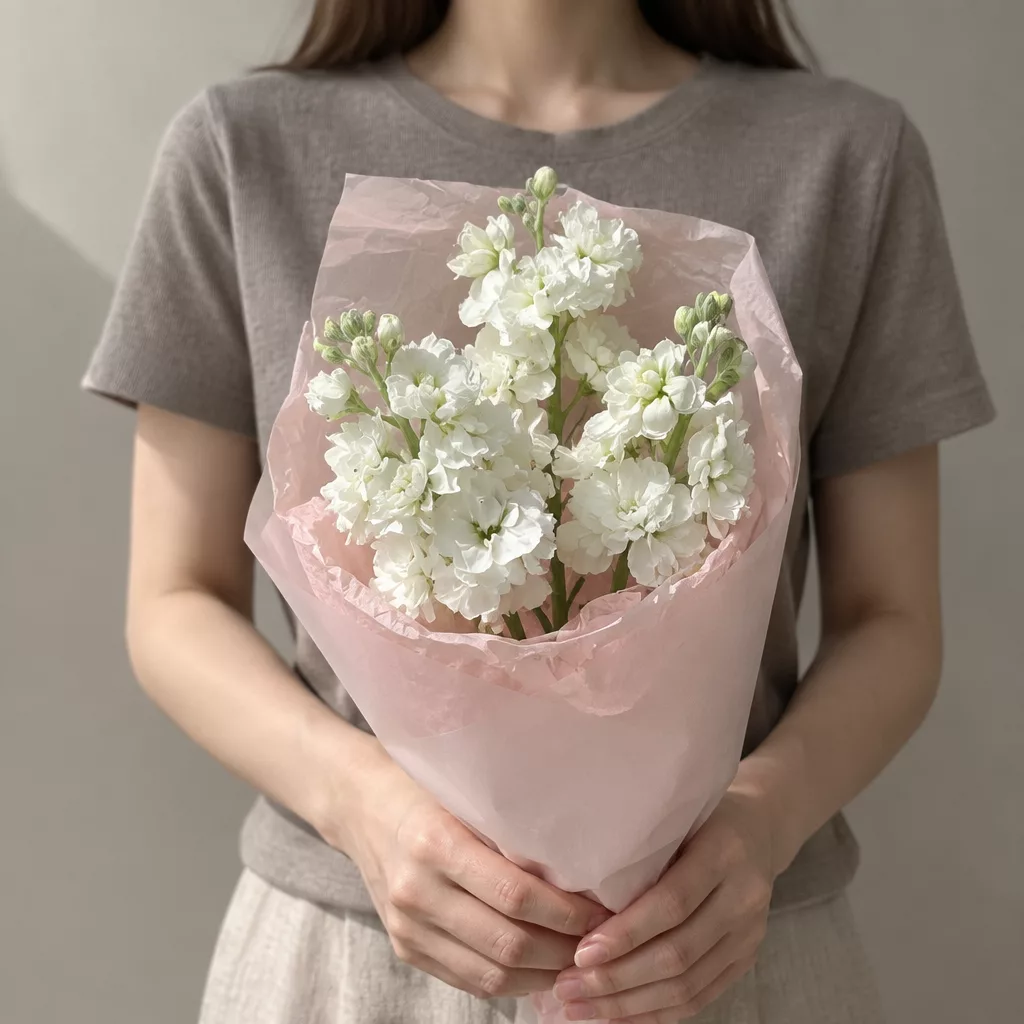
What Russian Recipients Expect When Flowers Arrive
In Russia, receiving flowers is a tactile, ceremonial moment. The recipient will unwrap the bouquet themselves, count the stems — this is genuinely important — and almost always place them in water within minutes. An odd number of stems is the rule for celebratory gifts: five roses, seven peonies, nine tulips. An even number is associated with grief and funerals, so senders from countries where a dozen roses is the default need to adjust their thinking. Eleven or fifteen stems reads as generous and festive; twelve reads as wrong.
The wrapping itself carries meaning. Russian florists use layered kraft paper, sometimes with a transparent outer sleeve, and the colour of the paper is chosen to complement the flowers rather than conceal them. When you order through Turboflora, the presentation is handled with this in mind, so the bouquet looks intentional and considered the moment it is handed over.
A handwritten card in Russian is appreciated but not required — our team can add a translated message if you write your text in English. Keep the message warm and direct. Russian recipients respond well to sincerity and tend to find overly formal phrasing a little cold. Something personal — a shared memory, a specific reason for the flowers — lands far better than a generic congratulations. If you are celebrating a birthday, a promotion, a new baby or an anniversary, name it. The occasion gives the flowers their full weight.
Choosing the Right Flowers for the Person and the Moment
Start with the recipient rather than the season. A woman in her sixties who keeps a traditional home will likely treasure a lush arrangement of spray roses, lisianthus and eucalyptus — classic, full and long-lasting. A younger woman in her twenties or thirties often responds more strongly to something with personality: garden-style bouquets mixing ranunculus, anemones and seasonal greenery feel current and considered rather than formulaic.
For men — and yes, flowers for men are completely normal in Russia, particularly for milestone birthdays or professional achievements — structured arrangements work well. Anthuriums, tropical foliage, and bold single-variety bouquets of sunflowers or large-headed chrysanthemums read as confident rather than fussy. Avoid anything that looks pastel or delicate if the recipient is someone who would feel uncomfortable receiving what they perceive as a feminine gift.
For children and teenagers, bright colours and playful combinations win every time. Gerberas in mixed colours, solidago, and single sunflowers with minimal greenery feel joyful and unpretentious. If the occasion is a school graduation or a sports achievement, a monochrome arrangement in the school's colours — if you know them — is a detail that will be noticed and remembered.
Peonies are universally loved in Russia and carry no complicated associations, making them a safe and genuinely beautiful choice when you are uncertain. Their season runs from late May through July, so ordering them in January is not realistic. Our florists will always suggest the closest equivalent if your preferred flower is out of season.
Seasonal Availability and What Survives the Journey
Flowers travel best when the temperature outside is moderate — roughly between five and eighteen degrees Celsius. Spring and early autumn are the easiest seasons for long-distance delivery to Yaransk. Summer deliveries work well too, though July and August require insulated packaging to prevent wilting during transit. Winter is the season that demands the most attention.
Below minus ten Celsius, many flowers become brittle within minutes of exposure. Roses, tulips and gerberas are particularly vulnerable to frost damage — petals turn translucent and collapse once they warm up indoors. Our couriers use insulated thermal bags for cold-weather deliveries, and we add extra protective layers around the blooms themselves. That said, some varieties handle cold far better than others. Chrysanthemums, carnations, alstroemeria and waxflower are genuinely cold-tolerant and arrive in excellent condition even in February. If you are ordering in January or February, leaning toward these varieties rather than insisting on tropical flowers gives the bouquet the best chance of looking perfect at the door.
In spring, tulips from Dutch and domestic growers are abundant and affordable, and they travel extremely well. Hyacinths, available from February through April, add fragrance that fills a room immediately — a detail that makes the delivery feel more immersive. Summer brings sunflowers, echinacea and zinnias alongside the peonies. Autumn is the season for dahlias, which are dramatic and long-lasting, and for mixed berry-and-bloom arrangements that feel warm and harvest-like. Each season has its own vocabulary, and working with it rather than against it always produces a more beautiful result.
Timing Your Order Across Time Zones
Yaransk operates on Moscow time, which is UTC plus three. If you are ordering from Western Europe, you are one to two hours behind. From the United States East Coast, you are eight hours behind. From California, eleven. This gap matters more than most senders realise, because the cutoff time for same-day delivery is calculated in Moscow time, not in your local time.
A practical rule: if you want flowers delivered on a Tuesday in Yaransk, place your order by Sunday evening in your local time if you are in the Americas, or by Monday morning if you are in Europe. This gives our team Monday in Russia to prepare the arrangement and confirm the logistics. Last-minute orders are sometimes possible, but they depend on what is available in our inventory at that moment, and the variety choice becomes narrower.
If the occasion is fixed — a birthday, a wedding anniversary, a graduation date — build in a full day of buffer. Orders placed 24 to 36 hours before the desired delivery time almost always arrive exactly when intended. Orders placed two or three hours before a specific moment are a gamble, and we would rather be honest about that than promise something we cannot guarantee.
When you place your order, you will specify a delivery window rather than a precise minute. A two-hour window — say, between noon and two in the afternoon — is realistic and allows for any minor delays in a town where our courier may be navigating unfamiliar streets. If the recipient has a firm schedule, choose a window when you know they will be home or reachable by phone.
How to Write Your Message and What to Include in the Order
The message card is where the flowers become personal. Russian recipients read cards carefully — it is not an afterthought the way it sometimes is in other cultures. A few sentences that explain why the flowers are arriving right now, and what the sender wants the recipient to feel, carry as much emotional weight as the bouquet itself.
Write your message in whatever language feels most natural between you and the recipient. If you share Russian, write in Russian. If your relationship has always been in English, an English card is perfectly fine and often touching — it signals that the sender made an effort from far away. If you would like the message translated into Russian, include a note in your order comments and our team will handle it.
When filling out the delivery details, include the full address with the apartment number, the building entrance number if there is one, and the floor. In Russian apartment buildings, the entrance — called a podyezd — is a separate door on the outside of the building, and without that number a courier can spend ten minutes circling a building looking for the right door. A working mobile number for the recipient is essential. Our courier will call ahead, and without a reachable number the delivery cannot be completed.
If the recipient is at work rather than at home, include the workplace address and confirm that receiving a flower delivery there is appropriate. In Russia, receiving flowers at work is common and often celebrated publicly — colleagues will see it, and that visibility is usually considered a good thing rather than an intrusion.
Caring for the Bouquet After Delivery: What to Tell the Recipient
The flowers arrive wrapped and ready, but their vase life depends almost entirely on what happens in the first hour after delivery. If you want to pass along care instructions — perhaps in your card message, or in a separate message you send once you know the delivery is complete — here is what actually makes a difference.
Cut the stems at an angle, about two centimetres from the bottom, using scissors rather than tearing. Diagonal cuts increase the surface area absorbing water and prevent the stem from sitting flat against the bottom of the vase, which would block the intake entirely. Use a clean vase — residue from previous arrangements introduces bacteria that shorten vase life significantly. Fill the vase with cool, not cold, water. Tap water in most Russian towns is fine; no special treatment is needed.
Remove any leaves that will sit below the waterline. Submerged leaves decompose quickly and cloud the water, which again feeds bacteria. Change the water every two days, and re-cut the stems each time you do. Keep the bouquet away from direct sunlight, radiators and fruit bowls — ripening fruit releases ethylene gas, which accelerates wilting in roses and tulips particularly.
With good care, roses and chrysanthemums last ten to fourteen days. Tulips and ranunculus typically give five to seven days of peak beauty before they begin to open fully and drop petals. Alstroemeria and carnations are the endurance champions — two weeks or more is realistic. Peonies, when they arrive as tight buds, open over three to five days and are most beautiful just before full bloom. Encourage the recipient to enjoy each stage rather than feeling disappointed when the flowers begin to change.
Sending flowers to Yaransk from outside Russia is genuinely achievable, and when it works well it feels like a small miracle — proof that distance is a logistics problem rather than an emotional one. The keys are planning your order with the time difference in mind, choosing varieties that suit the season rather than fighting it, getting the address details exactly right, and writing a message that says what you actually mean. Turboflora handles the journey; you handle the meaning behind it. Those two things together are what make flowers from far away feel like they were placed by hand.
Frequently asked questions
Can I order flowers for Yaransk delivery if I do not speak Russian?
Yes, completely. The Turboflora website and order process work in English, and you can write your card message in English or ask us to translate it into Russian. The only detail that must be accurate regardless of language is the recipient's address and mobile number — those need to be correct for the delivery to reach the right door.
How far in advance should I order for a specific date in Yaransk?
For a fixed date such as a birthday or anniversary, placing your order 24 to 36 hours before the desired delivery window is ideal. If you are ordering from the Americas, account for the time difference — Yaransk is UTC plus three, so your Monday morning may already be Monday afternoon or evening in Russia. Evening before is always safer than morning of.
What happens if the recipient is not home when the flowers arrive?
Our courier calls ahead before arriving, so the recipient has time to be ready. If there is no answer and no one is home, the courier will call again and attempt to leave the bouquet with a neighbour or building concierge if that is safe and appropriate. We will notify you if a delivery cannot be completed so you can coordinate a second attempt.
Are there flowers I should avoid sending to Russia for cultural reasons?
The main rule is stem count: always odd for celebrations, never even. Beyond that, yellow flowers were once considered unlucky in Soviet-era superstition, though this belief has faded considerably among younger generations. If you are uncertain about the recipient's age or background, a mixed bouquet with only one or two yellow stems alongside other colours sidesteps the question entirely.
Which flowers hold up best in Yaransk's winter temperatures?
Chrysanthemums, carnations, alstroemeria and waxflower are the most cold-tolerant cut flowers and arrive in excellent condition even in February. Roses and tulips are more vulnerable to frost damage during transit. In winter months we use insulated thermal packaging for all Yaransk deliveries, but choosing cold-hardy varieties gives your bouquet the best possible arrival condition.
Ready to send flowers?
Pick the city, choose the bouquet, and a local florist takes it from there.
Choose a city →