Sending Flowers to Yuryuzan from Abroad? Read This First
You are somewhere far from Russia — another country, another time zone — and someone you love is in Yuryuzan, a small city tucked into the southern Urals. You want to send flowers that arrive fresh, look generous, and feel personal. The distance makes everything feel uncertain. This guide is written to remove that uncertainty, step by step, so you can order with confidence and your recipient opens the door to something genuinely beautiful.
What Yuryuzan Means for Flower Delivery
Yuryuzan sits in the Chelyabinsk region of the southern Urals, a city of modest size surrounded by forested hills and a continental climate that swings hard between seasons. That geography matters when you are choosing flowers from abroad, because it shapes what arrives in good condition and what does not. Summers are warm and relatively short, winters are long and genuinely cold, with temperatures regularly dropping well below minus fifteen Celsius between November and March. A bouquet traveling through that cold needs to be chosen with that journey in mind.
Turboflora delivers to Yuryuzan directly, sourcing from temperature-controlled facilities and dispatching within one to two hours of order confirmation. For a sender abroad, this means the logistical gap you are bridging is smaller than you might expect. You place the order online, specify the address and a preferred delivery window, and the rest is handled. The city is reachable, the process is reliable, and the recipient does not need to travel anywhere or collect from a depot.
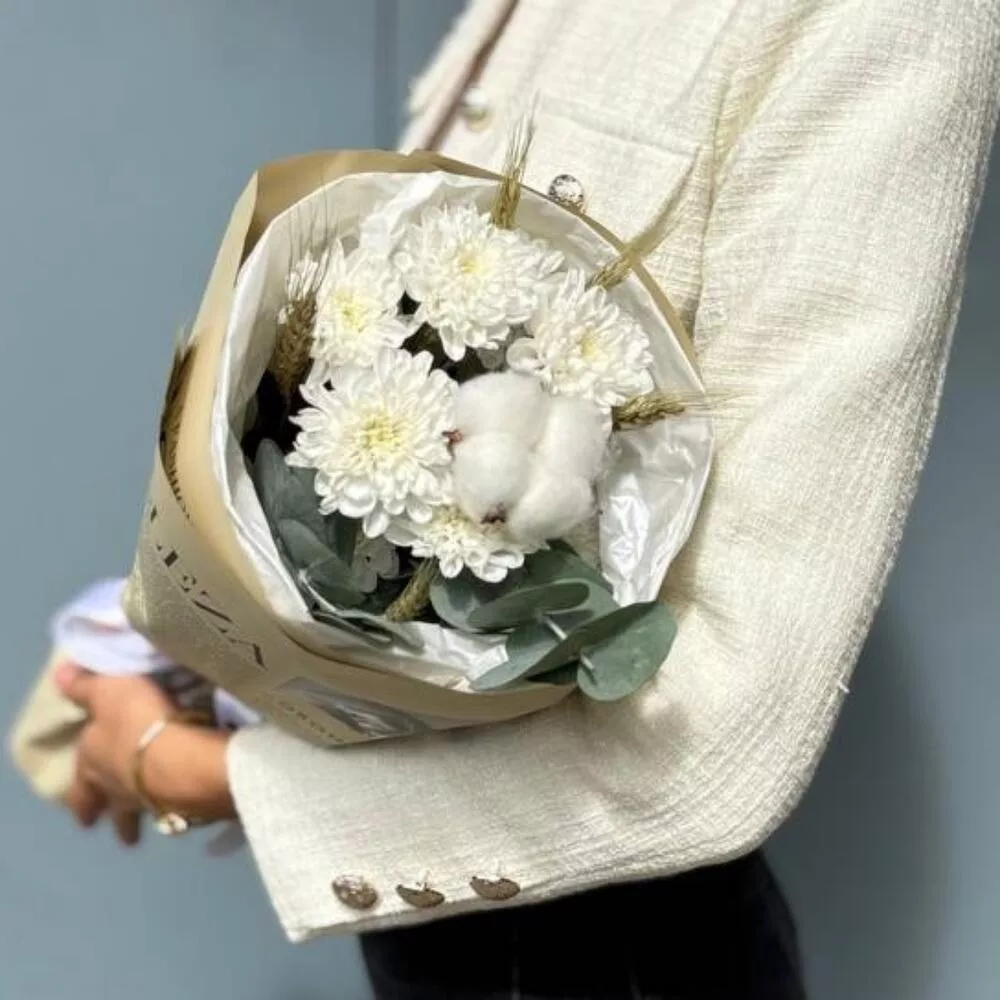
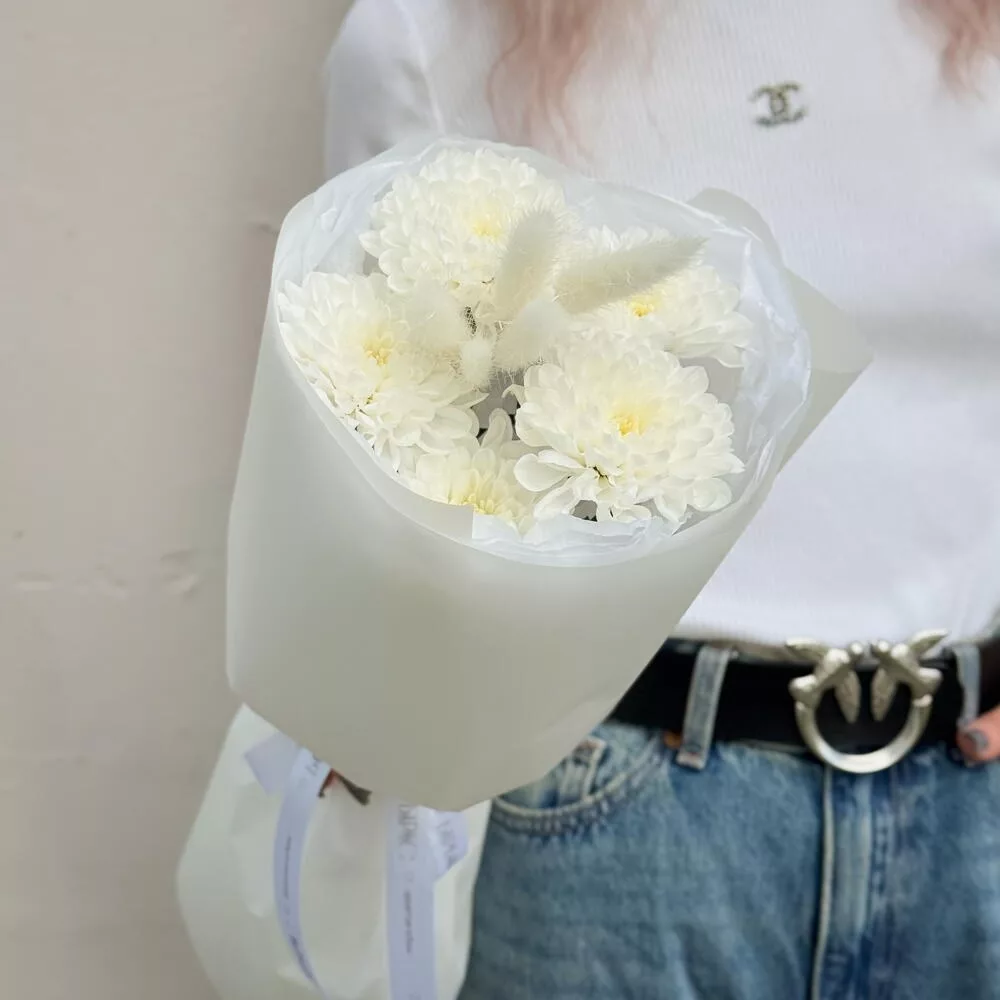
What you do need to understand is that Yuryuzan is not a major metropolitan hub, so the selection available will reflect what travels and keeps well along that route. Roses, spray chrysanthemums, alstroemeria, eustoma, and sturdy seasonal fillers like waxflower and eucalyptus are strong choices. Delicate tropical varieties that need high humidity and stable warmth are less suited to this destination, especially in the colder months. Choosing with the climate in mind is the single most practical thing a sender from abroad can do.
Bouquets we can deliver

Who You Are Sending To and Why It Shapes Everything
Before you think about color or variety, think about your recipient. A bouquet for a mother on her birthday carries a different emotional weight than flowers for a colleague's work anniversary or a gift for a close friend who has just moved into a new home. Russian gifting culture places real importance on this distinction, and florists here think in terms of the feeling first, the flower second.
For a parent or grandparent, warmth and abundance matter more than trend. A rounded arrangement of garden roses — varieties like Avalanche or Sweet Avalanche work beautifully — combined with alstroemeria and soft greenery reads as generous and sincere. It does not need to be fashionable; it needs to feel like it came from someone who cares. For a younger recipient, a more contemporary shape — a loose, asymmetric hand-tied bouquet with ranunculus, dried pampas grass, and a few stems of lisianthus — signals that you paid attention to their taste.
For a romantic occasion, red roses remain the clearest signal in Russian culture. There is nothing dated about them here; they carry full meaning and your recipient will understand exactly what they represent. For friendship or gratitude, softer palettes in peach, cream, and pale lilac feel right without reading as romantic. Sunflowers, which are genuinely beloved across Russia, work for almost any cheerful occasion and hold up well in transit.
One small but important point: always send an odd number of stems. In Russian tradition, even numbers of flowers are associated with mourning and are not appropriate for celebratory or affectionate gifts. This is a detail that matters to your recipient even if it seems arbitrary from the outside.
Timing Your Order Across Time Zones
Yuryuzan operates on Yekaterinburg Time, which is UTC plus five. If you are ordering from Western Europe, you are four to five hours behind. From the United States East Coast, the gap is eight hours; from the West Coast, eleven. These differences are not just logistical trivia — they determine whether a birthday morning delivery is actually possible or whether your order, placed at what feels like a reasonable hour to you, lands in the middle of the night in Yuryuzan.
The practical approach is to calculate the local Yuryuzan time before you finalize the order. If you want flowers to arrive between ten in the morning and noon local time — a good window for a birthday surprise — work backward from that. Turboflora's one-to-two-hour delivery window means you need your order confirmed by eight or nine in the morning Yuryuzan time at the latest. Plan to place the order the evening before from your own time zone if the math is tight.
Russian public holidays are another timing consideration. Key dates include New Year (January first and second), Orthodox Christmas (January seventh), Defender of the Fatherland Day (February twenty-third), International Women's Day (March eighth), and Victory Day (May ninth). Around Women's Day in particular, demand for flowers across Russia surges dramatically. If you are sending around that date, order at least two to three days in advance and specify your delivery window clearly. Leaving it to the day itself from abroad is the most common mistake senders make, and it is entirely avoidable with a little forward planning.
Choosing Flowers by Season in the Southern Urals
The southern Urals experience four distinct seasons, and what looks beautiful in a florist's photograph in July may not be what your recipient experiences when they unwrap the bouquet in January. Matching your flower choice to the season your recipient is actually living through is one of the most thoughtful things a sender can do.
In winter, from December through February, lean toward flowers that are robust and warming in color. Deep red roses, burgundy spray chrysanthemums, orange alstroemeria, and white eustoma all travel well in cold conditions and look rich against a backdrop of snow and short days. Avoid flowers with very soft petals that can bruise in cold transit, such as open garden peonies or fully open anemones.
Spring, from March through May, is when lighter choices come into their own. Tulips — both single and parrot varieties — are enormously popular in Russia during this period and are strongly associated with Women's Day. Ranunculus in pastel shades, freesia for its scent, and hyacinths for their vivid color are all appropriate and available. These flowers are meaningful to Russian recipients in spring in a way that goes beyond aesthetics.
Summer allows for the widest variety. Sunflowers, garden roses, lisianthus, and even dahlias are all viable. Autumn calls for warmer palettes again — terracotta, amber, rust — and varieties like solidago, hypericum berries, and bronze chrysanthemums feel genuinely seasonal rather than out of place. Choosing with the season creates a bouquet that feels considered, not generic, even from thousands of kilometers away.
How to Write a Card Message That Lands Well
A handwritten card accompanying a flower delivery carries enormous weight in Russian culture. The flowers are the gesture; the card is the voice. For a sender abroad, the card is often the only personal element that travels with the gift, so it deserves more thought than a quick line typed into a text field.
If you are writing in English, that is entirely fine — your recipient will likely understand, and the fact that you wrote in your own language adds authenticity. If you want to include a line in Russian, a simple phrase like 'S lyubovyu' (with love) or 'S dnyom rozhdeniya' (happy birthday) is warmly received and shows effort without requiring fluency. Avoid translation apps for longer sentences, as the results can be awkward or unintentionally formal.
Keep the tone direct and warm. Russian recipients tend to appreciate sincerity over elaborate flourishes. A message that says clearly why you are sending the flowers — 'I am thinking of you today and wish I could be there' — is more meaningful than a generic congratulatory phrase. If the occasion is a birthday, name it. If it is simply because you miss the person, say that. Specificity is what makes a card feel personal rather than purchased.
Avoid humor that depends heavily on cultural context or wordplay, as it can flatten in translation. Also avoid overly formal language — phrases that might feel polished in a business context can read as cold in a personal gift setting. Write as you would speak to this person if you were standing in the same room. That tone travels across any language barrier.
What Your Recipient Should Do When the Flowers Arrive
One of the most generous things you can do as a sender from abroad is pass along a few simple care instructions to your recipient, either in the card or via a quick message. Many people in Russia, as everywhere, receive flowers without knowing the small steps that double their vase life. Sharing this knowledge is a practical act of care.
The first step after unwrapping is to trim the stems. A diagonal cut of about two centimeters, made with a sharp knife rather than scissors, exposes more surface area and allows the stems to drink properly. Scissors can crush the stem tissue, which reduces water uptake. This cut should ideally be made under running water or immediately before placing stems in water, to prevent air bubbles from forming in the stem.
Vase water should be cool and clean. Tap water is fine in most Russian cities, but the vase itself should be rinsed thoroughly, as bacteria from a previously used vase will shorten the life of fresh flowers quickly. Any leaves that would sit below the waterline should be removed — they decompose and cloud the water rapidly. Change the water every two days, re-trim the stems each time, and keep the bouquet away from direct sunlight, radiators, and drafts.
In a Yuryuzan winter, the dry indoor heating that Russian apartments rely on is hard on soft-petaled flowers. Placing the vase in a cooler room overnight — even a hallway — extends freshness noticeably. Roses and alstroemeria typically last seven to ten days with this care. Chrysanthemums can last two weeks or more. Tulips, which your recipient may receive in spring, prefer cool water and a cool room, and will last five to seven days.
Placing the Order: Practical Steps for Senders Abroad
Ordering from outside Russia is straightforward but benefits from a few specific preparations. Start by confirming the recipient's full delivery address in Russian, including the apartment number, building entrance number if applicable, and a working local phone number. Russian addresses follow a different structure from Western ones — the city and street come before the building and apartment — and an incomplete address is the most common reason a delivery runs into delay.
Payment from abroad is accepted through international card systems. Have your card details ready and be aware that some banks flag international transactions automatically; it is worth notifying your bank before placing a larger order to avoid the payment being blocked. If you encounter a declined transaction, try a different card or contact your bank directly — this is a bank-side issue rather than a problem with the order system.
When filling in the order form, use the notes field generously. Specify whether the recipient is aware of the delivery or whether it should be a surprise. If it is a surprise, note that the courier should not call ahead but ring the doorbell directly. You can also note any access details for the building — many Russian apartment blocks have entry codes or intercoms — if your recipient has shared these with you.
Finally, double-check the delivery time against Yuryuzan local time before confirming. A small error here is the most common source of frustration for international senders, and it is entirely preventable. Once the order is confirmed, you will receive a confirmation, and the delivery follows within the stated window. The whole process, from first click to flowers at the door, is designed to work without you needing to speak Russian or navigate anything unfamiliar.
Sending flowers to Yuryuzan from abroad is a real and reliable option, not a complicated workaround. The distance between you and your recipient does not have to show in the quality of what they receive. When you choose flowers that suit the season, write a card that sounds like you, and place the order with the time zone in mind, what arrives at the door in Yuryuzan is exactly what you intended — something fresh, considered, and warm. The southern Urals are far from many places in the world, but the feeling a good bouquet carries travels without any difficulty at all.
Frequently asked questions
Can I order flowers for Yuryuzan if I do not speak Russian?
Yes. The Turboflora website and order process work in a way that international senders can navigate without Russian language skills. For the delivery address, ask your recipient to send it to you written out in full in Russian, including apartment and entrance numbers, and paste it directly into the address field. The card message can be written in English.
How far in advance should I order for a birthday or holiday delivery?
For a standard birthday, ordering the day before gives you the most flexibility with delivery timing. For major Russian holidays, particularly International Women's Day on March eighth, order at least two to three days ahead. Demand across Russia during that period is very high, and early ordering ensures your preferred time slot and flower selection are both available.
What flowers hold up best in Yuryuzan's cold winters?
Roses, spray chrysanthemums, alstroemeria, and eustoma are all well suited to cold-weather delivery in the southern Urals. They are sturdy in transit and look full and generous on arrival. Avoid requesting very open, soft-petaled flowers like fully bloomed peonies or anemones in winter months, as they are more vulnerable to cold during the delivery stage.
Why does the number of flower stems matter in Russia?
In Russian tradition, even numbers of flowers are given at funerals and carry associations with mourning. For any celebratory, romantic, or friendly occasion, always choose an odd number of stems — five, seven, nine, eleven, and so on. This is a widely observed custom that your recipient will notice and appreciate, even if it seems like an unusual detail from outside Russia.
What if my recipient is not home when the flowers arrive?
When placing your order, use the notes field to provide a neighbour's apartment number or a secondary contact if possible. You can also specify whether the courier should call the recipient before arriving. For surprise deliveries, note that the recipient should not be called in advance. Turboflora will make reasonable attempts to complete the delivery within the confirmed window.
Ready to send flowers?
Pick the city, choose the bouquet, and a local florist takes it from there.
Choose a city →