September 1 Bouquet Traditions: Flowers, Size, and Meaning
On the first of September, something happens across Russia that is unlike any other flower-giving occasion in the year. Schoolchildren arrive at their schools carrying bouquets that are, by almost any international standard, enormous. Teachers receive armfuls of gladioli, chrysanthemums, and asters from dozens of students in a single morning. If you are new to this tradition or sending flowers to someone in Russia for Knowledge Day, understanding why the bouquet looks the way it does — and what it is meant to say — makes choosing one far easier and far more meaningful.
What Knowledge Day Actually Means and Why Flowers Are Central to It
Knowledge Day, or Den Znaniy, falls on September 1 every year and marks the start of the Russian school year. It is a national holiday, and the ceremony at each school is taken seriously. Children dress formally, often in white shirts and dark trousers or pinafore dresses, and the day begins with an outdoor assembly rather than a classroom lesson. The bouquet a child carries is not an afterthought — it is part of the visual language of the day.
The tradition of bringing flowers to a teacher on this date stretches back to Soviet times, when gratitude was expressed through gestures rather than gifts. The flower became a symbol of respect for knowledge itself, not just for the individual teacher. This is why even very young children in first grade carry bouquets that seem disproportionately large for their small arms. The size is intentional.
For families outside Russia, or for anyone sending flowers to a teacher or student from a distance, the occasion can feel unfamiliar. Think of it as a combination of the first day of school and a formal appreciation ceremony rolled into one. The bouquet is the handshake, the thank-you card, and the celebration all at once. Getting it right matters to the family, and understanding that weight helps explain every choice that follows — the flower varieties, the stems, the scale, and the presentation.
Bouquets we can deliver


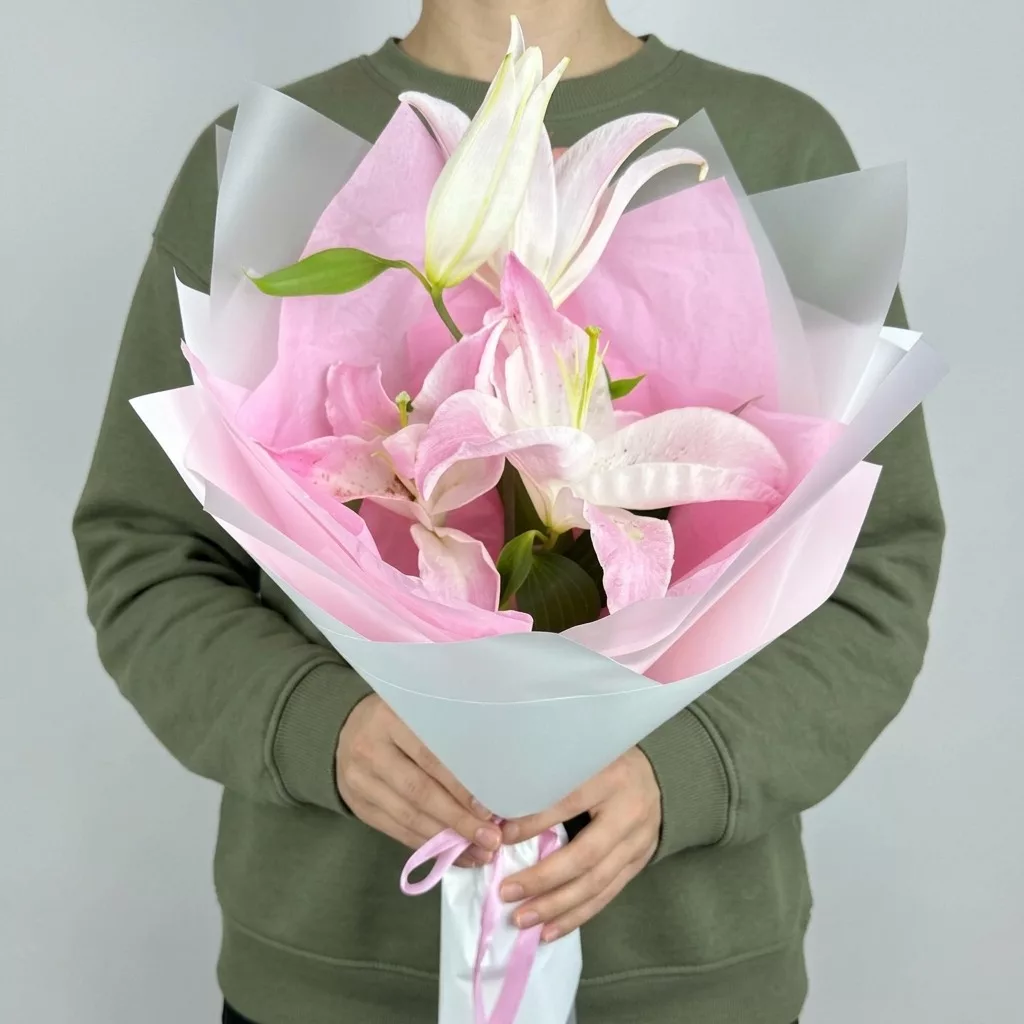

The Classic Flowers: Why Gladioli, Asters, and Chrysanthemums Dominate
Three flowers appear on September 1 more than any others, and each has a practical reason for its popularity alongside its symbolic one. Gladioli are the most iconic. Their tall, architectural stems — often reaching 80 to 100 centimetres — create exactly the kind of impressive silhouette that photographs well and reads as generous from a distance. They bloom in late summer and are genuinely in season in Russia at the start of September, which keeps them fresh and affordable at the same time.
Asters are the second great classic. Small, daisy-like, and available in deep purples, lilacs, pinks, and whites, they add softness and volume to any arrangement. They are a cool-season flower that thrives as temperatures drop in late August, so their quality is typically excellent around Knowledge Day. A bouquet of asters alone, densely packed and wrapped simply, is a perfectly traditional choice for a younger child to carry.
Chrysanthemums round out the trio. Spray chrysanthemums in particular — the branching variety with multiple small blooms per stem — add texture and longevity. They hold well even after a long morning outdoors, which matters when a teacher is receiving dozens of bouquets and cannot place them all in water immediately.
Roses do appear on September 1, particularly for older students presenting to a favourite teacher, but they are not the primary choice. Dahlias, zinnias, and rudbeckia are sometimes incorporated as accent flowers to add warmth and colour contrast, especially in arrangements leaning toward autumn tones of orange, burgundy, and gold.
Why Bouquets Are So Large and What That Communicates
A visitor watching a Russian school assembly on September 1 for the first time is almost always struck by the sheer size of the bouquets. Children who can barely see over the stems are carrying arrangements with fifteen, twenty, or even twenty-five stems. This is not accidental excess — it reflects a deeply held cultural idea that the scale of a gift signals the depth of the sentiment behind it.
In Russian gift-giving culture broadly, a small bouquet can read as perfunctory. On a day as significant as the start of the school year, a modest five-stem arrangement would feel understated to the point of being noticed for the wrong reasons. Teachers understand this completely and take no offence at the abundance; they have vases, buckets, and years of practice managing the morning harvest.
The large bouquet also serves a social function. Children stand together, and their bouquets are visible to other families. Bringing something beautiful and generous is a form of communal celebration, a way of saying that this school, this teacher, and this moment of beginning are worth marking properly. It is less about impressing anyone and more about participating fully in a shared ritual.
For anyone ordering remotely, the practical implication is clear: do not scale down out of caution. A bouquet of fewer than eleven stems will look sparse against what every other family brings. Fifteen to twenty-five stems is the comfortable range for a child's bouquet, and a teacher's arrangement from an adult — a parent, a grateful former student — can be even larger.
Choosing the Right Bouquet for the Situation: Teacher Versus Student
The recipient changes the bouquet considerably, and it is worth thinking about this before you order. A first-grader carrying flowers to their teacher on the very first day of school is participating in a ritual of introduction. The bouquet should be something the child can hold with both hands and feel proud of — typically a round, compact arrangement or a gathered bunch with a clear focal flower, wrapped in paper that will not crumple after ten minutes outdoors in September air.
A parent or older student giving flowers to a teacher they have known for years can go further. This is the moment for a more composed arrangement: gladioli combined with spray chrysanthemums and seasonal greenery, perhaps with a few stems of lisianthus for elegance, wrapped in kraft paper or a structured sleeve. The relationship is established, and the bouquet can reflect that warmth more specifically.
For a student receiving flowers — a child starting first grade, or a graduate beginning their final school year — the tone shifts slightly. These bouquets tend toward the celebratory rather than the reverential. Brighter colours, rounder shapes, and flowers that feel joyful rather than formal work well here. Sunflowers appear in this context more than in teacher bouquets, as do bright-toned asters in mixed palettes.
Temperature matters practically on this day. September 1 in Saint Petersburg can range from a warm 18 degrees Celsius to a cool 10 degrees, and bouquets will be outdoors for an hour or more during the assembly. Flowers with good stem strength and moderate water needs — gladioli, chrysanthemums, asters — handle this far better than, say, open garden roses or delicate ranunculus.
Presentation and Wrapping: What Makes a September 1 Bouquet Look Right
The wrapping of a Knowledge Day bouquet follows conventions that are worth knowing. Traditional presentation uses paper — kraft paper, matte wrapping paper, or a combination of both — rather than cellophane alone. A fully cellophane-wrapped bouquet has become associated with lower-effort purchases, while paper wrapping reads as considered and intentional. Many families choose a colour that complements the flowers: deep green or burgundy paper behind white and purple asters, for example, or natural kraft behind golden and rust-toned autumn varieties.
Bow placement and ribbon use tend to be restrained on September 1 compared to, say, a Valentine's Day arrangement. The flowers themselves are the statement. A simple satin ribbon tied at the stem base is common; elaborate decorative additions are less typical for this occasion.
Stem length is another detail that separates a well-made bouquet from a hasty one. Gladioli should not be cut short — their height is part of their visual impact. Asters and chrysanthemums are typically gathered so the blooms sit at a consistent level, creating that dense, full face that photographs well and feels substantial in the hand.
One common mistake is ordering a bouquet that looks impressive in a photograph but is difficult for a child to carry. A wide, flat arrangement with blooms spread outward becomes unwieldy on a school morning. The better shape for a child is tall and gathered — a vertical silhouette that the child holds upright rather than cradling sideways. Florists who work this occasion regularly know this instinctively and build accordingly.
Keeping the Bouquet Fresh After the Morning Assembly
By midday on September 1, a teacher may have received thirty or forty bouquets. The flowers that survive the day well are the ones that were conditioned properly before delivery and that hold without water for two to three hours. Gladioli, asters, and spray chrysanthemums are all reliable in this regard. They do not wilt dramatically in cool September air, and their stems are sturdy enough to stay upright in a crowded vase.
Once the bouquets are home, the standard care applies. Cut the stems at a diagonal — about two centimetres from the base — using a sharp knife rather than scissors, which can crush the stem tissue. Place them in clean water immediately, and change the water every two days. Gladioli will continue to open over several days as the upper buds come into bloom, which is part of their appeal; a stem that arrives with only the lower three or four florets open will be fully spectacular within a week.
Asters and chrysanthemums are among the longest-lasting cut flowers available. Kept in a cool room — between 16 and 20 degrees Celsius — they can hold for ten days to two weeks. Removing any leaves that fall below the waterline prevents bacterial growth, which is the primary cause of early wilting in these varieties.
For the recipient, the extended vase life of a Knowledge Day bouquet is part of its value. The flowers that arrived on September 1 are still on the table on September 10, a continuing reminder of the occasion. Choosing varieties with that staying power is not just practical — it is part of giving a gift that keeps communicating long after the morning assembly is over.
September 1 bouquets are one of the most specific and meaningful flower traditions in Russian life, and once you understand what they are meant to say, choosing one becomes straightforward. The size, the classic varieties, the paper wrapping, the upright shape — each element has a reason behind it. Whether you are a parent ordering for a child to carry, an adult sending appreciation to a teacher, or someone outside Russia trying to participate in this tradition from a distance, the principle is the same: give generously, choose flowers that are genuinely in season, and let the bouquet do what it has done for generations — arrive at the door of a school on the first morning of autumn and say, without any words, that what happens inside that building matters.
Frequently asked questions
How many stems should a Knowledge Day bouquet have?
For a child carrying flowers to a teacher, fifteen to twenty-five stems is the standard range in Russia. Fewer than eleven stems will look modest compared to what other families bring. An adult giving flowers to a teacher they know well can go larger — a generous arrangement of twenty-five to thirty stems is entirely appropriate for this occasion.
Can I send roses instead of gladioli for September 1?
Roses are not the traditional choice for Knowledge Day, but they are not wrong either, particularly for older students or adults sending flowers to a teacher. If you choose roses, opt for a large quantity — fifteen stems or more — and combine them with seasonal greenery or spray chrysanthemums so the bouquet has the full, generous look the occasion calls for.
What colours are most traditional for September 1 bouquets?
White, purple, and lilac are the most classic palette, often associated with asters and gladioli in those tones. Autumn colours — burgundy, orange, gold, and rust — are increasingly popular and feel very appropriate for early September. Bright mixed palettes work well for student bouquets, while teacher arrangements often lean toward more composed, elegant colour combinations.
How far in advance should I order a September 1 bouquet?
Because demand on Knowledge Day is extremely high, ordering the evening before or early on the morning of September 1 gives you the best choice of varieties and sizes. Turboflora delivers within one to two hours across Russia, so a morning order can still arrive before the school assembly begins. Ordering the day before removes any timing pressure entirely.
Do teachers actually appreciate receiving so many bouquets at once?
In Russian school culture, yes — receiving many bouquets is understood as part of the role and is genuinely appreciated. Teachers come prepared with buckets of water and often display the flowers throughout the classroom for days afterward. The abundance is the point: it reflects how many families value the teacher's work, and each bouquet is received as an individual expression of that gratitude.
Ready to send flowers?
Pick the city, choose the bouquet, and a local florist takes it from there.
Choose a city →