September 1 in Russia: How to Build a School Bouquet That Actually Works
Every year on September 1, the streets of Saint Petersburg fill with children clutching enormous, carefully wrapped bouquets, and the scent of late-summer flowers drifts through school corridors across Russia. If you are new to this tradition or simply want to get it right this year, you are in the right place. As florists who have assembled thousands of these bouquets, we can tell you exactly what makes a school bouquet feel right — the flowers, the structure, the colours, and the small details that teachers genuinely notice.
Why September 1 Is the Biggest Flower Day of the Russian Year
In Russia, September 1 is called Den Znaniy, the Day of Knowledge. It marks the first day of the school year, and it is observed as a national holiday. Children of all ages — from nervous first-graders to confident seniors — arrive at school carrying flowers for their class teacher. The tradition is deeply embedded in everyday life and has roots going back to the Soviet era, when presenting a teacher with a bouquet was considered a straightforward expression of respect and gratitude.
For florists, this single day generates more orders than almost any other occasion. Demand begins building in mid-August, peaks sharply in the final days of August, and then drops almost to zero by September 2. The window is narrow and unforgiving. Families who leave their order until the morning of September 1 often face limited variety choices because the most popular stems sell out the evening before.
For anyone unfamiliar with Russian customs, the key thing to understand is that this is not a casual gesture. A September 1 bouquet is expected to look formal, generous and well-composed. Arriving at school with a small or visibly wilting bunch would feel awkward for the child and embarrassing for the family. The bouquet is a public statement of appreciation, carried in full view of classmates, parents and school staff, often photographed at the entrance ceremony that begins the morning. Getting it right genuinely matters to the families who order it.
Bouquets we can deliver

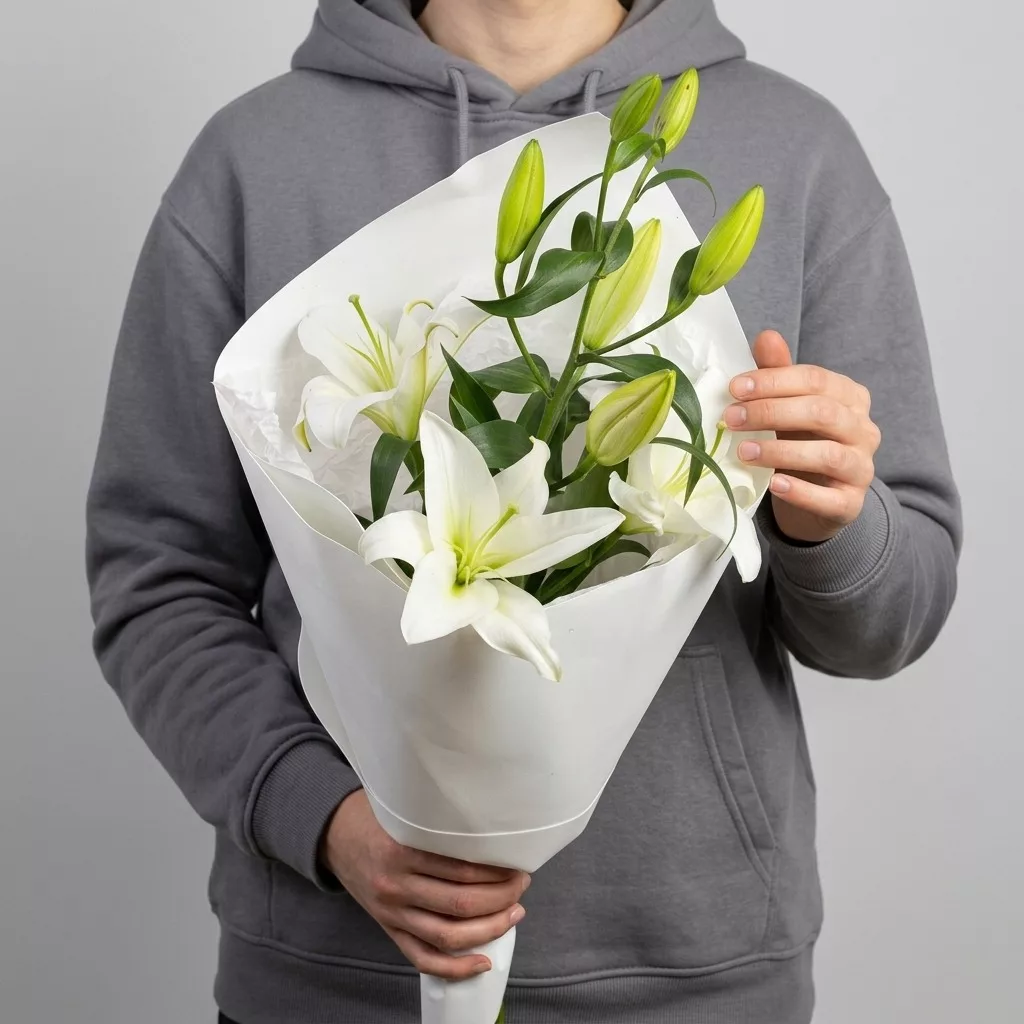
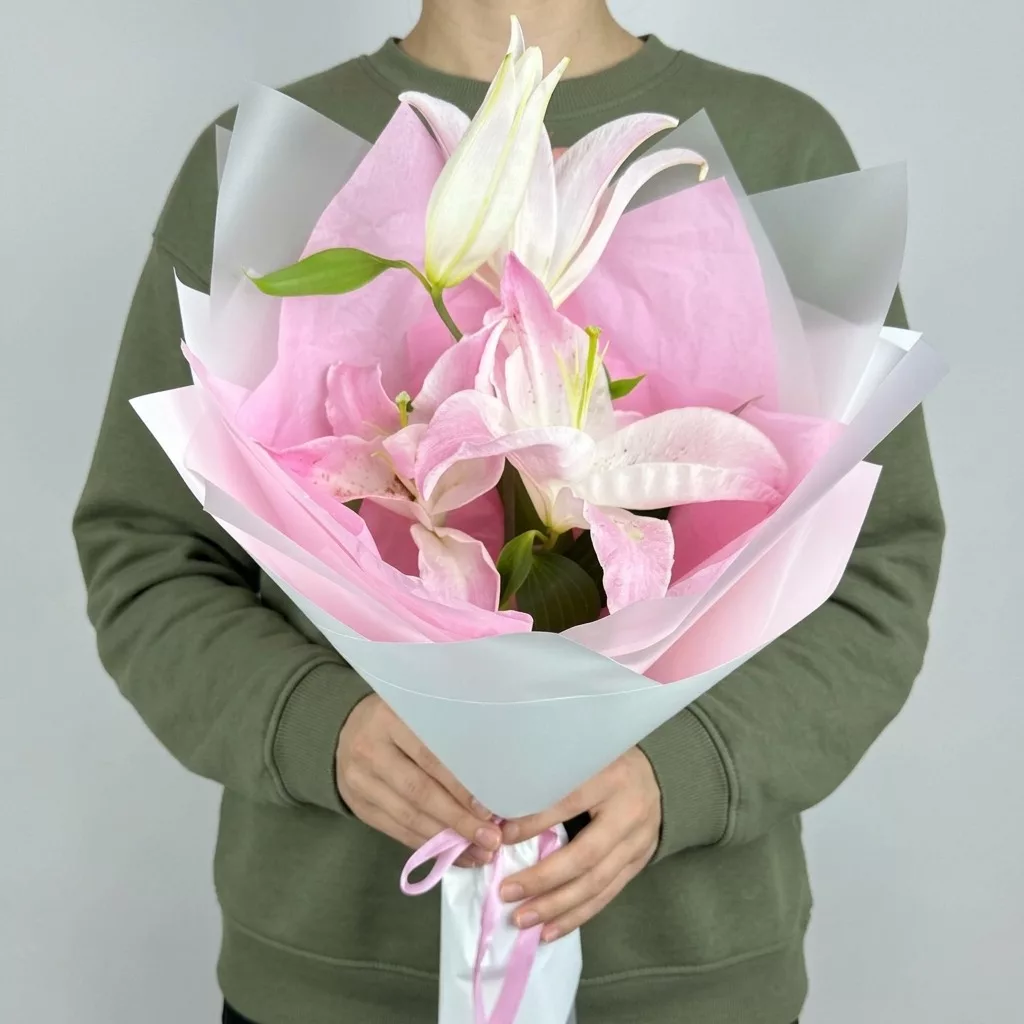

The Flowers That Define the Classic Russian School Bouquet
Ask any experienced Russian florist what belongs in a September 1 bouquet and the answer will come quickly: gladioli, asters and chrysanthemums. These three form the backbone of the classic school bouquet, and they have done so for decades. Each has qualities that make it particularly suited to this occasion.
Gladioli are the most iconic choice. Their tall, architectural spikes give a bouquet immediate visual impact and a sense of ceremony. A single stem of gladiolus can anchor an entire arrangement. Common colours for school bouquets include white, pale pink, deep burgundy and bright yellow. White and cream gladioli are especially popular because they photograph beautifully and read as elegant rather than showy.
Asters are the second essential element. These daisy-like flowers bloom naturally in late August and early September, which means they are at their peak freshness precisely when they are needed most. They come in purple, lilac, white, pink and deep red. Their small, dense heads add texture and fill space naturally without making the bouquet feel heavy.
Chrysanthemums, particularly the spray varieties, round out the classic trio. Spray chrysanthemums have multiple small blooms on each branching stem, which creates a full, lush look without requiring a large number of individual stems. White spray chrysanthemums are a perennial favourite. Single large-headed chrysanthemums also appear in school bouquets, though they are used more sparingly as focal points rather than filler.
Roses appear in many school bouquets too, particularly garden-style roses with slightly open, ruffled heads, but they are considered a slightly more personal choice than the traditional trio.
Colour Palettes: What Works and What to Avoid
Colour choice is where many families make their first mistake. The instinct is often to go bright and celebratory — bold reds, vivid oranges, electric purples all mixed together. In practice, bouquets with too many competing colours look chaotic and visually tiring. A school bouquet should feel festive but composed.
The most successful school bouquets are built around a palette of two or three colours at most. White combined with a single accent colour is the safest and most consistently admired approach. White gladioli with lilac asters, for example, create a combination that looks refined and works for teachers of any age or subject. White with pale yellow reads as warm and sunny without being aggressive. Deep burgundy with cream is more dramatic and suits older, more experienced teachers particularly well.
Pure white bouquets are a strong choice and carry a sense of formality that many Russian families associate with respect. They also photograph exceptionally well, which matters on a day when everyone has a phone camera ready.
Bright red bouquets are common but carry a slightly different emotional register in the Russian context — they can feel more romantic than respectful, so they are better suited to a beloved teacher whom the family knows well rather than a new teacher the child is meeting for the first time.
Avoid mixing warm and cool tones carelessly. Orange gladioli next to blue asters, for instance, create visual tension rather than harmony. If you want a warm bouquet, stay within the warm family: yellows, peaches, corals and creams. If you want a cool bouquet, stay with whites, lilacs, purples and soft pinks. Keeping this discipline makes even a simply assembled bouquet look intentional and professional.
Size, Structure and the Art of Looking Generous
A school bouquet should look generous. This is not about excess — it is about the visual impression the child makes when walking through the school gate. A bouquet that looks small or sparse, no matter how carefully assembled, will feel like an afterthought in a crowd of fuller arrangements.
The standard school bouquet contains somewhere between seven and fifteen stems, depending on the variety. Gladioli, being tall and dramatic, can make a bouquet look substantial with fewer stems. Spray chrysanthemums and asters, being smaller-headed, need more stems to achieve the same visual weight. A well-balanced bouquet typically has one or two focal stems — often gladioli or large-headed chrysanthemums — surrounded by a ring of asters or spray chrysanthemums, with foliage used to frame the whole arrangement.
Height matters enormously. A school bouquet should be tall enough that the child has to hold it at arm's length or against their chest rather than dangling it at their side. The classic silhouette is upright and slightly conical, wide at the base and tapering toward the top. This is the shape that reads as formal and considered.
Wrapping is part of the structure. The classic Russian school bouquet is wrapped in kraft paper or a combination of kraft and coloured tissue, tied with a satin ribbon. The paper should gather the stems firmly but leave the flower heads fully visible. Cellophane wrapping alone has fallen out of fashion and tends to look cheap in photographs. A wide satin ribbon in white, gold or a colour that echoes the flowers finishes the bouquet correctly and gives the child something comfortable to grip during the long morning ceremony.
Keeping Flowers Fresh: Timing, Temperature and Handling
September 1 falls at the end of summer, and in many parts of Russia the weather is still warm. In Saint Petersburg, early September temperatures can sit anywhere between ten and twenty degrees Celsius depending on the year. This range is actually kind to cut flowers — cool enough to slow wilting, warm enough that the flowers open properly. However, warm years do create real challenges, and handling matters.
If you order a bouquet for delivery, the timing of that delivery is critical. Flowers that arrive the evening of August 31 will be perfectly fresh the next morning if kept in a cool room away from direct sunlight, with the stems in water. Do not refrigerate wrapped bouquets — the paper and ribbon absorb moisture and the flowers can develop condensation damage. A cool hallway or a shaded balcony is ideal.
If you collect a bouquet on the morning of September 1, try to do so no more than two to three hours before the ceremony. Keep the bouquet out of direct sunlight during transport and avoid leaving it in a warm car.
Gladioli are particularly sensitive to heat and will begin to open rapidly in warm conditions. A bouquet assembled with gladioli at the half-open stage — showing colour but not yet fully unfurled — will be at its most beautiful during a morning ceremony. Fully open gladioli are stunning but more fragile and lose petals quickly when handled.
Asters and spray chrysanthemums are robust and handle warmth and handling well, which is one of the reasons they became staples of the school bouquet in the first place. They are reliable flowers for a day that involves a lot of carrying, photographing and passing between hands.
Common Mistakes Families Make and How to Avoid Them
After years of assembling September 1 bouquets, certain mistakes come up again and again. Knowing them in advance saves stress on a day when everything is already slightly hectic.
The most common mistake is ordering too late. Gladioli in particular are a seasonal flower with limited availability, and the best stems are reserved by florists for pre-orders placed days in advance. Families who call on the morning of September 1 expecting a full selection of gladioli are often disappointed. Order by August 28 at the latest, and ideally earlier.
The second mistake is choosing flowers based on price alone. Buying the cheapest available stems to save money usually produces a bouquet that looks thin and slightly wilted, because budget flowers at peak season are often the last of the stock. A modest number of fresh, high-quality stems will always look better than a large number of tired ones.
The third mistake is over-complicating the colour palette, as discussed earlier. Four or five different colours rarely harmonise in a hand-tied bouquet and the result looks busy rather than festive.
The fourth mistake is neglecting the wrapping. Parents sometimes ask for flowers without wrapping to save on cost, but an unwrapped bouquet looks unfinished and is harder for a child to carry. The wrap is structural, not decorative.
Finally, many families forget to ask for the bouquet to be sized for the child carrying it. A bouquet designed for an adult to carry will be too heavy and awkward for a seven-year-old first-grader. When you place your order, mention the age of the child so the florist can adjust the stem count and weight accordingly. A lighter, slightly smaller bouquet that a child can carry proudly is always better than a grand one they can barely hold.
A September 1 bouquet is one of those small things that carries genuine meaning. For a teacher, receiving a well-chosen, freshly arranged bouquet from a student is a real moment of warmth at the start of what will be a long year. For the child, carrying something beautiful through the school gate is a small ceremony in itself. Getting the flowers right — the right varieties, the right colours, the right size and the right timing — does not require expert knowledge. It simply requires a little planning and the willingness to think about it before the last possible moment. At Turboflora, we deliver across Saint Petersburg and Russia within one to two hours, and our team assembles every September 1 bouquet by hand with the same attention we would give any important occasion. This is one of our favourite days of the year, and we want yours to go perfectly.
Frequently asked questions
What is the most traditional flower for a September 1 bouquet in Russia?
Gladioli are the single most iconic choice. Their tall spikes create an immediate sense of ceremony and they bloom naturally at the end of August, making them fresh and available precisely when needed. White and pale pink gladioli are the most requested colours, though deep burgundy varieties are also widely loved for their dramatic effect.
How many stems should a school bouquet contain?
Most classic school bouquets contain between seven and fifteen stems. The right number depends on the variety — gladioli are tall and dramatic, so five or seven can look very full, while asters and spray chrysanthemums need more stems to achieve the same visual weight. Always factor in the age of the child carrying it, as younger children need a lighter arrangement.
Is it acceptable to give a teacher roses instead of the traditional varieties?
Roses are perfectly acceptable and appreciated by teachers. Garden-style roses with ruffled, slightly open heads are a popular choice. The only thing to consider is that roses carry a slightly more personal tone than gladioli or asters, so they suit families who know the teacher well. For a new teacher or a first-grade ceremony, the classic trio of gladioli, asters and chrysanthemums feels more universally appropriate.
When should I order a September 1 bouquet to make sure I get the best flowers?
Place your order by August 28 at the latest. Gladioli and the best asters sell out quickly as demand peaks in the final days of August. Early orders allow the florist to source the freshest stems and give you the widest choice of colours and combinations. Morning orders on September 1 itself often face limited availability of the most popular varieties.
How do I keep the bouquet fresh overnight if it arrives the evening before?
Place the stems in a clean container of cool water and keep the bouquet in a cool room away from direct sunlight and heating vents. Do not put a wrapped bouquet in the refrigerator, as the paper absorbs moisture and the flowers can develop condensation damage. A cool hallway works well. Remove any lower leaves that would sit below the waterline to keep the water clean.
Ready to send flowers?
Pick the city, choose the bouquet, and a local florist takes it from there.
Choose a city →