Should I Put Ice in My Flower Vase?
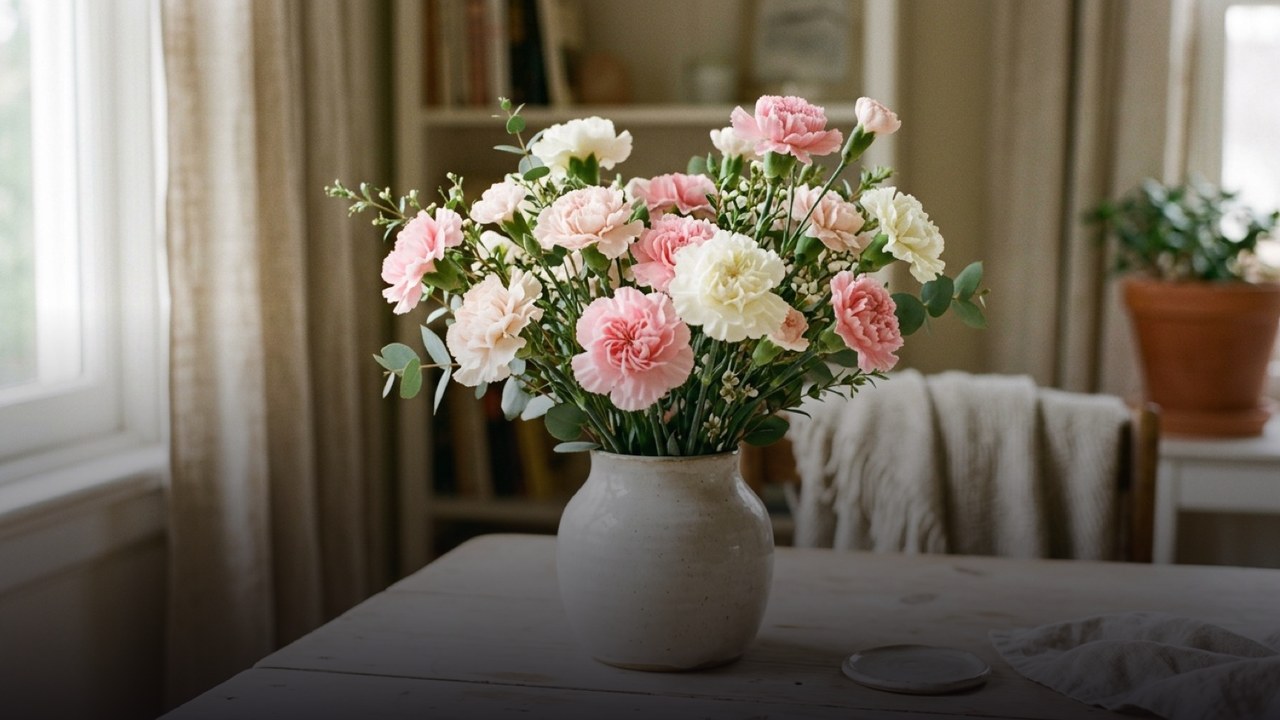
You generally do not need to put ice in your flower vase: fresh, cool tap water is a better everyday choice for most mixed bouquets. Ice is not a substitute for changing the water, cleaning the vase or following the instructions on cut-flower food. If you have already added a few cubes, remove any remaining ice and continue with normal vase care.
The useful distinction is between keeping your bouquet somewhere comfortably cool and trying to keep its water icy. A vase beside a sunny window can warm up again even after you add ice, while leaves left underwater still need removing. Focus on clean water, properly prepared stems and a suitable position; these are practical things you can check without guessing how cold each flower likes to be.
What ice can—and cannot—do for a bouquet
Ice lowers the water temperature while it melts, but it does not clean the vase or remove decaying plant material. If the water looks cloudy or smells unpleasant, adding cubes leaves the underlying problem in place. Empty the vase, wash it thoroughly, rinse away the detergent and refill it with fresh water before returning the prepared stems.
There is no single reason to make every bouquet's water ice-cold. A mixed arrangement may contain flowers and foliage with different care needs, so a general internet tip about one flower should not become a rule for the whole bunch. Unless you have specific instructions for your flowers, use cool water without deliberately chilling it with ice.
Ice also makes flower-food dilution harder to judge when you add it after mixing the solution. The cubes become extra water as they melt. If you use a sachet of cut-flower food, measure the water and follow the packet directions; do not keep adding ice or topping up indefinitely and assume the original concentration stays the same.
Which water should you use instead?
For routine care of most mixed cut-flower bouquets, start with fresh, cool tap water rather than water made icy in the freezer. You do not need to chase an exact temperature for an unidentified bouquet. If the flowers came with care instructions, use those as your first guide, especially when they specify a different approach for a particular variety.
Cool water should be an easy household choice, not a treatment you have to maintain throughout the day. Avoid adding hot water or moving repeatedly between hot and icy water in an attempt to revive the stems. Our guide to putting flowers in cold water explains the everyday choice in more detail.
Use a water level that keeps the cut ends submerged while leaving the foliage above the surface. Check it after arranging: a tall vase can hide a surprisingly low water line, and stems may sit at different heights. If you are unsure about the amount, see how much water to put in a flower vase, then adjust for your vase and stems.
Bouquets we can deliver




A useful vase-care routine, from unwrapping to refilling
Prepare the vase before leaving the bouquet on a table while you look for scissors. Choose one that supports the stems without forcing them tightly together, wash it and rinse it well. Remove any wrapping that would sit in the water, then take off leaves below the intended water line. Keep any binding that is needed to hold a hand-tied bouquet together.
With a clean, sharp tool, trim a small amount from the stem ends to expose a fresh cut, taking care not to crush them. Put the stems into the prepared water promptly. If you have cut-flower food, use the stated amount for the volume of water; a stronger mixture is not an improvement. Avoid adding sugar, aspirin or other household ingredients alongside it.
Check the water level every day, particularly during the first days when you are learning how quickly that bouquet uses it. Replace water that becomes cloudy or develops an odour, washing the vase before refilling. Remove fallen leaves and spent flowers as you notice them. At each refresh, check that shorter stems still reach the water and that no foliage has slipped below the surface.
If flowers droop, check these things before reaching for ice
First, look inside the vase. Has the water dropped below some of the stem ends? Is a stem bent or trapped against the rim? Has the bouquet spent time in a warm place? These checks give you something concrete to correct. Drooping is a symptom with several possible causes, so it does not establish that the flowers need colder water.
If the water is low or dirty, prepare a clean vase with fresh water, remove submerged leaves and recut the stem ends with a clean, sharp tool. Return the flowers to water and move them away from direct sun and heat. Give them time to take up water before making another change; repeated handling can damage delicate petals and stems.
Some flowers may improve after basic care, but ice cannot reverse ageing or repair a broken stem. Avoid treating every drooping flower with the same soaking, boiling-water or freezing trick. If one stem remains collapsed while the others look sound, remove it and assess it separately. You can ask for guidance on the particular flowers rather than escalating to a more extreme treatment.
Keep the vase cool by choosing its position
Where you put the bouquet is often more useful to review than whether to add a cube. Choose a spot away from radiators, heaters, hot appliances and strong direct sunlight. A bright windowsill may look attractive, but check whether it becomes warm during the afternoon. Cut flowers do not need to sit in direct sun to be displayed and enjoyed.
Keep the arrangement away from a strong air-conditioning outlet or a draughty doorway, too. You are aiming for a reasonably steady setting, not the coldest place you can find. If a room gets hot during part of the day, move the vase to a cooler indoor spot and check the water level again. Adding ice does not correct the conditions around the petals.
Leave some space between your flowers and a bowl of ripening fruit, which can release ethylene that speeds ageing in susceptible flowers. Avoid squeezing the bouquet into a crowded shelf where petals brush against objects. A clear, stable surface also makes daily care easier: you can see dropped petals, lift the vase safely and notice when the water needs attention.
Sending flowers to Russia: make the handover easy
If you are sending a bouquet from abroad, keep any care message simple: use a clean vase, fresh cool water and the supplied care directions, if any. You can browse our bouquets catalogue and contact a manager on WhatsApp for help choosing flowers, agreeing the address, delivery time and card text, or arranging a photo of the bouquet before delivery.
We deliver flowers across Russia. City delivery costs 500 RUB; for remote districts and suburbs, the operator confirms the price when confirming the order. In large cities, express delivery is available in 1–2 hours after order confirmation. You can also arrange delivery at an exact time within a margin of 30 minutes, choose a window of 09–12, 12–15, 15–18 or 18–21, or pre-order 1–30 days ahead.
Choose a time when the recipient can receive the bouquet and put it in water. The courier calls about 15 minutes before arrival. Delivery is anonymous by default, so the courier does not name the sender; a card with your text is free. If you want the recipient to know who sent the flowers, sign the message. Online checkout uses CloudPayments; check the payment options displayed there rather than assuming a particular foreign card will be accepted. We deliver bouquets across Russia in 1–2 hours.
Frequently asked questions
Will one ice cube ruin my flowers?
A single cube is not a reason to discard the bouquet. Remove any remaining ice, check that the stems have enough clean water and return to the care instructions for your flowers.
Should I put ice in a vase of roses?
Ice is not a necessary part of routine care for cut roses. Start with a clean vase, fresh cool water, prepared stems and correctly diluted cut-flower food if you have it.
Can ice replace changing the vase water?
No: ice adds water as it melts but does not remove dirt or decaying leaves. If the water is cloudy or smells unpleasant, empty and wash the vase before refilling it.
Should I put a flower vase in the fridge overnight?
A household fridge is not a reliable default for an unidentified mixed bouquet, especially if it contains ripening fruit or the flowers could touch a freezing surface. Choose a cooler indoor position away from direct sun and heat unless you have specific storage instructions.
What happens if the recipient is out when flowers arrive?
If the recipient is absent, we agree a second delivery the same day or handing the flowers to a neighbour or concierge with the sender's consent. The courier calls the recipient about 15 minutes before arrival.
Ready to send flowers?
Pick the city, choose the bouquet, and a local florist takes it from there.
Choose a city →