Siberian chrysanthemum: what the name means and how to choose
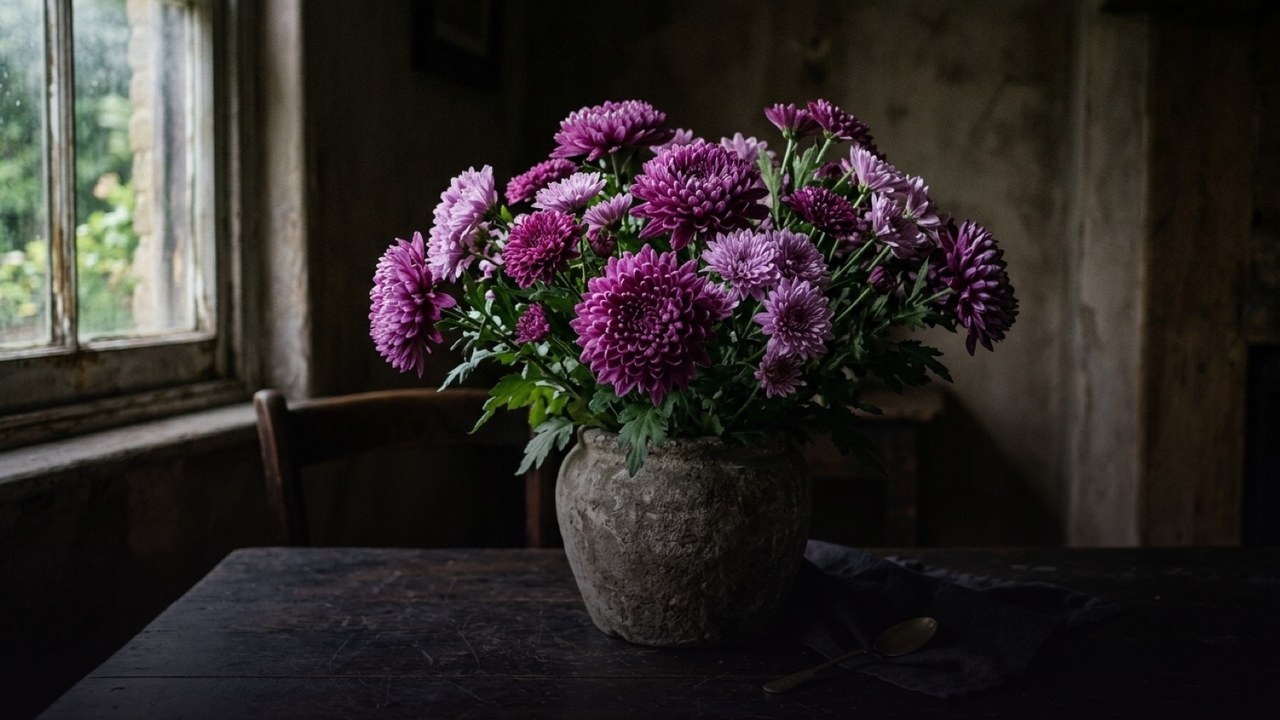
Siberian chrysanthemum commonly refers to Chrysanthemum zawadskii, a perennial also listed under the botanical name Dendranthema zawadskii. The name is not a reliable label for every cold-hardy chrysanthemum, and it does not identify a standard bouquet variety. If you want to buy one, first establish whether you mean a living garden plant or cut chrysanthemums for a gift.
That distinction matters because a plant's winter survival and a bouquet's vase life are separate questions. A photograph of a daisy-shaped flower cannot confirm its identity or hardiness, while a florist's chrysanthemum bouquet may contain quite different cultivated varieties. Here is how to interpret the name, assess a plant for your garden and choose flowers thoughtfully when your recipient lives in Russia.
What does “Siberian chrysanthemum” actually identify?
Common names are useful starting points, but they are less precise than botanical names. You may encounter Siberian chrysanthemum on plant labels, in gardening articles or beside photographs without enough information to establish exactly what is pictured. Look for the botanical name and, where supplied, the cultivar name. Those details give you a firmer basis for checking growth habit, flowering season and cultivation advice.
Chrysanthemum zawadskii has daisy-like flower heads with a visible central disc. That appearance helps explain the search results, but it is not a dependable identification test: many garden chrysanthemums and other members of the daisy family share that outline. Petal colour alone is especially weak evidence. If identification matters, keep the original label and compare foliage and the whole plant as well as the flower.
For a bouquet, describe the appearance you want instead of relying solely on the word “Siberian”. Say whether you prefer open, daisy-like flowers, rounded heads or branching stems carrying several blooms, then specify colour and overall size. A reference photograph can help communicate the effect. It does not establish that the pictured species or cultivar will be available for your order.
Can you grow it through a cold winter?
A northern-sounding name does not settle whether a plant will survive in your garden. Winter performance depends on the correctly identified plant, its establishment, soil drainage and the conditions at the planting site. A sheltered bed and an exposed balcony pot present different challenges, even within the same town. Treat claims such as “hardy chrysanthemum” as information to investigate, rather than a complete planting recommendation.
Before buying a living plant, ask whether it is intended for outdoor perennial cultivation and whether there is reliable guidance for your region. Choose a position with good light and soil that drains freely; avoid a hollow where water collects around the crown. Allow enough growing time for roots to establish before winter. A flowering pot bought late in the season may leave you fewer options for successful establishment.
Container roots experience different winter conditions from roots in the ground, so do not assume that advice for a garden bed transfers directly to a small pot. Check region-specific guidance on siting, protection and when to cut back the plant. For a closer look at the questions behind a hardiness claim, read which chrysanthemums survive winter.
Bouquets we can deliver




How to care for cut chrysanthemums at home
For cut stems, start with a thoroughly clean vase and fresh water. Remove leaves that would sit below the waterline, then trim the stem ends with a clean, sharp tool before arranging the flowers. Keep the arrangement loose enough that you can inspect the water and remove a stem without pulling the whole bouquet apart. Leaves left soaking in the vase make it harder to keep the water clean.
Use cut-flower food according to its packet instructions if you have it. Check the water level daily, because a full arrangement can use more water than you expect. Refresh the water and clean the vase when it becomes cloudy or develops an odour; recut the stem ends when refreshing the arrangement. Remove fading flowers and damaged foliage promptly, taking care with neighbouring stems.
Place the vase away from radiators, direct sun and ripening fruit. In a heated Russian home, a bright windowsill directly above a radiator can be a poor choice despite looking attractive. Keep petals and foliage clear of very cold window glass as well. Garden hardiness does not predict cut-flower longevity, and a named variety alone cannot tell you exactly how long a bouquet will remain decorative.
Chrysanthemum meanings and gift etiquette in Russia
Chrysanthemums can be appropriate for birthdays, thanks, family visits and other personal occasions in Russia. They do not carry one universal message across countries, however. Someone who grew up where chrysanthemums are strongly associated with remembrance may read them differently from a recipient who regularly enjoys them at home. Personal associations and the occasion are more useful guides than a fixed dictionary of flower meanings.
For a celebration in Russia, an odd number of clearly counted flowers is the usual convention; even counts are associated with mourning. With branching chrysanthemums, one stem can carry several flower heads, so stems and visible blooms are not interchangeable counts. If that distinction could cause confusion, ask for help choosing the arrangement and explaining your intended occasion before finalising the order.
Colour should also follow the recipient's taste. White can look restrained and elegant, while yellow may suit someone who enjoys bright flowers; neither choice tells you everything about how the gift will be received. If you are unsure about a cross-cultural association, our guide to chrysanthemum meanings and mourning customs explains why context deserves more attention than a blanket rule.
Choosing a chrysanthemum bouquet for someone in Russia
Turn your search term into a practical brief: the occasion, preferred colours, the scale of the bouquet and the flower shape you like. If you specifically want Chrysanthemum zawadskii, give the botanical name and ask whether that exact plant or flower can be supplied before making a decision. A catalogue photograph of cultivated chrysanthemums should not be treated as confirmation of a botanical species.
You can start with our bouquets catalogue, then contact a manager on WhatsApp for help choosing a bouquet and agreeing the time, address and card text. You can also arrange a photo of the bouquet before delivery. When the reference image matters, explain which details you care about most: the open centres, the colour balance or the overall outline.
Delivery is anonymous by default: the courier does not name the sender. A card with your text is free, so sign the message if you want the recipient to know immediately who sent the flowers. A short, specific note usually gives the gift clearer meaning than flower symbolism alone. Mention the birthday, thank-you or shared memory that prompted you to send it.
Planning delivery and checkout from abroad
We deliver flowers across Russia. City delivery costs 500 RUB; for remote districts and suburbs, the operator confirms the price when confirming the order. Give the complete address and discuss access details when agreeing delivery. If you are ordering from another country, express the requested date and time in the recipient's local time so there is no ambiguity between your calendar and theirs.
In large cities, express delivery is available in 1–2 hours after the order is confirmed. Other scheduling options are an exact time with a tolerance of plus or minus 30 minutes, or the windows 09–12, 12–15, 15–18 and 18–21. You can also pre-order 1–30 days ahead. Choose the timing around when the recipient can receive the flowers, especially for a workplace or a planned outing.
The courier calls the recipient about 15 minutes before arrival. If the recipient is absent, we agree a second delivery the same day or handing the flowers to a neighbour or concierge with the sender's consent. Online checkout uses CloudPayments; check the payment options displayed there rather than assuming that a particular foreign-issued card will be accepted. We deliver bouquets across Russia in 1–2 hours.
Frequently asked questions
Is Siberian chrysanthemum the same as any hardy chrysanthemum?
No. The common name often refers to Chrysanthemum zawadskii, while “hardy chrysanthemum” is used more broadly. Check the botanical identity and regional growing guidance before choosing a plant for winter survival.
Can I identify Siberian chrysanthemum from its flower colour?
Colour alone cannot confirm the species or cultivar. A reliable label, the foliage and the plant's overall growth habit provide more useful evidence than a close-up of a single flower.
Does a chrysanthemum bouquet need a sunny windowsill?
Keep cut chrysanthemums away from direct sun and heating appliances. A position clear of radiators and cold window glass, together with clean water and a clean vase, supports their condition.
Are chrysanthemums suitable for a birthday in Russia?
Yes, they can be a suitable birthday gift when chosen with the recipient's preferences in mind. Follow the usual odd-number convention for clearly counted flowers and add a signed card to make the occasion clear.
Can I pay for flower delivery to Russia with a foreign card?
Online checkout uses CloudPayments. Check the options shown at checkout, because acceptance of every foreign-issued card cannot be guaranteed.
Ready to send flowers?
Pick the city, choose the bouquet, and a local florist takes it from there.
Choose a city →