Slavic Bloom: A Practical Guide to Giving Flowers in Russia
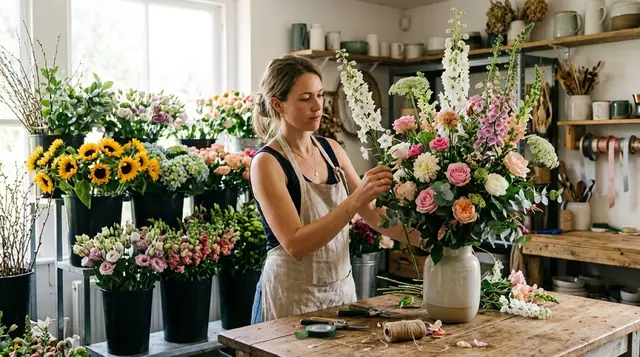
“Slavic bloom” is not a standard botanical name or a single recognised bouquet style. If you mean flowers associated with Slavic cultures, their significance depends on the country, occasion and recipient; for a gift to Russia, flower count, personal taste and the message you include are useful starting points.
You do not need to recreate a folk arrangement to make your gift feel thoughtful. Start with what the person enjoys, decide whether the occasion calls for romance, celebration or quiet support, and choose flowers they can comfortably display. This guide focuses on giving flowers in Russia, without treating the customs of every Slavic country as interchangeable.
What makes a bouquet feel personal rather than symbolic?
There is no fixed list of flowers that makes an arrangement authentically Slavic. Roses, carnations, chrysanthemums and seasonal flowers can appear in many different settings, so a flower name alone tells you little about the intended message. A more useful question is whether the bouquet suits this recipient and this particular moment.
Use something you know about the person as your first filter: a favourite colour, a preference for loose stems over a rounded arrangement, or a dislike of strongly scented flowers. If you only know that they love pink, that is a stronger starting point than an elaborate interpretation of flower symbolism found online.
Consider where the flowers will go. A large bouquet needs a suitable vase and room to stand securely; a more compact arrangement may be easier to enjoy on a small table. When browsing the bouquets catalogue, judge the overall shape and colour balance as well as the individual flowers. Avoid choosing on stem count alone.
Flower counts: the Russian custom worth checking
In Russia, an odd number of flowers is the customary choice for a celebratory gift, while even numbers are traditionally associated with mourning. This distinction is particularly noticeable in small bouquets where each flower is easy to count. If you are sending a simple bunch for a birthday or date, an odd count is the straightforward choice.
Mixed arrangements require a little more care in interpretation. Branching stems, clusters of small flowers and decorative foliage make counting less obvious than in a bunch of single-headed roses. Rather than trying to count every visible bud in a photograph, ask for clarification if the arrangement's main flower count matters to you.
Do not extend this custom into a claim that every Slavic recipient observes exactly the same rules. Family habits and individual preferences differ. For a Russian celebration, however, following the odd-number convention avoids an unnecessary distraction from your gesture. Our guide to the Slavic flower rule explains the distinction in more detail.
Bouquets we can deliver




Choose colour and meaning around the relationship
Red roses commonly suggest romantic love, which makes them a clear choice for a partner but a less neutral choice for a colleague. Pink can feel affectionate, and a varied colour palette can suit a celebration without carrying such a strong romantic signal. These are useful associations, not a language in which every shade has one compulsory meaning.
Yellow flowers deserve a practical caveat: some Russian recipients associate them with separation, while others simply enjoy their brightness. If you do not know the person's view, choose their favourite colour or another palette. There is no reason to reject yellow when you already know it is what the recipient likes.
White flowers can work in celebratory arrangements, but the occasion, flower count and accompanying words shape how they are received. For condolences, choose with the family's wishes and context in mind. A short, explicit card is more reliable than expecting the recipient to decode a colour scheme: say whether you are celebrating, thanking them or offering support.
Plan the arrival around the recipient's day
Before choosing a delivery time, think about what happens immediately afterwards. Someone leaving for a journey may have nowhere to put fresh flowers, and a person receiving them at work must still carry them home. A time when the recipient can take the bouquet indoors and place it in water often matters more than an elaborate surprise.
Turboflora delivers flowers across Russia. In large cities, express delivery is available in 1–2 hours after the order is confirmed. You can also arrange an exact time within a margin of 30 minutes, select a window of 09–12, 12–15, 15–18 or 18–21, or pre-order 1–30 days ahead. Use the destination's local time when agreeing the details.
City delivery costs 500 RUB; for remote districts and suburbs, the operator confirms the price when confirming the order. The courier calls the recipient about 15 minutes before arrival, so allow for that contact when planning a surprise. See delivery and payment when preparing the order, and make sure the agreed address and timing match the recipient's plans.
How to arrange a flower gift to Russia from abroad
Prepare the recipient's name, reachable phone number, delivery address and preferred local arrival time before you order. Include useful access information if you have it, and check spellings rather than guessing at unfamiliar address details. If your own time zone differs from the destination, write down the date as well as the hour to avoid a midnight mix-up.
Contact a manager on WhatsApp for help choosing a bouquet and agreeing the time, address and card text. You can also arrange a photo of the bouquet before delivery. Explain the occasion and any important preferences clearly; a direct request such as “pink flowers for my mother's birthday” gives a more useful starting point than “something Slavic”.
Online checkout uses CloudPayments. Check the payment options displayed at checkout; acceptance of every foreign card cannot be assumed. Delivery is anonymous by default, so the courier does not name the sender, and a card with your text is free. If you want the recipient to recognise you, sign the card, especially when the gift is arriving from another country.
If the recipient is absent, we agree either a second delivery that day or handing the flowers to a neighbour or concierge with the sender's consent. Tell the manager about known availability constraints while arranging the order. Do not build the plan around an unconfirmed assumption that someone else in the building will accept the bouquet.
Help the bouquet settle in and last well
Once the flowers arrive, prepare a clean vase and fresh water. Remove any leaves that would sit below the waterline, then trim the stem ends with a clean, sharp tool before placing them in the vase. Keep the stems together gently while working; squeezing them or forcing a large bunch through a narrow vase opening can damage the flowers.
If the bouquet arrives as cut stems, make sure all the cut ends reach the water. An arrangement built into a container may need different handling, so check its care instructions before pulling it apart. Choose a stable position away from radiators, direct sun and ripening fruit. Keep the flowers indoors where you can monitor their condition.
Check the water daily and replenish it as needed. Change cloudy water, clean the vase and remove fallen leaves or deteriorating flowers so they do not sit among healthy stems. Different flowers age at different rates, so adjust the arrangement as it changes. If a rose droops, check water access and stem condition first; no single treatment can restore every damaged or ageing bloom.
Frequently asked questions
Is “slavic bloom” the name of a particular flower?
It is not a standard botanical name. If you are trying to identify a flower, its appearance and botanical or common name are more useful than this broad phrase.
Should a birthday bouquet in Russia have an odd number of flowers?
An odd number is the customary choice for a celebratory bouquet, especially when the flowers are individually countable. Even numbers are traditionally associated with mourning.
Can I send flowers to Russia without revealing my name?
Yes. Delivery is anonymous by default, and the courier does not name the sender; leave your name out of the card text if you want it to remain undisclosed.
How soon can flowers arrive?
Express delivery in large cities is available in 1–2 hours after the order is confirmed. Other timing options include an exact time within a margin of 30 minutes, specified delivery windows and pre-orders 1–30 days ahead.
Can I pay with a card issued outside Russia?
Online checkout uses CloudPayments, but acceptance of every foreign card is not guaranteed. Check the options displayed at checkout before relying on a particular card.
Ready to send flowers?
Pick the city, choose the bouquet, and a local florist takes it from there.
Choose a city →