Snapdragons in a Bouquet: When to Use Them and What to Expect
There is a moment when a bouquet stops looking like a collection of flowers and starts looking like something someone actually thought about. Snapdragons are often the reason. Tall, tapering, covered in small blooms from base to tip, they give a bouquet vertical movement and a softness that roses alone cannot achieve. In Russia they are a working florist's reliable companion across two seasons, and if you have never ordered them before, it is worth knowing exactly when they shine, what colors are realistic to ask for, and how to keep them alive once they arrive.
When Snapdragons Are Actually Available in Russian Florists
Snapdragons are a cool-season flower, and that fact shapes everything about their availability in Russia. They do not like summer heat, which means the domestic growing season runs in two clear windows: spring, roughly from late March through May, and autumn, from September through November. During these months Russian greenhouse growers in regions like the Leningrad Oblast and Krasnodar Krai bring them to market in volume, and quality is noticeably higher than at other times of year.
In July and August you will still find snapdragons in florists, but they are almost entirely imported, mainly from the Netherlands and Colombia. Import stems travel well but they have already spent time in transit and cold storage, so their vase life on arrival is shorter than a freshly cut domestic stem in October.
Winter snapdragons, from December through February, are available but less common. Florists who stock them are usually sourcing from Dutch auction, and the price per stem rises accordingly. The stems are often shorter in winter because growers push them quickly under artificial light.
If you are planning a bouquet where snapdragons are the structural centerpiece rather than a filler accent, aim for the spring or autumn window. You will get longer stems, denser flower spikes, and a flower that will genuinely last in the vase rather than droop after three days. Asking your florist about current origin is not an unusual question — any professional will tell you straight away.
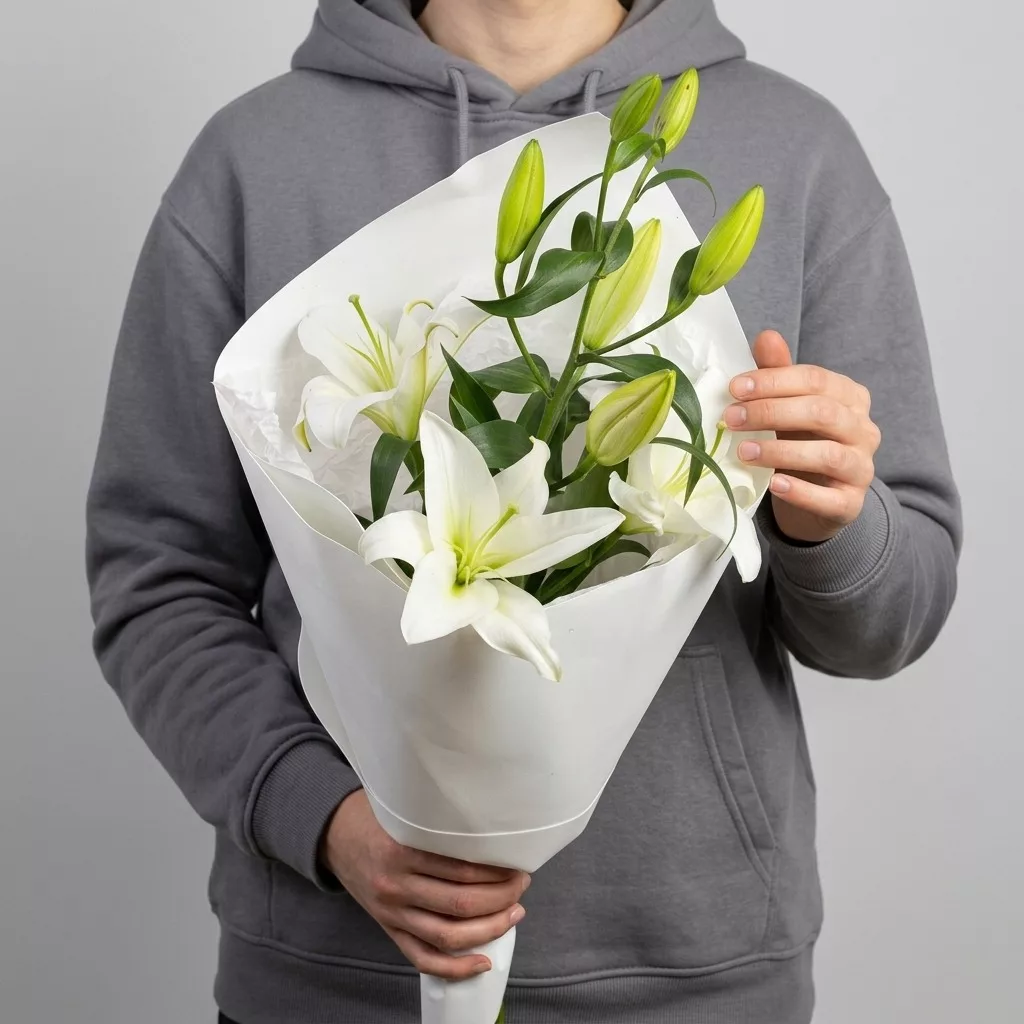
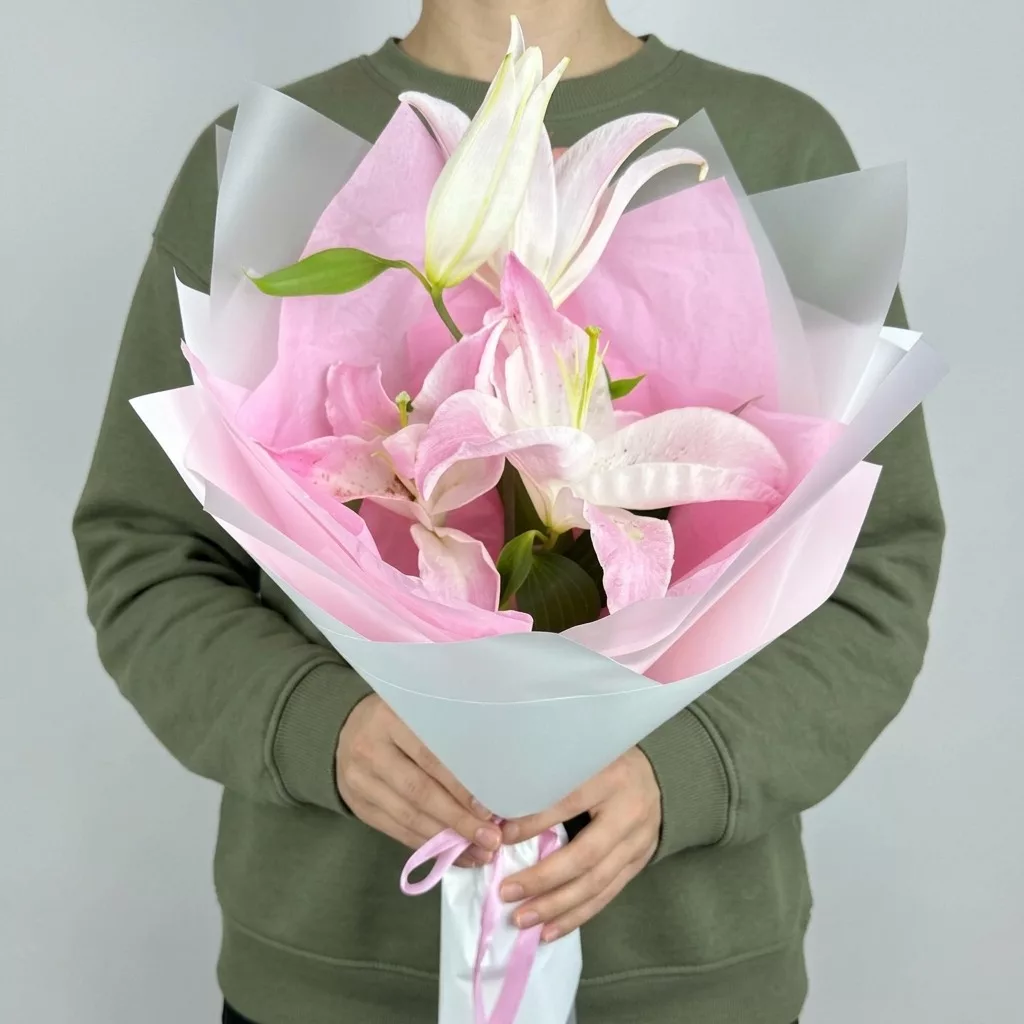
Bouquets we can deliver


The Color Range You Can Realistically Request
Snapdragons have one of the widest color ranges of any cut flower, and that is not an exaggeration. In a well-stocked Russian wholesale market during peak season you can find white, cream, pale yellow, deep yellow, coral, salmon, peach, soft pink, hot pink, burgundy, deep red, lavender, and purple. Bicolor stems — where each individual floret carries two tones, often a pale base with a darker lip — are common and genuinely beautiful up close.
That said, not every color is available every week. White and pink are the most consistent year-round. Yellow and coral are reliable in spring. Deep burgundy and purple tend to appear more strongly in autumn, which makes them a natural match for the season's other flowers: dahlias, spray roses in dusty tones, and eucalyptus.
In Russia, pale and pastel tones read as romantic and are popular for birthdays and anniversaries. Deeper, saturated colors — burgundy, plum, dark red — are often chosen for more formal or celebratory arrangements, including congratulations bouquets for professional milestones, which are taken seriously in Russian culture. Sending flowers to mark a promotion, a defense of a thesis, or a first performance is completely normal and expected.
If you have a specific color in mind, it is worth giving your florist a day's notice rather than ordering for same-day delivery. During peak season the range is broad, but a particular shade of apricot or a true lavender may need to be sourced specifically. A good florist will tell you honestly what is in the cooler right now.
What Snapdragons Actually Do Inside a Bouquet
Understanding why a florist reaches for snapdragons makes it easier to ask for what you actually want. They are what the trade calls a line flower — a bloom that creates direction and height rather than filling mass. A peony fills space. A snapdragon leads the eye upward. When you place two or three snapdragon stems in a round bouquet of garden roses, the whole arrangement suddenly looks taller, airier, and more considered.
They also soften hard shapes. A bouquet of tulips, which are all the same geometry, benefits enormously from one or two snapdragon spikes placed at different heights. The small individual florets along the stem break up the uniformity without competing for attention.
In hand-tied bouquets — the most common format in Russian florists — snapdragons are usually placed at the outer edge of the spiral rather than the center. This lets their height work naturally without the stems crossing awkwardly. A florist who places them in the middle of a tight round bouquet is making a small but visible mistake; the spike gets buried and the effect is lost.
For a gift bouquet being sent to someone who appreciates flowers, a combination worth requesting is snapdragons with lisianthus and eucalyptus. The snapdragon provides height, the lisianthus provides layered fullness, and the eucalyptus ties the color palette together while adding fragrance. It is not a trendy combination — it is a working one that photographs well and lasts in the vase.
Vase Life: What to Tell the Person Receiving the Flowers
A freshly cut snapdragon bought at the right time of year and handled correctly will last eight to twelve days in a vase. That is a genuinely good lifespan for a cut flower. The catch is that several small decisions in the first hour after the bouquet arrives make a significant difference to whether it reaches that number or drops to five or six days.
The first thing is water temperature. Snapdragons prefer cool water, not cold and certainly not warm. Room temperature water in a clean vase, changed every two days, is the baseline. The stems should be recut at an angle each time the water is changed — even removing two or three millimetres exposes fresh tissue and improves uptake.
The second thing is where the vase sits. Snapdragons are sensitive to ethylene gas, which is produced by ripening fruit. A bowl of apples or bananas on the same table will visibly shorten their life. Keeping them away from fruit, away from direct sun, and away from heating radiators — which are very much present in Russian apartments from October through April — makes a real difference.
One thing that surprises people is that snapdragon spikes continue to open from the bottom upward after cutting. When the bouquet arrives, the lower florets will be fully open and the tip may still be in bud. Over three or four days the whole spike opens progressively, which means the bouquet actually looks more impressive on day four than on day one. This is worth mentioning to the recipient so they do not assume the buds are a sign of an unripe flower.
Choosing Snapdragons for Specific Occasions in Russia
In Russia, flowers are given more frequently and for more occasions than in many other countries. Showing up to a dinner party without flowers is unusual. A teacher receives flowers from students at the end of term. A colleague gets a bouquet on their birthday regardless of how well you know them. Snapdragons fit comfortably into almost all of these situations because they do not carry the heavy symbolism that roses do.
For a birthday bouquet, snapdragons in warm tones — peach, coral, soft yellow — combine well with spray roses or ranunculus. The result reads as generous and cheerful without being formal. For a more romantic occasion, white or pale pink snapdragons with garden roses and touches of dusty miller create something that feels considered rather than assembled.
For congratulations — a graduation, a new job, a significant birthday milestone — height matters. Russians tend to appreciate generous, tall bouquets for celebratory moments. A bouquet built around long snapdragon stems, perhaps sixty to seventy centimetres, with supporting flowers at varying heights, signals effort and occasion in a way that a low, round bouquet does not.
If you are sending flowers to someone you do not know well — a business contact, a host family, a professional acquaintance — snapdragons in neutral tones with greenery are a safe and elegant choice. They do not carry the romantic weight of red roses and they are not as informal as a mixed wildflower bunch. They sit in a comfortable middle register that is appropriate for a wide range of relationships.
Common Mistakes When Ordering or Arranging Snapdragons
The most common mistake is ordering snapdragons in summer without asking about origin. A stem that has been in cold storage for ten days before it reaches the florist will not perform the same way as a stem cut three days ago. It is not that summer snapdragons are bad — they can still be beautiful — but your expectations for vase life should adjust accordingly. Asking your florist when the stems arrived is a reasonable question and a professional will answer it directly.
The second mistake is using too many snapdragon stems in one bouquet. Because they are tall and structural, three to five stems in a medium bouquet is usually enough. A bouquet of fifteen snapdragons with nothing else is a difficult thing to make look balanced — the spikes compete with each other and the result can look stiff rather than elegant. They work best when they have supporting flowers around them.
A third mistake, specifically for the person receiving the bouquet, is cutting the stems too short when trimming them for the vase. The height of a snapdragon is its main contribution. Cutting it down to match shorter flowers in a mixed arrangement removes the one quality that makes it useful. If the vase is short, choose a taller one rather than shortening the stems.
Finally, do not strip the leaves aggressively. Snapdragons have small leaves along the stem and removing all of them stresses the plant. Remove only the leaves that will sit below the waterline — those will rot and cloud the water — and leave the rest in place. The foliage is part of the stem's visual texture and contributes to the overall look of the arrangement.
Snapdragons reward a small amount of attention. Knowing the season, asking about stem origin, placing them correctly in a bouquet, and giving the recipient one piece of advice about fruit bowls and radiators — these are not complicated things, but they are the difference between a flower that lasts a week and a half and one that droops before the weekend. At Turboflora we carry snapdragons through both peak seasons and source carefully during the quieter months, so if you are building a bouquet around them or simply want them as part of something larger, it is worth telling us exactly what you have in mind.
Frequently asked questions
Are snapdragons available year-round in Russia or only in certain months?
They are available year-round, but quality and price vary significantly. Domestic greenhouse production peaks in spring and autumn when cooler temperatures suit the plant. Summer and winter stems are mostly imported from the Netherlands or Colombia, which means shorter vase life on arrival and higher prices. If vase life matters, spring or autumn is the better time to order them.
How long will snapdragons last in a vase after delivery?
Eight to twelve days is realistic for a fresh stem handled well. Change the water every two days, recut the stems each time, keep the vase away from fruit and direct heat sources, and use cool rather than cold water. Stems bought during peak domestic season consistently outperform imported stems bought in July or January.
Can I request a specific snapdragon color when ordering a bouquet?
Yes, and it is worth doing. White and pink are available almost any week. Coral and yellow are reliable in spring, while burgundy and purple appear most strongly in autumn. For a less common shade like apricot or true lavender, giving your florist a day's advance notice improves the chances of getting exactly what you want rather than the closest available substitute.
Are snapdragons appropriate to send as a gift in Russian culture?
Completely. They do not carry strong symbolic weight the way roses do, which makes them versatile. They suit birthdays, congratulations, thank-you gestures, and dinner party gifts equally well. In warm or neutral tones they are a safe choice for professional acquaintances too. Tall, generous stems read as celebratory in the Russian context, which values bouquet presence for significant occasions.
Why are the buds at the tip of my snapdragon spike still closed after delivery?
That is normal and actually a good sign. Snapdragon spikes open progressively from the bottom upward over three to five days. A spike where the tip is still in bud on delivery day means the flower is fresh and has days of opening ahead of it. The bouquet will look more fully open on day four than on day one, which is one of the things that makes snapdragons particularly good value.
Ready to send flowers?
Pick the city, choose the bouquet, and a local florist takes it from there.
Choose a city →