What Was the National Flower of the Soviet Union?
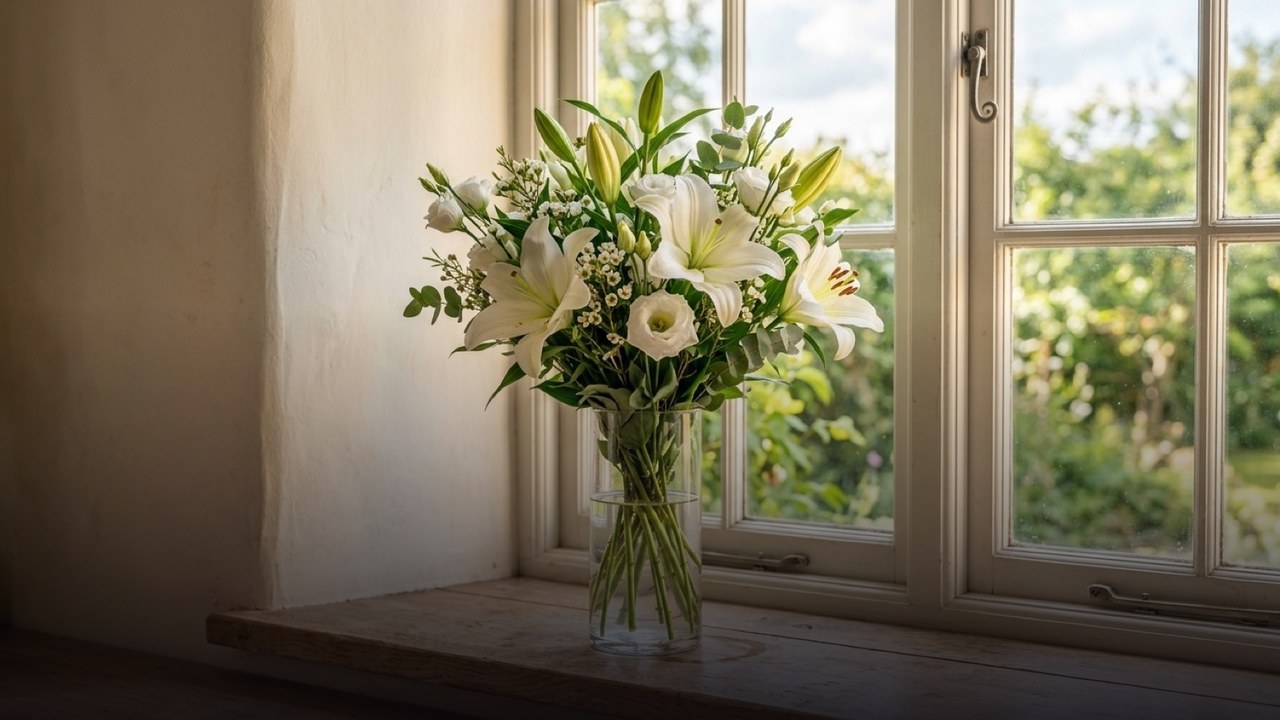
The Soviet Union had no generally recognised official national flower, but the red carnation is the flower most closely associated with Soviet public symbolism. It appeared in revolutionary imagery, public celebrations and acts of remembrance; that association should not be confused with an official national designation.
If you are searching for a Soviet flower to identify an old photograph or choose a meaningful bouquet, the occasion matters more than a single label. Red carnations, yellow mimosa and tall gladioli each bring different associations. For someone receiving flowers in Russia today, personal memories and the reason for your gift are usually more useful guides than historical symbolism alone.
Why the red carnation became the strongest Soviet association
Red carnations belonged to a wider tradition of socialist and workers' movement symbolism, so their meaning extended beyond the USSR. In Soviet settings, their red colour connected naturally with revolutionary flags and public ceremonies. This helps explain why the carnation is often offered as the answer to the national-flower question, even when no formal designation is established.
The same flower could serve several purposes: a tribute at a monument, a presentation at an official event or a personal gift. Context changes how you should read it. Carnations laid beside an eternal flame suggest remembrance, while a bouquet presented to a living person may express respect, affection or congratulations.
When identifying flowers in an old image, look at the flower head as well as the colour. Carnations have densely layered, often frilled petals, whereas roses have a different petal arrangement. A red bloom alone is insufficient evidence. The setting, accompanying objects and any caption can tell you more about its meaning than colour by itself.
Mimosa, gladioli and the difference between Soviet and Russian symbols
The yellow sprays commonly called mimosa in Russian flower traditions are usually flowering acacia, rather than plants of the botanical genus Mimosa. They are strongly associated with International Women's Day on 8 March. In a family photograph, those small yellow flower clusters can therefore suggest a spring celebration, although they cannot establish the date on their own.
Gladioli carry a different set of memories. Their tall stems are familiar from school celebrations, particularly the start of the school year on 1 September. A photograph of a child carrying gladioli may evoke that tradition rather than political symbolism. These associations continued beyond the Soviet period and remain recognisable to many families.
You should also separate the USSR from present-day Russia. The Soviet Union included multiple republics, with varied floral traditions, and no one bouquet represents all of them. Chamomile is often described as a Russian floral symbol, but that does not make it the Soviet national flower. Our guide to Russian flower symbols explores that distinction.
Bouquets we can deliver




Choose a bouquet for the person and the occasion
For someone who enjoys carnations, a bouquet can be a thoughtful gift without making a political statement. Start with what you know about their preferences: a favourite colour, a flower they grew at home or a bouquet they remember receiving. If you want to acknowledge a shared memory, explain it in the card so the recipient understands your intention.
For remembrance, red carnations are a familiar choice, but avoid assuming that every older recipient wants them for a birthday. A strongly ceremonial arrangement may feel too solemn for a personal celebration. Softer colours or a mixed bouquet can suit a celebratory intention when they also match the person's taste; no colour has one compulsory meaning.
If your goal is historical accuracy, identify the occasion and period before choosing the flowers. A school-day memory, an 8 March greeting and a memorial tribute call for different decisions. You can read more about Soviet flowers and their meanings, then use those associations as context rather than a rule that overrides the recipient's wishes.
Flower etiquette: stem counts, presentation and the card
In Russian gift etiquette, an odd number of flowers is customary for a living recipient, while even numbers are associated with funerals and remembrance. This distinction is especially noticeable in small bouquets where the stems are easy to count. If you are unsure, describe the occasion when choosing your bouquet instead of requesting a number without context.
Consider where the flowers will be received. Tall gladioli need a suitable vase and space, while a shorter bouquet may be easier to accommodate on a small table. For someone who will be travelling after a celebration, think about the practical burden of carrying long stems. The most impressive silhouette is not always the most convenient gift.
Keep the card specific and personal. A sentence such as 'These reminded me of the flowers you used to bring home in spring' gives a nostalgic bouquet a clear meaning. With Turboflora, a card with your text is free, and delivery is anonymous by default: the courier does not name the sender. Include your name in the message if you want the recipient to know who sent it.
Help carnations and other cut flowers last at home
Begin with a clean vase and fresh water. Remove leaves that would sit below the waterline, then trim the stem ends with a clean, sharp tool before arranging the flowers. Submerged foliage encourages dirty water, so this simple preparation is more useful than adding improvised household mixtures. If flower food is supplied, follow the packet instructions.
Keep the bouquet away from direct sun, radiators and ripening fruit. Check the water daily, refresh it when it becomes cloudy and wash the vase if residue develops. Remove fading blooms and any leaves that fall into the water. Carnations can be durable cut flowers, but their condition on arrival and the room environment affect how long they remain attractive.
Tall gladioli benefit from a stable vase that supports their stems; remove individual lower flowers as they fade. Flowering acacia sold as mimosa needs gentle handling because its small blooms can dry and shed. Mixed bouquets may age unevenly, so take out a spent stem without discarding flowers that are still fresh. Avoid treating any expected vase life as a guarantee.
How to arrange a meaningful flower delivery to Russia
Start with the occasion, the recipient's address and your preferred delivery date, then browse the bouquets catalogue. We deliver flowers across Russia. City delivery costs 500 RUB; for remote districts and suburbs, the operator confirms the price when confirming the order. If you have a particular historical flower in mind, ask about it before treating it as part of your chosen bouquet.
Use WhatsApp to get help choosing a bouquet and agree the time, address and card text; you can also request a photo of the bouquet before delivery. In large cities, express delivery is available 1–2 hours after the order is confirmed. Other options are an exact time with a tolerance of ±30 minutes, a window of 09–12, 12–15, 15–18 or 18–21, or a preorder 1–30 days ahead.
When ordering from abroad, state the intended delivery date and time clearly so a time-zone difference does not cause confusion. Online checkout uses CloudPayments; check the payment options displayed there, since acceptance of every foreign card cannot be assumed. The delivery and payment page is a useful reference while you prepare the order.
The courier calls the recipient about 15 minutes before arrival. If the recipient is absent, we agree a second delivery that day or, with your consent, hand the flowers to a neighbour or concierge. Give clear address details and choose a time when the recipient is likely to be available. That preparation helps the gift reach them with the personal message you intended.
Frequently asked questions
What was the national flower of the Soviet Union?
There was no generally recognised official Soviet national flower. The red carnation is the closest familiar symbolic association because of its use in revolutionary imagery, ceremonies and remembrance.
Was chamomile the Soviet Union's national flower?
Chamomile is commonly associated with Russia, but that is different from an official Soviet designation. Russia and the Soviet Union should not be treated as interchangeable when discussing national symbols.
Are red carnations appropriate for a birthday in Russia?
They can be, especially if the recipient likes them or they carry a happy personal memory. Consider the overall presentation and card text, since red carnations can also have ceremonial and memorial associations.
Why do people associate mimosa with Soviet celebrations?
The yellow flowering acacia commonly called mimosa became closely associated with International Women's Day on 8 March. That seasonal association does not make it an official national flower.
Can I order flowers to Russia while living abroad?
You can place an order for delivery across Russia and agree the recipient's details and timing with a manager. Checkout uses CloudPayments; check the displayed options rather than assuming your foreign-issued card will be accepted.
Ready to send flowers?
Pick the city, choose the bouquet, and a local florist takes it from there.
Choose a city →