Statice and Dried Accent Flowers: What Russian Florists Keep in Stock
You want a bouquet that still looks beautiful five days after delivery — not one that droops by Tuesday morning. That is exactly where statice and dried accent flowers earn their place. Russian florists have stocked these quietly essential blooms for decades, and once you understand what they do for a composition, you will never overlook them again.
What Statice Actually Is and Why Florists Love It
Statice — known botanically as Limonium sinuatum — is a papery, branching flower that comes in clusters of tiny blooms surrounded by a calyx that holds its colour long after cutting. Most people in Russia encounter it as a filler in mixed bouquets without ever registering its name. That invisibility is part of its charm: statice does the structural work quietly while the roses or peonies take the attention.
The calyx is the part that matters most. It is naturally dried in texture even when the plant is fresh, which means statice transitions from fresh to dried almost without any visible change. A stem cut today and left in a vase will look nearly identical in three weeks. This makes it invaluable for recipients who travel, forget to change the water, or simply want their gift to last.
Russian florists stock statice in purple, white, yellow, pink, and a deep blue-violet that photographs exceptionally well. Purple and white are the most consistently available varieties year-round, while yellow tends to arrive in larger quantities during late spring and summer when domestic greenhouse production peaks. The branching structure means a single stem fills a surprising amount of space, which also keeps it cost-effective for florists building mid-range bouquets. When you order a mixed arrangement and notice a fine, airy texture holding everything together, statice is almost certainly responsible.
Bouquets we can deliver


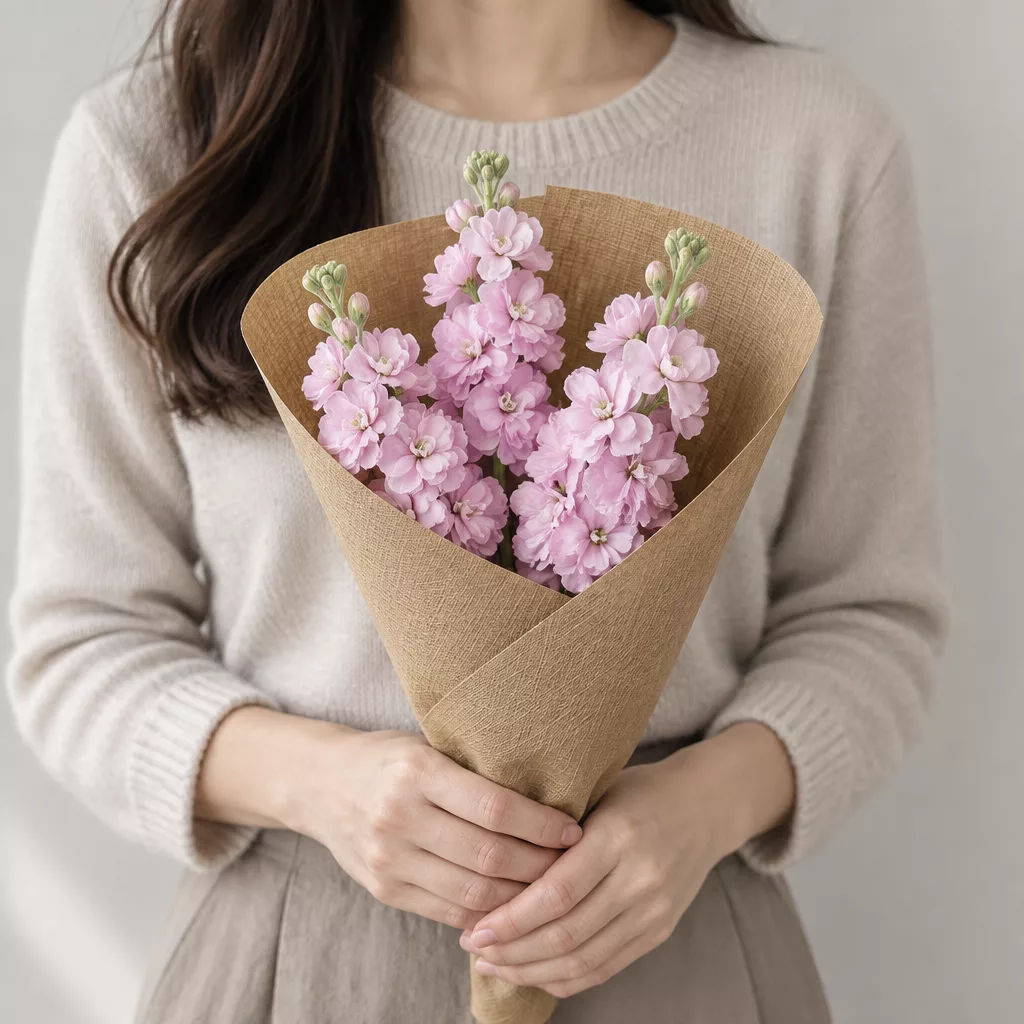
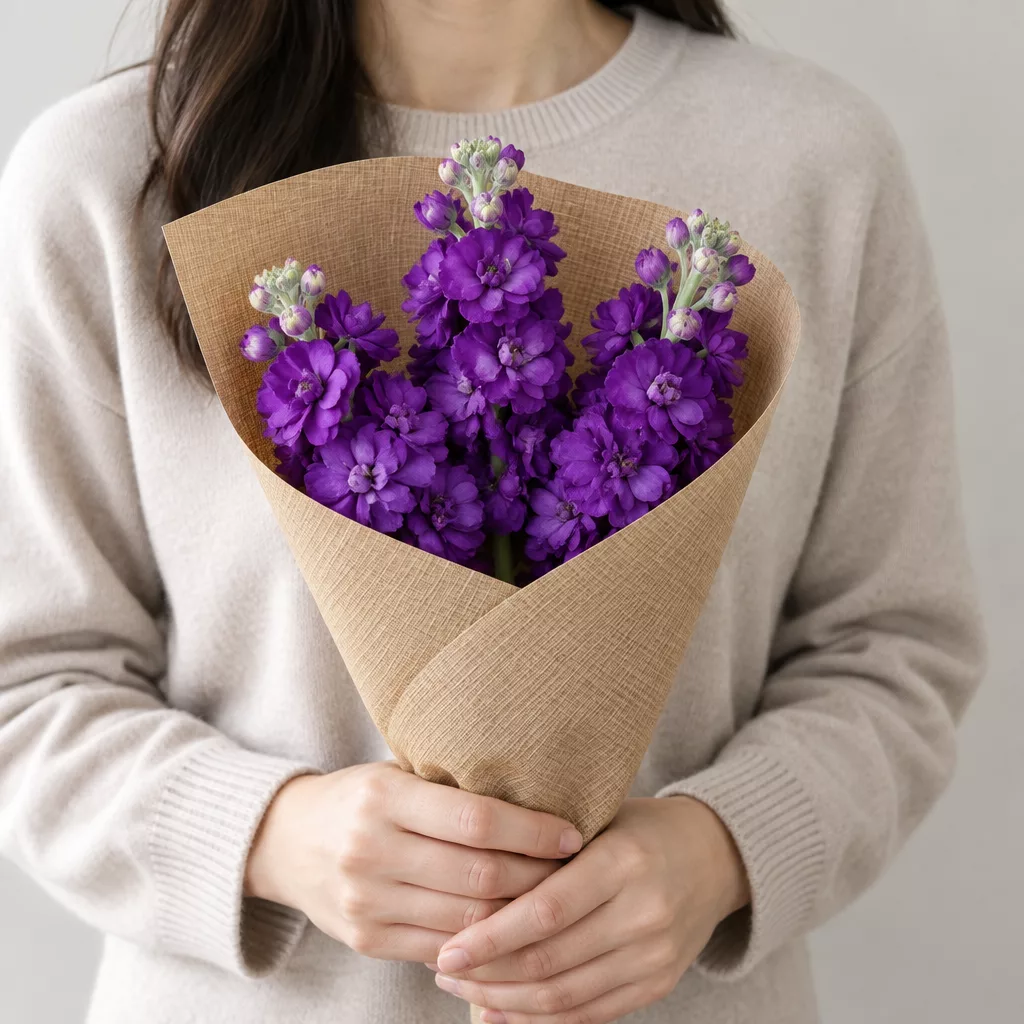
Other Dried and Semi-Dried Accents Common in Russian Flower Shops
Beyond statice, Russian florists regularly work with a small but reliable group of dried and semi-dried accent materials. Gypsophila — baby's breath — is the most familiar. It is sold both fresh and pre-dried, and the dried version has a slightly ivory tone that pairs beautifully with cream roses or warm-toned ranunculus. Fresh gypsophila is available year-round from Dutch imports and domestic growers; dried gypsophila is typically imported and stocked as a permanent supply item.
Craspedia, the round yellow drumstick flower, has grown steadily in popularity among Russian florists over the past several years. It holds its shape and colour almost indefinitely once cut, and its graphic, spherical form adds a contemporary feel to arrangements that might otherwise read as traditional. It is imported and available throughout the year, though supply can thin slightly in January and February when logistics across Europe slow.
Among grass and foliage accents, lagurus — commonly called bunny tail grass — appears frequently in bohemian-style arrangements. Its soft, oval seed heads dry naturally on the stem and add movement without adding weight. Phalaris grass, with its striped green-and-white blades, is used fresh but also air-dries well in the vase.
Finally, lunaria — the silver dollar plant with translucent seed pods — is a seasonal accent that arrives in autumn and is prized for the way light passes through its papery discs. Florists use it sparingly because its effect is so distinct. All of these materials are available to florists in Saint Petersburg and can be incorporated into bouquets delivered across Russia.
Year-Round Availability and What Changes by Season
One of the strongest practical arguments for using dried accent flowers is that they sidestep the seasonal limitations that affect fresh blooms. Statice, dried gypsophila, craspedia, and lagurus are stocked by wholesale suppliers in Russia throughout the entire calendar year. There is no waiting for a particular growing window, and there are no sharp price spikes in February or March the way there are for roses and tulips around major gift-giving dates.
That said, some variation does exist. Domestic statice — grown in Russian greenhouses — is most abundant from April through September. During winter months, florists rely more heavily on imported statice, primarily from the Netherlands and Colombia, which arrives via established cold-chain logistics. Quality remains consistent, but lead times can occasionally stretch by a day during periods of high demand, such as the week before International Women's Day on March 8th, which is the single largest flower-buying occasion in Russia.
For recipients in cities beyond Saint Petersburg, this matters. When Turboflora delivers across Russia within one to two hours, the bouquet needs to arrive in condition that justifies the distance it has traveled from the flower market to the preparation studio to the recipient's door. Dried accents do not wilt in transit, they do not bruise in cold temperatures, and they do not shed petals if the courier encounters a delay. In winter, when temperatures in many Russian cities fall well below freezing, this resilience is not a minor point — it is the difference between a bouquet that arrives intact and one that needs explaining.
Choosing Dried Accents for the Occasion and the Recipient
The occasion shapes everything about how dried accents should be used. For a birthday bouquet going to someone with a modern, minimal aesthetic, craspedia and lagurus alongside white spray roses create a composition that feels current without being cold. For a congratulations arrangement — a promotion, a new home, a graduation — statice in purple or deep violet adds a sense of richness and celebration without competing with the main flowers.
For romantic occasions, dried accents work best when they support rather than dominate. A bouquet of garden roses with a scattering of dried white gypsophila reads as soft and thoughtful. The same roses packed tightly without any filler can feel heavy or formal. The airy quality of dried material gives the eye somewhere to rest between the focal flowers.
Think about the recipient's home environment as well. Someone who lives in a warm, dry apartment — common in Russian cities where central heating runs at high intensity from October through April — will find that fresh flowers fade faster than expected. Bouquets with a strong dried accent component hold their appearance significantly longer under those conditions. This is worth mentioning when you order: a florist who knows the delivery is going to a heated city apartment in January can weight the composition toward more resilient materials.
For younger recipients, particularly those who follow interior design trends, dried flowers carry a strong aesthetic appeal in their own right. A composition built entirely from statice, lagurus, and lunaria is not a compromise — it is a deliberate design choice that many people find more interesting than a conventional fresh bouquet.
Budget Considerations: Where Dried Accents Add Value
Dried and semi-dried accent flowers occupy a middle position in the cost structure of a bouquet. They are not the most expensive element — that role belongs to garden roses, peonies, or orchids — but they are not purely cheap filler either. Their value is in what they contribute relative to their cost: volume, texture, longevity, and the ability to make a mid-range bouquet look more generous than its price suggests.
A bouquet built around five to seven stems of fresh focal flowers supplemented with statice and gypsophila will photograph and present better than a tight cluster of the same focal flowers alone. The dried material creates depth. It gives the composition a natural, gathered-from-a-garden quality that clients consistently respond to positively.
For budget-conscious orders, leaning into dried accents is a legitimate strategy rather than a shortcut. A well-designed arrangement of statice, lagurus, and a few stems of craspedia costs less than a rose bouquet but can be just as striking — and will outlast it by weeks. This is particularly relevant for people sending flowers to mark an occasion where the gift needs to be present in the room for several days, such as a housewarming or a congratulations for a new business.
At the higher end of the budget, dried accents serve a different purpose: they add complexity to luxury compositions without diluting the premium flowers. A bouquet of garden roses with lunaria and lagurus reads as more considered and artistic than roses alone. The dried elements signal that thought went into the design, not just the flower selection. That perception of care is worth something to the recipient.
Care Instructions That Actually Extend Vase Life
The care requirements for bouquets containing dried accents differ in important ways from purely fresh arrangements, and getting this wrong is the most common mistake recipients make. The first and most important rule: dried and semi-dried stems should never sit in deep water. Statice stems that are submerged too deeply will begin to rot at the base and can accelerate bacterial growth that shortens the life of the fresh flowers alongside them. Two to three centimetres of water, refreshed every two days, is the correct approach.
Placement matters more than most people realise. Dried accents are sensitive to humidity in the opposite direction from fresh flowers. Fresh roses need humidity to stay hydrated; dried statice and lagurus will reabsorb moisture from a very damp environment and lose their papery crispness. Keep the bouquet away from the bathroom, away from the kitchen sink area, and away from any humidifier running in the room. A well-ventilated spot at room temperature is ideal.
If the recipient wants to preserve the dried elements after the fresh flowers have finished, they can remove the statice and lagurus stems, shake off any remaining water droplets, and hang them upside down in a dry room for a week. The colour will deepen slightly but hold well for months. This is a common practice in Russia — many households keep dried statice from a meaningful bouquet as a long-term decorative piece.
Avoid placing any bouquet with dried accents in direct sunlight for extended periods. Ultraviolet light fades the pigments in statice particularly quickly, turning purple stems to a washed-out lavender within a week. A bright room without direct sun is the best possible environment.
Combinations That Work and the Ones to Avoid
The most successful combinations pair dried accents with flowers that share a similar visual weight. Statice works naturally alongside spray roses, lisianthus, matthiola, and ranunculus — all flowers with a relatively delicate, multi-petalled structure. The papery texture of statice echoes the layered petals of these blooms without creating visual competition. Against large, bold flowers like sunflowers or protea, statice can disappear entirely and lose its effect.
Craspedia pairs well with bold, graphic flowers precisely because its own form is so defined. A combination of sunflowers, craspedia, and green santini chrysanthemums has a strong, contemporary energy that works well for professional congratulations or milestone celebrations. The round forms repeat across the composition and create a sense of rhythm.
Lagurus and lunaria are best used with restraint. One or two stems of lagurus woven through a mixed bouquet add movement; too many create a bushy, unfocused look. Lunaria should be treated as a focal accent rather than a filler — three or four stems are enough to create an impression.
The combination to approach carefully is dried accents with tropical flowers such as anthuriums or birds of paradise. The textures are so different that the composition can feel unresolved unless the florist has a clear design intention holding it together. If you are ordering for someone with a bold, eclectic taste, this combination can be spectacular. For a more conservative recipient, it is safer to keep the dried accents paired with European-style florals.
Colour is the easiest place to go wrong. Purple statice and pink peonies are a classic pairing. Purple statice and orange gerbera is a combination that fights itself. When in doubt, ask the florist to guide the palette — that is precisely the kind of detail that separates a good bouquet from a memorable one.
Statice and dried accent flowers are not a trend that will fade next season — they have been part of Russian floristry for generations and they solve real problems for real recipients. They extend vase life, survive transit in cold weather, hold their shape in heated apartments, and add a layer of texture and intention that purely fresh bouquets sometimes lack. Whether you are ordering a birthday surprise to be delivered across the city in an hour or sending congratulations to someone in another Russian region, a composition that includes well-chosen dried accents will still be standing beautifully long after the occasion has passed. We deliver bouquets across Russia in 1–2 hours.
Frequently asked questions
Will statice look wilted when the bouquet arrives after a long delivery?
No. Statice is one of the most resilient stems a florist can use in transit. Its papery calyx does not bruise, wilt, or lose petals under movement or temperature change. A bouquet containing statice will arrive looking exactly as it was arranged, whether the delivery takes twenty minutes or crosses several time zones within Russia.
Can I request a bouquet made entirely from dried flowers rather than fresh ones?
Yes, and it is a genuinely popular choice. A composition built from statice, lagurus, craspedia, and dried gypsophila requires no water, lasts for months, and suits recipients who travel frequently or prefer low-maintenance decor. Let us know when ordering and we will design the arrangement accordingly with materials we have in stock.
Do dried accent flowers have a scent?
Statice has a very faint, slightly herbal scent when fresh that disappears almost entirely as it dries. Craspedia, lagurus, and lunaria are essentially scentless. If fragrance is important for the recipient, pair dried accents with matthiola, freesia, or roses, which will carry the scent of the whole bouquet.
Is it appropriate to send a bouquet with dried flowers as a gift in Russian culture?
Absolutely. Dried flowers have strong positive associations in Russia — many families preserve meaningful bouquets as keepsakes. The key is context: bright, well-designed arrangements with colourful statice and fresh focal flowers read as celebratory and thoughtful. A purely dried, monochrome composition suits someone with a modern interior aesthetic rather than a traditional taste.
How long will a mixed bouquet with statice actually last compared to a purely fresh one?
A fresh bouquet without dried accents typically lasts five to seven days with proper care. The same bouquet with statice, lagurus, or craspedia will see those dried elements remain presentable for three to four weeks after the fresh flowers have finished. Many recipients remove the spent fresh stems and keep the dried portion as a standalone arrangement.
Ready to send flowers?
Pick the city, choose the bouquet, and a local florist takes it from there.
Choose a city →