Tap Water or Filtered Water: What Your Flowers Actually Need
You bring home a beautiful bouquet — peonies just beginning to open, or garden roses already blushing at the edges — and the first thing you do is fill a vase. The water you reach for matters more than most people expect. It is not a small detail. The difference between tap water and filtered water can add or subtract days from the life of your flowers, and understanding why gives you a real advantage every time you receive or send a bouquet.
Why Water Chemistry Affects Flowers in the First Place
A cut flower is still a living thing. Once a stem is separated from its roots, it relies entirely on the water in the vase to carry nutrients up through tiny capillary channels to the petals. Anything that blocks those channels, slows water uptake, or changes the environment around the stem will shorten the life of the bloom. This is not abstract biology — you can see it happening. A rose that is drinking well holds its head upright and its petals feel firm to the touch. One that is struggling to absorb water droops within a day, even if the vase is full.
The key variables in any water source are chlorine and chloramine levels, mineral content, and pH. Each one interacts with the stem in a specific way. Chlorine, for example, is added to municipal water supplies to kill bacteria, which sounds helpful until you realize it also irritates the delicate tissue at the base of a cut stem. Minerals like calcium and magnesium are not harmful in small amounts, but in hard water they can build up and create a residue that partially blocks stem uptake. pH determines how acidic or alkaline the water is, and most flowers prefer a slightly acidic environment — roughly between 3.5 and 5.0 — because it keeps the capillary channels open and slows bacterial growth at the same time. Understanding these three factors is the foundation for making a good decision at the vase.
Bouquets we can deliver



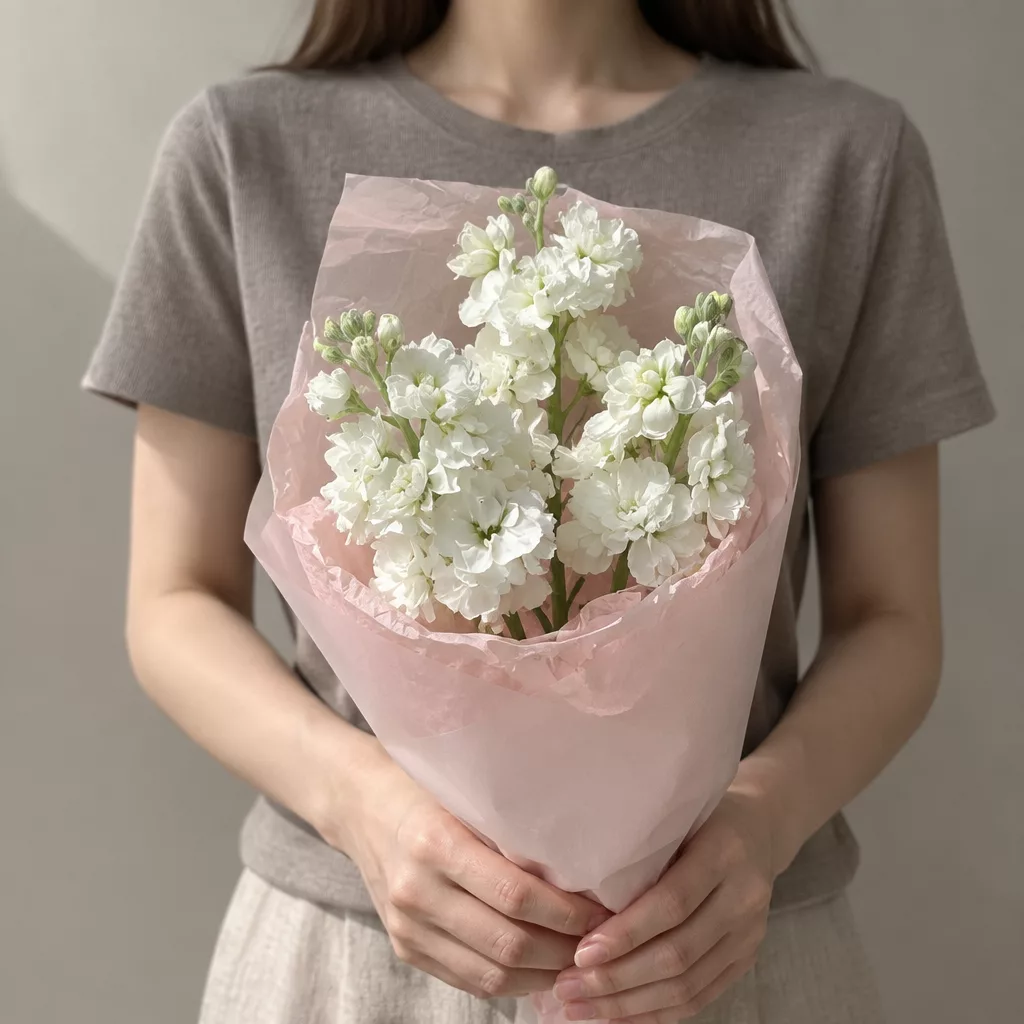
What Chlorine Actually Does to a Cut Stem
Tap water in Saint Petersburg and most other Russian cities is treated with chlorine or chloramine to make it safe for drinking. For humans, the concentrations used are completely harmless. For a freshly cut stem sitting in a vase, the situation is more complicated. Chlorine is a reactive chemical, and when it comes into contact with the soft, exposed tissue at the base of a cut stem, it can cause mild oxidative stress. Over several days, this accumulates. The cells around the cut become slightly damaged, the capillary channels narrow, and the flower begins to drink less efficiently.
You will notice this most clearly with varieties that have particularly fine stems — anemones, sweet peas, lisianthus. These flowers are sensitive to water quality in a way that sturdier stems like sunflowers or chrysanthemums are not. Roses sit somewhere in the middle: they tolerate tap water reasonably well for the first two days, but by day three or four in heavily chlorinated water, the base of the stem often turns slightly soft and dark, which is a sign that uptake is compromised.
The good news is that chlorine is volatile. If you fill a jug with tap water and leave it uncovered on the counter for two to four hours, a significant portion of the chlorine will simply evaporate. This is one of the oldest florist tricks in the book, and it genuinely works. Chloramine, which some water systems use instead, does not evaporate as easily — but it is less common in Russian municipal supplies. Letting your tap water rest before using it is a free and effective step that costs nothing.
Hard Water, Soft Water, and What Minerals Do Over Time
Russia has significant regional variation in water hardness. Saint Petersburg is known for relatively soft water, which is actually an advantage for flowers. Cities further east and south often have harder water with higher concentrations of calcium, magnesium, and bicarbonate. If you are in Moscow or a city in the Urals, for example, you may have noticed limescale building up in your kettle — the same minerals are present in your vase water.
Hard water creates two problems for flowers. First, the mineral ions compete with the nutrients that flower food packets are designed to deliver. The chemistry becomes less efficient, and the flower gets less of what it needs. Second, over several days, mineral deposits can begin to coat the inside of the stem channel and the cut surface at the base, reducing water uptake in a way that is similar to, though distinct from, the effect of chlorine.
Filtered water — whether from a pitcher filter or a reverse osmosis system — removes most of these minerals. This gives you a cleaner baseline. However, completely demineralized water is not ideal either. Flowers benefit from a small amount of dissolved minerals because they support cellular function. The sweet spot is moderately soft, slightly mineral water, which is roughly what a good pitcher filter produces. If you live in an area with very hard tap water, filtering is genuinely worth the effort, particularly for delicate varieties like ranunculus, garden roses, and tulips, all of which show visible improvement in vase life when the mineral load is reduced.
pH and Why Slightly Acidic Water Keeps Petals Fresh Longer
pH is the measurement of how acidic or alkaline a liquid is, on a scale from 0 to 14. Pure water sits at 7, which is neutral. Most tap water in Russia is slightly alkaline, typically between 7.5 and 8.5, because alkaline water is less corrosive to pipes and infrastructure. This is fine for drinking, but it is not the environment where cut flowers thrive.
Most flowers prefer water with a pH between 3.5 and 5.0. At this level of mild acidity, two things happen. The capillary channels in the stem stay more open and flexible, allowing water to move upward more freely. And bacterial growth at the base of the stem is significantly slowed, because most of the bacteria that cause stem rot prefer a neutral or alkaline environment. This is why the little packets of flower food included with bouquets almost always contain a mild acidifying agent — usually citric acid — alongside a sugar source and a bactericide.
Filtered water typically has a pH closer to neutral than tap water, but it is not acidic on its own. To bring the pH down to a flower-friendly range, you need to add something. A small amount of flower food does this effectively. Some florists use a few drops of lemon juice as an alternative, though this is less precise. Apple cider vinegar also works in a pinch. The important thing is not to rely on water alone, filtered or otherwise, to create the right environment. Water is the foundation, but pH management is a separate and equally important step that makes a real difference to how long your blooms hold their color and shape.
Filtered Water in Practice: When It Genuinely Makes a Difference
For everyday flowers — a cheerful bunch of alstroemeria, a simple arrangement of spray carnations, a handful of sturdy chrysanthemums — the difference between tap water and filtered water is modest. These varieties are resilient. They will last well in either, assuming the water is changed every two days and the stems are re-cut at an angle each time. The investment in filtered water for these blooms is unlikely to be noticeable to most people.
Where filtered water earns its place is with premium, delicate, or expensive varieties. Garden roses, peonies, and sweet peas are the clearest examples. These flowers have relatively short natural vase lives — a well-cared-for peony might last five to seven days at its best — and every environmental factor either adds or subtracts from that window. Filtered water, combined with flower food and a cool room temperature, can extend the life of a peony arrangement by a day or two compared to hard, chlorinated tap water. For a bouquet that someone has sent as a meaningful gift, those extra days matter.
The temperature of the water is worth mentioning here as well. Cold water, between 10 and 15 degrees Celsius, is ideal for most cut flowers. It slows bacterial growth and reduces the flower's metabolic rate, which preserves energy. The exception is tropical varieties like birds of paradise or anthuriums, which prefer room-temperature water. Whether you use tap or filtered, always check the temperature — water that is too warm accelerates decay noticeably, sometimes cutting vase life by thirty to forty percent.
Common Mistakes People Make with Vase Water
The most frequent mistake is not changing the water often enough. Many people fill the vase once and assume the flowers will manage. In reality, bacteria multiply quickly in standing water, especially at room temperature. By day two, the water in a warm room has already developed a significant bacterial load that is working against the stems. Changing the water every one to two days and rinsing the vase each time removes this problem almost entirely. This single habit has more impact on vase life than the choice between tap and filtered water.
The second common mistake is overfilling the vase. Stems only need to sit in about five to eight centimetres of water. More water is not better — it means more surface area for bacteria, and it keeps the lower portion of the stem constantly wet in a way that can encourage rot rather than healthy uptake. Roses and tulips in particular do better with moderate water levels.
A third mistake is placing flowers near fruit. Ripening fruit releases ethylene gas, which accelerates aging in cut flowers. Tulips and roses are especially sensitive to this. Even a bowl of apples on the same counter can shorten the life of nearby blooms by a day or more. This is not related to water quality, but it is the kind of thing a florist notices because it explains why a beautiful bouquet sometimes fades faster than expected despite careful watering.
Finally, people often skip re-cutting the stems when they change the water. A fresh diagonal cut removes the sealed, slightly damaged tissue at the base and opens up the capillary channels again. This takes thirty seconds and makes a meaningful difference, regardless of what type of water you use.
A Practical Approach for Every Situation
The honest answer to the tap versus filtered question is that it depends on your water and your flowers. If you live in Saint Petersburg with its naturally soft water and you are caring for a robust mixed bouquet, tap water that has been left to rest for a few hours is perfectly adequate. Add a packet of flower food, keep the vase in a cool spot away from direct sun and heating radiators, and change the water every two days. That routine will serve most flowers well.
If you live in a city with hard water and you regularly buy or receive delicate varieties — peonies, garden roses, ranunculus, lisianthus, sweet peas — then a pitcher filter is a worthwhile addition to your routine. It does not need to be elaborate. A standard activated carbon filter reduces chlorine and softens the mineral content enough to make a real difference. Pair it with flower food to address pH, and you have a genuinely good environment for even the most sensitive blooms.
For special occasions — a birthday arrangement, a significant anniversary bouquet, flowers sent to mark an important moment — the extra care is worth it. These are the situations where you want every day of vase life that is available to you. Treat the water, keep the room cool, re-cut the stems, and choose a clean vase. None of these steps is complicated, and together they allow the flowers to do what they were chosen to do: to be present, beautiful, and meaningful for as long as possible. The water in the vase is where that commitment begins.
Water is easy to overlook because it is invisible once the flowers are in the vase. But the chemistry happening in those few centimetres of liquid determines everything that follows — how long the petals stay vibrant, how firmly the stems hold their shape, how many days the arrangement remains something worth looking at. Whether you use tap or filtered water, the habits around it matter just as much as the source: resting the water to let chlorine dissipate, adding flower food to correct the pH, changing the water regularly, and keeping the temperature cool. These are the details that separate a bouquet that fades in three days from one that is still beautiful at the end of the week. We deliver bouquets across Russia in 1–2 hours.
Frequently asked questions
Can I use bottled mineral water for flowers instead of tap or filtered water?
You can, and it works well for delicate varieties. Still mineral water with low mineral content is a reasonable choice. Avoid sparkling water entirely — the carbonation does not help flowers and can irritate stem tissue. If you use mineral water, still add flower food to address pH, since even good bottled water is usually close to neutral rather than the mildly acidic range flowers prefer.
How long should I leave tap water to sit before putting flowers in it?
Two to four hours in an open container at room temperature is enough to allow most of the chlorine to evaporate. You do not need to leave it overnight. If you are in a hurry, even one hour makes a difference. This works specifically for chlorine — if your water supplier uses chloramine, evaporation is less effective, and a filter becomes more useful in that case.
Does the type of vase material affect how water quality interacts with stems?
Glass and ceramic vases are the safest choices because they do not react with water or flower food. Metal vases can introduce trace ions into the water that may interfere with stem uptake, particularly with roses and peonies. If you use a metal container, change the water more frequently — every day rather than every two days — to minimize any buildup around the stems.
Are tulips more sensitive to water quality than other common flowers?
Tulips are unusual because they continue to grow after cutting, sometimes by several centimetres. They are sensitive to fluoride, which is present in some tap water supplies, and may show petal spotting or premature drooping in heavily fluoridated water. Filtered water helps here. Tulips also prefer cooler water temperatures than most flowers — around 10 degrees Celsius — and benefit from being kept upright in a tall vase.
Is it true that adding a coin or aspirin to vase water helps flowers last longer?
The copper coin idea has some basis — copper has mild antimicrobial properties — but the effect is minimal compared to simply changing the water regularly. Aspirin lowers pH slightly, which can be marginally helpful, but a proper flower food packet does this more effectively and also provides sugar and a stronger bactericide. Neither trick replaces the basics: clean water, a fresh stem cut, and a cool location.
Ready to send flowers?
Pick the city, choose the bouquet, and a local florist takes it from there.
Choose a city →