Sending Flowers to Your Girlfriend in Russia: What Actually Works
You are in another country, she is in Saint Petersburg or Kazan or Novosibirsk, and you want to send something that feels like you chose it — not like you clicked the first bouquet on a website at midnight. The good news is that a well-chosen arrangement travels emotionally even when you cannot. The tricky part is knowing what reads as romantic in Russia, what holds up across a courier journey, and how to avoid the small mistakes that turn a lovely gesture into a forgettable one. This guide is written by florists who make these deliveries every day.
What Romantic Means in a Russian Flower Context
In Russia, flowers are taken seriously in a way that can surprise people from countries where a petrol-station bunch is considered acceptable. Your girlfriend almost certainly knows her flowers — varieties, freshness, how a bouquet is assembled. Sending something generic will read as generic, and she will know immediately.
Red roses remain the clearest romantic signal in Russian culture, far more so than in some Western European countries where they have started to feel old-fashioned. A single colour, presented in a clean and generous arrangement, carries more weight than a mixed bouquet of many different flowers that have no visual relationship to each other.
That said, Russian tastes have shifted considerably over the last decade. Peonies, garden roses, ranunculus, and lisianthus are now widely understood as romantic and sophisticated. Sending a mono-bouquet of blush garden roses or a soft arrangement of white and dusty-pink peonies will be received with just as much warmth as classic red roses — sometimes more, because it shows you thought about her specifically rather than defaulting to a symbol.
What does not work: bright tropical flowers like birds of paradise or anthuriums, which read as corporate or decorative rather than personal. Chrysanthemums in Russia are strongly associated with mourning and should be avoided entirely. Carnations, while not carrying the same association, tend to read as old-fashioned rather than romantic. Stick to flowers with soft textures, gentle fragrance, and a colour palette that suggests intimacy rather than spectacle.
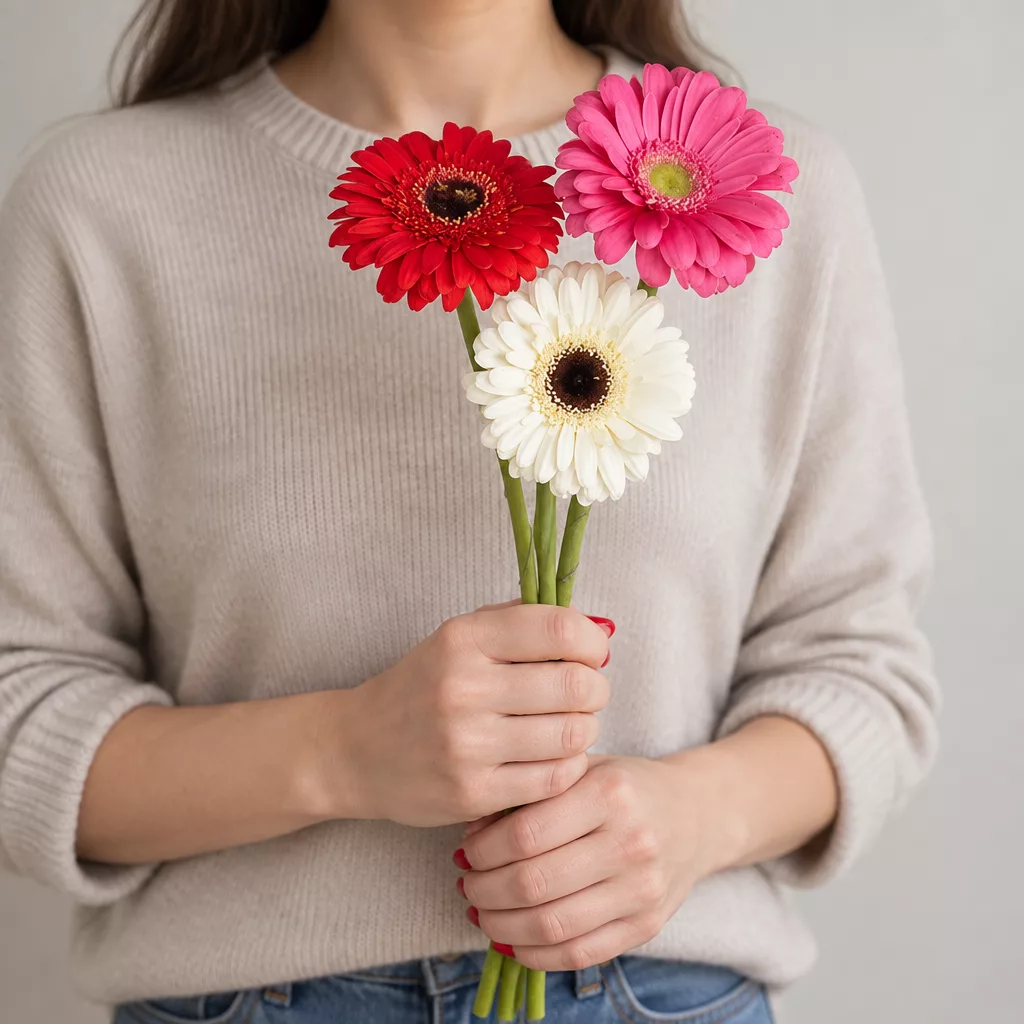
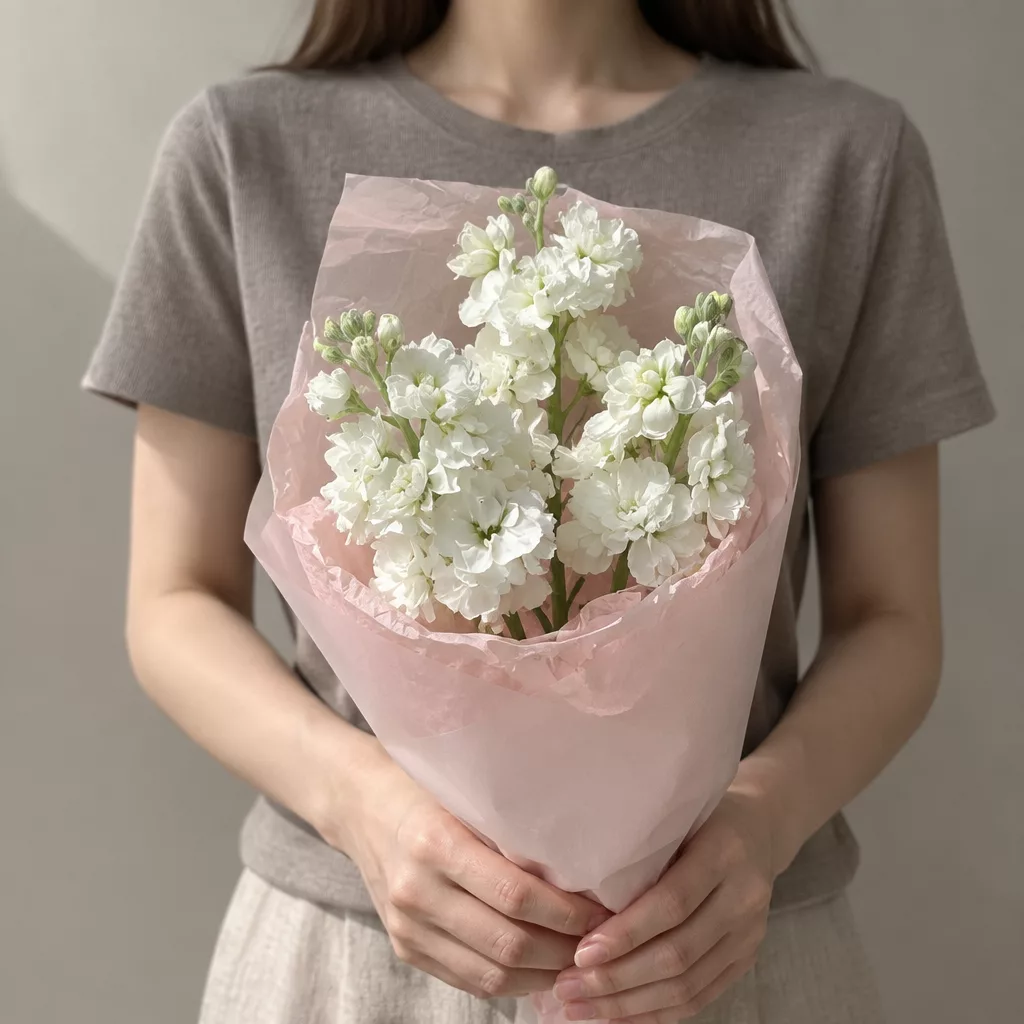
Bouquets we can deliver


Choosing by the Occasion, Not Just the Flower
The occasion shapes everything about what you should send, including the size, the colour palette, and the level of formality. A birthday arrangement and a just-because arrangement are different things even if they contain the same flowers.
For a birthday, volume matters. Russians tend to give flowers in odd numbers — one, three, five, seven — and a birthday bouquet should feel abundant. A tight cluster of fifteen garden roses or a full arrangement of peonies with eucalyptus signals celebration. Even numbers are traditionally reserved for mourning, so if you are ordering a custom count, keep this in mind.
For anniversaries, especially early ones, the arrangement should feel intimate rather than grand. A curated mono-bouquet of David Austin roses in a warm peach or cream, tied simply with ribbon, says more than an enormous mixed arrangement. The restraint is part of the message.
For Valentine's Day and the eighth of March — International Women's Day, which in Russia is treated as seriously as Valentine's Day and sometimes more so — order well in advance. Demand on these dates is extremely high, and the best seasonal flowers sell out. Tulips are the classic choice for the eighth of March because they arrive in peak season, are extraordinarily fresh, and carry a lightness that suits early spring. Red tulips are romantic; white or pink tulips are tender and elegant.
For a spontaneous gesture with no specific occasion, keep the palette soft and the arrangement unfussy. A small bunch of spray roses or sweet-scented freesias says affection without making it feel like a performance.
The Best Flowers to Send and Why They Travel Well
Not every flower survives a courier journey in good condition, and this matters more than people realise. A flower that looked beautiful in a studio photograph but arrives wilted is worse than a simpler flower that arrives crisp and perfect.
Roses are the most reliable option for delivery. They are hardy, they hold water well during transit, and they open gradually after arrival, which means your girlfriend gets to watch them bloom over several days. Ecuadorian long-stem roses are particularly good — the stems are thick, the heads are large, and they last well over a week with basic care.
Ranunculus are stunning but more fragile. They work well for spring and early summer deliveries when temperatures are moderate, but in summer heat above twenty-five degrees they can arrive soft. If you are sending in warm months, roses or lisianthus are safer.
Lisianthus — sometimes called eustoma — is underused and underappreciated. It resembles a ruffled rose, comes in white, purple, and soft pink, lasts ten days or more, and travels exceptionally well. It also looks expensive without being so, which makes it a smart choice when you want something that feels curated.
Peonies are seasonal — they are at their best from late April through June. Outside that window, you will be offered imported peonies that are fine but not exceptional. If you are sending in peony season, they are the most romantic flower available. Outside it, garden roses give a similar soft, full feeling year-round.
Freesias add fragrance, which is worth considering. A bouquet that smells beautiful when she opens the door is a different experience from one that is only visual.
Arrangements by Budget: What You Actually Get
Flower budgets in Russia work differently from what you might expect if you are used to Western European or North American pricing. The range between a modest arrangement and a genuinely impressive one is not as wide as it is in many countries, which means you do not need to spend extravagantly to send something beautiful.
At the lower end of the budget range, a compact mono-bouquet of five to seven roses or a small bunch of freesias and spray roses is entirely appropriate as a tender, personal gesture. It will look considered if the flowers are fresh and the presentation is clean. A florist who cares about their work will make this look beautiful.
In the middle range, you move into larger mono-bouquets — eleven or fifteen roses, a generous cluster of lisianthus with greenery, or a mixed arrangement built around one hero flower. This is the range where most romantic gestures sit, and it is where the difference between a thoughtful florist and a careless one becomes most visible. Ask for a specific colour palette rather than leaving it open.
At the higher end, you can request statement arrangements: a large box arrangement of garden roses, a tall vase arrangement of peonies and eucalyptus, or a hatbox filled with roses in a single colour. These feel like events rather than gestures and work well for significant occasions.
One practical note: if you are sending from abroad and paying in a foreign currency, confirm the payment method with the shop before placing the order. International card transactions sometimes require additional verification, and you do not want a delay on the day that matters.
Colours and What They Communicate
Colour in flowers is a language, and in Russia it is read more literally than in some cultures. Choosing the right palette is not about personal preference — it is about what she will feel when the arrangement arrives at her door.
Red is passion and romantic love. It is direct and unambiguous. If you want to say something clear and unequivocal, red roses do that without any possibility of misreading. The risk is that red can feel conventional if the arrangement itself is not well-made. A beautifully assembled bouquet of deep crimson roses with dark foliage is anything but ordinary.
Pink in its various shades covers a wide emotional range. Pale blush and dusty rose feel tender and intimate. Bright coral or hot pink feel energetic and celebratory. For romantic gestures, stay in the softer end of the pink spectrum — blush garden roses, soft pink peonies, pale pink lisianthus.
White communicates purity, elegance, and sincerity. A white arrangement is sophisticated and will always look expensive if the flowers are fresh. White roses, white peonies, and white lisianthus all work beautifully. Be aware that all-white arrangements in some contexts carry formal associations, so adding a small amount of soft green or blush keeps the mood warm rather than ceremonial.
Purple and lavender — through lisianthus, lavender roses, or lilac when in season — feel romantic and slightly mysterious. They are less common in Russian bouquets than red or pink, which makes them memorable.
Avoid yellow in a romantic context. In Russian tradition, yellow flowers are associated with separation and infidelity. This is not universal knowledge, but your girlfriend will almost certainly know it.
Timing the Delivery: What Long-Distance Senders Get Wrong
The most common mistake made by people ordering from abroad is not accounting for the time difference or assuming that a same-day order placed in the evening will arrive the same evening. Russia spans eleven time zones, and even within a single city, cut-off times for same-day delivery are real and firm.
Saint Petersburg operates on Moscow time, which is UTC plus three. If you are in Western Europe, you are one to two hours behind. If you are in North America, you may be eight to eleven hours behind. This means that a birthday that starts at midnight in Russia has already been underway for hours before your morning begins. Place orders the day before whenever possible.
For the eighth of March and Valentine's Day, the professional advice is to order at least three to five days in advance. These are the two highest-demand dates in the Russian flower calendar, and same-day or next-day orders on these dates carry real risk of limited availability.
Consider the delivery window carefully. A morning delivery — arriving before noon — feels like a surprise and sets the emotional tone for the entire day. An evening delivery can feel like an afterthought even if it was not. If she has plans during the day, coordinate with her schedule or ask for a specific time window.
Also think about where she will be. Deliveries to workplaces are common in Russia and are generally well-received — receiving flowers at the office is considered a public compliment. If she works from home, a home delivery is obviously simpler. If she is travelling, wait until she is stationary.
Keeping the Flowers Fresh: What to Tell Her
A beautiful arrangement that lasts three days is a disappointment. One that lasts ten days becomes a sustained reminder of you every time she walks past it. The difference is almost entirely in the first hour after delivery.
The most important step is immediate rehydration. The stems should be cut at an angle — about two centimetres — with a sharp knife or scissors, then placed immediately in clean, cool water. Tap water is fine. The vase should be rinsed clean, because bacteria from a previously used vase will shorten the life of fresh flowers significantly.
Roses and lisianthus should have all leaves removed from below the waterline. Submerged leaves rot quickly and contaminate the water. This is the single most common mistake people make, and it costs three or four days of vase life.
The vase should be kept away from direct sunlight, radiators, and fruit bowls. Ripening fruit releases ethylene gas, which accelerates the ageing of cut flowers. A cool room — around eighteen to twenty degrees — is ideal. In Russian apartments, which tend to be well-heated in winter, moving the flowers to a cooler spot at night extends their life noticeably.
Water should be changed every two days. Each time the water is changed, the stems should be recut by a centimetre. This keeps the vascular tissue open and allows the flower to continue drawing water.
With this basic care, roses will last seven to ten days, lisianthus up to twelve, and peonies five to seven. Freesias will fade faster — around five days — but the fragrance they give in that time is worth it.
Sending flowers across a border to someone you love is one of the more quietly powerful things you can do. It says that the distance did not make you forget, that you thought about what she would like rather than what was easiest to order, and that you know her well enough to choose something real. The florists at Turboflora deliver across Russia every day, and they understand the difference between an arrangement that arrives and one that lands. When you are ready to send something that feels like it came from you, not from a template, that is exactly the kind of order they are set up to help you place. We deliver bouquets across Russia in 1–2 hours.
Frequently asked questions
Can I send flowers to my girlfriend in Russia from outside the country?
Yes. You can place an order online with Turboflora from anywhere in the world. The key practical steps are confirming your payment method works for international transactions, accounting for the time difference when choosing a delivery window, and placing the order at least a day in advance to avoid cut-off time issues.
Are there any flowers I should definitely avoid sending in Russia?
Chrysanthemums are strongly associated with funerals and mourning in Russia and should never be sent as a romantic gesture. Yellow flowers carry an association with separation and infidelity in Russian tradition, so avoid yellow roses or yellow tulips in a romantic context. Even numbers of flowers are also traditionally reserved for mourning.
What is the best flower to send if I want something that lasts a long time?
Lisianthus is the florist's answer to this question. It resembles a ruffled rose, travels well, comes in romantic colours including white, blush, and purple, and lasts ten to twelve days with basic care. Long-stem Ecuadorian roses are also excellent, lasting seven to ten days. Both are more durable than peonies or ranunculus.
Is the eighth of March really as important as Valentine's Day in Russia?
For many Russian women, International Women's Day on the eighth of March is actually more significant than Valentine's Day. It is a national holiday with deep cultural roots, and receiving flowers on this date is an expectation rather than a surprise. Florists are extremely busy, so order at least three to five days ahead.
Can I include a personal message with the delivery?
Yes, and it matters more than most people think. A handwritten-style card with a specific, personal message transforms the arrangement from a product into a gesture. Avoid generic phrases. Write something that only you could have written — a reference to a shared memory or a specific reason you are thinking of her on that particular day.
Ready to send flowers?
Pick the city, choose the bouquet, and a local florist takes it from there.
Choose a city →