Nobody Home When Flowers Arrive? Here Is What Happens Next
You ordered roses for someone who means the world to you, the bouquet is wrapped, fresh, and on its way — and then nobody answers the door. It is one of those small anxieties that sits quietly at the back of every sender's mind. The good news is that a missed delivery does not mean a ruined moment. There is a clear, careful process that protects both the flowers and the feeling behind them, and understanding it takes all the worry out of the equation.
The First Thing a Courier Does When Nobody Answers
When a courier arrives at the address and gets no response at the door, the very first step is a phone call to the recipient. This is standard practice, and it happens immediately — not after a waiting period. Most people in Russia keep their phones close, so a direct call resolves the situation within a minute or two. The recipient may simply be in the shower, a meeting, or a noisy part of the building where they could not hear the intercom.
If the first call goes unanswered, the courier waits a short time and tries again. This is not a one-attempt-and-leave situation. Couriers understand that the person on the other side of this delivery is not just a name on a label — they are someone whose day is about to change for the better, and that is worth a few extra minutes of patience.
During this window, the courier stays with the bouquet. Flowers are never left unattended in a hallway or lobby at this stage, because temperature and security both matter. A bouquet of garden roses or tulips left in a warm entrance hall for even thirty minutes can begin to lose the taut, fresh quality that makes them beautiful. The courier is the bouquet's guardian until a clear next step is confirmed.
The sender is also notified at this point, usually by message, so that they know what is happening in real time and can help reach the recipient if they have another contact number.
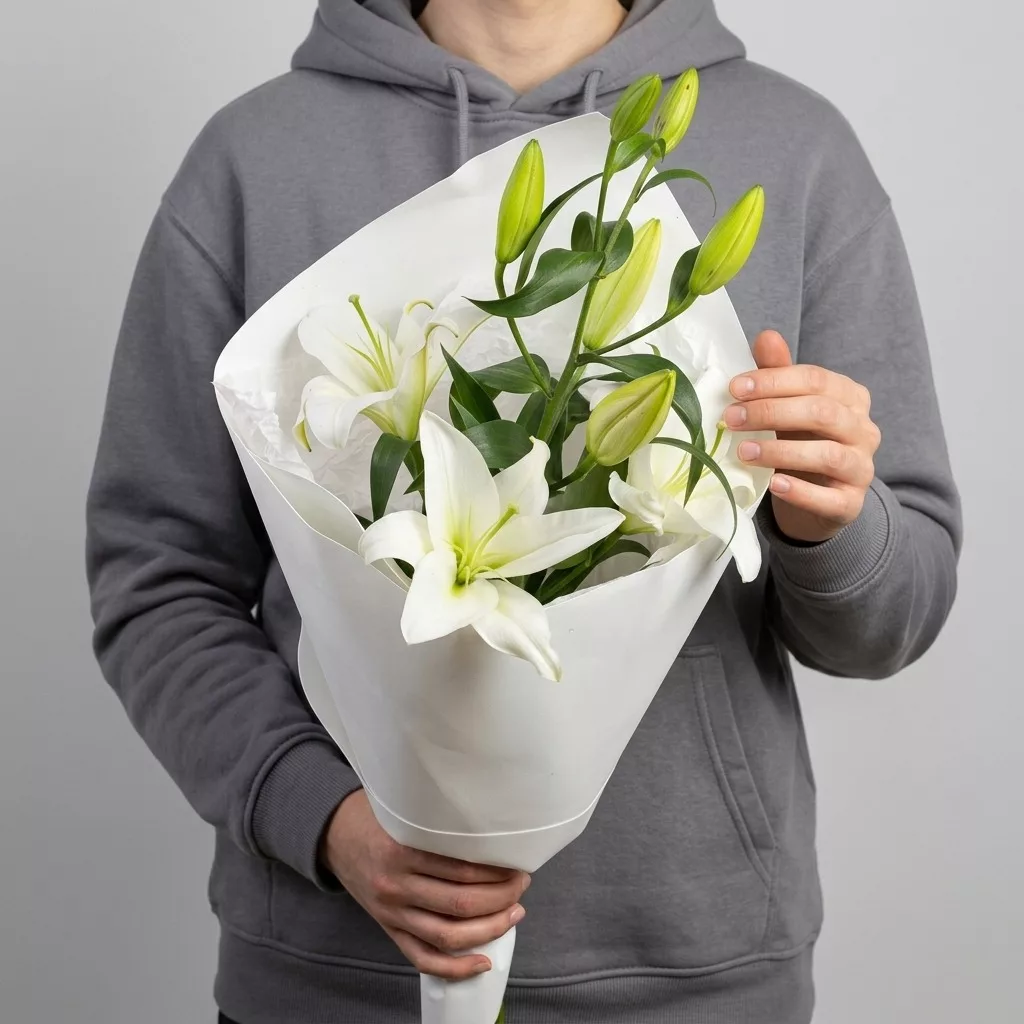
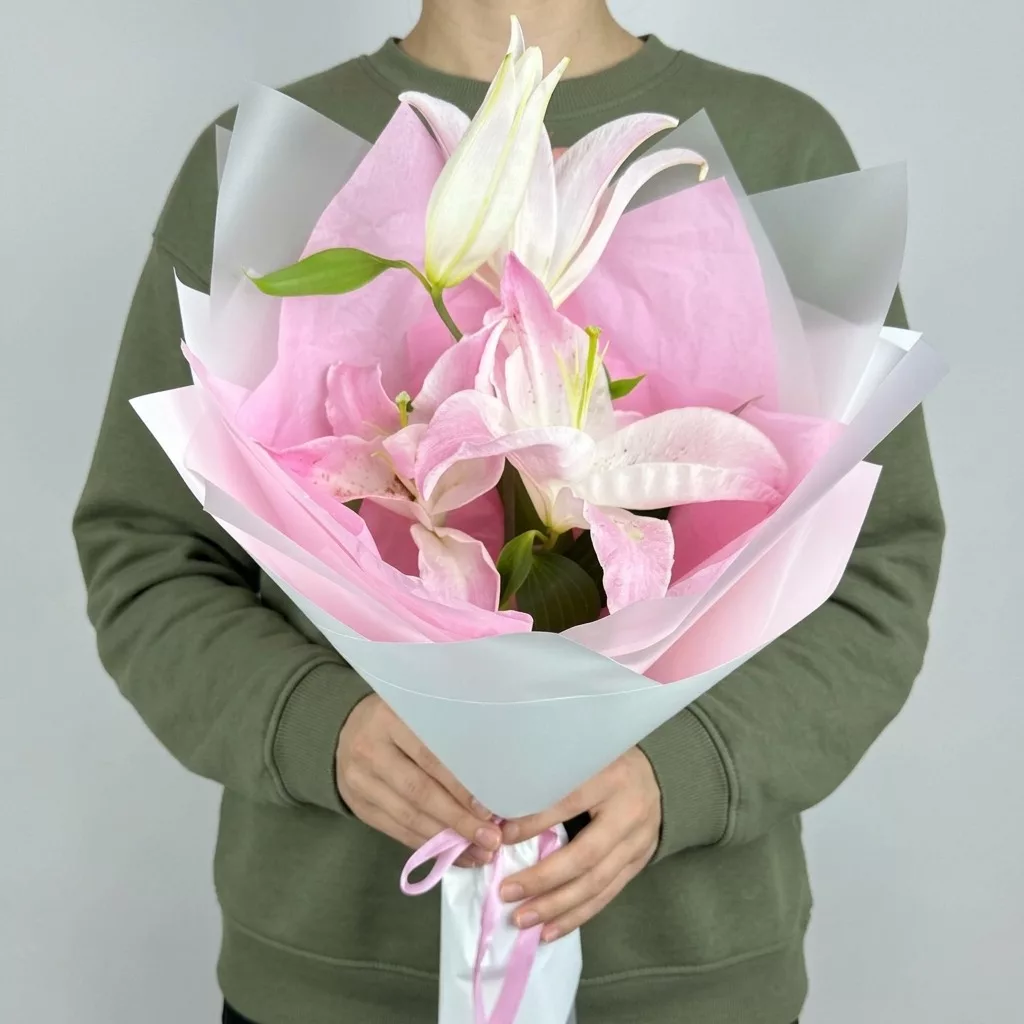
Bouquets we can deliver


Reaching the Sender for Instructions
Once it becomes clear that the recipient is not reachable by phone, attention turns to the person who placed the order. The sender almost always has context that the courier does not — they may know the recipient is at work until a certain hour, that they have a neighbor who can accept packages, or that there is a building concierge who handles this regularly.
This is the moment when a quick message or call to the sender can redirect everything smoothly. A sender might say: try the neighbor in apartment twelve, or she finishes work at six, please come back then. That kind of local knowledge turns a potential problem into a simple adjustment. It is worth saving the shop's contact in your phone when you place an order, precisely for moments like this.
In many Russian apartment buildings, there is a concierge or building manager, known as a konsyerzh, who sits at the entrance and can accept items on behalf of residents. This is a trusted, widely used arrangement. If the sender confirms this option, the courier can hand the bouquet to the concierge with a note, and the recipient collects it when they return home.
The sender's instructions always take priority. If there are no special instructions and neither the recipient nor sender can be reached, the courier moves to the next stage of the process rather than making independent decisions about where to leave the flowers. Nothing is done without consent, because a bouquet of peonies or lisianthus left in the wrong hands is a gift that never arrives.
Safe-Leave Options and What Makes Them Work
A safe-leave arrangement is exactly what it sounds like — a confirmed, agreed location where the flowers can be left securely when the recipient is temporarily unavailable. It only happens when either the recipient or the sender has explicitly approved it. This is not a courier making a judgment call; it is a coordinated handoff.
The most reliable safe-leave option in a Russian apartment building is the konsyerzh desk. Concierges are accustomed to holding deliveries, and they typically have a cool, shaded spot near their station. This matters more than people realize. Many popular flowers — ranunculus, spray roses, freesia — are sensitive to heat. A lobby that reaches twenty-five degrees on a summer afternoon can shorten a bouquet's vase life by a full day or more.
Another option is a trusted neighbor who has been named by the recipient or sender in advance. This works well in buildings where neighbors know each other, which is common in older residential areas of Saint Petersburg. The courier delivers to that neighbor, leaves a handwritten note on the recipient's door with the apartment number where the flowers are waiting, and the job is done with care.
What does not work as a safe-leave option is an unlocked stairwell, a doorstep exposed to direct sunlight, or any location where the bouquet could be moved or damaged. A wrapped bouquet of hydrangeas left in afternoon sun will droop visibly within an hour. The courier's job is to protect the flowers until they are in the right hands, and safe-leave only works when it genuinely achieves that.
Rescheduling the Delivery: How It Works in Practice
When safe-leave is not possible and the recipient remains unreachable, rescheduling is the cleanest solution. It sounds like a complication, but in practice it is often the option that produces the best outcome — because the flowers arrive when the person is actually there to receive them, open the door themselves, and experience the full effect of a fresh, beautifully arranged bouquet.
Rescheduling is arranged through the shop, either by the sender calling or messaging directly. The new time slot is chosen based on when the recipient is confirmed to be home — not guessed, but confirmed. This is a small but important distinction. A rescheduled delivery that lands at the right moment is far more meaningful than one that was forced through and left with a stranger.
For the flowers themselves, rescheduling within the same day is almost always fine. A well-conditioned bouquet of chrysanthemums, alstroemeria, or standard roses, kept in a cool environment, holds its quality comfortably for many hours. These are sturdy, well-traveled varieties that professional florists choose in part because they are forgiving of real-world logistics.
More delicate choices — sweet peas, open garden roses, or anemones — have a shorter window, and the shop will be honest about that when discussing options. If rescheduling pushes into the following day, the team will advise on whether the specific bouquet will still look its best or whether a fresh arrangement makes more sense. The goal is always that the recipient sees flowers at their peak, not flowers that have been waiting too long.
How to Prevent a Missed Delivery Before It Happens
The simplest way to avoid a missed delivery is to let the recipient know that flowers are coming — without spoiling the surprise of what exactly is arriving or from whom. A casual message saying something like, stay close to home this afternoon, is enough. Most people will make sure they are available without pressing for details, especially if they sense something good is on its way.
When placing the order, adding a secondary contact number is one of the most useful things a sender can do. This might be a family member who lives nearby, a colleague at the recipient's workplace, or anyone who can pass on a message quickly. It gives the courier an additional route to reach someone who can help, and it costs nothing to include.
If the recipient lives in a building with a konsyerzh, note that in the order comments. Couriers who know this in advance can coordinate with the building desk from the start, making the whole process faster and smoother. Similarly, if there is a gate code, a building entry system, or a specific entrance to use, including those details removes small obstacles that can add unnecessary time to a delivery.
For workplace deliveries — which are popular for birthdays and anniversaries in Saint Petersburg — it is worth confirming the recipient's working hours and whether reception staff can accept flowers on their behalf. Office receptions handle this routinely and are usually happy to do it. A bouquet of sunflowers or tulips sitting at a reception desk also creates a lovely moment when the recipient walks past and realizes it is for them.
What the Courier Carries Back and What Happens to the Flowers
If all contact attempts fail and no safe-leave option is available, the courier returns to the shop with the bouquet. This is not a failure — it is the responsible outcome. The flowers come back in the same condition they left, because the courier has kept them protected throughout the process.
Back at the shop, the bouquet is placed in temperature-controlled storage immediately. For most cut flowers, the ideal holding temperature is between four and eight degrees Celsius. This is the range that slows cellular activity, keeps stems firm, and preserves the color intensity that makes a bouquet visually striking. A bunch of alstroemeria or standard carnations held properly at this temperature will look just as fresh the following morning as it did when it was first arranged.
The sender is updated as soon as the bouquet is back, and a new delivery time is arranged. There is no penalty and no loss of the original order — the flowers are simply waiting for the right moment. In most cases, a new delivery can be organized within a few hours, often the same evening or early the next morning depending on the sender's preference.
The one thing that changes with a returned bouquet is the advice around timing. The shop will give an honest assessment of how much time the specific flowers have remaining at their best, and that guides the conversation about when to redeliver. The whole point of every step in this process — the calls, the safe-leave options, the rescheduling — is to make sure that when the flowers finally reach the person they were chosen for, they are exactly as beautiful as the sender imagined them to be.
A missed delivery is a pause in the story, not the end of it. Every step the courier takes — the calls, the careful waiting, the coordination with the sender, the return to controlled storage — is designed with one purpose: making sure the flowers arrive looking the way they should, at a moment that actually works. When you order from us, you are not just sending a bouquet across Saint Petersburg; you are sending a feeling, and we take that seriously enough to protect it through every unexpected turn along the way.
Frequently asked questions
Will my flowers still be fresh if the delivery has to be rescheduled?
In most cases, yes. Sturdy varieties like alstroemeria, chrysanthemums, and standard roses hold well for many hours when stored correctly at four to eight degrees Celsius. For more delicate flowers such as open garden roses or anemones, we will give you an honest assessment and advise whether a fresh arrangement is the better choice before rescheduling.
Can the courier leave flowers with a neighbor without asking me first?
No. Flowers are only left with a neighbor when either the sender or recipient has explicitly agreed to it. We never make that call independently. If we cannot reach anyone to confirm, the bouquet returns to the shop and we arrange a new delivery time with you directly.
What is a konsyerzh and can they always accept my delivery?
A konsyerzh is a building concierge common in Russian apartment blocks, typically stationed at the entrance. They routinely accept deliveries on behalf of residents. However, not every building has one, and availability varies. Mentioning in your order notes that a konsyerzh is present helps us plan the handoff smoothly from the start.
How will I know if my delivery was missed and what is happening?
We contact the sender as soon as a missed delivery situation develops, so you are never left wondering. You will receive an update on what step the courier is taking and what options are available. You do not need to chase us — we reach out to you with the information you need to decide what happens next.
Is there a limit to how many times a delivery can be rescheduled?
We work with you to find a time that genuinely works, but the number of rescheduled attempts depends on how long the specific flowers will remain at their best. We are transparent about that window and will always tell you if a fresh bouquet is the more practical solution rather than reattempting with one that has been waiting too long.
Ready to send flowers?
Pick the city, choose the bouquet, and a local florist takes it from there.
Choose a city →