The Best Way to Hydrate a Bouquet You Cannot Fully Unwrap
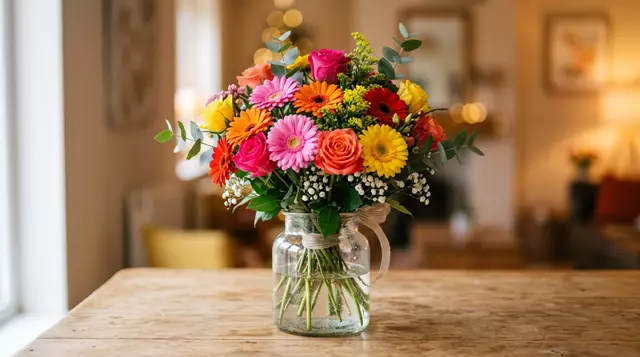
The best way to hydrate a hand-tied bouquet that cannot be fully unwrapped is to put its exposed stem ends into fresh water in a clean, stable vase, keeping the binding in place. Open or lift only enough of the lower wrapping to give the stems direct access to water; keep paper, ribbon and flower heads above the waterline.
The tie holds the arrangement together, so you usually do not need to undo it for vase care. First check what surrounds the stem ends: decorative paper, a sealed water pouch and floral foam need different handling. If you cannot identify the base, avoid pouring water into the wrapping, where it may collect without reaching the cut ends.
Identify what is actually holding water
Look underneath the bouquet while supporting it over a sink or tray. Exposed cut ends indicate that the bouquet needs a vase. A plastic pouch containing liquid is a temporary water supply; decorative wrapping alone is not. Do not assume a folded paper base is waterproof simply because the outside feels dry.
If there is a water pouch, support the bouquet upright before opening it over the sink. Drain it carefully and move the exposed stems into a prepared vase, leaving the main stem tie intact. Avoid piercing the pouch while it is inside decorative paper: the escaping water can soak the wrapping and leave you with a difficult transfer.
A bouquet supplied in floral foam needs a different approach because its stems draw water from the foam. If you can clearly identify accessible foam inside a watertight container, add water slowly to that container and watch for overflow. If the base is concealed or unfamiliar, ask for care guidance before cutting into it.
Give the stem ends a clear route into the vase
Choose a clean vase with an opening wide enough to accept the bundled stems without forcing them together. It should stand securely with the bouquet in place and support the arrangement without crushing the wrapping. Our guide to the best vase shape for flowers explains how the opening affects support.
Lift or fold back the lower paper so that every accessible cut end can sit in water. Keep the structural tie in place, but do not use it as a handle: support the stems beneath it when moving the bouquet. If a decorative ribbon hangs down towards the water, tuck it up so it stays dry.
Check the shortest stems as well as the longest ones. A vase can contain plenty of water while some cut ends remain above its surface. Add enough water to cover the exposed ends, while keeping leaves and decorative materials out of it. If the wrapping prevents both conditions, adjust the lower wrapping or choose a more suitable vase.
Bouquets we can deliver




Refresh accessible stem ends without disturbing the arrangement
If the ends are reachable, use a clean, sharp cutting tool to remove a small section from each stem before placing the bouquet in water. Work below the binding and support the bundle so the flowers keep their positions. A clean cut matters more than creating a dramatic angle; avoid crushing or splitting stems to make them absorb more.
Prepare the vase first so you can return freshly cut stems to water promptly. If the bundle is too thick to cut comfortably, trim accessible stems individually while leaving the tie alone. Do not attempt to force household scissors through the whole bunch at once, especially where woody and softer stems are mixed.
If trimming would require dismantling the bouquet or reaching blindly through its wrapping, put the existing ends into water instead. Remove only the leaves you can safely reach below the intended waterline. The guide to cutting flower stems offers more detail when access allows a careful trim.
Use clean water and keep the wrapping dry
Use fresh, clean water at ordinary room temperature as a practical starting point for a mixed bouquet unless you have specific care instructions. If flower food was supplied, follow its stated dilution and measure the water accordingly. A concentrated mixture is not a substitute for enough water, and guessing the dose adds an avoidable variable.
Pour water into the vase beside the stems, using a narrow-spouted jug if the bouquet fills most of the opening. Check the level from the side as you pour. Do not pour through the flower heads or into the centre of the wrapping: wet petals do not replace water taken up through the cut stem ends.
Check the level at least daily, particularly after the bouquet first goes into its vase. Top up before any cut ends become exposed. Change water that becomes cloudy or develops an unpleasant smell; topping it up alone leaves the old water in place. Keep household recipes, bleach and undiluted additives out of the vase.
Change the water while preserving the bouquet's shape
Set a second clean container of fresh water beside the vase before lifting the bouquet. Hold the stems below the binding with one hand and support the upper arrangement if needed. Move the bundle into the temporary container, keeping it upright so the wrapping does not slip and individual stems do not pull against the tie.
Empty and wash the original vase, rinse it thoroughly, then refill it before returning the bouquet. If the arrangement is heavy or awkward, have another person hold it while you clean the vase. Avoid balancing the bouquet on its flower heads or laying it where damp stem ends can soak decorative paper.
After returning it to the vase, check the stem ends and waterline again. Place the bouquet away from direct sunlight, radiators and strong draughts. If the room is warm, move it to a cooler suitable spot rather than adding ice or repeatedly misting the flowers. Room conditions matter alongside a steady water supply.
Help the recipient get the bouquet into water promptly
When you send flowers to someone in Russia, a short care message can make the handover easier: keep the stem tie on, check the base and place exposed ends in a clean vase. You do not need to turn the gift card into a care sheet. A separate message lets your card remain personal while giving the recipient practical instructions.
We deliver flowers across Russia. You can choose a bouquet from our bouquets catalogue and contact a manager on WhatsApp to agree the address, delivery time and card text, or arrange a photo before delivery. A card with your text is free; city delivery costs 500 RUB, while the operator confirms the price for remote districts and suburbs.
For a recipient who needs to plan their day, delivery can be arranged at an exact time within plus or minus 30 minutes, or in the windows 09–12, 12–15, 15–18 and 18–21. The courier calls about 15 minutes before arrival. Choose a time when the recipient can receive the flowers and attend to the vase soon afterwards. Check our delivery information; confirm the timing for your order.
Frequently asked questions
Can I leave the tie on when I put the bouquet in a vase?
Yes, the structural tie can usually stay in place to preserve the arrangement. Check that the exposed stem ends reach the water and that leaves and decorative wrapping remain above it.
Can I pour water straight into a wrapped bouquet?
Only add water to an identifiable water-holding container or accessible floral foam in a watertight base. Decorative paper and an unknown sealed base are not reliable places to pour water.
What if I cannot reach the stems to trim them?
Place the existing cut ends in clean water rather than delaying hydration while you try to dismantle the bouquet. Trim later only if you can safely reach the stems without damaging the arrangement.
Will spraying the flowers hydrate the bouquet?
Misting does not replace keeping cut stem ends in water. Avoid soaking petals or wrapping, and focus on the vase water level and the bouquet's position in the room.
What should I do if the bouquet still looks wilted?
Check that every accessible stem end is submerged, the water is clean and the bouquet is away from heat. Some flowers may recover after taking up water, but hydration cannot reliably reverse every cause of wilting.
Ready to send flowers?
Pick the city, choose the bouquet, and a local florist takes it from there.
Choose a city →