Receiving Flowers Without Warning: the Russian Social Script
A courier rings the doorbell. There are no flowers expected, no birthday on the calendar, no anniversary circled in red. Yet there they are — a wrapped bouquet, still cool from the van, smelling of something the recipient cannot immediately name. In Russia, that moment triggers a very specific chain of thought, and if you are sending the flowers, it helps to know exactly what that chain looks like.
The First Ten Seconds: Surprise, Then Calculation
Russians are not especially accustomed to receiving things without context. The culture runs on occasion — flowers arrive on birthdays, on the eighth of March, on graduations, on name days. So when a bouquet appears on an ordinary Tuesday with no warning, the recipient's first reaction is almost never simple delight. It is a rapid, instinctive calculation: who sent this, and why today?
The card, if there is one, is read before the flowers are even properly looked at. If there is no card, the guessing starts immediately. A Russian woman receiving an unexpected bouquet will typically run through a mental list: a partner making up for something, a colleague marking a quiet milestone, a family member who remembered something she herself forgot. Each theory carries a different emotional weight, and the flowers themselves become evidence.
This is not cynicism. It is a deeply social reflex. Flowers in Russia are rarely decorative gestures made for their own sake — they are communication. An unexpected bouquet says something specific, and the recipient is trying to decode the message before she even decides how to feel about it. The florist's job, and yours as the sender, is to make that message as clear and as warm as possible from the very first glance at the wrapping.
Bouquets we can deliver


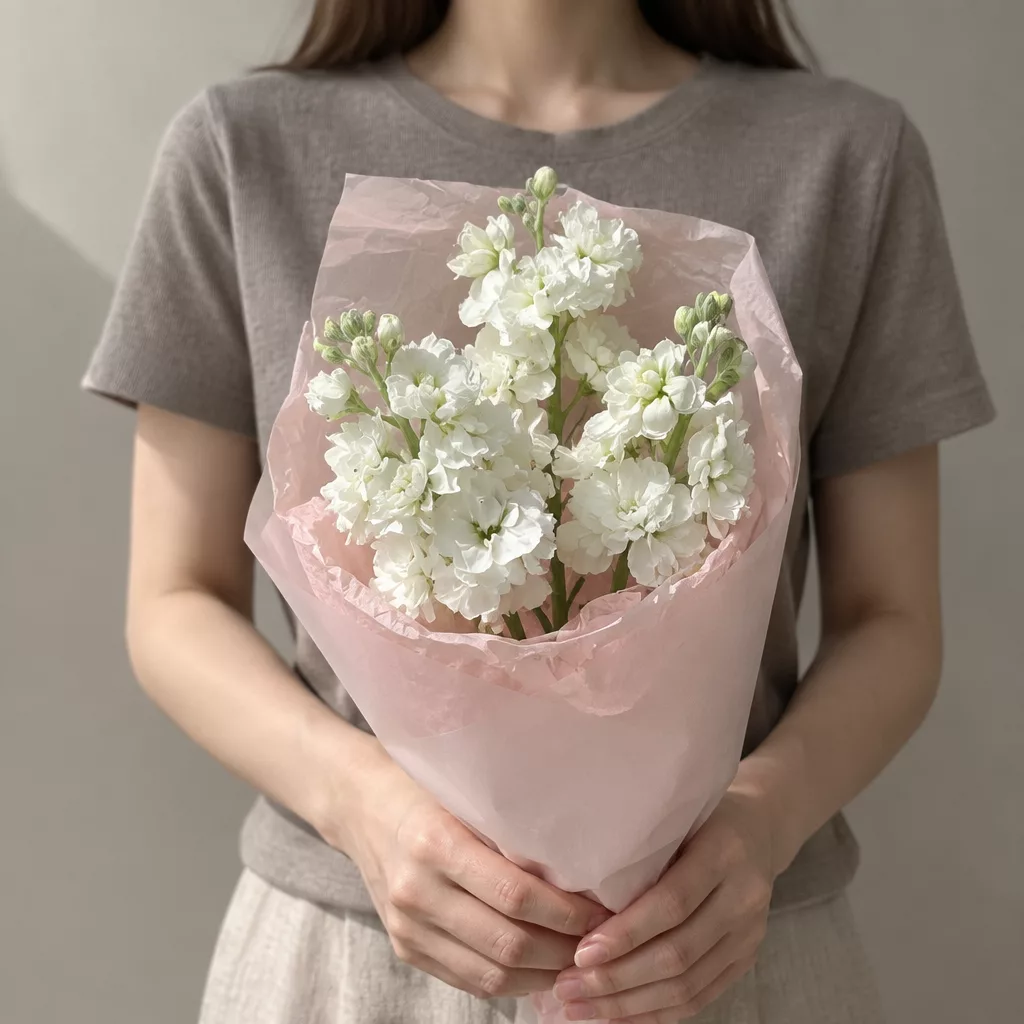
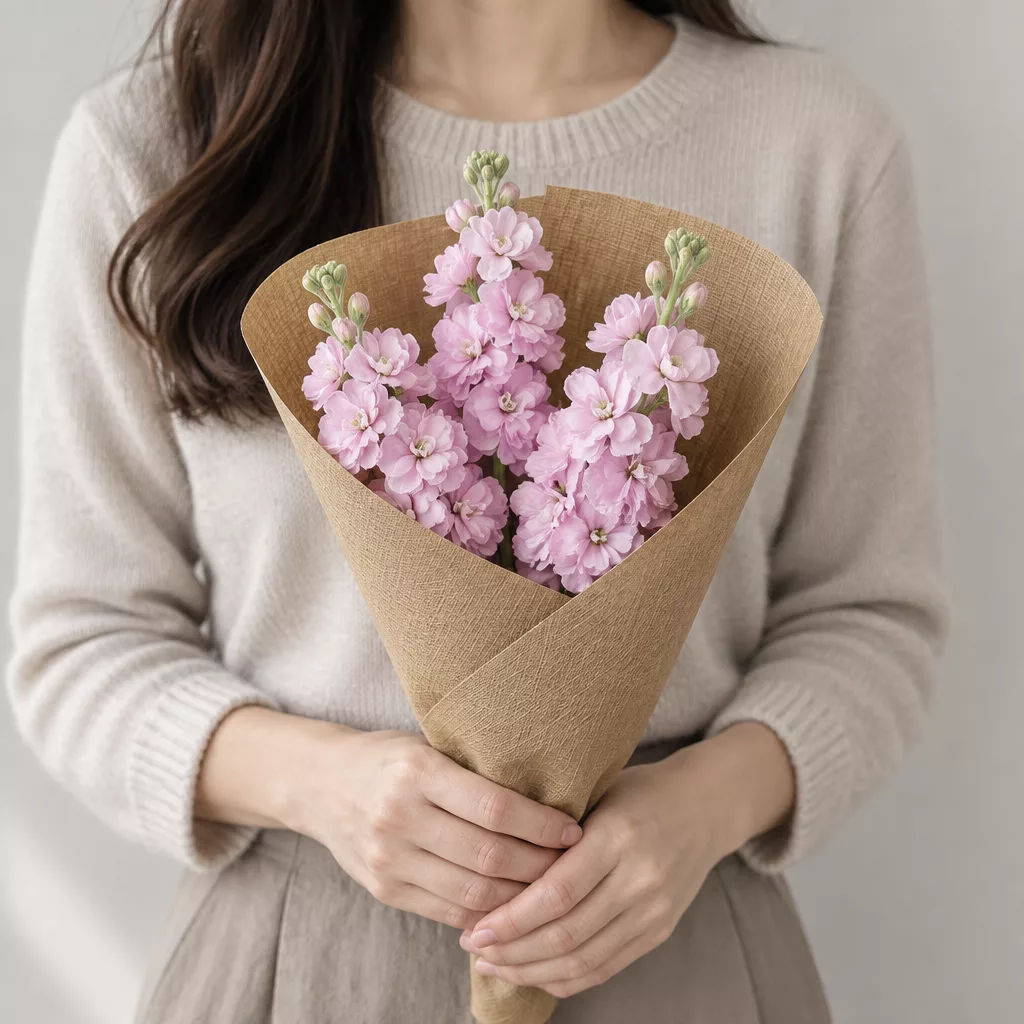
What the Bouquet Itself Communicates Before the Card Is Read
Russians read flowers with a literacy that surprises many people from outside the country. Colour, composition and scale all speak before a single word is seen. Red roses in a tight, formal bunch read as romantic intention — serious, possibly urgent. Soft peonies in blush and white read as affectionate and celebratory without being demanding. A loose arrangement of garden-style flowers — ranunculus, lisianthus, spray roses — reads as thoughtful and personal rather than ceremonial.
Size matters too, but not in the way you might expect. A very large bouquet on an unremarkable day can feel slightly alarming to a Russian recipient, as if the scale of the gesture signals a proportionally large reason behind it. A medium, beautifully composed bouquet of fifteen to twenty-five stems tends to land better as a surprise — generous enough to feel significant, contained enough to feel easy.
Colour combinations carry weight. All-white arrangements are associated with weddings and formal occasions, so they can feel slightly odd outside those contexts. Mixed pastels feel warm and modern. Deep burgundy and dusty rose together feel intimate. If you are sending across distance and cannot consult a florist in person, describing the relationship and the mood you want — rather than listing specific flowers — tends to produce a result that reads correctly to a Russian eye. The florist can then choose what is freshest and most expressive that day, which also means the flowers will last longer once they arrive.
The Odd-Number Rule and Other Customs the Recipient Will Notice
One of the most consistent things a Russian recipient will count, almost without realising it, is the number of stems. Even numbers of flowers are associated with funerals and mourning in Russian tradition, and this association is strong enough that receiving an even-numbered bouquet as a surprise can produce a moment of unease, even in people who consider themselves unsuperstitious. Odd numbers — seven, nine, eleven, fifteen, twenty-five — feel celebratory and alive.
This is not a rule that needs to be explained to the recipient. It works below the level of conscious thought. A bouquet of eleven tulips simply feels right. A bouquet of ten feels slightly off, and the recipient may not be able to say why. Reputable florists in Russia count as a matter of professional habit, but if you are ordering and want to be certain, it is worth mentioning.
Yellow flowers occupy complicated territory. There is a persistent folk belief in Russia that yellow flowers signal separation or infidelity, though this varies considerably by age group and by region. Younger recipients in cities like Saint Petersburg or Moscow are far less likely to read yellow negatively, and a monochromatic yellow bouquet of mimosa or golden ranunculus can feel joyful and contemporary. For a recipient whose age or sensibility you are less certain of, mixing yellow with white or soft orange removes any ambiguity while keeping the warmth. When in doubt, ask the florist — it is exactly the kind of nuance a working florist navigates every day.
How the Recipient Interprets the Timing of Delivery
Russians pay close attention to when something arrives, not just what it is. A bouquet delivered in the morning reads differently from one that arrives in the evening. Morning flowers feel planned and considered — someone woke up thinking about this person and acted on it. Evening flowers feel more impulsive, more emotionally charged, as if something happened during the day that made the gesture necessary.
Delivery on a weekday carries a different charge than delivery on a weekend. A surprise bouquet arriving on a Wednesday afternoon, when the recipient is at work or managing an ordinary day, tends to feel especially touching precisely because it interrupts the routine. It says: you were thought of outside the normal occasions.
The season also shapes interpretation. Flowers in February, when Saint Petersburg is cold and grey and the city feels compressed, land with particular force. Fresh tulips or hyacinths in February carry the smell of spring into a winter apartment, and that sensory contrast is something recipients remember. In summer, when flowers are everywhere and the city is bright, a surprise bouquet needs a stronger composition to feel equally significant — more unusual varieties, more deliberate structure, something that stands apart from the seasonal abundance.
If you are timing a delivery strategically, early afternoon on a weekday tends to produce the most unambiguous warmth. The recipient is alert, not tired, and the flowers have the whole evening ahead of them to be noticed and appreciated.
What Happens in the Hour After the Bouquet Arrives
The social behaviour around receiving an unexpected bouquet in Russia follows a recognisable pattern. The first thing most recipients do, after reading the card, is photograph the flowers. This is not vanity — it is the beginning of a conversation. The photograph goes to the sender as acknowledgment, or to a close friend as a way of sharing the surprise and processing it together.
Then comes the practical question of the vase. Russian apartments, especially older ones, tend not to have large dedicated vases sitting empty and ready. A tall glass, a ceramic jug, a wide-mouthed jar — whatever is available gets pressed into service. This is worth knowing as a sender, because it affects what you order. A very structured, architecturally precise arrangement may lose something when transferred from its wrapping to a mismatched vessel. Loose, generous arrangements that work in a range of containers tend to survive the transition better and look just as beautiful on a kitchen table as in a florist's display.
Water temperature matters more than most people realise. Flowers should go into cool, clean water immediately — room temperature or slightly cooler, never warm. Stems cut at a diagonal angle, about two centimetres from the bottom, will drink more efficiently. Removing any leaves that would sit below the waterline prevents bacterial growth that shortens vase life. Tulips, which are among the most commonly received flowers in Russia, are particularly sensitive to ethylene gas from fruit, so keeping them away from a fruit bowl adds several days to their life.
Sending a Surprise Bouquet That Will Be Understood Correctly
The single most effective thing you can do when sending flowers as a surprise in Russia is to write a card that gives the recipient something to land on. It does not need to be long. Even one sentence — 'I was thinking of you today and wanted you to know' — removes the anxiety of the calculation and replaces it with warmth. Without it, even a beautiful bouquet can leave the recipient slightly unsettled, running through explanations rather than simply enjoying the flowers.
For a romantic surprise, red roses remain the clearest signal, but they benefit from composition. A bouquet of red garden roses mixed with dark foliage and a few stems of burgundy lisianthus feels considered rather than generic. For a friendly or familial surprise, soft colours and a mix of textures — peonies with eucalyptus, ranunculus with white veronica — feel generous and unambiguous.
Delivery speed shapes the experience significantly. Flowers that arrive within one to two hours of being ordered are visibly fresh — the petals are firm, the stems are hydrated, the scent is present. A bouquet that has spent several hours in transit loses that immediate sensory quality, and the recipient can often tell. When the delivery is part of the surprise itself — the unexpectedness, the immediacy, the sense that someone acted on an impulse right now — freshness is not a detail. It is the whole point.
Trust the florist to make choices that will read well to a Russian eye. Describe the person, the relationship, the feeling you want to create. The rest follows.
Surprise flower delivery in Russia is a social act with a clear grammar, and once you understand that grammar, you can use it with confidence. The recipient will notice the number of stems, the colour choices, the timing of the knock at the door. They will read the bouquet before they read the card, and they will feel the freshness of the flowers the moment they unwrap them. Get those things right — odd numbers, warm colours, a honest note, same-day delivery — and the moment you create will be one the recipient talks about for a long time.
Frequently asked questions
Is it rude to send flowers to a Russian person without warning them first?
Not at all — surprise deliveries are welcomed and often remembered more vividly than expected ones. The key is a clear, warm card so the recipient knows immediately who sent the flowers and why. Without that context, even a beautiful bouquet can feel ambiguous. The gesture itself is always appreciated; the card makes it land perfectly.
Do I really need to worry about even and odd numbers of flowers?
Yes, it is worth taking seriously. The association between even-numbered bouquets and mourning is deeply embedded in Russian culture and works below conscious thought — the recipient may feel something is slightly wrong without knowing why. Odd numbers such as seven, eleven, or fifteen feel naturally celebratory. Reputable florists count automatically, but it is fine to confirm when ordering.
Are yellow flowers really a problem to send in Russia?
It depends on the recipient. Older generations in smaller cities sometimes associate yellow flowers with separation or bad luck. Younger recipients in major cities are much less likely to read them negatively and may find a yellow bouquet joyful and modern. If you are unsure, mixing yellow with white or soft orange removes any ambiguity while keeping the brightness and warmth of the colour.
How long will a surprise bouquet stay fresh after it arrives?
Most fresh-cut flowers last five to ten days with basic care — cool clean water, diagonal stem cuts, and distance from fruit. Tulips and ranunculus typically last five to seven days; roses and lisianthus can reach ten days in good conditions. Flowers delivered within one to two hours of being prepared start from a much stronger position than those that have travelled for longer.
What is the best time of day to schedule a surprise flower delivery in Russia?
Early to mid-afternoon on a weekday tends to work best. The recipient is alert and present, and the flowers have the whole evening to be enjoyed. Morning deliveries feel very planned and romantic. Evening deliveries feel more emotionally urgent. Avoid very late evening if possible — the flowers need immediate water, and a tired recipient may not attend to them straight away.
Ready to send flowers?
Pick the city, choose the bouquet, and a local florist takes it from there.
Choose a city →