A Flower Card for Reconciliation: Words That Leave Room to Talk
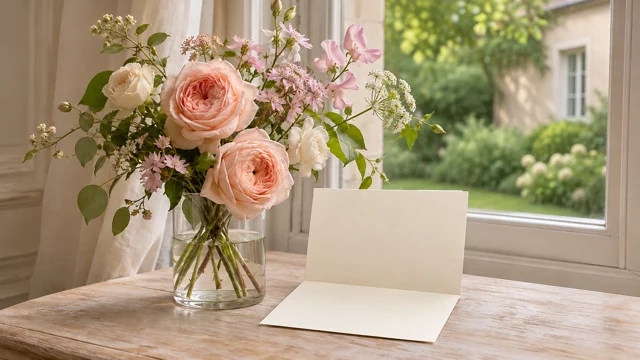
On a flower card for reconciliation, name what you regret, take responsibility and leave the recipient free to respond when they are ready. For example: “I'm sorry I spoke harshly. You deserved a calmer conversation, and I'd like to listen whenever you feel ready. —Alex”
Keep the card focused on your part in what happened. Flowers can accompany an apology, but rebuilding trust depends on the conversation and actions that follow.
Build your message around one clear apology
A useful structure is: what you did, why you regret it and a gentle invitation to talk. “I'm sorry I cancelled our plans without telling you sooner. I let you down. I'd appreciate the chance to talk when it suits you. —Sam”
Use wording you can stand behind. If you promise a change, make it specific and realistic: “Next time I need to change our plans, I'll tell you as soon as I know.” Avoid broad promises such as “I'll never disappoint you again.”
Card examples for different relationships
After an argument with your partner: “I'm sorry I dismissed what you were saying. I want to understand how it felt for you. If you're willing, I'd like us to talk. Love, Jamie.”
To a friend: “I should have kept what you told me private. I'm sorry I broke your trust. I understand if you need time. —Taylor”
To a parent or sibling: “I'm sorry for the hurtful things I said on our call. Being upset didn't excuse them. I'd like to listen when you're ready. —Alex”
After losing touch: “I've left it too long to get in touch, and I'm sorry. I've been thinking of you and would welcome a conversation if you'd like one. —Sam”
Bouquets we can deliver




Avoid pressure, excuses and mixed messages
Leave out “I'm sorry you felt hurt,” “but you started it” and “please forgive me today.” These phrases shift responsibility or put a deadline on the recipient's feelings. Avoid asking the flowers to prove anything: the bouquet does not create an obligation to reply.
If they have asked for no contact, respect that boundary and do not send flowers. Otherwise, choose a modest gesture suited to their preferences; a larger bouquet does not make an apology more convincing.
Sending reconciliation flowers to Russia
Choose from our bouquets catalogue and include your message on a free card. Delivery is anonymous by default—the courier does not name the sender—so sign the card clearly if you want the recipient to know it is from you.
We deliver across Russia. You can contact a manager on WhatsApp to agree the bouquet, address, delivery time and card text, and request a photo of the bouquet before delivery. The courier calls the recipient about 15 minutes before arrival, so consider whether that contact would be welcome.
For scheduling options, see delivery and payment. Online checkout uses CloudPayments; if you are paying from abroad, check the options displayed at checkout. More on this in Writing a Flower Card for Russia: Names, Titles and Warm Words. For a deeper look, see Card Message in Russian When You Don't Know the Language.
Frequently asked questions
Should I explain the whole disagreement on the card?
Keep the card to a few clear sentences acknowledging your part. Save detailed explanations for a conversation the recipient agrees to have, so the apology does not become a written argument.
What if they don't respond to the flowers?
Give them space and avoid sending repeated gifts to prompt an answer. Reconciliation needs both people's willingness, and silence is not an invitation to increase contact.
Ready to send flowers?
Pick the city, choose the bouquet, and a local florist takes it from there.
Choose a city →