Does the Courier Speak English When Calling the Recipient in Russia?
You have chosen the bouquet, written the card message, and entered the delivery address. Then one question stops you: when the courier calls ahead to confirm arrival, will your recipient in Saint Petersburg understand a single word? It is a fair concern, and it deserves a straight answer rather than vague reassurance. Here is exactly what happens during that call, why it is made in Russian, and the simple steps you can take right now to make sure the flowers reach the right hands without confusion.
Why the Courier Calls the Recipient Before Arriving
In Russia it is standard practice for a courier to phone the recipient roughly thirty minutes before reaching the door. This is not a formality — it serves a real purpose. Saint Petersburg is a city of large apartment blocks, gated courtyards, and intercom systems that do not always work predictably. A quick call confirms that someone is home, clarifies which entrance to use, and saves the bouquet from sitting in a cold stairwell while the courier waits.
Flowers are perishable cargo. A bunch of garden roses or double-headed tulips can lose an hour of vase life simply from sitting in a warm delivery bag while the courier tries repeatedly to ring a silent doorbell. The call protects the flowers as much as it protects the delivery window.
For the recipient, the call is also a small moment of anticipation. Hearing that something is on its way — even without knowing what — shifts the mood before the door even opens. That emotional beat is part of what makes a flower delivery feel like an event rather than a parcel drop. Understanding why the call happens helps you plan the instructions you leave for us, which we will cover in detail shortly.
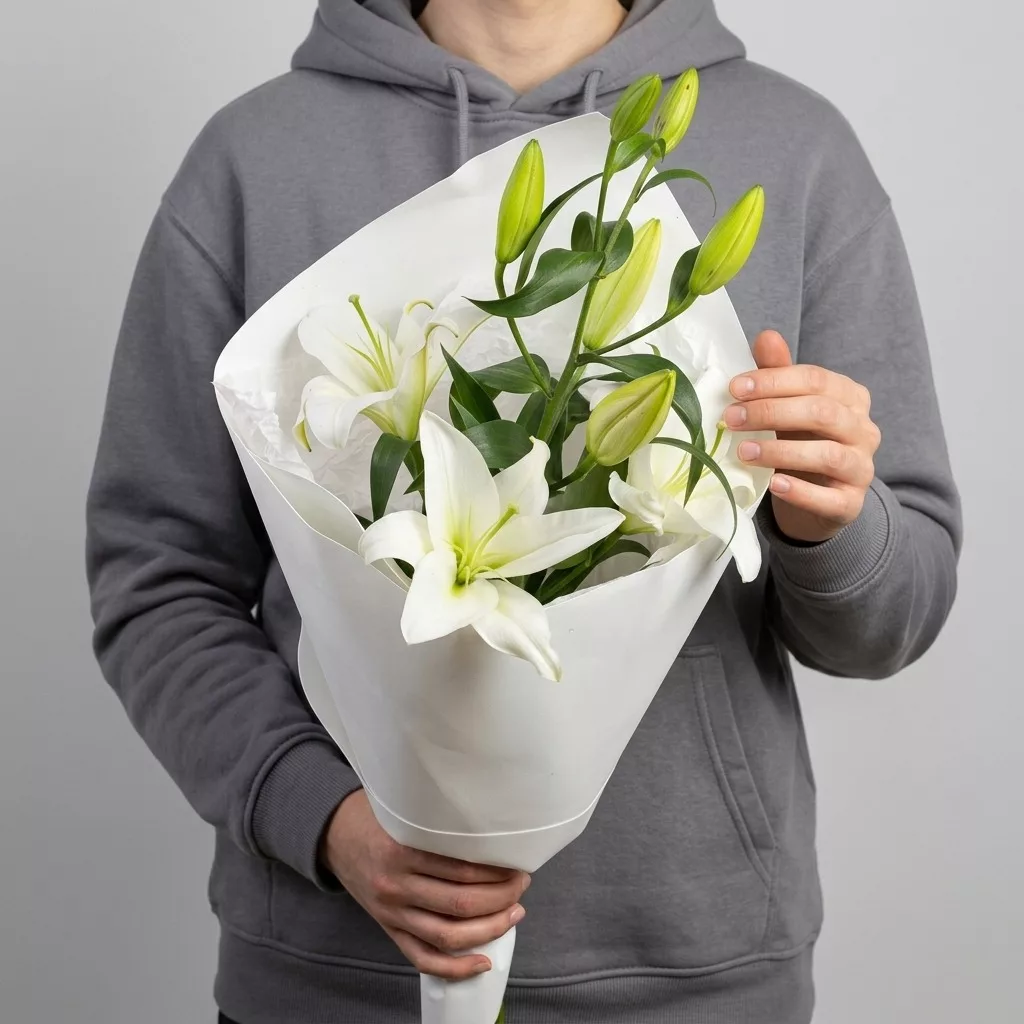
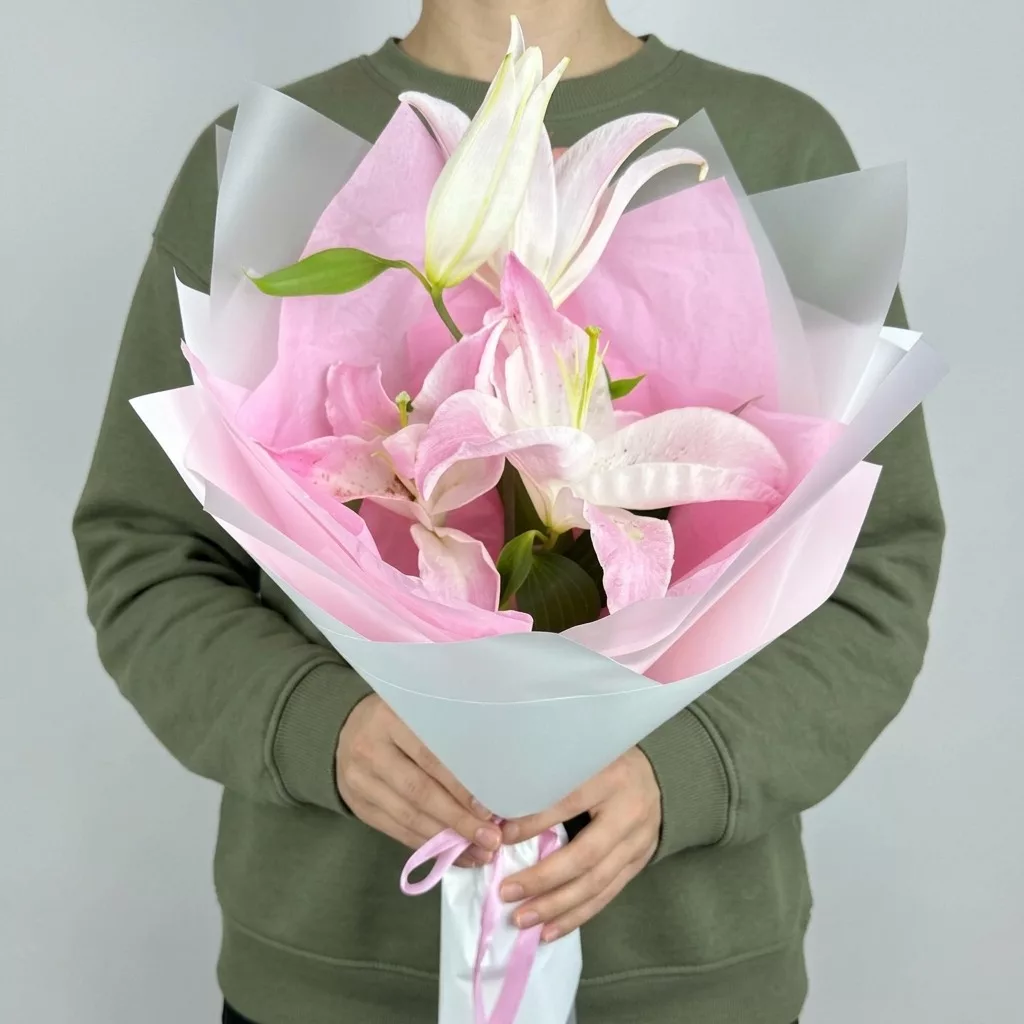
Bouquets we can deliver


The Honest Answer: Couriers Call in Russian
Yes, the call is made in Russian. Our couriers are based in Saint Petersburg and work across Russia, so Russian is the language of every delivery call. This is not a limitation we apologise for — it is simply the reality of operating a same-day flower delivery service in a country where the working language is Russian, and where most recipients expect to hear exactly that.
What this means in practice depends entirely on your recipient. If she grew up in Moscow, studied in Novosibirsk, or has lived in Russia for years, the call will be completely natural. If she is an expat colleague who arrived in Saint Petersburg six months ago and is still working through her first phrase book, a Russian-only call might cause a moment of panic.
The good news is that the call itself is short and follows a predictable script. The courier will say who they are, name the company, and ask whether the recipient is home and which entrance to use. It rarely goes beyond three or four exchanges. Even recipients with very limited Russian often manage this once they know what to expect. The key is preparation — and that is where your delivery instructions become genuinely important.
What to Write in the Delivery Instructions Field
The order form includes a field for delivery notes, and most senders use it only for practical details like floor numbers or gate codes. If your recipient may struggle with Russian, this field becomes your most important tool. Use it to give us a heads-up, and use it to prepare the recipient in advance through your own message.
A note such as 'Recipient speaks limited Russian — please speak slowly and clearly' is genuinely useful. Our couriers are experienced with a range of situations and will adjust their pace and phrasing when they know it helps. They cannot switch to English, but they can simplify and slow down.
You can also write the recipient's name in Cyrillic if you know it. When a courier says a name that sounds recognisably like the recipient's own name, it immediately signals that the call is legitimate and expected rather than a random number. That recognition alone can ease the first few seconds of uncertainty.
Finally, consider writing the approximate delivery window in your own message to the recipient — a text, a WhatsApp, or even the card message if it suits the occasion. 'Expect a call from a courier between two and four this afternoon' removes almost all the friction from the exchange. The recipient knows to answer, knows what the call is about, and can simply confirm their location.
How to Prepare the Recipient Without Spoiling the Surprise
Telling someone to expect a delivery call does not have to mean telling them what is coming. There is a comfortable middle ground between full secrecy and full disclosure, and most senders find it easily once they think it through.
A message that says 'You have something arriving this afternoon — pick up if you see an unknown number' preserves almost all of the surprise. The recipient knows to expect a call but does not know it is flowers, does not know who sent them, and still gets the full moment of opening the door to a fresh bouquet. The reveal is intact; only the confusion is removed.
For recipients who are expats or foreign nationals living in Russia, this kind of advance notice is especially kind. Receiving an unexpected call in rapid Russian when you are in the middle of a workday is stressful. Knowing that a call is coming — even without knowing why — means the recipient can answer calmly, say 'da' at the right moments, and open the door ready to receive something beautiful.
If the surprise matters deeply to you and you cannot send any advance message, consider asking a Russian-speaking friend or colleague of the recipient to be available by phone during the delivery window. That person can act as a brief interpreter if the courier's call causes confusion. It takes one text to arrange and solves the problem entirely.
Entrance Codes, Intercom Systems, and Why Details Matter
Saint Petersburg's older residential buildings — the grand nineteenth-century blocks around the city centre and the Soviet-era apartment complexes further out — often have intercom systems that require a specific code or a working button press to open the street door. Without this information, a courier carrying a large arrangement of peonies or a box of spray roses can be left standing outside for longer than anyone wants.
When you place your order, include the intercom code, the entrance number, and the floor in the delivery notes. In Russian addresses, the entrance is called a 'podyezd' and it matters because a building might have six separate doors on the street. The courier will use this information before the call and confirm it during the call if anything is unclear.
This level of detail also shortens the call itself. If the courier already knows the entrance code and floor, the conversation with the recipient becomes a simple confirmation of availability rather than a navigational exchange in a language the recipient may not command. The shorter and simpler the call, the less room for misunderstanding.
Think of the delivery notes as a briefing document for your courier. Every piece of information you include — intercom code, preferred entrance, name in Cyrillic, note about language — reduces uncertainty at the door and protects the condition of the flowers. Dahlias and anemones in particular dislike being held in a warm bag for an extended wait, so a smooth entry benefits the bouquet directly.
Common Situations and How They Usually Resolve
Over many deliveries to recipients with varying levels of Russian, a few situations come up repeatedly. Knowing them in advance helps you choose the right preparation for your specific case.
The most common situation is a recipient who speaks some Russian but is nervous about phone calls in a second language. These recipients almost always manage the courier call without difficulty once they know it is coming. The vocabulary involved — 'yes', 'I am home', 'third floor', 'entrance two' — is basic enough that even early-stage Russian learners handle it.
The second situation is a recipient who speaks no Russian at all. This happens with recently arrived expats, foreign students, or visitors staying in the city temporarily. Here, advance notice combined with a note in the delivery instructions is the most reliable solution. The courier will speak slowly, the recipient will open the door, and the flowers will do the rest of the communicating.
The third situation is a recipient who does not answer the phone. This can happen regardless of language — meetings, noisy offices, and phones left on silent are universal problems. Our couriers will attempt the call more than once and will also try the doorbell on arrival. If there is a Russian-speaking contact at the address — a colleague, a neighbour, a building manager — including their name and number in the delivery notes gives us an additional option and almost always resolves the situation.
None of these situations is unusual, and none of them has to result in a failed delivery.
What Happens to the Flowers If the Call Goes Unanswered
A bouquet is a living thing with a timeline, and that timeline does not pause while a courier waits for a callback. Most fresh arrangements — particularly those built around hydrangeas, lisianthus, or garden roses — are at their best within the first twelve hours after being cut and arranged. A delay of even two hours at ambient temperature in a delivery vehicle affects how the petals look when the recipient finally sees them.
If the courier cannot reach the recipient by phone and the doorbell goes unanswered, we will contact you as the sender. This is why a working sender phone number is as important as the delivery address itself. You may be able to reach the recipient directly, provide an alternative contact, or adjust the delivery window to a time when someone will definitely be home.
In some cases, a neighbour or building concierge can accept the flowers on the recipient's behalf, particularly if you have included that option in your delivery notes. Russian apartment buildings often have a concierge desk on the ground floor, and leaving flowers there is a recognised and perfectly acceptable practice.
The flowers will always be kept in the best possible condition while a resolution is found. But the simplest protection for both the bouquet and the experience is a recipient who is expecting the call, knows roughly when it will come, and has their phone within reach. That small act of preparation on your part is the single most effective thing you can do to ensure the moment lands exactly as you imagined it.
Sending flowers from another country — or even from another city — to someone in Russia involves one small language gap that is easy to bridge once you know it is there. The courier call is made in Russian, it is brief, and it follows a predictable shape. A note in the delivery instructions, a short heads-up message to your recipient, and a complete address with entrance details will handle almost every situation before it becomes a problem. The bouquet you have chosen will still arrive fresh, the door will still open, and the person on the other side will still feel exactly what you wanted them to feel.
Frequently asked questions
Can I request an English-speaking courier for my delivery in Russia?
Our couriers operate in Russian, which is the working language across all our delivery routes in Russia. We cannot guarantee an English-speaking courier, but you can leave a note in the delivery instructions asking the courier to speak slowly and simply. Combined with advance notice to your recipient, this resolves the vast majority of language situations smoothly.
What if my recipient does not answer the courier's call?
The courier will try calling more than once and will also ring the doorbell on arrival. If the recipient remains unreachable, we will contact you as the sender so you can help find a solution. Including a backup contact in your delivery notes — a colleague, neighbour, or building concierge — gives us an additional option and greatly reduces the chance of a missed delivery.
Should I tell my recipient a delivery is coming if I want to keep it a surprise?
You do not have to reveal what is coming — just that something is arriving. A simple message saying to expect a call from an unknown number that afternoon preserves the surprise almost entirely. The recipient will still open the door not knowing what awaits them. This small heads-up is especially helpful for recipients who are not comfortable with unexpected calls in Russian.
How do I write the recipient's address correctly to avoid delivery problems?
Include the full street address, building number, entrance number, floor, flat number, and intercom code if there is one. In Saint Petersburg's larger residential blocks, the entrance number is particularly important. If you know the recipient's name in Cyrillic, add that too. The more complete your address details, the shorter and simpler the courier's call to the recipient will be.
Does Turboflora deliver to cities outside Saint Petersburg, and does the same calling process apply?
Yes, we deliver fresh flowers across Russia, and the same pre-arrival call process applies in every city. The call is always made in Russian regardless of location. The same preparation steps work everywhere: leave detailed delivery notes, include entrance information, and give your recipient a heads-up if they are likely to find an unexpected Russian-language call difficult to navigate.
Ready to send flowers?
Pick the city, choose the bouquet, and a local florist takes it from there.
Choose a city →