Women's Day on March 8 in Russia: The Biggest Flower Day of the Year
If you have ever walked through any Russian city on the morning of March 8, you already know what the fuss is about. Flower stalls appear on every corner the night before, delivery vans run through the night, and florists work shifts that begin before dawn. International Women's Day is not simply a date on the Russian calendar — it is the single largest flower-buying event of the year, dwarfing Valentine's Day, New Year, and every other holiday combined. Whether you are sending flowers to a mother in Moscow, a colleague in Novosibirsk, or a partner right here in Saint Petersburg, understanding why this day matters so deeply — and how to order smartly — will make the difference between a bouquet that arrives beautifully fresh and one that never arrives at all.
Why March 8 Is Bigger Than Any Other Holiday in Russia
International Women's Day has roots in the early twentieth-century labour movement, but in Russia it took on a cultural weight that goes far beyond its political origins. Soviet tradition turned March 8 into a day when every woman — mother, grandmother, teacher, colleague, neighbour — is celebrated without exception. That habit never faded after the Soviet era. If anything, it deepened. Russian men grow up understanding that forgetting March 8 is simply not an option. The holiday carries the warmth of Mother's Day, the romance of Valentine's Day, and the collective spirit of a national celebration all at once.
Flowers sit at the absolute centre of this tradition. Chocolates, perfume, and small gifts are common, but a bouquet is considered the essential gesture. It is not unusual for a man to buy flowers for his wife, his mother, his mother-in-law, his female colleagues, and his daughter's teacher — all on the same morning. Corporate offices order arrangements for every woman on the team. Schools see parents arriving with bundles of tulips and roses before the first lesson begins.
The result is a demand spike that is genuinely unlike anything else in the floral calendar. In the weeks leading up to March 8, wholesale flower markets across Russia receive shipments that dwarf their normal volumes. Growers in the Netherlands, Ecuador, Kenya, and Colombia plan their cutting schedules months in advance specifically for this date. As a working florist, I can tell you plainly: the pressure on the supply chain is real, and it starts long before the holiday itself.
Bouquets we can deliver

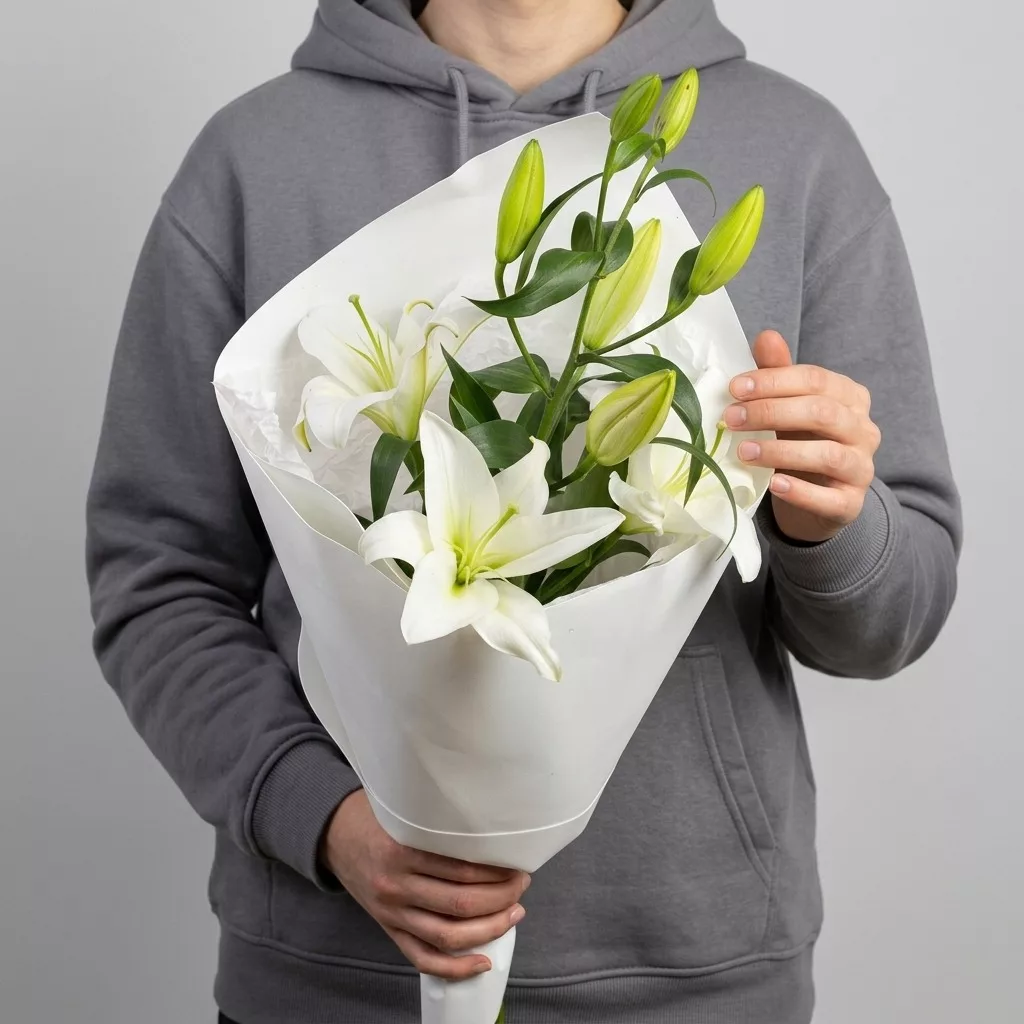
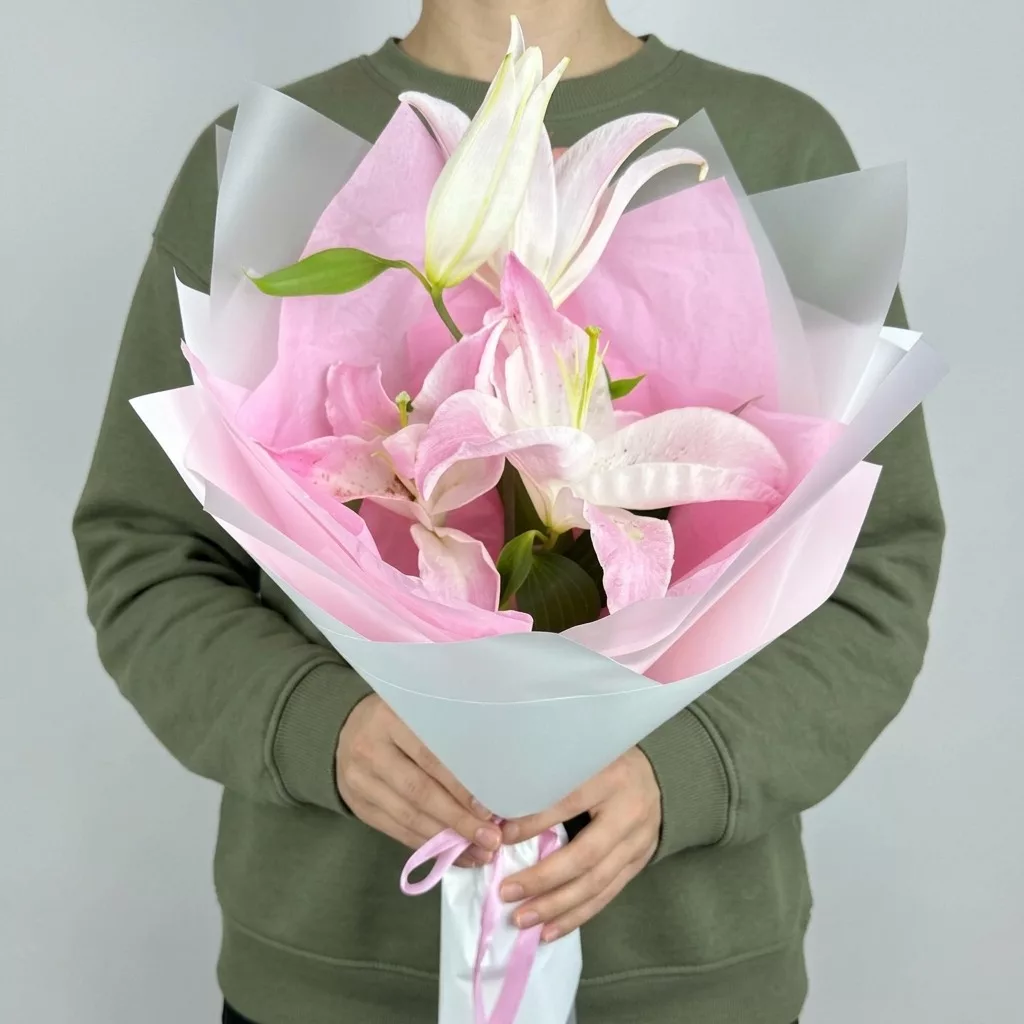

The Flowers Everyone Wants and Why They Sell Out First
Tulips are the undisputed symbol of March 8 in Russia. Their association with early spring, their clean lines, and their relatively affordable price point make them the default choice for millions of buyers. Dutch tulips — varieties like strong-stemmed Purple Prince, the classic red Ile de France, or the soft pink Foxtrot — arrive by the pallet load in the days before the holiday. Yet even those enormous shipments run short by the evening of March 7 in a busy year.
Roses are the second pillar of the holiday. Red roses remain perennially popular for romantic gestures, but spray roses in cream, peach, and blush tones have grown steadily in demand for bouquets given to mothers and colleagues, where the mood is warm rather than intensely romantic. Ecuadorian large-head roses — varieties like Explorer or Mondial — are prized for their vase life and their impressive size. A well-conditioned rose stem, kept at the correct storage temperature of two to five degrees Celsius, will hold beautifully for seven to ten days after cutting.
Freesia, ranunculus, and hyacinths round out the March 8 palette, adding fragrance and texture that tulips and roses alone cannot provide. Hyacinths in particular carry a scent that many Russian women associate directly with this holiday — their mothers received them, and now they do too. The challenge with hyacinths is that they are cold-sensitive once they leave the cooler: at room temperature above eighteen degrees they open quickly, so timing from florist to recipient matters enormously. This is exactly why ordering from a florist who controls the entire delivery chain makes such a difference on this day.
The Timeline Problem: Why Last-Minute Orders Fail
Here is the honest reality that most buyers discover only after something goes wrong. By the afternoon of March 7, the best flower stock is already spoken for. Florists who plan properly have pre-sold a significant portion of their inventory to customers who ordered days or even weeks in advance. The stems reserved for those pre-orders are conditioned, hydrated, and allocated. What remains for walk-in or same-day online orders on the morning of March 8 is whatever was not pre-sold — and in a high-demand year, that can mean limited variety, shorter stems, or flowers that have been sitting in transit longer than ideal.
Temperature plays a direct role in this. Cut flowers are living things. A tulip stem that spends two hours in a warm van because delivery routes are overloaded on March 8 morning will arrive with petals already beginning to open wide. A rose that was not properly cold-stored before dispatch may show bruising at the outer petals by the time it reaches the door. These are not failures of individual flowers — they are the predictable consequences of a supply chain under maximum pressure.
The safest window for ordering is between March 1 and March 5. Ordering in this window means your florist can source exactly the varieties you want, condition the stems properly over twenty-four to forty-eight hours in cold storage, and schedule your delivery slot before the rush peaks. Orders placed on March 6 are still manageable but carry more risk of variety substitution. Orders placed on the morning of March 8 itself are the highest risk of all — not because florists stop trying, but because the logistics simply cannot absorb unlimited demand in a single morning.
How to Choose the Right Bouquet for the Right Person
One of the most common questions I hear in the days before March 8 is some version of: what should I actually order? The answer depends entirely on who is receiving the flowers and what the relationship means.
For a romantic partner, a monobouquet of long-stem roses in a deep red or a rich burgundy reads as deliberate and classic. If your partner has more contemporary taste, a mixed bouquet combining garden roses, ranunculus, and eucalyptus in soft tones will feel more personal and less generic. Avoid overly stiff, symmetrical arrangements for romantic gifts — they can feel corporate rather than intimate.
For a mother or grandmother, tulips remain the warmest choice. A generous bunch of mixed-colour tulips — combining white, yellow, and pink — carries a cheerful, abundant feeling that suits the generational warmth of the occasion perfectly. Adding a few stems of fragrant freesia lifts the whole arrangement.
For a female colleague or manager, restraint is appropriate. A small, elegant bouquet of white or cream flowers — spray roses, alstroemeria, or lisianthus — conveys respect without overstepping. Lisianthus, sometimes called eustoma, is particularly good here: it has the delicate appearance of a rose but holds exceptionally well at room temperature, which matters when a bouquet will sit on a desk for hours before going home.
For a daughter or young girl, bright colours work beautifully. Gerbera daisies in orange, yellow, and pink are sturdy, cheerful, and genuinely exciting to a child. They are also among the most temperature-resilient cut flowers, which makes them a practical choice for deliveries that may encounter variable conditions.
Delivery on March 8: What to Expect and How to Prepare
Delivering flowers across Russia on March 8 is a logistical operation that we plan for months in advance. Routes are mapped, time slots are pre-allocated, and vehicles are loaded in a specific sequence to minimise the time any bouquet spends outside of temperature-controlled conditions. Even with all of that preparation, customers who have not booked a delivery slot in advance will find that morning slots on March 8 fill up entirely by early March.
When you place an order, be precise about the delivery address and the recipient's availability. An undelivered bouquet — because no one answered the door — is a genuine waste on this day. If the recipient will be at work, consider having flowers delivered to their workplace rather than their home. Most offices are open on March 7, the day before the holiday, which is actually an ideal delivery day: flowers arrive fresh, the recipient can enjoy them all day, and your delivery avoids the peak-hour congestion of March 8 morning.
For deliveries outside Saint Petersburg, to other Russian cities, factor in transit time honestly. Flowers shipped by refrigerated courier to Yekaterinburg, Kazan, or Krasnoyarsk need to be dispatched at least one to two days before the intended arrival date. The flowers themselves are fine with this — a properly conditioned tulip or rose stem, kept cold during transit, will arrive in excellent condition and have its full vase life ahead of it. The mistake is ordering too late and expecting overnight miracles from a supply chain that is already at capacity.
Always include a handwritten note option when ordering. On March 8, the card matters as much as the flowers.
Keeping Your Bouquet Fresh After Delivery
A bouquet that arrives in perfect condition deserves care that keeps it that way. The first thirty minutes after delivery are the most important. Unwrap the flowers immediately — leaving them in packaging traps heat and accelerates wilting. Trim the stems at a forty-five-degree angle with a clean, sharp knife or scissors, removing about two centimetres from the bottom. The angled cut increases the surface area through which the stem draws water, which makes a measurable difference to vase life.
Fill a clean vase with cool, fresh water. Room-temperature water is acceptable for most flowers, but slightly cool water — around fifteen degrees — slows bacterial growth and keeps stems firmer for longer. Remove any leaves that will sit below the waterline, as submerged foliage rots quickly and clouds the water, introducing bacteria that block the stem's vascular system.
Tulips are particular in one specific way: they continue to grow after cutting, sometimes by several centimetres. This is not a defect — it is simply their nature. A tulip that arrives with a bud slightly closed will open over the course of a day, which is actually ideal. Place tulips away from direct sunlight and heating radiators, both of which accelerate opening and shorten vase life significantly. In a cool room, away from fruit bowls — ethylene gas from ripening fruit ages cut flowers noticeably faster — a well-conditioned tulip will last five to seven days.
Roses benefit from having their water changed every two days and their stems re-trimmed each time. Hyacinths prefer to stay in shallow water rather than a deep vase. Treat each variety on its own terms, and a March 8 bouquet can still look beautiful well into the second week of March.
March 8 is the day when flowers carry more meaning in Russia than on any other day of the year. Behind every bouquet is a relationship worth honouring — a mother who raised you, a partner who stands beside you, a colleague who makes the workday better. Getting that bouquet right means thinking ahead: ordering early enough to secure the varieties you want, choosing a florist who controls the delivery from cooler to doorstep, and giving the recipient flowers that will still be beautiful days later. At Turboflora, we have built our entire March 8 operation around exactly these priorities — so that when your flowers arrive, they arrive the way you imagined them.
Frequently asked questions
How far in advance should I order flowers for March 8 in Russia?
Ordering between March 1 and March 5 gives you the best selection of varieties and the widest choice of delivery time slots. By March 6 options narrow, and by the morning of March 8 itself, popular varieties like tulips and large-head roses are frequently sold out. Early ordering is the single most effective thing you can do to guarantee a beautiful bouquet.
Can flowers be delivered to cities outside Saint Petersburg for March 8?
Yes, but transit time must be factored in honestly. For cities like Moscow, Kazan, or Novosibirsk, flowers should be dispatched one to two days before the intended arrival date. Properly conditioned stems shipped in refrigerated conditions arrive fresh and retain their full vase life. Order early enough to allow for this transit window and your recipient will receive flowers in excellent condition.
What flowers are most traditional for Women's Day in Russia?
Tulips are the most culturally iconic flower for March 8 in Russia — they represent early spring and are given across all ages and relationships. Roses, particularly in red for romantic gestures and softer tones for family or colleagues, are the second most popular choice. Hyacinths and freesia are beloved for their fragrance. Any combination of these varieties will feel appropriate and genuinely festive.
Is it better to deliver flowers on March 7 or March 8?
Delivering on March 7, the day before the holiday, is often the smarter choice. Delivery slots are less congested, flowers arrive in calmer conditions, and the recipient has the joy of the bouquet a full day earlier. Many Russian women appreciate receiving flowers on the evening of March 7 — it feels like the celebration beginning rather than a rushed morning gesture squeezed between competing deliveries.
How long will a March 8 bouquet stay fresh?
With proper care — stems trimmed at an angle, cool clean water changed every two days, placement away from direct heat and ripening fruit — tulips last five to seven days and roses seven to ten days. Hyacinths are shorter-lived at room temperature, typically three to five days. The fresher the flowers are when they arrive, the longer they will last, which is another strong reason to order early from a florist with reliable cold-chain delivery.
Ready to send flowers?
Pick the city, choose the bouquet, and a local florist takes it from there.
Choose a city →