Wrapping Paper on Delivered Flowers: Remove It or Keep It?
Your bouquet has just arrived, and it looks beautiful inside its layers of paper and ribbon. The instinct is to leave it exactly as it is — it feels finished, almost like unwrapping it would ruin something. But some of that wrapping is working hard to protect the flowers during transit, and some of it, left on too long, will quietly shorten their life. Knowing which is which takes about two minutes to learn and can add several days to your blooms.
Why Bouquets Are Wrapped the Way They Are
A delivered bouquet is dressed in layers for reasons that have nothing to do with decoration — at least not entirely. The innermost layer, usually a thin moisture-retaining sleeve or damp paper around the stems, exists purely to keep the flowers hydrated during the journey. Without it, roses and tulips can lose enough water in an hour to start drooping before they even reach the vase.
The middle layer is typically kraft paper or a structured cone of wrapping paper. This holds the bouquet's shape, stops petals from pressing against each other, and protects delicate blooms like ranunculus or lisianthus from bruising when the courier moves quickly. In winter, this layer also traps warmth — Saint Petersburg winters are serious, and a bouquet moving from a heated vehicle to cold air and back again needs that buffer.
The outer decorative layer — printed paper, organza, or a branded sleeve — is the one most people focus on because it is the most visible. It is there for presentation and first impression. It photographs well and signals care. But it is also the first thing that needs to come off once the flowers are indoors. Understanding this three-layer logic means you will never again wonder whether you are doing something wrong by unwrapping a gift bouquet.
Bouquets we can deliver

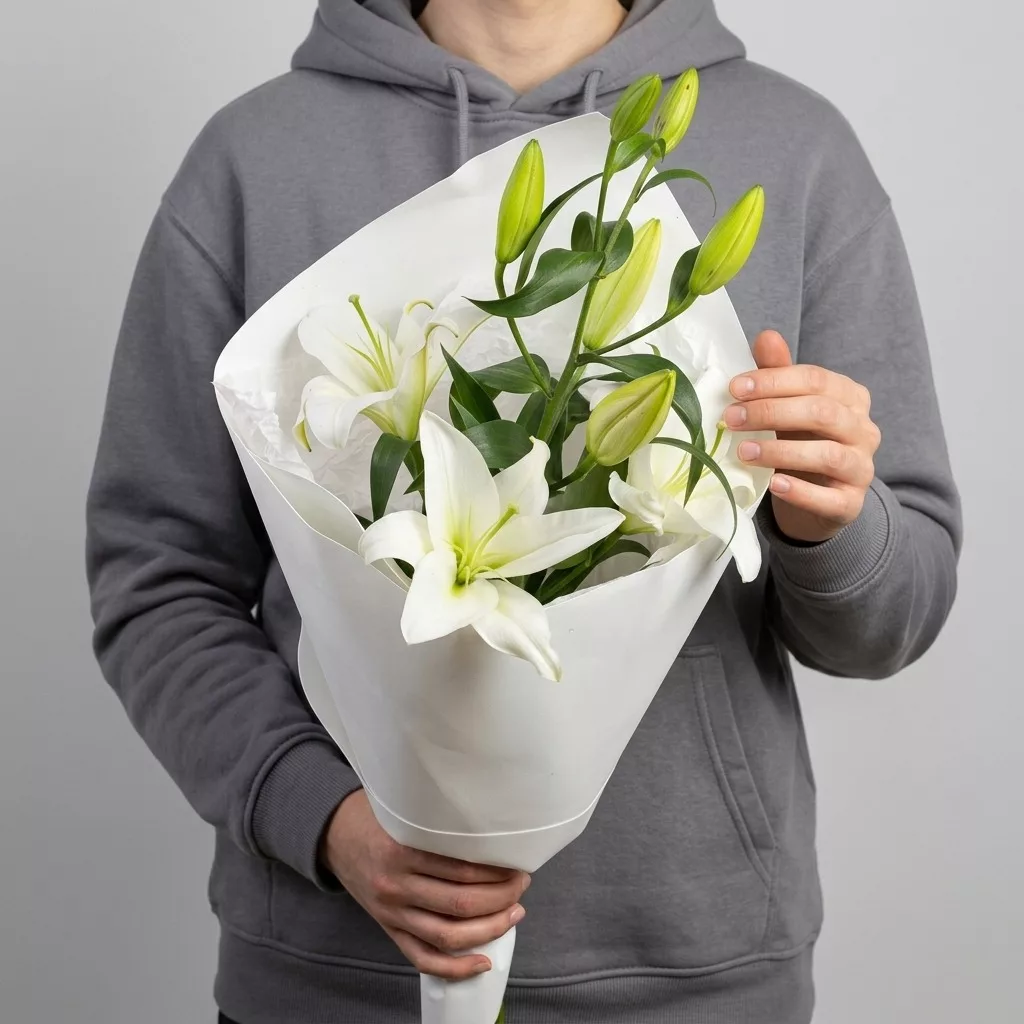
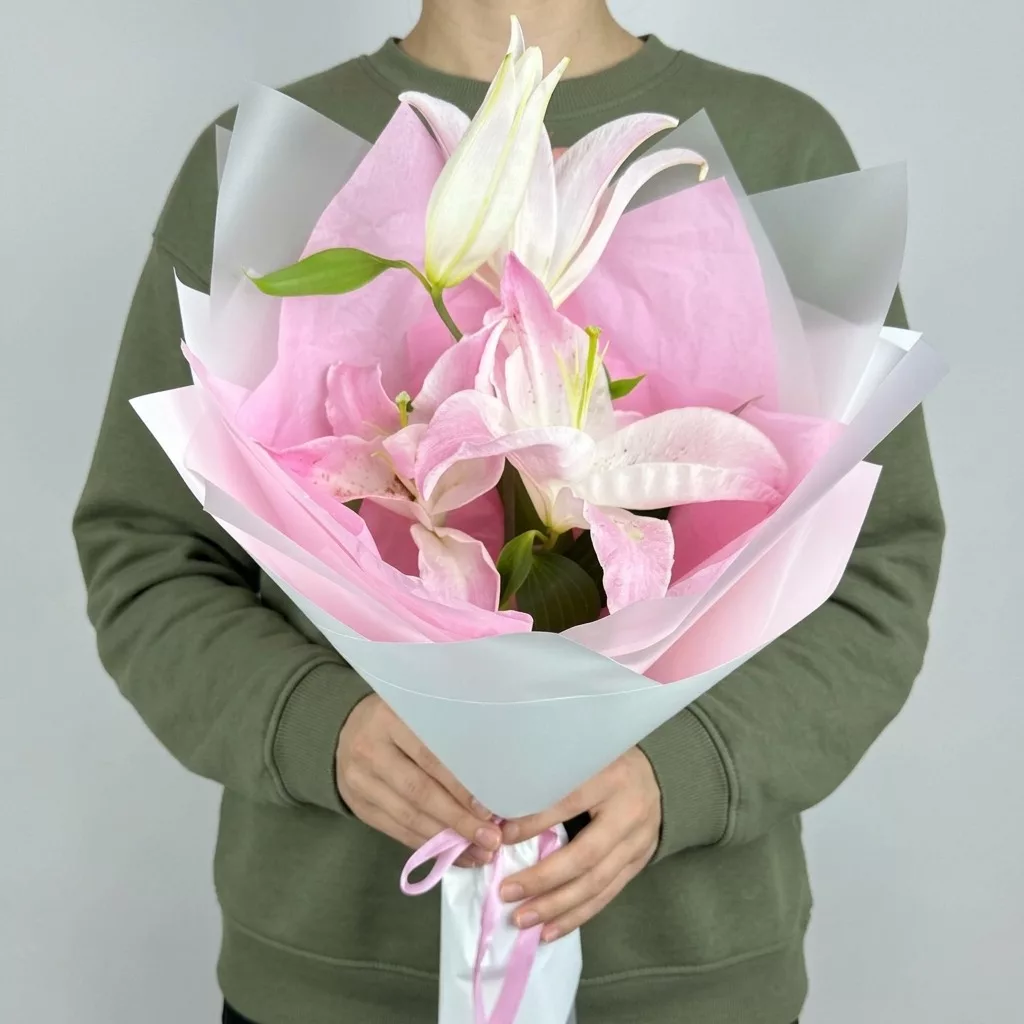

The Outer Decorative Wrapping: Off Within the First Hour
Decorative outer wrapping is not designed to stay on. It is stiff, it holds the stems in a fixed position, and it traps humidity around the foliage in a way that encourages bacterial growth at the base of the bouquet. Roses are particularly sensitive to this — their lower leaves begin to yellow and rot if left pressed against damp paper for more than an hour or two at room temperature.
Peel back the outer layer carefully. If it is tied with ribbon, undo the knot rather than pulling hard — the ribbon is often anchoring the whole structure, and yanking it can snap stems or scatter small filler flowers like waxflower or gypsophila. Once the outer wrapping is off, you will see the bouquet's true shape for the first time, and that is a good moment to appreciate the composition before moving to the next step.
In Russia, it is a common custom to present flowers still fully wrapped and let the recipient unwrap them — this is the moment of gift-giving, not the florist's final presentation. If you are the recipient and someone has handed you a wrapped bouquet, it is perfectly natural to unwrap it in front of them. There is no etiquette rule requiring you to wait. The flowers will thank you for acting quickly, and so will anyone watching the petals open up as the layers come away.
The Inner Moisture Layer: Handle It Gently Before Removing
Beneath the decorative paper you will usually find a softer inner wrap — sometimes tissue paper, sometimes a thin plastic sleeve, sometimes a small piece of wet cotton or floral foam tucked around the stem ends. This inner layer has been doing real work. It is the reason the flowers survived a courier journey without a vase.
Before you remove it, look at the stem ends. If there is damp material there, the florist has conditioned the bouquet for travel. Remove this carefully over a sink, because it will drip. Do not squeeze or twist the stems as you pull the wrapping free — hydrangeas and gerberas especially can bruise at the stem if handled roughly, and a bruised stem will not draw water properly even once it is in a vase.
Once the inner layer is off, cut about two centimetres from the bottom of each stem at a diagonal angle before placing them in water. This is not optional. During transit, even with moisture wrapping, the cut ends begin to seal over as a natural response to air exposure. A fresh diagonal cut reopens the water channels. Use clean scissors or a sharp knife — a blunt blade crushes the stem cells rather than cutting them cleanly, which reduces water uptake significantly. This single step, done within the first fifteen minutes of the bouquet arriving, makes a measurable difference to vase life.
What to Do With Bouquets Delivered in Cold Weather
Winter deliveries in Russia — and in Saint Petersburg specifically, where temperatures regularly drop well below freezing from November through March — require a brief acclimatisation step that many people skip. When a bouquet arrives cold, do not unwrap it immediately in a warm room. Let it sit, still wrapped, for ten to fifteen minutes near the door or in a cool hallway.
This matters most for tropical and subtropical flowers that are common in Russian florists year-round: calla lilies, anthuriums, and orchid stems are all sensitive to sudden temperature shifts. Moving them directly from near-freezing outdoor air into a heated apartment can cause the cells in the petals to contract and expand too quickly, leading to translucent spots or petal collapse that looks like frost damage even when the flowers were never actually frozen.
Tulips behave differently. They are cold-hardy and actually prefer to be unwrapped and placed in cool water as quickly as possible. Roses sit somewhere in between — they tolerate a brief acclimatisation but do not need it the way anthuriums do. If you are unsure what is in the bouquet, the ten-minute rule is a safe default for any winter delivery. After that resting period, unwrap from the outside in, trim the stems, and place the flowers in a vase with cool — not cold, not warm — water at around sixteen to eighteen degrees Celsius.
Decorative Elements You Can Actually Keep On
Not everything on the bouquet needs to come off. Some decorative elements are designed to stay and become part of the arrangement in the vase. Knowing the difference saves you from accidentally stripping a bouquet of its intended character.
Satin ribbon tied around the stems at vase height is usually meant to stay. It holds the bouquet's gathered shape and looks intentional above the waterline. What you should remove is any ribbon that sits below where the water level will be — ribbon submerged in water rots, discolours, and introduces bacteria into the vase. Slide it up or retie it before placing the stems in water.
Small decorative picks — thin wooden or wire stems with pearls, butterflies, or dried elements — can stay in the arrangement. They are anchored into the bouquet and removing them often disturbs the composition. Dried orange slices or cinnamon sticks tucked into winter bouquets are also meant to remain; they add fragrance and texture and do not harm the fresh flowers around them.
Cellophane cone wrapping is one element that causes the most confusion. A clear cellophane sleeve that holds the bouquet in a cone shape is decorative outer packaging — it comes off. But a cellophane wrap that is tight around individual stems and clearly there to hold moisture is inner packaging — remove it carefully over the sink as described earlier. When in doubt, ask yourself whether removing it would change how the bouquet looks. If the answer is no, it is functional packaging and it comes off.
The Vase, the Water, and the First Twenty-Four Hours
Once the wrapping is handled correctly, the vase setup determines everything that follows. The vase should be clean — genuinely clean, not just rinsed. Old flower water leaves a biofilm inside glass that you cannot always see but that will contaminate fresh water within hours. A quick wash with dish soap and a bottle brush, then a thorough rinse, is the right starting point.
Fill the vase with cool water and add the sachet of flower food if one came with the bouquet. These sachets contain three things: a sugar source for the flowers, an acidifier that helps water move up the stems, and a biocide that slows bacterial growth. They are not optional extras — they extend vase life noticeably, particularly for roses and chrysanthemums. If no sachet came with the delivery, a small amount of lemon juice and a pinch of sugar in clean water is a reasonable substitute.
For the first twenty-four hours, keep the bouquet away from direct sunlight, heating vents, and fruit bowls. Ripening fruit releases ethylene gas, which accelerates the ageing of flowers — particularly tulips and carnations, which are highly sensitive to it. A cool spot in indirect light, ideally between sixteen and twenty degrees Celsius, gives the flowers time to fully hydrate and open at their own pace. By the following morning, you will see the difference between a bouquet that was handled well from the moment it arrived and one that was left wrapped on a table for the evening.
Keeping the Bouquet Fresh Through the Week
The work does not end after the first unwrapping. Vase life for most mixed bouquets delivered in Russia ranges from five to ten days depending on the varieties involved, and a few consistent habits push that range toward the higher end.
Change the water every two days and recut the stems each time. This sounds like more effort than it is — it takes about three minutes and makes the single biggest difference to how long the flowers last. When you recut, remove any leaves that have fallen below the waterline, because submerged foliage decays quickly and clouds the water with bacteria that block the stem ends.
Different flowers in a mixed bouquet age at different rates. Alstroemeria and chrysanthemums typically outlast roses and gerberas by several days. When the roses begin to fade, remove them rather than leaving them to rot among the still-fresh stems. The remaining flowers will last longer without the decaying material nearby, and the bouquet often looks more deliberate as a smaller, tighter arrangement than it did at full size.
If the bouquet came with a water tube on a single stem — a small plastic vial filled with water, common on orchid stems or single large blooms added to arrangements — check it daily and refill it if it runs low. These tubes keep individual stems hydrated independently of the main vase and are particularly useful for flowers that have been wired or placed at an angle that would be difficult to maintain in a standard vase. Leaving them empty defeats their purpose entirely.
Wrapping paper is not the enemy of fresh flowers — it is their travelling companion, and like any good travelling companion, it knows when its job is done. The outer decorative layer comes off first and comes off quickly. The inner moisture layer comes off carefully, over the sink, before the stems are trimmed. The ribbon, the picks, and the small decorative details that belong to the arrangement stay exactly where the florist placed them. Follow that sequence, give the stems a clean cut, set the vase up properly, and the bouquet you received will look as good on day five as it did when it arrived at the door.
Frequently asked questions
Should I remove the wrapping before giving flowers as a gift?
In Russian tradition, handing over a wrapped bouquet is part of the gift moment — the recipient unwraps it themselves. However, if you are placing the bouquet in water before the recipient arrives, unwrap it fully, trim the stems, and arrange it in a vase. A fully unwrapped bouquet in water will always outlast one left in decorative packaging.
Can I leave the cellophane on overnight if I am busy?
It is better not to. Cellophane traps humidity around the foliage and stem bases, which accelerates bacterial growth and causes lower leaves to yellow. Even a quick partial unwrap — removing the outer layer and placing the still-wrapped stems in a jug of water — is significantly better than leaving the full packaging on overnight.
My roses arrived with their heads drooping. Is this the wrapping's fault?
Drooping rose heads after delivery usually indicate dehydration during transit rather than a wrapping problem. Remove all packaging immediately, recut the stems diagonally, and place them in cool water up to just below the lowest leaves. In most cases, roses recover fully within two to four hours once they have access to fresh water.
Does the type of paper wrapping affect how quickly I need to remove it?
Yes. Kraft paper and tissue paper breathe and can stay on slightly longer without causing harm. Cellophane and plastic sleeves trap moisture and warmth and should come off within the first thirty minutes indoors. Foil wrapping is the most restrictive and should be removed immediately — it holds heat and blocks airflow entirely around the stems.
Is it safe to put a fully wrapped bouquet straight into a vase of water?
Only as a very short-term measure while you prepare properly. Paper wrapping will absorb water, swell, and press against the stems, restricting water uptake. Plastic wrapping will prevent water from reaching the stems at all. Unwrap, trim, and place in the vase within fifteen minutes of the bouquet arriving for the best results.
Ready to send flowers?
Pick the city, choose the bouquet, and a local florist takes it from there.
Choose a city →