Are Flowers Supposed to Be in Cold Water? A Practical Care Guide
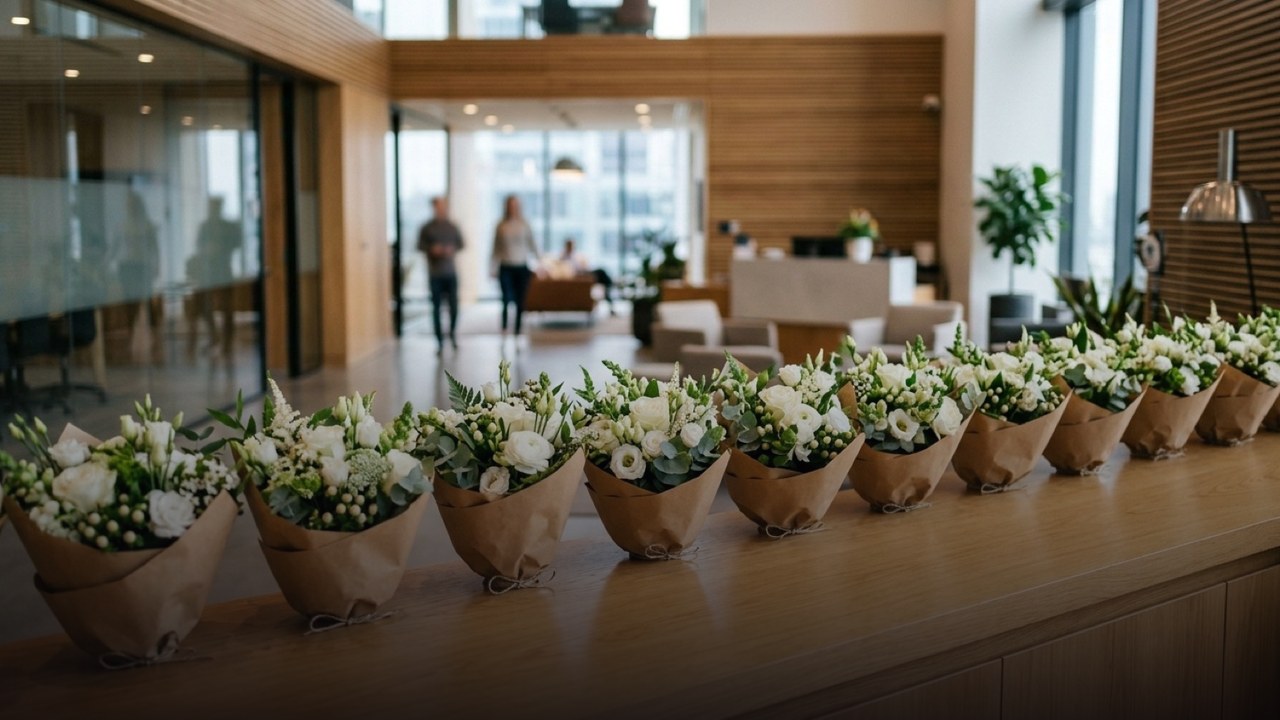
Most cut flowers can go in cool or room-temperature water; they do not usually need ice-cold water. For a mixed bouquet, fresh drinking-quality water that feels neutral or slightly cool to your hand is a sensible starting point, unless the flowers come with different care instructions. Avoid hot water and leave ice cubes out of your everyday vase routine.
Water temperature is only one part of keeping a bouquet in good condition. A clean vase, freshly trimmed stems, no submerged leaves and a suitable place in the room all deserve your attention. If you have received flowers as a gift, start with those basics before searching for a special treatment: changing the temperature alone will not correct dirty water, damaged stems or a vase standing beside a radiator.
What “cold water” should mean for a flower vase
In everyday flower care, cool water means ordinary cool tap water, rather than water chilled in a refrigerator. You do not need to reach a precise temperature for a typical mixed bouquet. If your tap runs very cold in winter, let the water stand until it feels less sharply cold. If it runs warm at first, allow it to cool before filling the vase.
Room-temperature water is also a practical choice for many cut flowers. Instructions that seem to disagree often use “cold”, “cool” and “lukewarm” loosely, so focus on avoiding extremes. Use any care guidance supplied with the bouquet as your first reference, especially when it contains a flower with particular requirements or comes with a flower-food sachet.
Do not confuse cool water with a cool room. A vase filled with cold water can still sit in direct sunshine or beside a heater, where the flowers may lose moisture quickly. Choosing a position away from heat is more useful than repeatedly adding ice. For another explanation of the choice, see our guide to warm or cold water for flowers.
Prepare the vase and stems before arranging the bouquet
Wash the vase with washing-up liquid, rinse it thoroughly and check the inside for any slippery residue. A quick refill of an unwashed vase leaves yesterday’s dirt behind. Choose a container that supports the bouquet without squeezing the stems tightly together, and fill it deeply enough to keep every cut stem end submerged once the flowers are arranged.
Remove any leaves that would sit below the waterline. Then use clean, sharp scissors or secateurs to make a fresh cut at the bottom of each stem, taking off a small section and avoiding crushed ends. Put the stems into water promptly after cutting. You do not need to strip off all the foliage: keep healthy leaves that remain clear of the water.
If flower food is supplied, mix it with the volume of water stated on the packet. Guessing the amount or adding the whole sachet to a very small vase can produce the wrong concentration. Without flower food, use fresh water and keep up with cleaning. Avoid improvised mixtures of sugar, household bleach or other kitchen ingredients whose proportions you cannot reliably control.
Bouquets we can deliver




Adjust your care to the flowers you actually have
A mixed bouquet needs an approach that works for its different stems. Start with cool or room-temperature water, keep the cut ends covered and follow any specific instructions that arrive with it. If one flower declines before the others, remove that stem and inspect the rest. There is no need to subject the whole arrangement to a temperature treatment because one bloom looks tired.
For roses, fresh cuts, clean water and keeping foliage out of the vase water are useful first steps. A drooping head does not by itself prove that the water is too cold: dehydration, stem damage and the flower’s condition can all play a part. Our guide to cold water for roses covers the water question in more detail.
Tulips can continue to grow and bend after cutting, so a changing outline is not automatically a sign of poor care. Give them a vase that supports their stems and check the water regularly. With any unfamiliar flower, identify it before trying a species-specific treatment. Advice for one type of stem should not automatically become a rule for every flower in the bouquet.
Keep the water fresh and the bouquet away from heat
Check the water level every day, especially soon after the bouquet first goes into its vase. Some arrangements use water quickly, and a narrow container can look full near the top while offering little reserve. Make sure every stem still reaches the water. If you shorten or rearrange the bouquet, check again rather than assuming all the ends remain submerged.
Replace the water regularly, and sooner if it becomes cloudy, smells unpleasant or contains fallen leaves. When changing it, lift the bouquet out, wash and rinse the vase, and remove deteriorating material. Simply topping up dirty water does not clean the container. If you are using flower food, follow its instructions when preparing the fresh solution.
Choose a spot away from direct sun, radiators, heating vents and strong draughts. Keep the arrangement away from ripening fruit, which can release ethylene that affects susceptible flowers. A comfortably cool position is helpful, but an ordinary household refrigerator is not a necessary care step: food, limited space and very cold areas make it a poor default place for a gift bouquet.
What to do if the flowers already look wilted
First check the simplest explanation: are the cut ends actually in water? A low level, an awkward arrangement or a short stem caught above the waterline can leave individual flowers dry. Move the bouquet away from heat, prepare a clean vase with fresh water and remove leaves below the surface. Recut the stem ends with a clean, sharp tool before returning them to the vase.
Give the flowers time to take up water, then assess their condition again. Some dehydrated stems may improve, but petals that are browned, bruised or naturally ageing will not become fresh through a water change. Remove clearly deteriorating flowers so you can care for the remaining arrangement. Avoid repeatedly cutting large lengths off otherwise sound stems in search of an immediate result.
Do not treat boiling water, an ice bath or submerging the whole bouquet as universal rescue methods. Special treatments sometimes appear in advice for particular flowers, but they are unsuitable as a general instruction for an unidentified mix. If the bouquet came with care guidance, follow that first. Otherwise, clean water, fresh cuts and a cooler position are a reasonable starting point.
Sending flowers to Russia: plan for an easy handover
If you are ordering from abroad for someone in Russia, choose a delivery time when the recipient is likely to be available and can put the flowers in water. You can browse the bouquets catalogue and contact a manager on WhatsApp for help choosing a bouquet, agreeing the address, delivery time and card text, or arranging a photo of the bouquet before delivery.
We deliver flowers across Russia. City delivery costs 500 RUB; for remote districts and suburbs, the operator confirms the price when confirming the order. In large cities, express delivery is available 1–2 hours after order confirmation. You can also arrange an exact time with a tolerance of ±30 minutes, choose a window of 09–12, 12–15, 15–18 or 18–21, or pre-order 1–30 days ahead.
Delivery is anonymous by default, so include your name in the free card if you want the recipient to know who sent the flowers. The courier calls about 15 minutes before arrival. If the recipient is absent, we agree a second delivery that day or a handover to a neighbour or concierge with the sender’s consent. Online checkout uses CloudPayments; check the payment options displayed there. Acceptance of a particular foreign card is not guaranteed. We deliver bouquets across Russia in 1–2 hours.
Frequently asked questions
Are flowers supposed to be in cold water or room-temperature water?
Cool or room-temperature water is a sensible starting point for most mixed bouquets. Follow any flower-specific instructions supplied with the arrangement and avoid very hot or ice-cold water as a routine treatment.
Should I add ice cubes to my flower vase?
Ice cubes are not needed for everyday care of most cut bouquets. Use fresh water and move the vase away from heat if its surroundings are too warm.
Do I need to change the water if it still looks clear?
Clear-looking water does not tell you everything about the cleanliness of the vase. Replace it regularly, clean the container during changes and follow the instructions on any flower food you use.
Will cold water revive drooping roses?
Changing the temperature alone may not help. Check the water level, clean the vase and recut the stems; dehydrated roses may improve, while damaged or ageing flowers may not.
What should I tell someone receiving flowers as a gift?
Ask them to use a clean vase, remove leaves below the waterline and put freshly trimmed stems into cool or room-temperature water. Remind them to check the level daily and keep the bouquet away from direct sun and heaters.
Ready to send flowers?
Pick the city, choose the bouquet, and a local florist takes it from there.
Choose a city →