Are You Supposed to Remove Leaves from Roses?
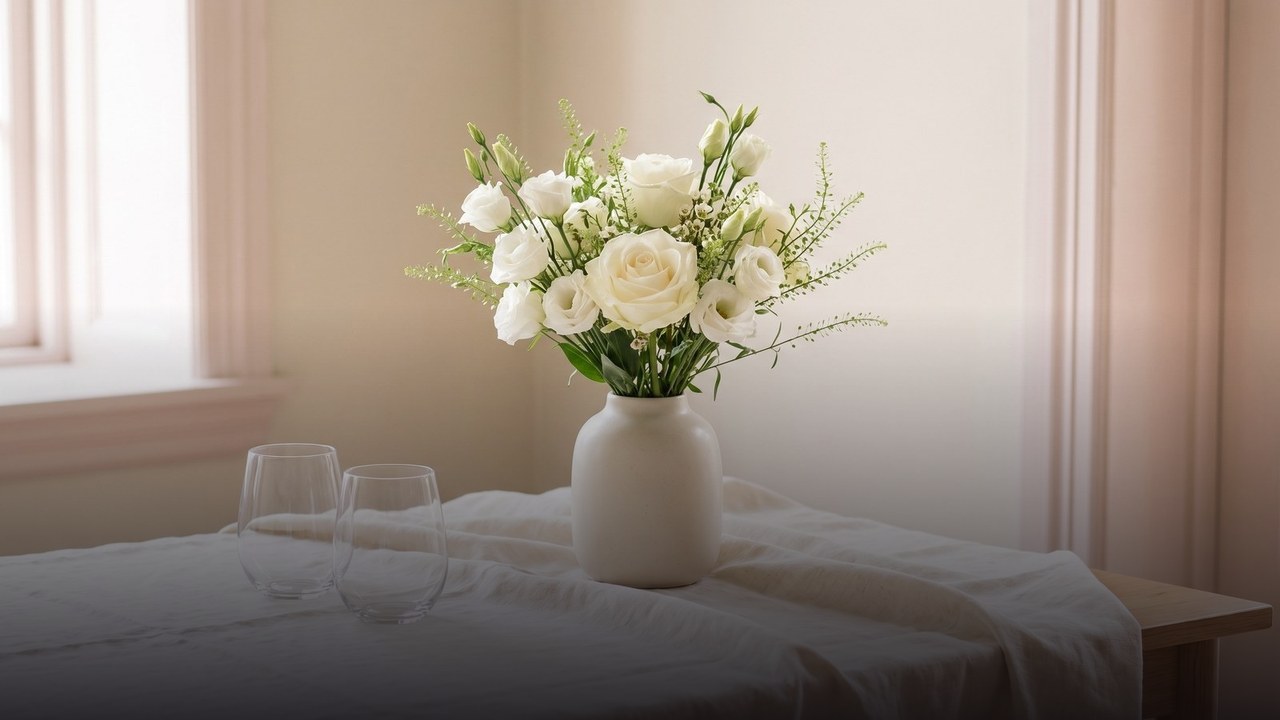
Yes—if you mean cut roses, remove any leaves that would sit below the waterline in your vase. Keep healthy leaves above the water unless they are damaged, crowded or likely to fall into it. You do not need to strip every stem bare.
The useful dividing line is the water level, rather than a fixed number of leaves per rose. A short vase may leave much of the foliage clear, while a deeper vessel can submerge several leaf clusters. Before removing anything, choose your vase and check where each stem will sit; this makes the job quicker and helps preserve the bouquet’s natural shape.
Why leaves below the waterline should come off
Submerged foliage breaks down and adds decaying material to vase water. This encourages microbial growth, which can interfere with water uptake through the cut stems. Removing those leaves is a practical hygiene step, but it works alongside a clean vase and fresh water; leaf removal alone cannot keep dirty water suitable for flowers.
Check the whole submerged part of each stem, including small leaflets tucked behind larger ones. Rose leaves grow in groups, so removing one visible leaflet may leave others hanging into the vase. Look from the side after arranging the bouquet, because a leaf that seemed clear on the worktop can dip into the water once the stem tilts.
Do not solve the problem by leaving the vase nearly empty just to keep the foliage dry. Add enough water to keep the cut ends submerged, then remove the leaves that fall within that level. Our guide to removing leaves below the waterline explains why keeping plant debris out matters throughout the bouquet’s time in the vase.
How to remove rose leaves without damaging the stems
Start with a washed vase, clean cutting tools and a clear work surface. If the bouquet has wrapping around the lower stems, open it enough to inspect them properly. Hold a rose beside the vase to judge its finished height and waterline before you trim it. Work on one stem at a time so you can see exactly what needs to come off.
Support the stem close to the leaf attachment and gently detach the unwanted leaf cluster. If it resists, use clean, sharp scissors or secateurs to snip the leaf stalk without cutting into the main stem. Avoid dragging your hand down the rose: thorns can catch your skin, and forceful stripping can tear or scrape the stem’s outer surface.
Once the lower leaves are removed, make a fresh, clean cut at the base and place the rose in water promptly. Use a tool that cuts through the stem without crushing it, and do not hammer or split the end. Gather the discarded leaves straight away so they cannot drop into the vase as you finish arranging the remaining flowers.
Bouquets we can deliver




Which upper leaves to keep—and when to remove more
Keep upper foliage that is firm, reasonably clean and clear of the water. It gives the arrangement shape and can help conceal gaps between stems. There is no useful universal rule such as leaving exactly two leaves on every rose: stem length, vase height and the position of the flower heads all affect how much foliage fits comfortably.
Remove leaves that are yellowing, slimy, badly torn or already drying and falling apart, even when they sit above the water. Also check foliage pressed tightly against neighbouring flower heads. You can remove an awkward leaf cluster to create space, but avoid thinning the whole bouquet simply because a few stems need adjustment.
Taking off every leaf is not a reliable rescue for a drooping rose. Wilting can involve water uptake, the condition of the stem or the flower’s age, so start by checking the water and making a fresh cut if needed. Healthy upper leaves do not have to be removed as a precaution, and stripping them cannot reverse damage already present in the bloom.
Check the water and foliage after arranging
Once the roses are arranged, inspect the vase again at water level. Stems can settle, spread or slide lower, bringing previously dry leaves into contact with the water. Remove any floating fragments as well as attached submerged foliage. If the vase is opaque, lift the stems carefully to check rather than relying only on what you can see from above.
Check the water daily and keep the cut ends submerged. Replace water that has become cloudy or contains debris, and wash the vase when changing it. If you use cut-flower food, follow the packet’s dilution instructions; adding extra is not a substitute for cleaning. Keep leaves out of the water each time you refill or rearrange the flowers.
Place the vase away from direct sun, radiators and other sources of heat, and keep it clear of ripening fruit. Remove deteriorating flowers and leaves as they appear so they do not shed into the arrangement. For the wider routine, including fresh cuts and placement, see our guide to rose vase life.
Does the same advice apply to roses growing outdoors?
A rose bush needs a different approach from a bouquet. Do not remove healthy leaves from a growing rose merely because lower leaves should be stripped from cut stems. Leaves support the plant through photosynthesis, and routine defoliation is not part of preparing a healthy garden rose to flower. The vase waterline rule applies only after a stem is cut.
If you are cutting roses from your own garden, use clean tools and put the stems into a clean container of water while you prepare the final vase. Remove foliage that would be submerged in either container. Leaves higher up the cut stems can stay if they are healthy and fit the arrangement; there is no need to copy the bare lower stem all the way to the bloom.
Spotted or damaged leaves on a garden plant call for a closer look at the cause. Removing affected foliage may be part of managing a problem, but it does not establish whether the issue is disease, pests or growing conditions. Avoid stripping the bush in response to uncertain symptoms; seek advice that matches the visible problem and your growing conditions.
Sending roses to Russia: timing and a useful care note
If you are choosing roses for someone in Russia, think about when they can receive the flowers and put them in water. You can browse our bouquets catalogue, then contact a manager on WhatsApp for help choosing a bouquet, agreeing the address, delivery time and card text, or arranging a photo of the bouquet before delivery.
We deliver flowers across Russia. City delivery costs 500 RUB; for remote districts and suburbs, the operator confirms the price when confirming the order. In large cities, express delivery is available 1–2 hours after order confirmation. You can also choose an exact time with a tolerance of 30 minutes either way, a 09–12, 12–15, 15–18 or 18–21 window, or pre-order 1–30 days ahead.
The courier calls the recipient about 15 minutes before arrival. Delivery is anonymous by default, and a card with your text is free; if you want the recipient to know who sent the roses, sign your message. A separate care message can be simple: “Use a clean vase and remove leaves below the water.” Online checkout uses CloudPayments; check the payment options displayed there when ordering from abroad. We deliver bouquets across Russia in 1–2 hours.
Frequently asked questions
Should I remove all the leaves from roses before putting them in a vase?
No. Remove leaves that would sit in the water, along with damaged or deteriorating foliage, and keep healthy leaves above the waterline.
How many leaves should I leave on each rose?
There is no fixed number that suits every stem. Use the vase’s waterline as your guide, then keep upper foliage that fits without crowding the flowers.
What should I do if rose leaves have been sitting in the water?
Remove the submerged leaves and discard any loose fragments. If the water is cloudy or contains decaying material, wash the vase and refill it with fresh water before returning the roses.
Should I remove rose thorns as well as leaves?
Thorns do not need to be removed for the same reason as submerged leaves. Handle the stems carefully, and avoid scraping away the stem surface while trying to make them completely smooth.
Will removing leaves make a drooping rose stand up again?
Removing leaves alone is not a dependable remedy for drooping. Check that the cut end is submerged, use a clean vase and fresh water, and recut the stem with a clean, sharp tool; recovery depends on the flower’s condition.
Ready to send flowers?
Pick the city, choose the bouquet, and a local florist takes it from there.
Choose a city →