Gifting Flowers to a Russian Business Partner: What to Send First
You have one chance to set the tone with a new Russian business contact, and a flower arrangement can do more than a handshake. In Russia, a well-chosen bouquet signals that you understand the culture, value the relationship, and pay attention to detail. Get it right and the gesture is remembered long after the meeting ends. Get it wrong — the wrong colour, the wrong count, the wrong flower entirely — and the message you send is the opposite of the one you intended. This guide walks you through exactly what works, why it works, and how to order with confidence even if you have never sent flowers in Russia before.
Why Flowers Still Carry Weight in Russian Business Culture
In many Western business environments, flowers are reserved for personal occasions. In Russia, they cross over into professional life quite naturally. Presenting a bouquet when you visit a partner's office, mark a company anniversary, or congratulate a colleague on a promotion is entirely normal and expected at many levels of seniority. It is not seen as overly personal — it is seen as attentive.
The gesture carries a particular weight when the relationship is new. A first visit to a Russian partner's office is a moment of assessment on both sides. Arriving with a thoughtful arrangement tells your contact that you prepared, that you respect local customs, and that you are serious about the relationship. Arriving empty-handed when others do not can read as indifference, even if that was never the intention.
For foreign business visitors especially, flowers are a low-risk, high-reward move. They do not require fluency in Russian or deep knowledge of local etiquette — they communicate warmth and professionalism on their own. The key is choosing the right arrangement, because in Russia the details of a bouquet are read carefully. Colour, flower type, number of stems, and presentation all carry meaning. Understanding those details before you order is what separates a gesture that lands from one that quietly misfires.
Bouquets we can deliver

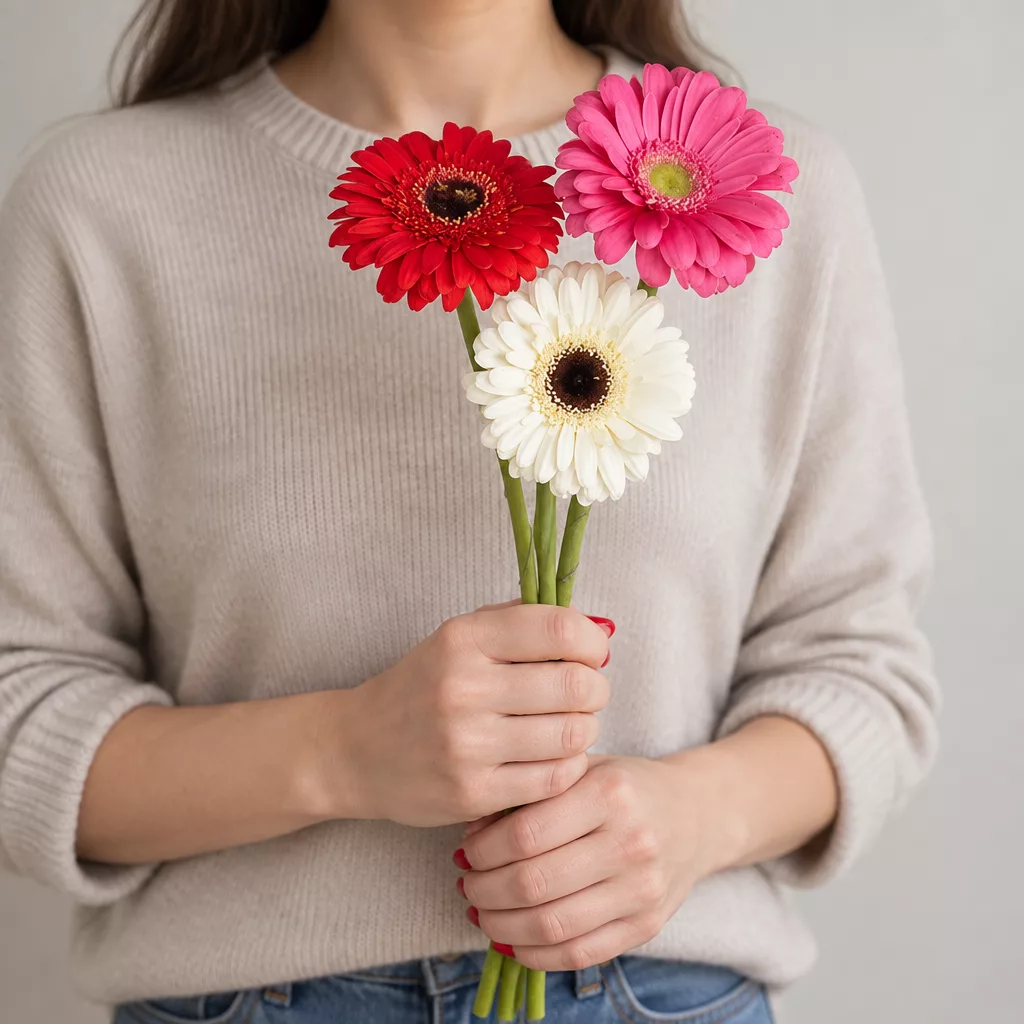


The One Rule You Cannot Ignore: Odd Numbers Only
If there is a single rule to memorise before sending flowers to anyone in Russia, it is this: always send an odd number of stems. Even numbers of flowers — two, four, six, eight — are associated with mourning and are placed at graves or given in times of grief. Presenting an even-numbered bouquet to a living person, and especially to a business contact, is a serious social error that most Russians will notice immediately, even if they say nothing.
Odd numbers — five, seven, nine, eleven, fifteen — are for celebration, congratulation, and goodwill. A compact arrangement of seven white roses reads as elegant and considered. A larger bouquet of fifteen mixed stems reads as generous and festive. Both are appropriate in a business context depending on the occasion and the relationship.
This rule applies regardless of the type of flower or the size of the arrangement. A single rose is fine. Three stems of lisianthus tied with ribbon is fine. Two of anything is not. If you are ordering online or by phone and the florist suggests a number, always confirm it is odd before you finalise.
At Turboflora we apply this rule automatically to every business order, but it is worth knowing yourself so you can check any arrangement you have in mind. It is the kind of detail that, once you know it, you will never forget — and your Russian contacts will appreciate that you took the time to learn it.
Colours That Speak Professionalism in a Russian Context
Colour choice in Russian flower-giving is not as strictly codified as the odd-number rule, but certain palettes read as more appropriate in a business setting than others. White is universally safe and signals respect and sincerity. Cream, ivory, and soft champagne tones work beautifully in professional arrangements and feel refined without being cold. These shades suit senior contacts, formal first meetings, and occasions where you want to convey seriousness alongside goodwill.
Deep red roses are romantic in Russian culture as much as anywhere else. Sending a dozen red roses to a female business contact you have just met can create an awkward subtext. If you want to use red, blend it with white or ivory — a mix of red and white spray roses with eucalyptus reads as festive rather than romantic, and the combination is well suited to company anniversaries or opening celebrations.
Yellow flowers deserve a note. In older Russian tradition, yellow was sometimes associated with separation or betrayal. That association has softened considerably among younger urban professionals, and yellow sunflowers or yellow tulips are now widely given without any negative reading. That said, if your contact is older or more traditional, it is safer to lean toward white, peach, or blush tones for a first gift.
Purple and violet — lisianthus, lavender, statice — add richness and a sense of occasion without the romantic connotations of red. They pair well with white flowers and work especially well in autumn and winter arrangements when the palette feels seasonally appropriate.
Choosing Arrangements by the Scale of the Occasion
Not every business gift needs to be a grand statement, and matching the scale of the arrangement to the occasion is itself a sign of good judgment. A first introductory meeting calls for something elegant but not overwhelming — a hand-tied bouquet of seven to nine stems in a neutral palette, wrapped cleanly and neatly. Roses, lisianthus, or freesia in white or cream are all strong choices. The arrangement should look considered, not extravagant.
A company anniversary or the opening of a new office is a larger occasion and calls for a more generous gesture. A tall vase arrangement of fifteen or more stems, incorporating branches of eucalyptus or ruscus for structure, makes a visual impression in an office reception. Peonies in season — roughly May through July in Russia — are particularly appreciated for their fullness and their scent. Out of season, garden roses with multiple petals give a similar sense of abundance.
Congratulating a partner on a personal milestone — a promotion, the birth of a child, a significant birthday — sits between these two scales. A bouquet of eleven to thirteen stems, perhaps with a small decorative element like dried cotton or a sprig of wax flower for texture, strikes the right balance between personal warmth and professional respect.
Always consider where the flowers will go. An arrangement destined for a large boardroom table can carry more height and volume. A bouquet handed directly to a person should be comfortable to hold and easy to carry — nothing so large that it becomes awkward to accept gracefully.
Flower Varieties That Work Well and Why
Roses are the most reliable choice for a business gift in Russia and for good reason. They are available year-round in consistent quality, they carry universal associations with respect and appreciation, and they hold well for five to seven days with basic care. For business arrangements, choose varieties with a high petal count and a strong stem — Avalanche, Mondial, and similar large-headed varieties look substantial and last well even in centrally heated Russian offices, where temperatures can reach 22–24 degrees Celsius in winter.
Lisianthus — sometimes called eustoma — is an excellent supporting flower and increasingly used as a primary bloom. It has a soft, ruffled appearance that reads as refined rather than showy, and it holds for up to ten days in a vase. Purple, white, and cream lisianthus are all suitable for professional arrangements.
Freesia adds scent, which is genuinely appreciated in a gift context. A few stems of white or cream freesia tucked into a rose bouquet lift the whole arrangement. Orchid stems — particularly cymbidium or dendrobium — add an architectural quality that works well in modern office environments and signals a higher level of care in the selection.
Avoid flowers that wilt quickly in warm interiors. Anemones and sweet peas are beautiful but fragile. Tulips, while beloved in Russia and perfectly appropriate in spring, can droop within a day or two in a heated office unless the recipient refreshes the water and re-cuts the stems. If you send tulips, include brief care instructions — it is a thoughtful detail that most recipients genuinely appreciate.
Presentation and Packaging: What Russian Recipients Notice
In Russia, how a bouquet is wrapped matters nearly as much as what is inside it. A loosely assembled bunch in basic cellophane reads as casual — fine for a market purchase, less appropriate as a professional gift. For a business contact, the packaging should feel intentional. Kraft paper in natural tones, layered with tissue, tied with a grosgrain ribbon in a neutral colour — this combination reads as considered and contemporary without being fussy.
The bouquet should arrive in good condition, which means it needs to be transported at the right temperature. During Russian winters, flowers can suffer from thermal shock when moved from a cold delivery vehicle into a warm building and back again. A well-packaged arrangement with insulating wrap protects the blooms during transit. In summer, heat is the greater risk — direct sunlight in a delivery vehicle can cause roses to open prematurely and petals to bruise.
A handwritten card is a small detail that makes a significant difference. In Russian business culture, the personal element of a gift is noticed and valued. Even a brief message — congratulating the company on its anniversary, or expressing genuine pleasure at beginning the partnership — elevates the gesture. If you are writing in English to a Russian-speaking contact, that is entirely acceptable; most business professionals in Russia read English, and the effort of the message matters more than the language.
Avoid heavy decorative additions like glitter, artificial elements, or synthetic ribbon in bright colours. Clean, natural presentation is the register that works best in a professional context.
Timing and Delivery: Getting the Flowers There When It Counts
Timing a flower delivery to a business contact requires a little more planning than a personal gift. Offices have reception hours, receptionists who may or may not pass on a delivery, and meetings that can run long or end early. The most reliable approach is to schedule delivery for mid-morning — between ten and noon — when the recipient is most likely to be settled at their desk and when the flowers have the full working day ahead of them in a vase.
If the delivery is tied to a specific event — the first day of a new office, a signing ceremony, a company anniversary — confirm the date and address carefully. In Russia, office buildings often have multiple entrances and specific delivery protocols. Providing a contact name and a direct phone number for the recipient, rather than just a company name and address, significantly reduces the chance of a delay.
Turboflora delivers across Saint Petersburg and to recipients throughout Russia within one to two hours of ordering, which means you can respond quickly to a business opportunity or a last-minute occasion without sacrificing the quality of the arrangement. That speed is particularly useful when you learn about a partner's milestone at short notice — a congratulatory bouquet that arrives on the day itself carries far more meaning than one that arrives a week later.
For deliveries to other Russian cities, confirm the local delivery window when you order. Planning a day ahead when possible gives you more flexibility on arrangement choice and ensures the flowers arrive at peak freshness rather than at the end of a long transit.
Sending flowers to a Russian business partner is a gesture that works — when the details are right. Odd stem counts, neutral or white-dominant palettes, clean professional packaging, and a short personal note are the elements that turn a simple bouquet into a lasting first impression. You do not need to be an expert in Russian customs to get this right; you just need to know the few rules that matter most and choose a florist who understands the context. The relationship you are building is worth the extra thought, and the flowers are one of the easiest ways to show it from the very first meeting. We deliver bouquets across Russia in 1–2 hours.
Frequently asked questions
Is it appropriate to send flowers to a male business partner in Russia?
Yes, entirely. Gifting flowers to men is more common in Russia than in many Western countries. A structured bouquet of white or cream roses, or a vase arrangement for the office, is appropriate and will be well received. Avoid anything that reads as overly decorative or romantic — clean lines and neutral colours are the right register for a male recipient.
What should I write on the card when sending flowers to a Russian business contact?
Keep it warm but professional. Congratulate them on the specific occasion, express genuine pleasure in the partnership, or simply wish the company continued success. A few sincere sentences are better than a formal template. Writing in English is perfectly fine for most Russian business professionals, and the personal effort of the message matters more than the language you use.
Are there any flowers I should never send in a Russian business context?
Avoid arrangements built entirely around yellow flowers if your contact is older or more traditional, as the colour carries older associations with parting in some generations. Even numbers of any flower are a firm rule to avoid. Chrysanthemums, while popular in Russia, are strongly associated with funerals and are best left out of any professional or celebratory arrangement entirely.
How do I make sure the flowers stay fresh when delivered to an office in winter?
Russian offices in winter are typically very warm — 22 to 24 degrees Celsius — which accelerates how quickly flowers open and age. Ask for varieties known for longevity, such as roses with a high petal count or lisianthus. Re-cutting stems at an angle and placing the bouquet away from radiators and direct heat sources will extend vase life by several days.
Can I send flowers to mark a business deal or contract signing in Russia?
Absolutely — this is one of the most appreciated moments to send flowers in a Russian professional context. A generous arrangement timed to arrive on the day of the signing, or delivered to the office the same morning, signals that you regard the partnership as genuinely significant. Choose a larger, celebratory arrangement rather than a modest bouquet to match the importance of the occasion.
Ready to send flowers?
Pick the city, choose the bouquet, and a local florist takes it from there.
Choose a city →