A Closed Rose: What Its Bud Can Tell You
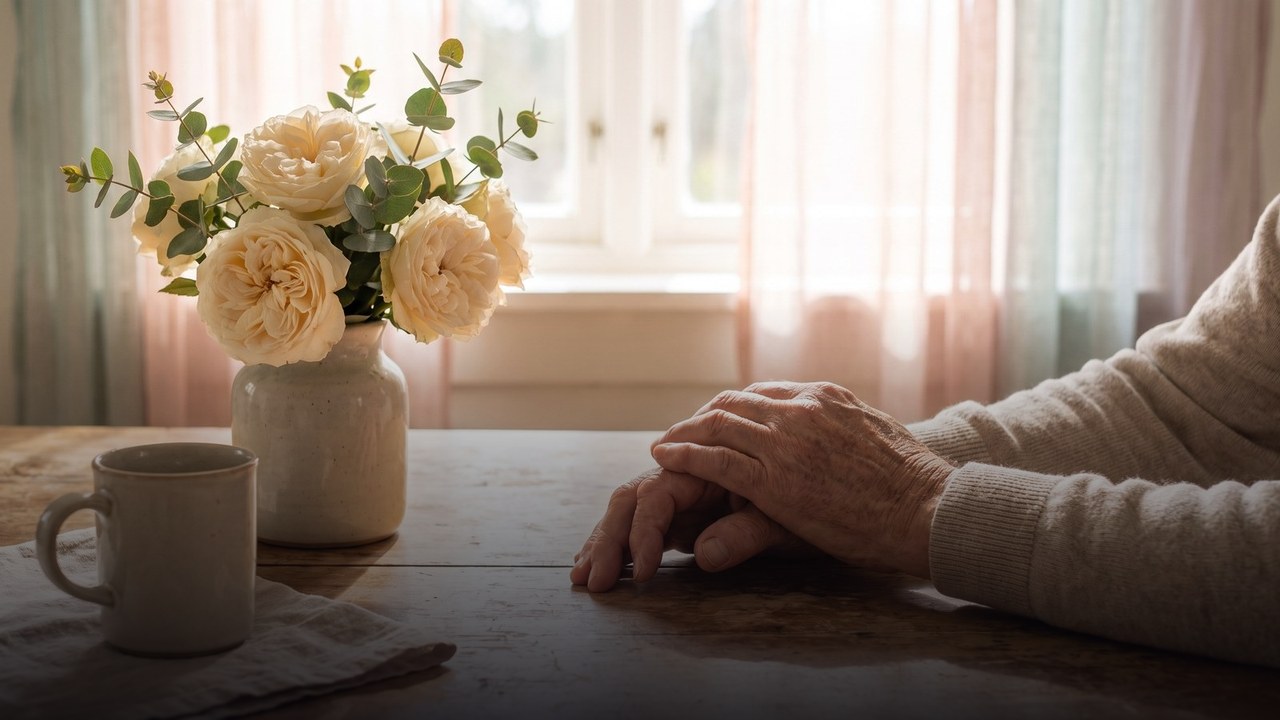
A closed rose is a rose whose petals are still folded into a bud; it may be developing normally, or it may be struggling to take up enough water to open. A firm bud on an upright stem can be perfectly healthy, while a drooping head, dry petals or soft, discoloured tissue calls for closer attention. Give cut roses clean water and time before trying to open them by hand.
The useful question is how the whole stem looks, rather than how tightly the petals overlap. Some roses open slowly or retain a deep, cup-shaped centre; others were cut too immature to unfold successfully in a vase. If you are choosing flowers for someone else, think about whether you want the recipient to enjoy that gradual change or see a fuller display on arrival.
Check the stem and petals before judging the bud
Start with the neck: the short section of stem immediately below the flower head. It should support the rose without folding sharply. Look along the rest of the stem and check the leaves, too. A rose with an upright head and reasonably firm leaves gives you a different starting point from one whose entire stem looks limp, even when both buds are equally closed.
Next, inspect the outer petals without pulling the centre apart. A few slightly creased or weathered outer petals can be guard petals, which protect the bloom as it develops. They do not automatically mean the rose is spoiled. Remove an individual damaged outer petal only if necessary, easing it away at its base instead of tugging against the whole flower.
Soft brown patches, fuzzy growth, an unpleasant smell or petals that seem wet and are breaking down deserve attention. Separate an affected stem from the others and inspect it closely; opening it by force will not restore damaged tissue. A dry, papery edge is a different problem, but it can also prevent a bud from unfolding neatly. Appearance alone cannot always identify the cause.
Give a closed cut rose a clean start in water
Wash the vase thoroughly and rinse away any detergent before filling it with fresh water. Remove leaves that would sit below the waterline, since submerged foliage can decay and foul the water. Keep healthy leaves above the water where practical. If the roses came with cut-flower food, mix it according to the packet rather than guessing a stronger dose.
Use clean, sharp secateurs or a suitable knife to take a small section off each stem base, making a fresh cut without crushing it. Put the stems into water promptly afterwards. Check that every cut end reaches the water: a tightly arranged bouquet can hold one shorter stem above the surface, leaving a single rose thirsty while the others look fine.
Place the vase somewhere with a comfortable room temperature, away from direct sun, heaters and drying draughts. Check the water level daily, replenish it as needed and change the water if it becomes cloudy, cleaning the vase again. If a head bends despite this care, see our guide to roses with bent necks before treating the problem as a stubborn bud.
Bouquets we can deliver




Help petals unfold without forcing the flower
Once the stems are in water, loosen any wrapping that presses directly against the flower heads. Leave enough space between blooms for the outer petals to move, especially if the roses are packed closely in a narrow vase. Support the stems securely, but avoid a crowded arrangement that keeps the heads squeezed together. Water uptake and a little space are the sensible first steps.
Watch for small changes over the next day: an outer petal easing backwards, a wider opening at the centre or a head becoming more upright. Roses do not all move at the same pace, even within one bunch. A photograph taken from the same angle can help you notice progress without repeatedly touching the petals. There is no reliable deadline by which every closed rose should open.
Avoid boiling water, direct heat, hairdryers and vigorous shaking. Pulling petals apart can bruise or tear them, and blowing into the centre is unnecessary handling. A rose that stays tight despite good care may have been cut too young, may be damaged or may naturally have a compact form. Repeatedly trying stronger tricks is unlikely to improve its condition.
Choose the opening stage to suit the occasion
For a gift that the recipient will watch over several days, firm buds beginning to loosen can be appealing. For a dinner table, photograph or celebration happening soon after arrival, ask about roses that already show more of their shape. A tightly closed head gives a different visual effect from a broad bloom, so describe the effect you want instead of asking only for fresh roses.
Closed does not automatically mean fresher, and fully open does not automatically mean near the end of its vase life. Opening stage is only one clue; petal condition, stem strength and the flower's earlier handling also matter. Equally, buying the tightest possible buds does not guarantee that they will open or last longer. Choose for condition and purpose together.
If you are sending flowers for an event, allow time for the recipient to unpack them, prepare a vase and arrange the stems. Avoid building the plan around a promise that closed roses will reach a particular size by a particular hour. When the appearance at presentation matters, explain that before ordering so the preferred opening stage can be discussed.
What a closed rose means as a gift
In traditional flower symbolism, a rosebud can suggest youth, a beginning or affection that is still developing. These associations are cultural conventions rather than a message everyone will recognise. Most recipients will read the bouquet through its colour, the occasion and your relationship with them. A closed rose does not carry a single fixed meaning on its own.
For a new relationship, a restrained arrangement and a short, clear card can communicate warmth without leaving everything to symbolism. For a birthday or family gift, write the wish you actually want to send. You do not need to explain that the buds represent something unless that meaning is personal to you both; an ordinary, thoughtful sentence often does more.
When sending flowers to someone in Russia from abroad, use the card to make your intention clear, particularly if the recipient is not expecting a gift. Turboflora delivery is anonymous by default: the courier does not name the sender. A card with your text is free, so include your name there if you want the recipient to know immediately who sent the roses.
Order roses to Russia with the right details agreed
Start with the bouquets catalogue, then contact a manager on WhatsApp if you need help choosing. Explain whether you prefer a compact bud or a more open display, and agree the delivery address, timing and card text. You can also ask for a photo of the bouquet before delivery. Discuss your preference without assuming a particular rose or opening stage is available.
We deliver flowers across Russia. City delivery costs 500 RUB; for remote districts and suburbs, the operator confirms the price when confirming the order. In large cities, express delivery is available in 1–2 hours after confirmation. You can also arrange an exact time with a tolerance of plus or minus 30 minutes, choose a 09–12, 12–15, 15–18 or 18–21 window, or pre-order 1–30 days ahead.
The courier calls the recipient about 15 minutes before arrival. If they are absent, we agree a second delivery the same day or, with the sender's consent, hand the flowers to a neighbour or concierge. Online checkout uses CloudPayments; check the options shown there for your card. See delivery and payment details when planning the order, especially if you are coordinating across time zones.
Frequently asked questions
Is a closed rose dead?
No. A closed rose with a firm stem and healthy petals may simply be at an early opening stage; a drooping neck or soft, deteriorating petals needs closer inspection.
How long does a closed rose take to open?
There is no fixed time: the variety, cutting stage, condition and vase environment all affect opening. Watch for gradual movement after providing clean water, and remember that some buds never open fully.
Should I peel back the petals to open a rose?
Avoid pulling healthy petals apart because they can bruise or tear. Remove only an individual damaged outer petal when necessary, and give the bloom water and space to unfold.
Are closed roses better for a gift than open roses?
Choose according to the occasion and the condition of the flowers. Buds offer a compact appearance and may develop in the vase, while more open roses give a fuller display at presentation.
Can I order roses to Russia while I am abroad?
You can order flowers for delivery across Russia and agree the recipient's details with a manager. Payment at checkout uses CloudPayments; check the displayed options because acceptance of every foreign card is not guaranteed.
Ready to send flowers?
Pick the city, choose the bouquet, and a local florist takes it from there.
Choose a city →