Columbian Roses: What to Know About Colombian Roses
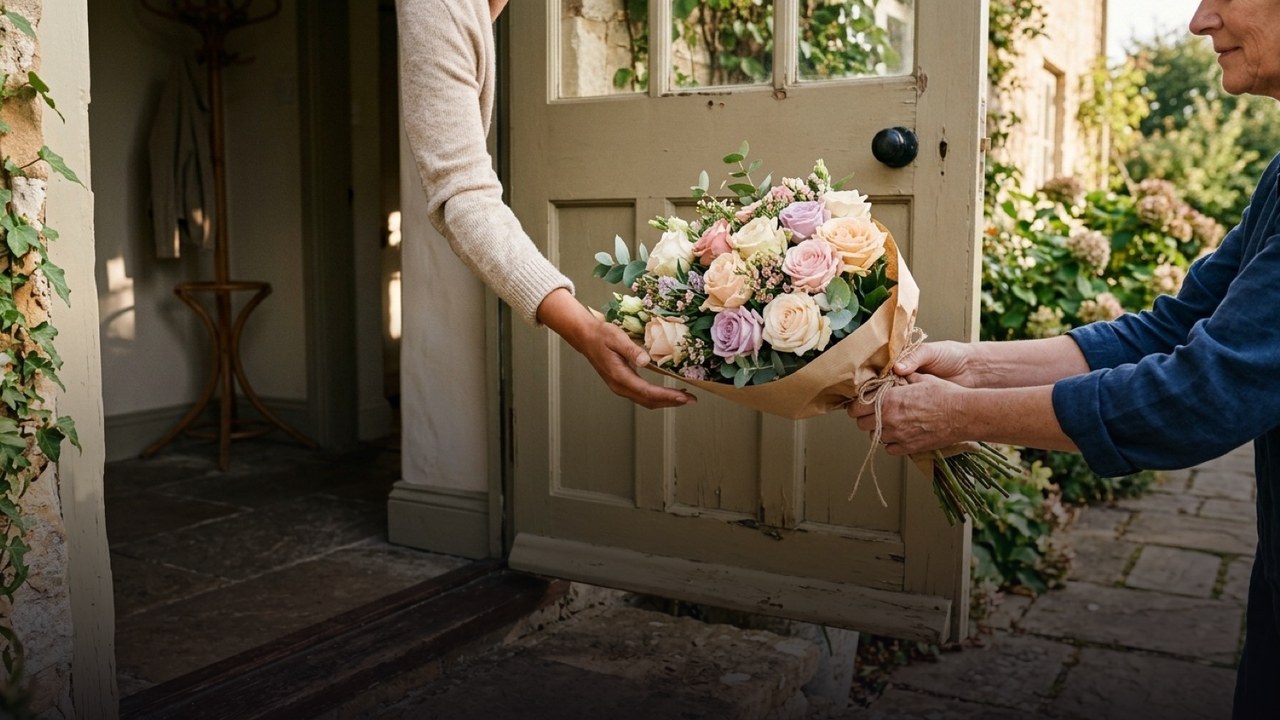
“Columbian roses” usually means Colombian roses: roses grown in Colombia, the South American country. The name describes their geographical origin, rather than a single rose variety, so it does not tell you their colour, scent, bloom size or vase life.
If you are choosing a bouquet, start with the recipient’s preferences and the condition of the flowers, then ask about origin if that matters to you. A photograph can help you judge colour and arrangement, but it cannot establish where a rose was grown. For a gift to someone in Russia, it also helps to settle the delivery details early, especially when you are organising everything from another country.
What the Colombian label tells you
Colombia grows roses for the international cut-flower trade, but “Colombian” is not a specification for one particular appearance. Different varieties can have different petal counts, stem lengths and opening habits. If you have a specific look in mind, describe it directly: a compact arrangement of rounded blooms, for example, or a looser bouquet with flowers that open more widely.
Country of origin alone cannot tell you how long a bouquet will last. Variety, maturity at cutting, handling and care all influence what happens in your vase. Treat claims that every Colombian rose is exceptionally large, strongly scented or unusually long-lasting with caution. Those qualities need to be assessed for the particular flowers, rather than assumed from a country name.
When browsing a bouquet catalogue, distinguish a product’s descriptive title from confirmed information about its roses. A romantic name or a photograph does not establish origin. If Colombian-grown flowers are essential to your choice, ask whether that detail can be confirmed for the bouquet you are considering before you place the order.
Choose roses by their condition and shape
Look for blooms that sit upright on their stems, with petals that hold their shape rather than appearing limp or translucent. Leaves should look healthy, and the stems should feel firm. A tightly closed bud is not automatically the freshest or best choice: some very immature blooms may struggle to open. Equally, a partly open rose can be a good choice when its petals are sound.
The outermost petals can look slightly different from those inside. These protective outer petals, often called guard petals, may have a rougher edge or a greenish tone; their appearance alone does not mean the entire rose is deteriorating. Extensive browning, soft tissue or fuzzy growth deserves closer attention. Judge the whole flower rather than one imperfect outer petal.
Match the shape to the setting as well as the occasion. Long stems need a suitably tall, stable vase, while a shorter arrangement may be easier to place on a dining table without blocking conversation. If scent is important, ask about the particular variety; a rose’s colour, size or Colombian origin does not reliably tell you how fragrant it will be.
Bouquets we can deliver




Colour, meaning and Russian gifting etiquette
Red roses commonly suggest romantic affection, while pink can express tenderness, appreciation or thanks. White often feels restrained or ceremonial, and peach or yellow can suit a warm, cheerful gesture. These are conventions rather than fixed rules. If the recipient loves yellow roses, that preference is more useful than a rigid interpretation of what yellow is supposed to mean.
In Russia, an odd number of flowers is the customary choice for a celebratory bouquet when the stems are counted individually. Even numbers are traditionally associated with mourning. This is especially worth remembering if you are ordering a simple rose bouquet from abroad. For an elaborate mixed arrangement, where the count is less obvious, explain the occasion and your preferences when choosing.
Let the relationship guide the scale of the gesture. A modest bouquet with a personal message can suit a thank-you, while red roses may communicate more romance than you intend for a colleague. A card with your text is free. Use it to make the meaning clear: a specific line about a birthday, a shared memory or something you appreciate will say more than a generic greeting.
How to care for Colombian roses in a vase
Start with a clean vase, washed thoroughly to remove residue from earlier flowers. Remove any leaves that would sit below the waterline, then recut the stem ends with a clean, sharp tool before placing the roses in water. Keep the cuts neat and avoid crushing the stems. If you have cut-flower food, follow its dilution instructions instead of adding an estimated amount.
Place the vase away from radiators, direct sunlight and draughts. Keep roses away from ripening fruit, which releases ethylene that can accelerate ageing in sensitive flowers. Check the water level daily and top it up as needed. Replace cloudy water promptly, clean the vase and remove fallen foliage; a large bouquet may use more water than you expect.
Remove deteriorating flowers as they fade, and recut the remaining stems when refreshing the arrangement. Do not rely on improvised mixtures of sugar, household cleaners or other additives to extend its life. For a fuller care routine, see our guide to rose vase life. No single lifespan applies to every bouquet, even when all the roses come from the same country.
Opening buds and dealing with a drooping rose
If you want the bouquet to look open for a dinner or photograph, discuss that visual goal when choosing it. You cannot reliably schedule every bud to open at the same moment. Variety and the flower’s stage of development both matter, so avoid choosing solely by how tightly closed the roses look. A bouquet for immediate display may need a different opening stage from one intended to unfold gradually.
For a rose that begins to droop, first check the water level and whether leaves or debris are fouling the vase. Clean the container, refresh the water and make a fresh cut at the base of the affected stem. Place it back in water promptly. A bent neck can be associated with poor water uptake, but damage or advanced deterioration may also be involved, so recovery is uncertain.
Avoid forcing petals apart, exposing flowers to strong heat or treating a hot-water plunge as a universal remedy. These actions can damage delicate tissue. If a flower has soft, decaying areas, remove it from the arrangement. Ordinary vase care supports healthy roses; it cannot reverse every problem or make a damaged bloom perform like an undamaged one.
Arranging a rose delivery to someone in Russia
We deliver flowers across Russia. City delivery costs 500 RUB; for remote districts and suburbs, the operator confirms the price when confirming the order. Use WhatsApp for help choosing a bouquet, agreeing the time, address and card text, or arranging a photo of the bouquet before delivery. If origin matters, raise that alongside your colour and style preferences.
In large cities, express delivery is available in 1–2 hours after the order is confirmed. You can also arrange an exact time with a tolerance of plus or minus 30 minutes, choose a window of 09–12, 12–15, 15–18 or 18–21, or pre-order 1–30 days ahead. When ordering from another time zone, state the intended date and time in the recipient’s city to avoid ambiguity.
Delivery is anonymous by default: the courier does not name the sender, so include your name in the free card if you want the recipient to know. The courier calls about 15 minutes before arrival. If the recipient is absent, we agree a second delivery that day or a handover to a neighbour or concierge with your consent. Online checkout uses CloudPayments; check the payment options displayed there, as acceptance of every foreign card cannot be guaranteed. See delivery and payment details when planning your order.
Frequently asked questions
Are Columbian roses and Colombian roses the same thing?
In flower searches, “Columbian roses” usually refers to Colombian roses, meaning roses grown in Colombia. Colombian is the correct spelling for the country of origin, and it does not identify a particular variety.
Do Colombian roses always have large heads and long stems?
No: bloom size and stem length vary between varieties and individual flowers. Choose by the confirmed description of the bouquet rather than assuming those features from its origin.
How long do Colombian roses last in a vase?
There is no dependable lifespan based on origin alone. The variety, condition on arrival and care all matter, so use a clean vase, keep foliage out of the water and check the water level daily.
Can I order specifically Colombian roses for delivery in Russia?
Ask the manager whether Colombian origin can be confirmed for the bouquet you are considering. Do not assume that all roses in the catalogue are grown in Colombia.
Can I pay for a delivery to Russia with a foreign card?
Online checkout uses CloudPayments, and you should check the options displayed at checkout. Acceptance of every foreign card is not guaranteed.
Ready to send flowers?
Pick the city, choose the bouquet, and a local florist takes it from there.
Choose a city →