Why Your Flower Is Losing Petals and How to Help
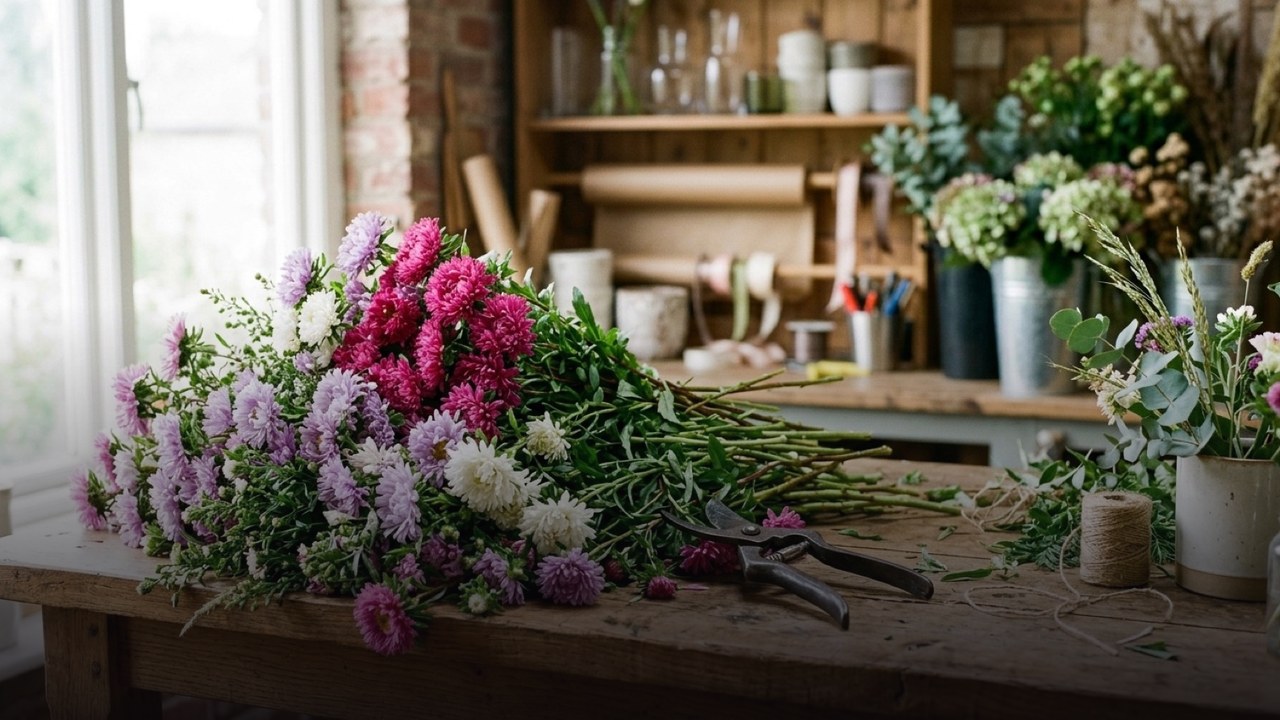
A flower losing petals may be ageing naturally, struggling to take up water or reacting to heat, handling or other stress. Check the stem, water and remaining petals before deciding what to do: better care may help the blooms that remain, but fallen petals cannot reattach.
Start by noticing whether one fully open bloom is shedding or the whole bouquet is changing at once. A few loose petals beneath an otherwise firm flower call for a different response from widespread drooping, cloudy water or soft, discoloured tissue. The checks below help you choose a useful next step without damaging healthy flowers.
Read the pattern before treating the bouquet
Look at where the petals are coming from. Outer petals on a fully open flower can loosen as the bloom matures, while the centre still looks presentable. Different flowers, and even stems of the same type, develop at different rates. One fading bloom does not automatically mean that every stem in the vase needs to be discarded.
Next, look for changes beyond petal loss. Limp leaves and drooping heads can accompany poor water uptake; a sour smell, slimy stems or cloudy water suggest the vase needs cleaning. Soft, wet-looking patches or visible mould deserve particular attention. These observations help you assess the problem, although they cannot prove its cause on their own.
Consider what changed just before the shedding began. Was the bouquet left beside a heater, moved into direct sun or handled repeatedly? Did its water run low? Petals that fell during unwrapping may have been loosened by movement. Put the flowers somewhere stable, then assess the remaining blooms instead of shaking them to see what falls.
Restore water uptake with a clean vase and fresh cuts
If the flowers are in a vase, lift them out gently and empty it. Wash the container thoroughly, rinse away detergent and refill it with clean water. Remove leaves that would sit below the waterline, along with any fallen petals in the water. Submerged plant material breaks down and encourages microbial growth, which can interfere with water uptake.
Use a clean, sharp tool to trim a small amount from each stem base, then return the stems promptly to water. Make a clean cut without crushing the stem. Avoid hammering, splitting or burning the ends as a general remedy: flower types differ, and a technique intended for one material can damage another. Ordinary mixed bouquets usually need straightforward, careful handling.
If you have cut-flower food, follow the packet's dilution instructions rather than guessing. Do not add extra powder to make it stronger, and avoid improvised mixtures of sugar, bleach or household cleaners. Check the water level daily and refresh it when it becomes cloudy. Restoring water uptake may improve wilted flowers, but it will not reverse natural ageing.
Bouquets we can deliver




Choose a position that reduces further stress
Give the bouquet a stable place away from direct sunlight, radiators and other sources of heat. A bright windowsill can warm flowers even when the rest of the room feels comfortable. Keep petals clear of hot lamps and appliances too. You are trying to reduce unnecessary water loss and rapid ageing, rather than force the flowers to close again.
Move the vase away from ripening fruit. Some flowers are sensitive to ethylene, a gas released by ripening produce that can accelerate ageing and petal drop. Sensitivity varies, so fruit nearby is a possible contributor rather than a certain diagnosis. Choosing another display spot is a simple precaution that does not require treating the flowers.
Avoid placing blooms directly in the airflow from a fan or air conditioner, and give the flower heads enough room to sit without being squeezed. Repeatedly moving a bouquet between very different conditions adds handling and can dislodge fragile petals. Choose a suitable position once, then move it only when you need to change the water or remove a stem.
Know what petal loss means for different flowers
Roses sometimes arrive with firmer outer petals, often called guard petals, that look less smooth than the inner bloom. An unattractive outer petal is not, by itself, proof that the rose is failing. If one is damaged, you can remove it gently at its base while supporting the flower. Repeatedly peeling away layers leaves less of the bloom and risks bruising it.
A very open tulip or peony may shed as it reaches the end of its display life. Tulips also continue to change shape after cutting, so bending alone is not the same as petal loss. Judge the whole flower: whether its tissues remain firm, whether it is taking up water and whether there are signs of decay. No single appearance gives an exact remaining vase life.
Some flowers release petals cleanly, while others first fade, curl or develop brown edges. If discolouration is the main symptom, our guide to brown petals on cut flowers can help you examine it more closely. Avoid pulling petals apart to inspect the centre; use good light and look without disturbing a bloom that is already fragile.
Decide what to keep, remove or ask about
Remove a flower that has visible mould or extensive soft decay, and clean the vase before returning the sound stems. If one bloom is simply spent, take it out and rearrange the others into a smaller display. This also lets you remove fallen material and see the remaining flowers clearly. There is no need to discard a mixed bouquet solely because its earliest-opening flower has faded.
If a newly received bouquet sheds heavily as you unpack it, take clear photographs of the whole arrangement and the affected stems before making extensive changes. Note when it arrived and what you observed. Share those details with the seller so they can assess the situation. Petal loss alone cannot establish whether handling, water stress or the flower's stage of development is responsible.
When the bouquet was a gift, you can explain the problem to the sender calmly and specifically if their help is needed: for example, several heads were shedding during unwrapping. Avoid treating falling petals as a message about the relationship or the giver's intentions. Flowers change naturally, and a physical care problem does not carry a reliable symbolic meaning.
Sending flowers to Russia: plan the handover and care
If you are arranging a gift from abroad, choose from our bouquets catalogue and think about when the recipient can receive the flowers and put them in water. Turboflora delivers across Russia. City delivery costs 500 RUB; for remote districts and suburbs, the operator confirms the price when confirming your order. You can pre-order 1–30 days ahead.
In large cities, express delivery is available 1–2 hours after order confirmation. You can also arrange delivery at an exact time with a tolerance of ±30 minutes, or in the windows 09–12, 12–15, 15–18 or 18–21. Use WhatsApp to get help choosing a bouquet and agree the address, time and card text; you can also request a photo of the bouquet before delivery.
The courier calls the recipient about 15 minutes before arrival. If they are absent, we agree a second delivery that day or a handover to a neighbour or concierge with the sender's consent. Delivery is anonymous by default, and a card with your text is free. Online checkout uses CloudPayments; check the payment options displayed there. See delivery and payment when planning your order.
Frequently asked questions
Is a flower losing petals always dying?
Petal loss can be part of natural ageing, but it can also follow handling or environmental stress. Check the remaining bloom, stem and water before deciding whether to remove it.
Can fallen flower petals grow back?
A cut flower cannot reattach fallen petals or replace them on the same bloom. Good care supports the remaining flowers and any buds that are capable of opening.
Should I mist a bouquet that is shedding petals?
Misting does not address blocked stems or natural ageing, and wet petals can encourage spotting or decay in susceptible flowers. Start with clean vase water, fresh stem cuts and a suitable display position.
Why are petals falling even though the vase has water?
Water in the vase does not guarantee that the stems are taking it up effectively. Check for slimy stem ends and submerged leaves, while remembering that mature flowers can shed despite adequate hydration.
Should I remove every flower that drops a petal?
A few loose petals do not necessarily justify removing an otherwise firm, attractive bloom. Remove flowers with visible mould or extensive decay, and take out spent blooms when they no longer suit the display.
Ready to send flowers?
Pick the city, choose the bouquet, and a local florist takes it from there.
Choose a city →