Sending Flowers for Orthodox Christmas on January 7 in Russia
Orthodox Christmas falls on January 7, and if you have someone in Russia you want to remember that day, you may be wondering whether flowers are even appropriate. The short answer is yes — with a little thought about tone and timing. This article explains the tradition honestly, tells you what combinations feel right for the occasion, and helps you choose something that will genuinely move the person who receives it.
Is It Actually Customary to Give Flowers on Orthodox Christmas?
Orthodox Christmas in Russia is primarily a religious and family holiday, quieter in atmosphere than New Year, which Russians celebrate with much more fanfare on December 31 and January 1. Churches fill with candlelight services on the night of January 6, and January 7 is spent at home with close family, sharing a festive meal and observing a sense of peace and gratitude.
Flowers are not a centuries-old Christmas tradition in the Orthodox context the way they might be in Western Europe. You will not find a Russian grandmother expecting a bouquet the way she might on International Women's Day in March. That said, flowers are never out of place in Russian culture when they carry warmth and are given with sincerity. A thoughtful arrangement sent on January 7 reads as a gesture of care, not a cultural misstep.
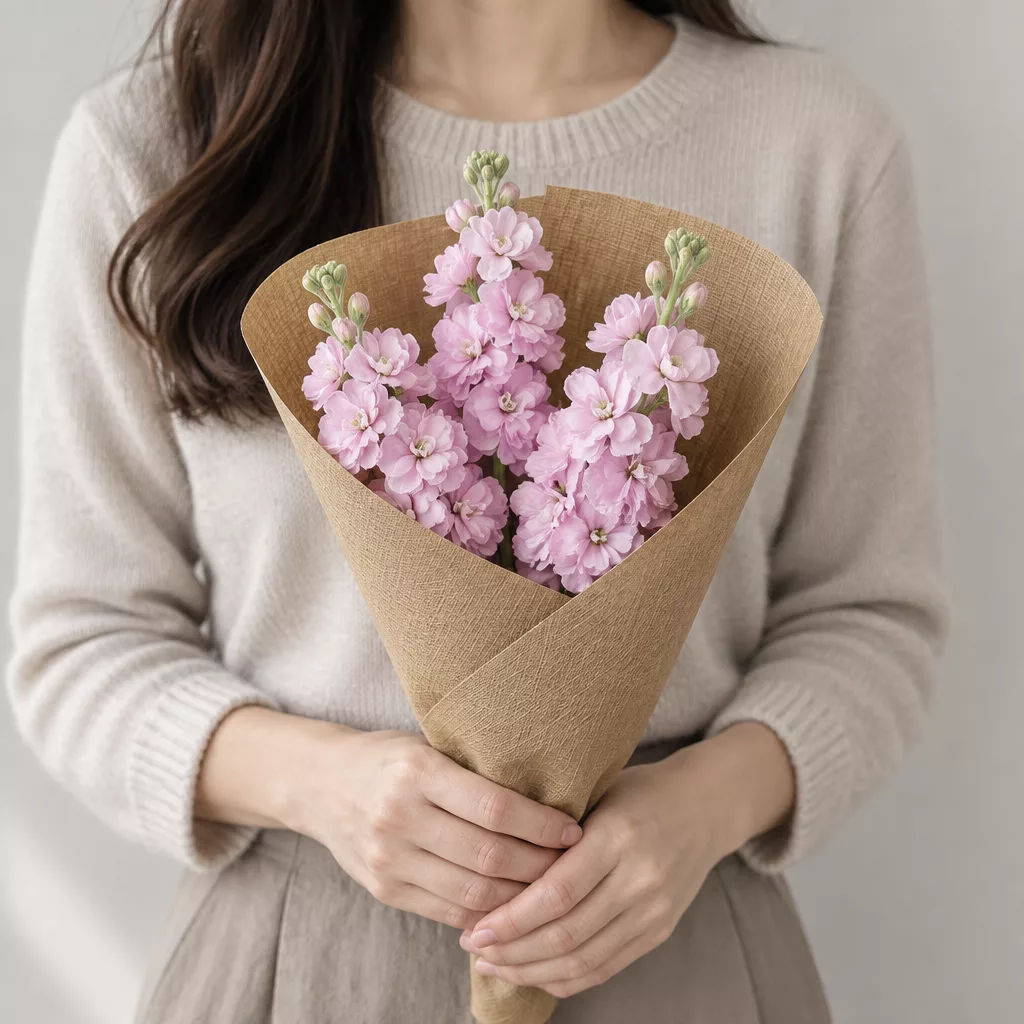
The key is choosing the right mood. Bold tropical arrangements or anything that feels like a party centerpiece can seem slightly off-key for this particular holiday. What works is softness — white, cream, pale blush, and gentle greenery that echo the quiet, candlelit feeling of the day. Think of it less as a celebration bouquet and more as a way of saying you were thinking of the person. That framing shapes every choice that follows, from flower selection to the note you write.
Bouquets we can deliver


What the Recipient Will Feel When the Flowers Arrive
January 7 is a day most Russians spend indoors. Outside, temperatures in Saint Petersburg and across much of Russia are deep in the minus range — often between minus ten and minus twenty Celsius. The streets are quieter than on New Year. Receiving a delivery of fresh flowers on that particular morning carries a specific emotional weight: someone remembered, and they went to the effort of sending something living and fragrant into a cold winter day.
That contrast — warmth and scent arriving through a frost-covered door — is something a recipient feels physically. A bunch of white tulips opening slowly in a warm apartment, or the faint honey smell of alstroemeria on a windowsill, becomes part of how they experience the holiday. This is worth thinking about when you choose your flowers, because the sensory detail matters as much as the visual one.
For recipients who are observant Orthodox Christians, the gesture is received as a blessing of sorts — an acknowledgment of the day's meaning. For those who celebrate more culturally than religiously, it simply feels like a kind and slightly unexpected surprise. Either way, the flowers do not need to carry religious symbolism. They just need to feel considered. A small handwritten note acknowledging the holiday by name — even just wishing a bright Christmas — adds everything the arrangement itself cannot say on its own.
Choosing Flowers That Match the Mood of the Holiday
The palette for Orthodox Christmas arrangements should lean toward the colours you associate with candlelight, snow, and quiet celebration. White is the obvious anchor — white spray roses, white lisianthus, white ranunculus when they are in season. These varieties hold their shape in the cold transit from our workshop to the recipient's door, and they open beautifully over several days once inside a warm home.
Cream and pale blush tones work alongside white without competing. A mix of cream garden roses and blush lisianthus with silver brunia or eucalyptus creates something that feels genuinely wintry without being cold or clinical. Adding a stem or two of white waxflower brings a delicate texture and a light honey fragrance that fills a room gently rather than overwhelmingly.
Avoid anything in the deep red and bright yellow range for this occasion. Those colours read as festive in a different register — more New Year than Christmas. Deep burgundy is a borderline choice; it can work if the overall arrangement stays soft, but it shifts the mood toward something more dramatic than the holiday calls for.
If the recipient loves something more distinctive, white amaryllis is a striking January flower that photographs beautifully and has real presence in a vase. One or two stems alongside smaller white blooms creates a composition that feels intentional and elegant rather than generic. The amaryllis also lasts well — up to ten days with proper care — which means the flowers stay with the recipient well beyond the holiday itself.
Options Across Different Budgets Without Losing the Feeling
A smaller budget does not mean a smaller gesture on January 7. A mono-bouquet of fifteen white tulips, wrapped simply in kraft paper with white ribbon, is one of the most sincere things you can send. Tulips in January are at the height of their availability because growers time their crops for the Russian holiday season. They open over two to three days in a warm room, which means the recipient gets to watch the arrangement evolve — a slow, pleasant experience that suits the pace of a quiet holiday.
At a mid-range budget, combining white spray roses with eucalyptus and two or three stems of white lisianthus gives you something with more texture and longevity. Spray roses have multiple blooms per stem, so the arrangement looks full and generous even when the stem count is modest. Lisianthus holds for up to two weeks in water, making it one of the best value flowers in winter.
For a more substantial gift, consider adding a small potted plant alongside cut flowers. A white orchid — phalaenopsis is the most widely available — paired with a compact white bouquet creates a two-part gift with staying power. The orchid can bloom for two to three months with minimal care, becoming a lasting reminder of the occasion long after the cut flowers have finished. This combination also photographs well, which matters if the recipient is likely to share it with family or on social media. Presentation in a matching box or with a simple vase included lifts the whole impression significantly.
Alternatives to Flowers That Still Mark the Day
If you are sending to someone who you know prefers plants over cut flowers, or if you want something that lasts beyond the holiday week, a living arrangement is worth considering. White cyclamen is a classic winter houseplant that blooms through January and February, thrives on cool windowsills, and has a delicate appearance that suits the quiet mood of Orthodox Christmas. It is widely available and travels well when packed properly.
A potted paperwhite narcissus — the white-flowered bulb variety — is another option that feels seasonal and fragrant. If the bulbs are already in bud when delivered, they will open over several days, releasing a sweet, slightly sharp scent that many people associate with winter holidays. This kind of unfolding gift suits the slower rhythm of January 7.
For recipients who appreciate something they can use, a combination of a small plant with a jar of good honey or a package of herbal tea is a thoughtful pairing. Orthodox Christmas has a long fasting period that ends on January 7, so food-related gifts carry a particular resonance — the fast is broken and the celebration begins. Flowers or plants alongside something sweet acknowledge both the sensory and the symbolic dimension of the day.
If you are sending to an elderly relative or someone in a home where fresh flowers are difficult to maintain, a long-lasting succulent arrangement in a ceramic pot is a practical and genuinely beautiful choice. Succulents need almost no attention and stay looking good for months, which means the gesture keeps giving without creating any burden for the recipient.
Timing Your Order for January 7 Delivery
January 7 falls during one of the busiest delivery periods of the Russian winter. The extended New Year holiday runs from January 1 through January 8, and while many businesses slow down, demand for flowers and gifts remains high throughout this period. Placing your order at least a day in advance — ideally by the evening of January 6 — gives the best guarantee that your arrangement arrives at the time you specify.
Morning delivery is the most appreciated on a holiday like this. Receiving flowers before noon means the recipient has the entire day to enjoy them, to arrange them in a vase, and to have them on the table during the family meal. If you are sending from outside Russia or across time zones, calculate the Moscow or Saint Petersburg time carefully when selecting your delivery window.
Winter temperatures in January create one practical concern: the flowers travel from our temperature-controlled workshop into air that can be minus fifteen or colder. We wrap arrangements in insulating sleeves for transit, and our couriers move quickly between vehicle and door. However, you should know that very delicate open blooms — fully open garden roses, for instance — are slightly more vulnerable than buds. Ordering flowers in bud stage for a January delivery is always the smarter choice, because they open beautifully indoors and are protected during the cold journey. Tulips in bud, lisianthus in bud, and spray roses just beginning to open are all excellent winter choices for exactly this reason.
Helping the Recipient Keep the Flowers Fresh Longer
January flowers delivered into a heated Russian apartment face one main challenge: central heating in Russian homes runs very warm through the winter, often keeping indoor temperatures at twenty-two to twenty-four Celsius or higher. This warmth, while comfortable for people, accelerates how quickly cut flowers open and age. Passing along a few simple care tips with your order makes a real difference to how long the arrangement lasts.
The first thing the recipient should do is trim the stems at an angle under running water — about two centimetres from the bottom — before placing them in a clean vase. This opens the stem's water-drawing channels immediately after the cold transit. Fresh, cool water changed every two days keeps bacteria from building up and dramatically extends vase life.
The vase should be placed away from direct heat sources: not above a radiator, not in direct sunlight through a window, and not next to a fruit bowl. Ripening fruit releases ethylene gas, which causes flowers to age faster. This is a detail most people do not know, and mentioning it in a note alongside the bouquet positions you as someone who genuinely cared about the gift lasting.
With these steps, white tulips will last five to seven days, lisianthus up to two weeks, and spray roses seven to ten days. Amaryllis, which opens from a large bud, can last ten days or more if kept in a cool room overnight. The recipient gets to experience the flowers across multiple stages of opening — which, for a quiet January holiday, is exactly the kind of slow, pleasant gift that suits the occasion.
Orthodox Christmas on January 7 is a day of warmth, family, and quiet joy — and a thoughtful bouquet fits that spirit more naturally than you might expect. The right flowers, in the right colours, arriving at the right time, tell the recipient that someone across a city or across a country was thinking of them on a day that matters. Whether you choose white tulips in bud, a soft mixed arrangement with lisianthus and eucalyptus, or a living plant that will bloom through the rest of winter, the gesture carries weight. Order early, choose softness over spectacle, and include a note that names the day. That is all it takes. We deliver bouquets across Russia in 1–2 hours.
Frequently asked questions
Are flowers an appropriate gift for Orthodox Christmas in Russia?
Yes, though they are not a centuries-old tradition for this holiday the way they are for Women's Day. Flowers sent on January 7 read as a warm, personal gesture rather than a cultural expectation. Keep the colours soft — white, cream, pale blush — and the mood quiet, and the gift will feel exactly right for the occasion.
What flower colours work best for an Orthodox Christmas arrangement?
White and cream are the natural anchors for this holiday. Pale blush, soft green foliage, and silver accents like brunia all complement the quiet, candlelit feeling of January 7. Avoid bold reds and bright yellows, which carry a New Year energy rather than a Christmas one. Deep burgundy can work in small amounts within a predominantly white arrangement.
How far in advance should I order flowers for January 7 delivery?
Place your order by the evening of January 6 at the latest. The extended Russian New Year holiday period keeps demand high, and an advance order lets you secure a specific morning delivery window. Morning delivery is ideal — it means the recipient has the flowers on the table for the holiday meal and the full day to enjoy them.
Will the flowers survive being delivered in January cold?
Yes, when ordered correctly. Request flowers in bud stage rather than fully open — tulips, lisianthus, and spray roses in bud handle cold transit much better than open blooms. We insulate arrangements for the journey and our couriers minimise the time flowers spend in the cold between the vehicle and the recipient's door.
What is a good alternative if I want to send something longer-lasting than cut flowers?
A white phalaenopsis orchid or a potted white cyclamen are both excellent January choices. They suit the season visually, require minimal care, and last weeks to months rather than days. Pairing a small potted plant with a compact cut-flower bouquet gives the recipient both an immediate sensory experience and a lasting reminder of the occasion.
Ready to send flowers?
Pick the city, choose the bouquet, and a local florist takes it from there.
Choose a city →