Flowers of Colombia: What to Know About Blooms from South America
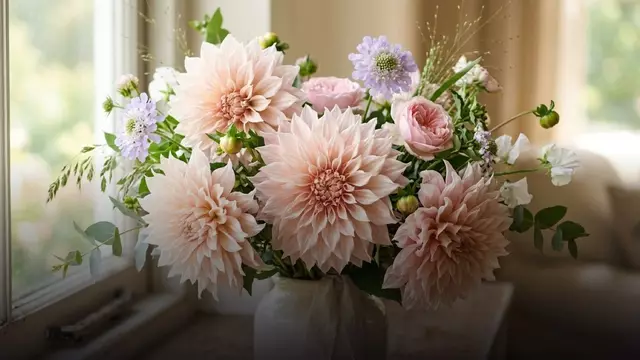
Colombia, in South America, is known for orchids and commercially grown cut flowers, including roses, carnations, chrysanthemums and alstroemeria. Its national flower is the orchid Cattleya trianae. If you are exploring Colombian flowers for a gift, distinguish the country’s native plants from the cultivated flowers you might choose for a bouquet.
That distinction helps you ask useful questions: are you interested in a plant’s botanical origins, where a particular stem was grown, or simply its appearance? A rose grown in Colombia is not necessarily a native Colombian species. For a gift, start with the recipient’s preferences, then consider flower form, opening stage and care; ask about growing origin separately if it matters to your choice.
Colombia’s orchids and cut flowers: two different stories
Colombia’s varied landscapes support a rich diversity of orchids. Cattleya trianae, the national flower, is associated with the country’s botanical identity, but it should not be treated as a description of every Colombian bouquet. An orchid seen in a wildlife photograph may have very different growing needs from a cultivated orchid sold as a houseplant.
Roses and carnations belong to the other side of this story: cultivated flowers grown for cutting. Chrysanthemums and alstroemeria also feature in Colombian flower production. Their usefulness in bouquets comes from their different shapes: roses provide a clear focal point, carnations add ruffled texture, and branching stems can distribute colour throughout an arrangement.
A country name alone cannot tell you how fresh a particular bunch is or how it has been handled. If Colombian origin is essential, ask whether it is confirmed for the specific flowers under discussion. Our guide to Colombian roses explores choosing and caring for them; origin should remain a separate question from colour, stem length and bouquet size.
Choose flowers by their shape and the recipient’s habits
Roses suit a bouquet with a strong, recognisable outline. Look at the relationship between the flower head and the stem: a large head needs enough support, while very long stems require a suitable vase. If the recipient usually keeps flowers on a small dining table, a manageable arrangement may be more useful than one chosen mainly for height.
Carnations offer layered petals and work well when you want texture without relying on large individual blooms. Alstroemeria carries several flowers on branching stems, giving a lighter, more dispersed effect. Chrysanthemums vary considerably in form, so a reference image is more informative than the flower name alone when explaining the look you prefer.
Choose the opening stage with the occasion in mind. For a gift presented at dinner, visible, partly open flowers make their effect immediately; tightly closed buds may contribute less colour at that moment. A closed bud is not proof of superior freshness, and you should not assume that every tightly cut flower will open fully in a vase.
Bouquets we can deliver




Colour, meaning and flower etiquette for a gift to Russia
Flower meanings are conventions rather than fixed translations. Red roses often suggest romance, while pink or mixed pastel flowers can feel gentler and less formal. Yellow flowers can suggest warmth and friendship, but personal associations vary. If you know the recipient dislikes a colour or connects it with an unhappy event, that knowledge matters more than a general symbolism guide.
In Russian gift etiquette, an odd number of flowers is customary for a celebratory bouquet when the stems are clearly countable. Even numbers are traditionally associated with mourning. This distinction is particularly relevant to a simple bunch of roses or carnations; in a dense mixed arrangement, counting every branching stem is less straightforward.
Your message can clarify an otherwise ambiguous gift. For a colleague, name the achievement you are celebrating; for a relative, write something personal rather than relying on colour to communicate affection. A card with your text is free with our delivery. Check names, spelling and the sign-off carefully, especially if you want the recipient to know who sent the flowers.
Care for cut flowers without relying on origin claims
Start with a clean vase and fresh water. Remove foliage that would sit below the waterline, then recut the stem ends with a clean, sharp tool before placing the flowers in water. Use cut-flower food according to its packet instructions if you have it. Increasing the concentration or adding improvised household mixtures can create problems rather than improve the bouquet.
Place the vase away from radiators, strong direct sunlight and ripening fruit. Check the water daily and replenish it as needed; if it becomes cloudy, wash the vase and replace the water. Remove fallen leaves and deteriorating flowers so they do not remain in the arrangement. These ordinary steps are more useful than assuming Colombian-grown stems need a special home treatment.
For roses, check that the stems stay upright and the water supply remains adequate. With carnations and branching flowers, remove spent individual blooms carefully without damaging healthy ones. Orchids need a separate approach: a potted orchid is a living plant with root and watering requirements, while a cut orchid stem belongs in vase care. Avoid applying one set of instructions to both.
Turn your inspiration into a clear bouquet request
If a photograph of Colombian flowers has caught your attention, identify what you actually like about it. Is it the rounded rose heads, the ruffled petals, a single colour or the loose outline? Describe those features and the occasion. A photograph is a useful visual reference, but it does not establish the growing origin, exact dimensions or availability of the flowers shown.
For delivery to Russia, begin with the bouquets catalogue and explain any essential requirements before confirming your order. Separate firm preferences from flexible ones: for example, the recipient may care strongly about a white palette but have no preference about stem length. If Colombian-grown flowers are essential, ask whether that origin can be confirmed rather than inferring it from a bouquet’s appearance.
You can contact a manager on WhatsApp for help choosing a bouquet and agreeing the address, delivery time and card text. You can also arrange a photo of the bouquet before delivery. Use that conversation to make the request precise, including any flower or colour the recipient dislikes, so the agreed details reflect the gift you intend to send.
Arrange delivery to Russia from abroad
We deliver flowers across Russia. City delivery costs 500 RUB; for remote districts and suburbs, the operator confirms the price when confirming the order. Provide the city and full delivery address early, including the flat or office details where relevant. This lets you agree the destination and delivery conditions before treating the arrangements as settled.
In large cities, express delivery is available within 1–2 hours after the order is confirmed. You can also arrange an exact time with a tolerance of plus or minus 30 minutes, choose a window of 09–12, 12–15, 15–18 or 18–21, or pre-order 1–30 days ahead. When ordering from another country, state the intended date and recipient’s local time explicitly to avoid a time-zone misunderstanding.
Delivery is anonymous by default: the courier does not name the sender, and calls the recipient about 15 minutes before arrival. If the recipient is absent, we agree a second delivery that day or a handover to a neighbour or concierge with the sender’s consent. Online checkout uses CloudPayments; check the payment options displayed there, since acceptance of every foreign card cannot be guaranteed. See delivery and payment for the ordering information.
Frequently asked questions
What flowers is Colombia in South America known for?
Colombia is known for its orchids and for cultivated cut flowers such as roses, carnations, chrysanthemums and alstroemeria. Its national flower is Cattleya trianae, an orchid.
Are Colombian roses native to Colombia?
The phrase usually describes where roses were grown, rather than identifying a native Colombian species. If growing origin matters to your purchase, ask for confirmation about the particular flowers.
Do flowers grown in Colombia always last longer?
Country of origin alone does not establish vase life. Flower variety, condition at cutting, subsequent handling and care in your home all affect how a bouquet develops.
Can I order flowers to Russia while I am abroad?
Yes, you can order flowers for delivery across Russia and agree the bouquet, address, timing and card text with a manager. Checkout uses CloudPayments; check the displayed options for your payment method, as foreign-card acceptance is not guaranteed.
Will the recipient know who sent the bouquet?
The courier does not name the sender because delivery is anonymous by default. If you want to identify yourself, include your name in the text for the free card.
Ready to send flowers?
Pick the city, choose the bouquet, and a local florist takes it from there.
Choose a city →