How are flowers packaged for delivery?
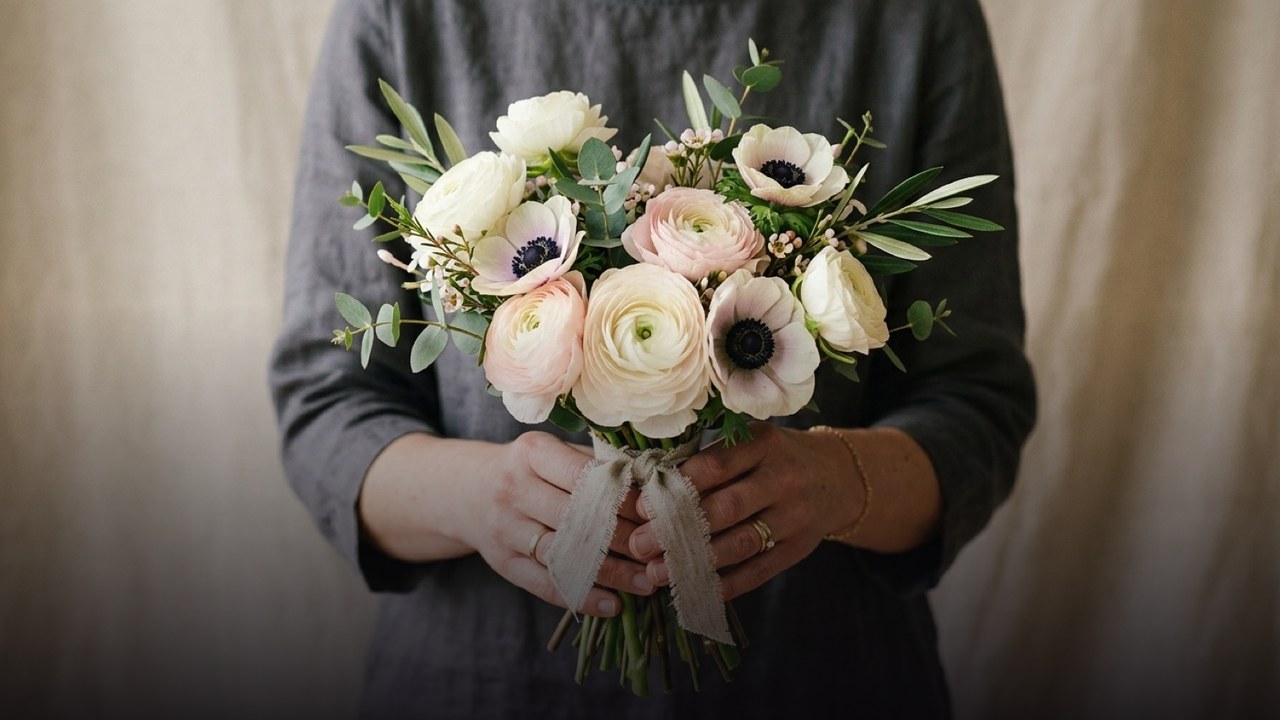
Flowers are generally packaged with wrapping around the bouquet, protection for the cut stems and, where needed, support that limits movement during delivery. Some arrangements travel with a temporary water source or in a container; the right method depends on the flowers, the design and the journey.
Presentation paper is only one part of the package: it should frame the flowers without crushing them, while transport protection helps keep the arrangement steady. If you are sending a gift to Russia from abroad, ask about the packaging for your chosen bouquet rather than assuming every design arrives in a box or vase. Here is what the different layers do, what your recipient should remove and which details to agree before delivery.
What each layer of flower packaging does
A hand-tied bouquet usually has a tie holding the stems together and an outer wrap shaping its presentation. Paper, film or another wrapping material may surround the lower part of the bouquet. These materials have different roles: a decorative sheet gives the gift its finished appearance, while a protective sleeve can reduce rubbing against petals and leaves during handling.
Good protection leaves room around the flower heads. Tight wrapping can bend a delicate stem or press petals against an edge, particularly where blooms project beyond the main shape. A tall bouquet and a compact, rounded bouquet therefore need different support. More layers do not automatically mean better packaging; the useful question is whether the flowers can move without being squeezed.
A box can provide structure, but the word alone tells you little about what is inside. It may mean an outer transport carton, a decorative container or an arrangement with a water-holding base. Before choosing from the bouquets catalogue, distinguish the floral design from any container shown, and ask a manager to clarify anything the product description leaves uncertain.
How stems get moisture during the journey
Cut flowers continue to lose moisture after they are arranged. For transport, florists may use a small water reservoir, individual water tubes or a damp covering enclosed around the cut ends. Other designs have their stems set in a water-holding arrangement base. These are general packaging methods, so check which applies to your chosen flowers instead of assuming a particular system is included.
Temporary stem protection serves a different purpose from a vase. A damp pad or small reservoir may help during the journey, but the recipient should still unpack a hand-tied bouquet promptly and place it in fresh water. Keep any wet stem covering away from furniture, clothing and electrical items as you open it, and support the bouquet while removing the material.
For flowers arranged in a container, identify the water source before taking anything apart. Stems may be placed directly in water or inserted into floral foam, and pulling them out can disturb the design. If the arrangement has foam, add water slowly to that base without pouring it over the petals. If its construction is unclear, ask for care guidance before dismantling it.
Bouquets we can deliver




Why the flower shape and weather matter
Different flowers create different packaging challenges. Long stems need support along their length, while broad flower heads need space at the top. Branching stems can catch on a sleeve as it is removed. When unpacking, open the wrapping outwards or loosen it first rather than dragging a tight sleeve across the blooms; this reduces avoidable contact with petals and side shoots.
Weather also affects how carefully a bouquet should be handled between the vehicle and the door. Protective wrapping can reduce direct exposure, but it does not make flowers immune to heat, cold or wind. Arrange for someone to receive the gift indoors, and avoid leaving it outside while you prepare a vase. Do not assume an attractive presentation wrap provides insulation.
Once indoors, keep the flowers away from radiators, heating vents, strong draughts and direct sun. If they have arrived from cold conditions, avoid putting them beside a heater to warm them quickly. Choose a stable place for unpacking, with enough room to lay the wrapping aside, so the bouquet is supported throughout rather than balanced on its flower heads.
How to unpack a delivered bouquet and care for it
Prepare a clean vase before removing temporary stem packaging. Wash away any residue from earlier flowers, rinse thoroughly and add fresh water. Remove leaves that would sit below the waterline, since submerged foliage encourages the water to deteriorate. Then use a clean, sharp tool to make a fresh cut at each stem end before placing the bouquet in the vase.
Remove transport coverings and anything enclosing the cut ends. Decorative wrapping above the vase can sometimes stay, provided it does not touch the water or crowd the blooms, but taking it off makes inspection and care easier. You can leave the bouquet tie in place to preserve its shape if it is not constricting the stems; remove or loosen it if you want a freer arrangement.
Check the water level daily and refresh the water regularly, cleaning the vase when needed. Follow the directions on flower food if it is supplied; do not guess a stronger dose or add household mixtures. Remove fading flowers and any leaves that drop into the water. Different stems can age at different rates, so adjust the arrangement as individual blooms finish.
Agree the presentation and delivery details before ordering
When you order from abroad, explain how the recipient is likely to receive and display the flowers. A gift going to a workplace may need to wait before it reaches a vase, while a home recipient may be ready to unpack it immediately. Ask which design suits that situation and what the recipient will need. Do not assume that a vase, carry bag or particular wrapping material comes with every bouquet.
You can contact a manager on WhatsApp for help choosing a bouquet and agreeing the time, address and card text, as well as a photo of the bouquet before delivery. Use that conversation to clarify the presentation and any packaging questions. A photo helps you see the arrangement, though it may not show the stem covering or every layer used for transport.
Turboflora delivers flowers across Russia. City delivery costs 500 RUB; for remote districts and suburbs, the operator confirms the price when confirming the order. Check the address and recipient's contact details carefully, especially if you are entering them from another country. The delivery and payment information is a useful reference when arranging the order.
Choose a time when the recipient can receive the flowers
Packaging works best alongside a sensible handover plan. In large cities, express delivery is available within 1–2 hours after the order is confirmed. You can also arrange delivery at an exact time with a tolerance of plus or minus 30 minutes, choose a window of 09–12, 12–15, 15–18 or 18–21, or pre-order 1–30 days ahead. When ordering from abroad, make the intended date and time clear to the manager.
The courier calls the recipient about 15 minutes before arrival. If the recipient is absent, we agree a second delivery the same day or, with the sender's consent, hand the flowers to a neighbour or concierge. Think about who can bring the bouquet indoors and pass it on promptly. For a workplace gift, providing clear reception or entrance details helps make the intended handover easier to understand.
Delivery is anonymous by default: the courier does not name the sender. A card with your text is free, so sign the message if you want the recipient to know who sent it; the wrapping itself will not explain your intention. Online checkout uses CloudPayments. Check the payment options displayed there, particularly when paying from abroad, because acceptance of every foreign card cannot be guaranteed.
Frequently asked questions
Are all flowers delivered in a box?
No single packaging format suits every bouquet or arrangement. Ask about the chosen design and clarify whether a pictured box is a decorative container or whether separate transport packaging is involved.
Do delivered flowers always have water around the stems?
Packaging methods vary: flowers may have a temporary moisture source, a water-filled container or a water-holding arrangement base. Confirm the method for your order, and place a hand-tied bouquet in fresh water promptly after unpacking.
Should the recipient remove the bouquet wrapping?
Remove transport protection and any temporary covering around the cut ends before putting a hand-tied bouquet in a vase. Decorative wrapping can be removed too, especially if it would touch the water or press against the flowers.
Can I see the bouquet before it is delivered?
Contact a manager on WhatsApp to arrange a photo of the bouquet before delivery. Ask separately about stem protection or other packaging details that may not be visible in the photograph.
What happens if nobody is there to receive the flowers?
If the recipient is absent, we agree a second delivery the same day or hand the flowers to a neighbour or concierge with the sender's consent. The courier calls the recipient about 15 minutes before arrival.
Ready to send flowers?
Pick the city, choose the bouquet, and a local florist takes it from there.
Choose a city →