How Long Do Lilies Live For in a Vase or Garden?
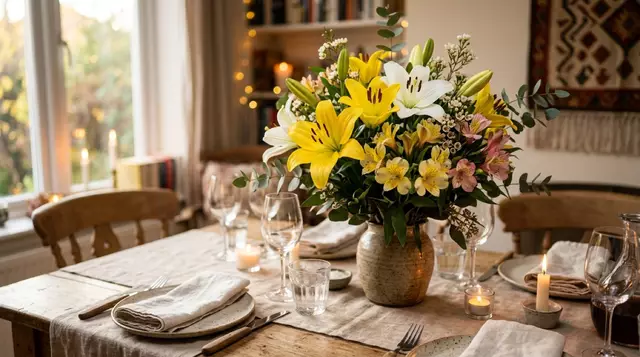
Cut lilies usually last about 7–14 days in a vase, depending on their freshness, variety and care; each individual flower often lasts around 3–7 days. Garden lilies are perennials: their flowers are seasonal, but a healthy bulb can grow and flower again for many years.
The distinction matters because a lily stem usually carries several buds that open in succession. One fading flower does not mean the whole bouquet has finished, and a garden lily losing its flowers does not mean the plant has died. If you are choosing lilies as a gift, look beyond the number of open flowers: the condition of the buds, leaves and stems tells you more about how much enjoyment remains.
What determines how long cut lilies last?
Treat 7–14 days as a useful expectation, rather than a deadline or guarantee. A stem that arrives with several developing buds may provide a longer display than one whose flowers are already fully open. However, tightly closed buds alone do not prove freshness: shrivelled buds, yellowing leaves and a deteriorating stem base are reasons to examine the flowers more closely.
Variety affects the size, fragrance and pace of the display, but the name alone cannot predict a precise vase life. Transport, time since cutting and conditions in your room also matter. Our guide to lily varieties, scent and vase life helps you compare the characteristics that matter when choosing a bouquet.
Watch the stem as a sequence of flowers. Remove a spent bloom when its petals start to collapse, leaving healthy buds and foliage in place. If another bud is swelling and beginning to show colour, the stem still has something to offer. A bouquet can look different each day as the first flowers fade and later ones open.
Give lilies a clean start in the vase
Wash the vase thoroughly before filling it with fresh water. Remove any leaves that would sit below the waterline, since submerged foliage breaks down and encourages bacterial growth. Choose a vase that supports the stems without forcing them into a tight bundle; large lily flowers can make a narrow or lightweight container unstable as they open.
With a clean, sharp blade or secateurs, trim roughly 1–2 cm from the stem ends before arranging them. Make a clean cut without crushing the stems, then put them into water promptly. If flower food is available, follow its dilution instructions exactly. Adding extra powder does not make flowers last longer, and a guessed mixture can be counterproductive.
Check the water level daily: a full arrangement can use more than you expect. Replace the water every couple of days, or sooner if it becomes cloudy, and clean the vase when you do. Recut the ends if needed and remove loose plant material. For a fuller routine, see how to keep lilies alive in a vase.
Bouquets we can deliver




Choose the right place and handle open flowers gently
Place your vase in a cool part of the room with indirect light, away from radiators, direct sunshine and warm appliances. Avoid a draughty windowsill or a position directly beneath an air-conditioning outlet. Steady indoor conditions are more useful than trying to force the buds open with heat, which can shorten the display once the flowers unfold.
Keep lilies away from a bowl of ripening fruit. Ripening fruit releases ethylene, which can accelerate ageing in sensitive cut flowers, although responses vary between flowers and varieties. A separate table is a simple precaution. Give the blooms enough space that people do not repeatedly brush against the petals when walking past or opening curtains.
As flowers open, you can gently remove the pollen-bearing anthers with a tissue before they shed pollen. This mainly prevents stains; it is not a reliable way to add days to vase life. Avoid rubbing loose pollen into fabric. True lilies are highly toxic to cats, including their pollen and vase water: choose different flowers for a home with cats, and seek urgent veterinary advice after suspected exposure.
Read fading flowers correctly—and know what you can improve
An older bloom with curling edges or dropping petals is usually reaching the end of its natural life. Remove that flower carefully while retaining the rest of the stem. If several flowers suddenly droop together, check whether the vase has run low, the water has become dirty or the arrangement has been standing near a heat source before assuming that every stem is finished.
For a stem that appears dehydrated, wash the vase, replace the water and trim the stem end with a clean tool. Return it to a cooler position and allow time to see whether it recovers. This may help when poor water uptake is the problem, but it cannot reverse decaying tissue or restore petals that have already become dry and brittle.
Some buds never open, especially if they were cut too immature or the stem has deteriorated. Do not squeeze the bud or peel its petals apart: that can damage the flower without solving the cause. Remove soft, browning or shrivelled buds and keep caring for the healthy ones. Judge progress by the whole arrangement rather than expecting every bud to perform identically.
Garden lilies live beyond a single flowering season
For lilies growing outdoors, separate the lifespan of the flower from that of the plant. An individual bloom lasts days, while a stem with several buds can flower over a longer period. Different varieties flower at different points in the season, so planting several types can extend the overall display without making each individual flower last longer.
After flowering, remove spent flower heads if you do not want seeds, but leave healthy green leaves and stems to finish their work. The foliage supplies energy to the bulb for future growth. Cut it back once it has yellowed and died down naturally. Cutting everything to ground level immediately after flowering can weaken the following season's performance.
A bulb can persist for years when its growing conditions suit it, but there is no fixed lifespan for every garden lily. Drainage, disease, pests and suitability for the planting location all influence survival. A potted lily also needs attention after flowering; do not discard it simply because the flowers have gone. Identify the variety before deciding how to plant it out or manage winter conditions.
Time a lily gift around the occasion and the recipient
Choose the stage of opening to suit the occasion. For a gift enjoyed over several days, a mixture of open flowers and developing buds gives an attractive arrival with more to unfold. For a dinner or photograph at a specific time, explain that you need visible open blooms. Bud opening varies, so avoid planning an important display around a promise that every flower will open on a particular morning.
Think about the setting as well as the date. Fragrant lilies may be unwelcome in a small shared room or to someone sensitive to scent. White lilies can carry associations with sympathy as well as celebration, depending on the recipient's culture and circumstances. A free card with your own text can make the intention clear; for a household with cats, choose another flower from the bouquets catalogue.
We deliver flowers across Russia, with city delivery costing 500 RUB; an operator confirms the price for remote districts and suburbs when confirming the order. In large cities, express delivery is available 1–2 hours after order confirmation. You can also arrange an exact time within ±30 minutes, choose a 09–12, 12–15, 15–18 or 18–21 window, or pre-order 1–30 days ahead.
Contact a manager on WhatsApp for help choosing a bouquet, agreeing the address, time and card text, or arranging a photo before delivery. Delivery is anonymous by default, so the courier does not name the sender. Online checkout uses CloudPayments; check the payment options displayed there, as acceptance of every foreign card is not guaranteed. Availability and timing of delivery across Russia are confirmed for the chosen city, address, date and bouquet.
Frequently asked questions
How long do lilies live for after you buy them?
Cut lilies usually last about 7–14 days with suitable care, though their remaining life depends on their condition when purchased. Individual flowers fade sooner, while later buds can continue the display.
Do lilies last longer if you remove the pollen?
Removing the pollen-bearing anthers mainly helps prevent stains on petals, clothing and furniture. Clean water, healthy stems and a suitable position matter more for vase life.
Can I make closed lily buds open faster?
Give the stems clean water and indirect light, and allow them to develop naturally. Avoid direct heat or pulling the petals apart; very immature or damaged buds may never open.
Will garden lilies come back next year?
Many garden lilies return from their bulbs when the variety suits the location and the bulb stays healthy. Leave green foliage in place after flowering so it can support the bulb before dying back.
Can I send lilies to someone in Russia without naming myself?
Yes, delivery is anonymous by default: the courier does not name the sender, and a card with your text is free. The courier calls the recipient about 15 minutes before arrival, so the delivery itself may not be a complete surprise.
Ready to send flowers?
Pick the city, choose the bouquet, and a local florist takes it from there.
Choose a city →