How long will flowers last out of water during a journey or event?
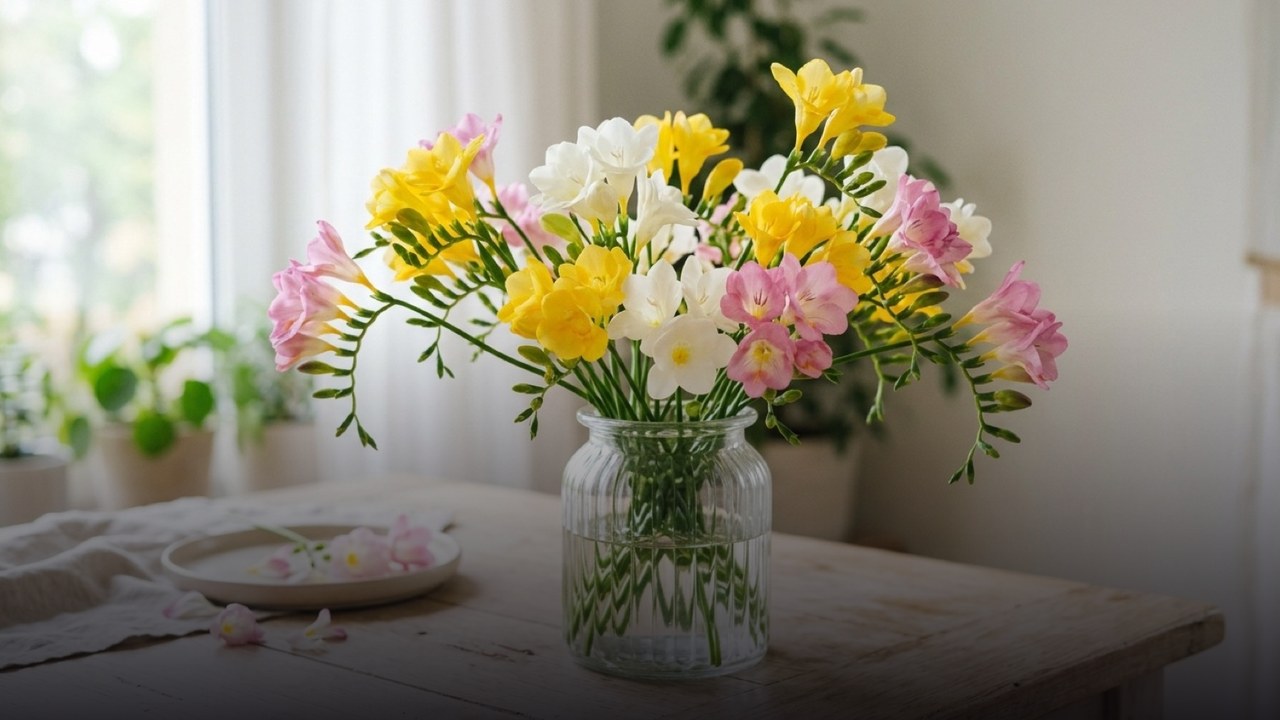
Cut flowers may cope with a short journey out of water, but there is no reliable number of hours that is safe for every bouquet. Some begin to wilt quickly, while others stay presentable for a few hours in cool, shaded conditions; put them in water as soon as you can.
The useful question is how much moisture your particular bouquet is losing before you can rehydrate it. Flower type, freshness, direct sun, moving air and the way the stems are packed all matter. A bouquet can still look upright while becoming dehydrated, so appearance alone is a poor reason to extend its time without water.
What changes how long a bouquet can manage?
Once cut, flowers depend on water entering through their stems to replace moisture lost from leaves and petals. Without that supply, they gradually lose firmness. Heat and moving air can accelerate moisture loss, which is why the same bouquet may cope differently with a cool indoor wait and a journey beside a sunny car window.
Flower type matters, but it cannot give you a dependable countdown. Delicate petals, soft stems and thirsty foliage may show stress sooner than firmer material in the same arrangement. Hydrangeas, for example, can wilt noticeably when short of water. In a mixed bouquet, plan around the most vulnerable flowers rather than assuming every stem has equal endurance.
Condition before the journey matters too. Flowers that have been drinking in a clean vase start differently from stems already left dry on a counter. You usually cannot establish that history just by looking at a wrapped bouquet. Treat an unknown period without water as a reason to rehydrate promptly, rather than adding another supposedly safe allowance.
Plan transport around the next chance to use a vase
For a straightforward trip, make collecting the flowers one of your last stops and go directly to your destination. Keep the bouquet supported so stems do not bend under its weight. Choose a shaded position away from heaters and strong air vents, and avoid leaving it in a parked vehicle while you run another errand.
For a longer journey, use a stable container with water if you can transport it securely. Keep the stem ends submerged and the flower heads dry, and prevent the container from tipping during braking or turns. Loose stems sitting beside a water bottle gain no benefit from it: the cut ends need actual contact with the water.
A damp wrap around the cut ends can help reduce drying during a brief transfer, but it is not equivalent to a vase. Keep moisture contained around the stems so it does not soak the petals or damage nearby belongings. If you cannot carry water safely, shorten the journey or arrange for the flowers to reach their destination closer to the time they are needed.
Bouquets we can deliver




Know whether the packaging provides any water
Decorative paper, ribbon and cellophane do not themselves hydrate flowers. Look at the base of the bouquet rather than judging by how elaborate the wrapping appears. If the cut stems are dry, the bouquet is out of water even when the wrapping feels cool or there is condensation inside it.
Some bouquets have a water-filled pouch around the stem ends. Check whether one is actually present and keep it upright; do not assume every wrapped bouquet includes one. It provides water only while the cut ends remain in contact with its contents. When you reach a suitable place, transfer the flowers carefully into a clean vase.
An arrangement in floral foam needs a different approach because its stems may already be inserted into a water-holding material. Follow any care instructions supplied with it and check the material's moisture without pulling the stems out to inspect them. A decorative box alone tells you nothing about whether the flowers have a water source.
What to do as soon as you get the flowers home
Prepare a clean vase with fresh water before unpacking the bouquet. Remove leaves that would sit below the waterline, then use a clean, sharp tool to make a fresh cut at the base of each stem. Place the stems into water promptly after cutting. If flower food is supplied, follow its dilution instructions rather than adding an arbitrary amount.
Remove or loosen transport wrapping that compresses the flowers, taking care around bent stems and fragile petals. A tie holding a hand-tied bouquet together can stay if it is not constricting the stems. Check that every cut end reaches the water: an uneven bouquet can leave shorter stems dry even when the vase looks adequately filled.
Let the bouquet drink in a cool position away from direct sun and heating. Check the water level again after it has had time to hydrate, especially with a large bunch in a narrow vase. Continue with clean water and a clean container; our guide to changing vase water explains the ongoing routine.
Can you save flowers that have already wilted?
Sometimes dehydration can be partly reversed, but recovery depends on the flower and the damage already done. Soft leaves or a slightly drooping head may improve after a fresh stem cut and a period in clean water. Crispy petal edges, broken stems and decaying tissue will not become healthy again through hydration.
Start with the basic care steps above and give the flowers a few hours in a suitable place before assessing them again. Avoid repeatedly handling the heads to test their firmness. If a stem is crushed near its base, cutting above the damaged part may help, provided enough stem remains to reach the water in your chosen vase.
Do not apply boiling water, ice baths or full-head soaking as a universal rescue treatment. Techniques appropriate for one flower can damage another, and wet petals may mark. Separate visibly decaying stems from the rest; for help judging the difference between recoverable wilting and deterioration, read when to save flowers and when to discard them.
Time a gift so it reaches water sooner
If you are giving flowers at a restaurant, workplace or event, consider what the recipient will do with them next. A bouquet handed over at the beginning of a long outing may spend the whole evening dry. Ask whether a vase will be available, or arrange the gift for a point when the recipient can take it home. Leaving flowers dry overnight is an avoidable risk, even in a cool room.
When sending flowers to Russia from abroad, choose a delivery time that fits the recipient's plans. We deliver across Russia. In large cities, express delivery is available in 1–2 hours after order confirmation; other options include an exact time with a ±30-minute allowance, windows of 09–12, 12–15, 15–18 or 18–21, and pre-ordering 1–30 days ahead. Check the date and local arrival time carefully.
You can contact a manager on WhatsApp to choose a bouquet and agree the address, timing, card text and a photo before delivery. City delivery costs 500 RUB; an operator confirms the price for remote districts and suburbs when confirming the order. Online checkout uses CloudPayments: check the payment options displayed there, as acceptance of a particular foreign card cannot be guaranteed.
The courier calls the recipient about 15 minutes before arrival. If they are absent, we agree a second delivery that day or, with the sender's consent, hand the flowers to a neighbour or concierge. Delivery is anonymous by default, and a card with your text is free. A brief care note in your message can help the recipient remember to put the bouquet in water soon after receiving it. We deliver bouquets across Russia in 1–2 hours.
Frequently asked questions
Can flowers last two hours out of water?
Some cut flowers may remain presentable for two hours in cool, shaded conditions, but that is not a safe allowance for every bouquet. Use water during transport where practical and rehydrate the stems as soon as you arrive.
Can I leave a bouquet out of water overnight?
Avoid leaving a cut bouquet dry overnight, because prolonged dehydration can cause wilting and lasting damage. Put it in a clean vase before bed rather than relying on a cool room to preserve it.
Does wrapping keep flowers hydrated?
Ordinary decorative wrapping does not supply water. A water-filled pouch can hydrate the stems while their cut ends remain submerged, but you need to check that the pouch is present and contains water.
Should I put dehydrated flowers straight into water?
Prepare a clean vase, remove submerged leaves and freshly cut the stem ends with a clean, sharp tool before placing them in water promptly. Keep the bouquet away from heat and direct sun while you assess whether it recovers.
Is a drooping flower definitely dead?
No: drooping can result from dehydration, and some flowers regain firmness after appropriate care. Broken stems, dry damaged petals and decaying tissue cannot be restored simply by adding water.
Ready to send flowers?
Pick the city, choose the bouquet, and a local florist takes it from there.
Choose a city →