How much is in a bunch of flowers?
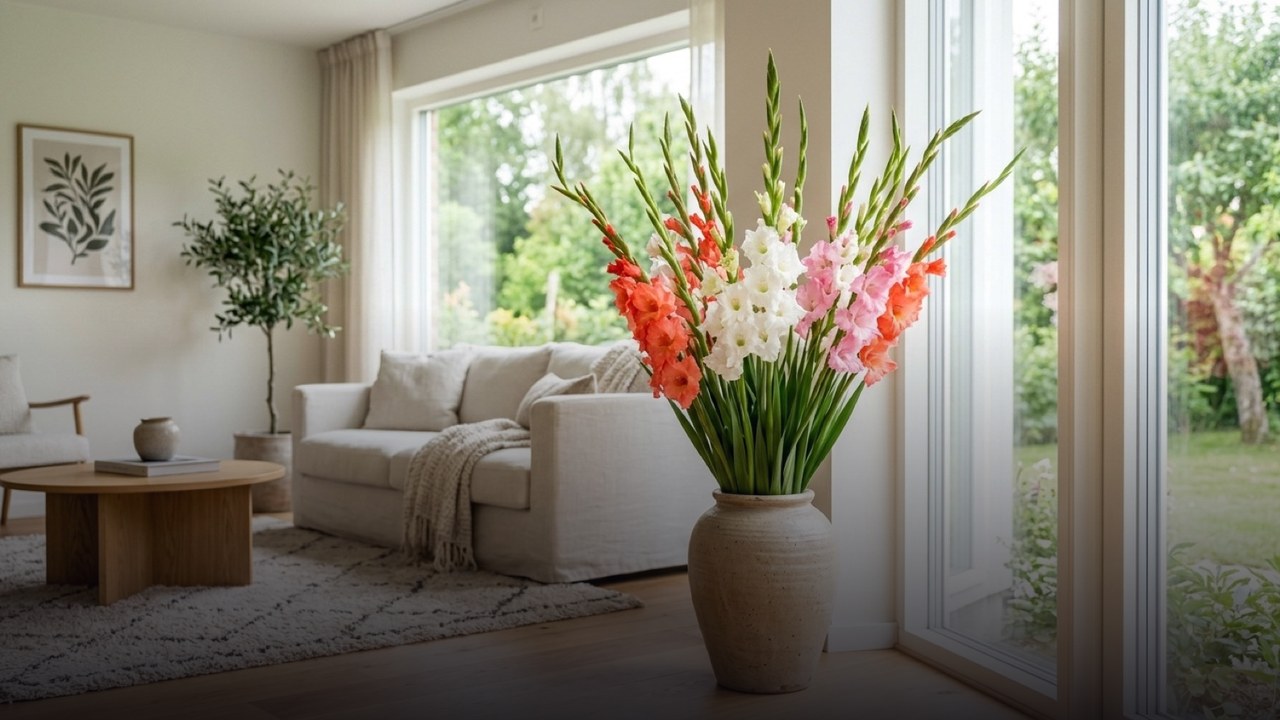
A bunch of flowers has no fixed quantity: the word alone does not tell you how many stems you will receive. Check the stated stem count and flower types, because one branching stem can carry several blooms. If you mean how much a bunch costs, check the individual arrangement; there is no single price attached to the word “bunch”.
The useful question is what you want those flowers to do: make a small personal gesture, fill a particular vase or create a generous birthday gift. Those choices depend on the shape and size of the flowers as well as the number of stems. When you are ordering for someone in Russia from abroad, it also helps to separate the visible size of the gift from the flower-count etiquette that may matter to the recipient.
What are you counting: stems, blooms or a finished bouquet?
Start with the unit in the description. A stem is a cut stalk; a bloom is an individual flower head. A single-headed rose generally gives you one main bloom per stem, while spray roses or branching chrysanthemums can carry several. This means seven stems of two different flower types may give you very different numbers of visible flowers. Ask about stems when you need a quantity you can compare.
“Bunch” and “bouquet” are useful descriptions, but neither is a measurement. A bunch can mean flowers gathered together, often of one type, while a bouquet usually suggests a composed arrangement. The terms overlap in everyday use. Do not assume that a bouquet contains more flowers than a bunch, or that decorative wrapping indicates a particular stem count.
For example, a description saying “nine rose stems” answers a quantity question more clearly than “a lovely bunch”. For a mixed arrangement, look for the main flower types and any stated dimensions alongside the count. Our guide to how many flowers are in a bunch explains the counting question in more detail.
Why the same number of stems can look very different
Flower-head size changes the result immediately. A few broad hydrangea heads can occupy substantial space, whereas the same number of slender tulips gives a lighter outline. Branching flowers spread their blooms across a wider area. Before deciding that a count sounds too small, consider whether you are picturing large heads, small individual flowers or several blooms on each stem.
The stage of opening matters too. Flowers with tight buds can look compact when first arranged and become fuller as they open, although the amount of change depends on the flower and its condition. A photograph shows one moment. If the opening stage matters for a presentation or dinner, ask about it rather than assuming every bud will open by a particular hour.
Arrangement style also affects apparent size. Closely grouped stems make a dense shape; stems placed with space between them create a wider, airier outline. Foliage and wrapping can add width without adding flower heads. Compare the floral part of the arrangement, its stated dimensions where available and its overall shape, especially if you are choosing from photographs taken at different angles.
Bouquets we can deliver




Choose a quantity that suits the gesture and the vase
For a quiet thank-you or an everyday surprise, a modest arrangement can communicate your intention clearly. For a milestone, you might prefer a fuller shape or flowers with larger heads. There is no universal stem count that makes a gift sufficiently thoughtful. The recipient’s taste, the space where the flowers will stand and your relationship are more useful guides than trying to reach an impressive number.
Think about the vase if you know what the recipient owns. A narrow neck supports a small group of stems; a broad opening needs enough stems or branching material to keep the arrangement from falling apart visually. Tall flowers also need a vessel that supports them securely. More stems will not correct a mismatch between a heavy flower head, a long stalk and a small, unstable vase.
When comparing options in the bouquets catalogue, identify the feature you care about most: a particular flower, a compact shape or a broad display. Then check the description for the details that support that choice. A clear preference such as “a compact arrangement for a small dining table” is more useful than “a big bunch”, which different people can interpret very differently.
Flower-count etiquette when your recipient is in Russia
For a celebratory gift in Russia, an odd number of flowers is the customary choice when the stems are individually countable. Even numbers are traditionally associated with funerals and remembrance. The recipient’s own habits still matter, but following the odd-number convention is a considerate default for a birthday, a thank-you or a romantic gift when you are unsure of their preferences.
The convention is easiest to apply to a simple arrangement of single-headed flowers, such as seven roses or nine tulips. A mixed bouquet with branching stems is harder to count by eye. If this detail matters to you or the recipient, ask the manager to clarify the flower count before ordering. Counting every small bloom on a branching stem is not a useful way to choose the arrangement.
Colour meanings are less dependable than a known personal preference. Yellow flowers, for example, can carry different associations for different people, so avoid treating an online colour chart as a rule for every recipient. Their favourite flowers or colours are a stronger starting point. Use the free card to make your message explicit, whether you are expressing affection, congratulations or thanks.
How to arrange a flower delivery to Russia from abroad
We deliver flowers across Russia. City delivery costs 500 RUB; for remote districts and suburbs, the operator confirms the delivery price when confirming the order. Choose the arrangement first, then check the delivery details for the actual destination. Online checkout uses CloudPayments: check the payment options displayed there, as acceptance of every foreign card cannot be assumed.
For help choosing, contact a manager on WhatsApp. You can agree the address, delivery time and card text, and request a photo of the bouquet before delivery. Describe the occasion and the size or shape you have in mind. If stem count is important, ask about it directly so that a word such as “bunch” does not leave the quantity unclear.
In large cities, express delivery is available in 1–2 hours after order confirmation. You can also arrange an exact time with a tolerance of ±30 minutes, choose a window of 09–12, 12–15, 15–18 or 18–21, or preorder 1–30 days ahead. Choose a time when the recipient can receive the flowers, and allow for the stated tolerance if the gift is connected to a meal, departure or celebration.
Delivery is anonymous by default: the courier does not name the sender. A card with your text is free, so include your name there if you want the recipient to know who sent the gift. The courier calls about 15 minutes before arrival. If the recipient is absent, we agree a second delivery that day or, with the sender’s consent, hand the flowers to a neighbour or concierge.
Help the flowers look their best after arrival
Prepare a clean vase before putting the flowers in water. Remove any leaves that would sit below the waterline, then use a clean, sharp tool to refresh the stem ends. Check whether any packaging needs to be loosened or removed so the stems can reach the water properly. If flower food is supplied, follow its instructions rather than guessing a stronger concentration.
Keep the arrangement away from direct sun, radiators and other sources of heat, and check the water level daily. A full vase can become depleted surprisingly quickly when it holds many stems. Refresh the water as needed and clean away fallen leaves or petals. Avoid adding improvised household mixtures: clean water, clean equipment and suitable placement are a more dependable starting point.
As the flowers change, remove individual stems that have deteriorated and adjust the remaining ones into a smaller vase if necessary. Different flowers in a mixed bouquet may develop at different rates, so the arrangement does not need to stay in its original shape throughout its display. When judging how much to order, choose a quantity the recipient can comfortably accommodate and care for. We deliver bouquets across Russia in 1–2 hours.
Frequently asked questions
Does a bunch of flowers always contain a dozen?
No. “Bunch” does not specify a number, so check the product description or ask for the stem count. A dozen means twelve, but you should only expect that quantity when it is stated.
Is a bunch smaller than a bouquet?
Not necessarily: neither term defines size. Compare the flower types, stem count and stated dimensions rather than relying on the name alone.
How much does a bunch of flowers cost?
There is no fixed price for a bunch; check the individual arrangement in the catalogue. City delivery costs 500 RUB, while the operator confirms the delivery price for remote districts and suburbs.
Should I choose an odd number of flowers for someone in Russia?
An odd number is the customary choice for celebratory gifts with individually countable flowers. Even numbers are traditionally associated with funerals and remembrance, so clarify the count if you are unsure.
Can I pay for flowers to Russia with a foreign card?
Online checkout uses CloudPayments. Check the options displayed at checkout; acceptance of every foreign card is not guaranteed.
Ready to send flowers?
Pick the city, choose the bouquet, and a local florist takes it from there.
Choose a city →