How to Arrange Roses in a Rose Bowl, Stem by Stem
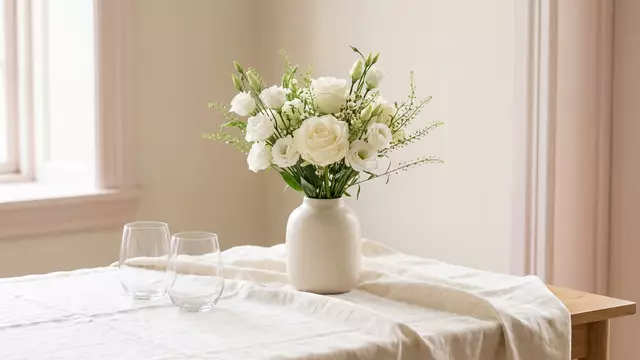
To arrange roses in a rose bowl, start with a clean bowl, add water mixed with cut-flower food according to its instructions, and position freshly cut stems in a loose dome. Set the outer roses first, then fill towards the centre, trimming each stem gradually so every cut end stays in water and the flower heads sit comfortably above the rim.
The main challenge is keeping the stems steady inside a rounded container. A narrow opening may provide enough support by itself; a wide opening usually benefits from a simple floral-tape grid. Work with the shape of your bowl and the actual size of your rose heads, rather than trying to copy a fixed stem count from a photograph.
Choose a bowl that supports the shape you want
Look at the opening before you look at the bowl’s overall size. A rounded vessel with a relatively narrow neck gathers stems together and makes a compact arrangement easier to build. A shallow bowl with a broad mouth gives you more room to spread flowers, but stems can slide sideways unless you add support. Check that the bowl stands securely when filled.
For a dining table, plan a low arrangement that lets people see one another across it. Hold a rose beside the empty bowl and move its head up and down to judge the finished height. A useful starting shape has the outside blooms sitting just above the rim, with the centre slightly higher. Leave enough stem below each head to reach the water without forcing a sharp bend.
Gather clean, sharp secateurs or flower scissors, a jug, cut-flower food and, if needed, waterproof floral tape. Wash the bowl thoroughly and rinse away detergent before filling it. If you are using a family bowl or decorative vessel, check that it is watertight and suitable for prolonged contact with water; keep any container with an uncertain finish away from vulnerable furniture.
Prepare the roses before making any short cuts
Unwrap your roses and examine each stem separately. Remove leaves that would sit below the finished waterline, along with any damaged foliage. You can gently remove a bruised outer petal if it spoils the appearance, but avoid stripping away sound petals simply because they curl differently from those inside. Handle the flower heads lightly so you do not mark them while arranging.
If the roses have travelled or spent time out of water, refresh their stem ends and stand them in a clean vase while you prepare the bowl. Use clean water and flower food at the dilution stated on the packet. Let the flowers take up water before judging their final position: a soft or drooping stem is difficult to place accurately and should not be used as structural support.
Keep the stems longer than you expect to need until you start placing them. Measure against the actual bowl, make a clean angled cut, and put each stem promptly into water. The angle is useful, but a clean cut matters more than achieving a particular number of degrees. Trim in small stages; once a stem is too short, you cannot recover the length needed to reach water.
Bouquets we can deliver




Give the stems support inside the bowl
For a wide opening, dry the rim completely and apply narrow strips of waterproof floral tape across it in both directions. Aim for openings that admit individual stems without squeezing them. Press the tape firmly onto the dry rim and secure the ends. Ordinary paper tape is unlikely to stay reliable when wet, so use tape intended for flower arranging if you choose this method.
Add the prepared water carefully, keeping the taped rim dry as far as possible. The right level depends on the bowl and the angle of the stems: every cut end must sit below the surface, while leaves stay above it. Leave room for the water level to rise as stems go in. A jug with a narrow spout makes both the first fill and later top-ups easier.
With a narrow-necked rose bowl, try placing a few stems without a grid first. Angle them in different directions so they rest against the opening and help hold one another in position. Keep this loose enough to adjust individual roses. Packing the neck tightly makes it harder to check the water, remove a failing stem or change the water without dismantling the whole arrangement.
Build the rose dome from the outside towards the centre
Choose several sound roses for the outline and place them at intervals around the rim. Angle their stems towards the opposite side of the bowl, keeping the cut ends submerged. Turn the bowl after each addition so you can see whether the outline is balanced. The outside heads should soften the edge of the container without being pressed against it or hanging heavily over one side.
Add the next roses between those first positions, with their heads a little higher and further towards the middle. Continue inwards until you have a gentle dome. Use your largest or most open blooms where they have space to show their shape; smaller heads can sit between them. Leave a little breathing room around the petals, especially if some roses are still opening.
Step back and inspect the arrangement from table height as well as from above. If one bloom sticks out, remove that stem and shorten it slightly before replacing it. If a gap remains, try changing the angle of a neighbouring stem before adding another rose. Stop when the outline feels complete: a few visible spaces can look deliberate, while crowded heads are harder to adjust and can bruise.
Adjust colour, spacing and scale to the occasion
For a calm, unified effect, use roses in one colour and let differences in opening stage provide the detail. With two or more colours, repeat each shade around the bowl so the arrangement feels considered from every seat. You can also group colours deliberately, but check all sides before deciding where the strongest contrast belongs. A table centrepiece is usually viewed from several directions.
Estimate quantity by the width of the flower heads and the area you want them to cover. Lay a few roses loosely across the opening before cutting to see how much space they occupy. Large, open blooms need fewer companions than small, tight buds, and roses may change shape as they open. If your supply looks sparse, choose a smaller bowl or make a lighter arrangement with visible space.
When making a gift, use the recipient’s known preferences as your guide to colour and form. A simple card can state the occasion or your message more clearly than relying on a flower colour to convey it. Consider the setting too: a compact bowl suits a crowded table, while a wider arrangement needs a clear, stable place where sleeves, dishes and passing hands will not catch the flowers.
Keep the bowl fresh and plan gifts to Russia
Check the water daily because a shallow bowl can hold less usable water than its rounded shape suggests. Top up before any cut ends become exposed, and change the water regularly, especially if it turns cloudy. When changing it, clean the vessel and refresh the stem ends where practical. Keep the arrangement away from direct sun, heaters and ripening fruit; our guide to rose vase life covers further care.
If you are arranging a gift for someone in Russia from abroad, you can choose flowers through our bouquets catalogue. We deliver flowers across Russia; city delivery costs 500 RUB, while the operator confirms the price for remote districts and suburbs when confirming the order. For a particular rose colour or a presentation suitable for a bowl, ask a manager to confirm what can be arranged before you rely on it.
Use WhatsApp to agree the address, timing and card text, or request a photo of the bouquet before delivery. Express delivery in large cities takes 1–2 hours after order confirmation; you can also pre-order 1–30 days ahead. Delivery is anonymous by default, and a card with your text is free. See delivery and payment for planning; online checkout uses CloudPayments, so check the payment options displayed there.
Frequently asked questions
How short should I cut roses for a rose bowl?
Measure each stem against your bowl before cutting: the head should sit at the intended height while the cut end remains submerged. Start longer than necessary and shorten gradually, allowing slightly more height for the roses in the centre.
How many roses do I need for a bowl arrangement?
The number depends on the opening’s width, the size of the rose heads and how closely you want them spaced. Test the coverage with uncut stems first, leaving room for tight buds to open.
Can I arrange roses in a bowl without floral foam?
Yes, a narrow opening may support the stems on its own, while a waterproof floral-tape grid can help with a wide bowl. In either case, check that every stem end reaches the water.
Should rose heads touch the water in a rose bowl?
For a stemmed bowl arrangement, keep the flower heads and leaves above the water, with only the lower stems submerged. If a head sits too low, reposition the stem or choose a longer one rather than letting the petals soak.
How do I change the water without losing the arrangement?
For a small, loosely gathered arrangement, support the stems together and lift them carefully into a clean temporary vessel while you wash and refill the bowl. If a tape grid prevents lifting them safely, remove and replace the stems in stages, rebuilding the outline as you go.
Ready to send flowers?
Pick the city, choose the bouquet, and a local florist takes it from there.
Choose a city →